

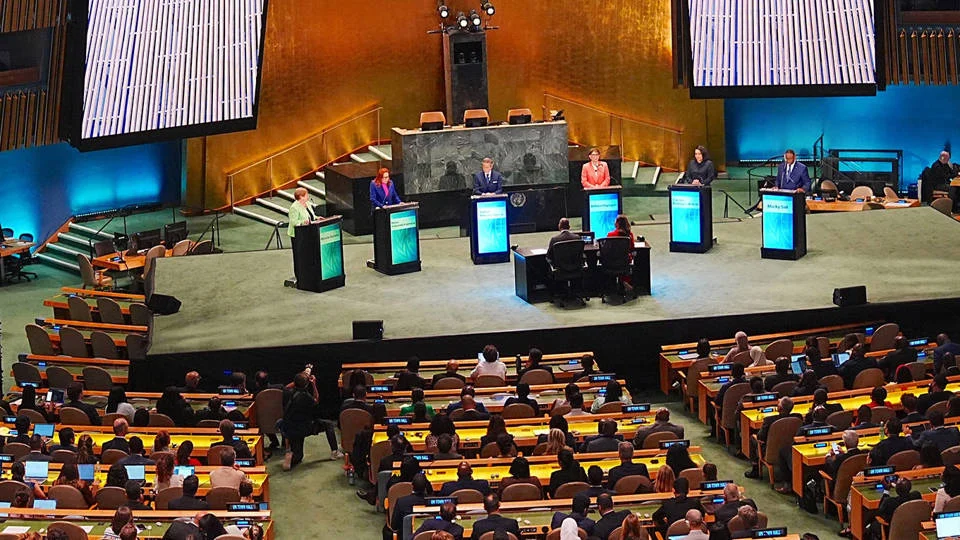
The upcoming selection of the United Nations’ next Secretary-General in 2027 presents a critical juncture for global governance. The incoming leader will assume the helm of the world’s foremost multilateral institution at a time when the very principles of international cooperation appear to be at their lowest ebb, a phenomenon exacerbated by the ongoing fragmentation of the postwar global order. Navigating this complex multipolar reality will necessitate not only a profound redefinition of the UN’s purpose but also a resolute demand for greater commitment and accountability from its member states. This period of profound challenge, however, also offers an unprecedented opportunity for fundamental reform, a chance to reshape the UN for the 21st century and rebuild trust in the efficacy of collective action.
The Shifting Landscape of Global Governance
For decades, the United Nations has served as the bedrock of international diplomacy and cooperation. Established in the aftermath of World War II, its foundational mission was to prevent future conflicts, foster economic and social progress, and promote human rights. However, the geopolitical tectonics of the early 21st century have dramatically altered the landscape. The rise of new global powers, the resurgence of nationalism, and the increasing prominence of non-state actors have challenged the unipolar or bipolar structures that once defined international relations. This shift has contributed to a palpable sense of multilateralism’s decline, characterized by a weakening of consensus, a proliferation of competing interests, and a growing skepticism towards international institutions.
The current Secretary-General, António Guterres, has navigated this turbulent environment, often highlighting the urgent need for reform and adaptation. As his tenure approaches its end in 2027, the selection process for his successor has begun, with seven candidates initially vying for the position. The United Nations Security Council’s straw polls have begun to winnow the field, indicating a potential preference for a candidate from Latin America or the Caribbean, adhering to the informal but respected principle of regional rotation. As of the latest informal consultations, Rebeca Grynspan of Costa Rica and Carolyn Rodrigues Birkett of Guyana have emerged as leading contenders, though the possibility of late entrants remains.
The Imperative for a Transformative First 100 Days
Whomever ultimately secures the role will face the immediate challenge of defining a clear and actionable agenda for their first 100 days in office. This critical initial period will set the tone for their entire tenure and will be instrumental in shaping the UN’s trajectory. Experts and stakeholders globally, including those consulted by Cepei, a Bogota-based think tank, emphasize that the next Secretary-General must approach this challenge with a vision for fundamental reform. The goal is to ensure that the UN remains relevant and effective in addressing the complex, interconnected issues of the 21st century.
While the independent powers of the UN Secretary-General are inherently limited by the sovereign interests of member states, the office wields significant influence. The Secretary-General serves as the UN’s public face, a vital conduit for diplomatic engagement, appoints senior leadership, and oversees the vast administrative machinery of the organization. Therefore, demonstrating leadership, credibility, and a clear sense of direction from the outset is paramount. This requires a strategic approach that maximizes the impact of these inherent powers within the existing constraints.
Strategic Priorities for a New Era
1. Restoring Political Clarity and Focus on Execution:
The incoming Secretary-General should prioritize clear and consistent messaging, leveraging the predictable UN calendar to achieve early, tangible successes. The initial focus should be on political clarity rather than thematic expansion. This means consolidating and advancing existing, crucial agendas such as the Sustainable Development Goals (SDGs) and climate agreements, shifting the emphasis from the proliferation of new initiatives to their effective implementation. This strategic focus will demonstrate a commitment to concrete action and results.
2. Enhancing Transparency, Inclusion, and Coordination:
A fundamental aspect of rebuilding trust involves making power within the UN system more transparent. This includes greater openness in decision-making processes and resource allocation. Embedding inclusion across all levels of the UN system is also vital, ensuring that diverse voices and perspectives are not only heard but actively integrated into policy development and implementation. Strengthening coordination with member states, fostering genuine partnerships, and ensuring that financial contributions are strategically aligned with governance objectives will be crucial for enhancing the organization’s effectiveness and legitimacy.
3. Building a High-Performing and Courageous Leadership Team:
The appointment of senior leadership will be a critical early task. The next Secretary-General must select individuals who embody political courage, possess independent judgment, demonstrate discipline in setting priorities, and are willing to take calculated risks and withstand criticism. A renewed commitment to mediation and conflict resolution, a core strength of the UN, will be essential. Such leaders will be instrumental in incentivizing coordination, building sustainable coalitions, and driving meaningful structural and organizational change, underpinned by robust accountability mechanisms. This commitment to internal reform will signal a broader dedication to strengthening the UN’s operational capacity.
4. Addressing Workforce Morale and Resource Constraints:
The UN workforce, comprising approximately 120,000 individuals, faces significant challenges, including low morale and critically tight budgets. Instilling a renewed sense of purpose requires a compelling diagnosis of the UN’s multifaceted challenges, a clear vision for its future, and concrete priorities for action. The diagnosis must squarely address the political factors that often underpin the UN’s difficulties, recognizing that many of its problems stem from decisions made by member states, the erosion of consensus, and shifting power dynamics. This acknowledgment, while highlighting the limits of institutional reform alone, underscores the need for member states to actively contribute to the UN’s revitalization.
The UN80 Initiative and the Path Forward
The incoming Secretary-General will inherit the ongoing UN80 Initiative, a forward-looking effort aimed at enhancing the organization’s efficiency, reviewing the implementation of its mandates, and exploring potential structural changes and program realignments. This initiative, launched in anticipation of the UN’s 80th anniversary in 2025, provides a framework for critical reflection and reform. During the first 100 days, significant decisions will need to be made regarding which aspects of the reform agenda to pursue, which to adapt, and which to set aside, all while carefully managing reform fatigue and ensuring member state ownership of the future direction.
Strategic Differentiation and Value Addition
At the country level, the UN’s operations require a strategic re-evaluation. The next Secretary-General must make difficult choices about which activities the UN should discontinue, while simultaneously striving to improve delivery, localization, and coordination. This necessitates a clear understanding of where the UN genuinely adds value. Its universal legitimacy, its unparalleled convening power, its norm-setting influence, and its crucial role in mediation and "good offices" remain indispensable. The guiding principle should be differentiation rather than outright withdrawal. This means continuing direct delivery where the UN’s unique capabilities are essential, while more deliberately relying on regional and national actors when they are better positioned to achieve outcomes. This approach acknowledges the evolving global landscape and seeks to optimize the UN’s impact.
Sustainable Funding for a Sustainable Future
A perennial challenge for the UN is its over-reliance on voluntary contributions and earmarked resources, often concentrated among a small number of major donors. This dependence can compromise the organization’s independence and create an imbalance between funding priorities and programmatic needs. The next Secretary-General must proactively engage with member states to develop a more sustainable and predictable funding model. This will involve strategically utilizing the organization’s existing levers of authority to align financing with governance objectives. Strategies could include maximizing unearmarked voluntary funding, creating dedicated project-specific funding windows (ensuring that transaction costs do not unduly distort governance), and providing contributors with appropriate political recognition and enhanced transparency. Such measures are essential for strengthening the UN system’s effectiveness and accountability.
The Broader Agenda and the Path to Reinvigoration
The overarching agenda for the new UN head is ambitious: to restore peace, protect the most vulnerable populations, and galvanize global action on critical issues such as climate change and the regulation of artificial intelligence. These are formidable challenges, made all the more difficult by persistent geopolitical upheaval, which impedes efforts to forge consensus and deliver long-term solutions. The UN has, in many respects, struggled to adapt quickly enough to the current multipolar reality, where influence is dispersed across numerous centers of power. Tokenistic engagement and negative narratives about the UN’s efficacy can inadvertently reinforce a sense of exclusion, deepening the very legitimacy crisis the organization seeks to overcome.
However, the incoming Secretary-General possesses the potential to alter this trajectory. While rebuilding the UN’s legitimacy will be a long and arduous process, a leader who demonstrates strong management skills, a clear vision, and an unwavering commitment to reform in their first 100 days will lay a crucial foundation for a reinvigorated and more effective United Nations. The coming years will test the resilience and adaptability of global multilateralism, and the leadership chosen in 2027 will be pivotal in determining its future. The challenges are immense, but so too is the potential for positive change if the new Secretary-General can effectively marshal the will of member states and the resources of the organization towards a shared future of cooperation and stability.
