

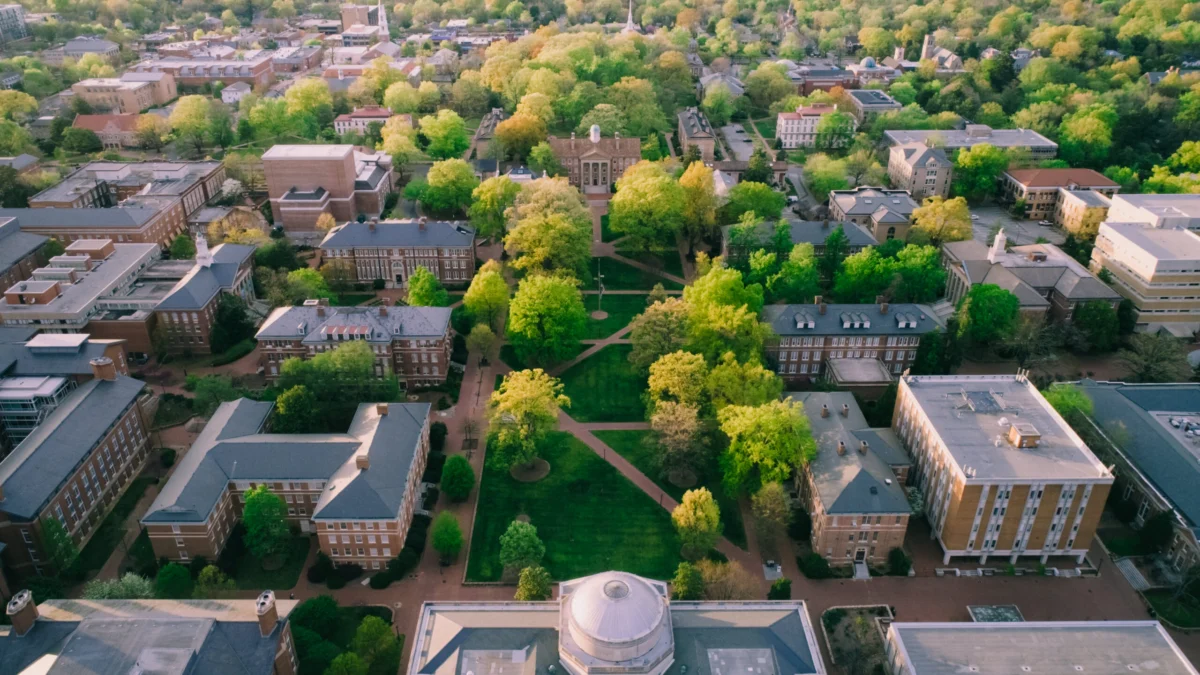
As the academic year commences across the United States, the student housing sector is experiencing a robust period of pre-leasing, outpacing figures from the previous year. This surge in demand, however, masks a growing divergence in market fundamentals, with some university and regional markets demonstrating exceptional strength while others contend with oversupply and declining interest. For real estate investors, this creates a complex yet potentially lucrative environment, demanding specialized knowledge and a granular approach to asset selection. The University of North Carolina-Chapel Hill, captured in an aerial view by Ryan Herron for Istock/Getty Images, serves as an emblematic institution within the thriving segment of this bifurcated market, where demand consistently outstrips available supply.
The national landscape, as meticulously tracked by Yardi Matrix, a leading provider of commercial real estate data and analysis, reveals an encouraging trend. Pre-leasing across the Yardi 200—a curated index encompassing 200 of the most significant student housing markets and representing approximately 90% of the institutional-grade space—reached an impressive 89.1% by July, in anticipation of the fall move-in period. This figure marks a discernible increase from 88.1% recorded in July of the preceding year (using the original article’s implied 2024 for the current year, and 2023 for "last year," with 2025 being a typo in the original for "last year’s August levels"), though it remains marginally below the August 2023 peak of 89.9%. A closer examination of Yardi’s data from July indicated that 117 out of the 200 surveyed markets were either at or had surpassed their pre-leasing levels from the prior year, underscoring a broad-based recovery and heightened demand in many areas.
The Widening Chasm: Market Disparities and Supply Concentration
Despite the positive national aggregates, a critical nuance emerges when dissecting the market at a finer level. Tyson Huebner, Director of Research at Yardi Matrix, highlighted this growing disparity in a recent report. "New supply is increasingly concentrated in large markets, dragging down performance at schools with the most beds and weighing more heavily on national metrics," Huebner noted. This concentration of new development, often driven by investor confidence in high-demand areas, inadvertently contributes to oversupply issues in certain locales while leaving other, equally robust markets undersupplied. The implication is clear: a national average, while indicative of overall health, can obscure significant variations in local market conditions, requiring investors to exercise heightened due diligence.
The uneven distribution of new construction has profound implications. In markets experiencing an influx of new beds, competition among property owners intensifies, potentially leading to slower lease-ups, concessions, and downward pressure on rental rates. Conversely, markets where development has lagged behind enrollment growth are characterized by high occupancy rates, competitive bidding for available units, and robust rental growth. This dichotomy underscores a fundamental shift in the student housing investment paradigm, moving away from a broad-stroke approach towards one demanding precision and deep market understanding.
Harrison Street’s Strategic Focus: Specialization as Key
One of the most prominent players navigating this intricate landscape is Harrison Street Asset Management. Since its inception in 2005, the firm has emerged as a titan in the alternative real estate investment space, allocating over $24 billion across 432 student housing properties. Its extensive portfolio encompasses more than 238,000 beds spread across 200 university markets in North America and Europe, providing the firm with an unparalleled vantage point on sector trends.
Mike Gordon, Global Chief Investment Officer for Real Estate at Harrison Street, articulated the firm’s nuanced perspective on the current market. "Our conviction in student housing is really high, but our conviction in every student housing market is not," Gordon stated, succinctly capturing the essence of the prevailing investment environment. He emphasized that this selective conviction creates "a really interesting investment environment," suggesting that while opportunities abound, they are not universally distributed. Gordon further elaborated on the increasing importance of specialization, particularly given the influx of new investors seeking exposure to the sector. He noted that while many are eager to enter the market, only a limited number of managers possess the requisite long-term experience and granular expertise to navigate its complexities effectively. This specialized knowledge is more critical than ever, as disparities between university markets have accelerated due to a confluence of factors including funding cuts, enrollment trends, and specific student demand patterns.
Driving Forces Behind Market Bifurcation
The widening performance gap between university markets is not accidental; it is driven by several interconnected factors. Enrollment trends represent a primary determinant. Leading institutions, often those with strong academic reputations, robust research capabilities, and a history of positive student outcomes, continue to attract an overwhelming number of applicants. Universities such as the University of Michigan, the University of Virginia (UVA), and the University of North Carolina-Chapel Hill—many belonging to the prestigious "Power Four" athletic conferences—are experiencing concentrated growth in applications and selectivity. Prospective students and their families increasingly prioritize factors like strong graduation rates, high alumni earnings, and cutting-edge research facilities, gravitating towards institutions that consistently deliver on these fronts.
Gordon highlighted that many of the university markets favored by Harrison Street are operating at or above 95% occupancy, a testament to sustained demand. This high occupancy is further exacerbated by a significant lag in housing supply relative to enrollment growth at these specific institutions. Universities like Virginia Tech, Auburn University, and Penn State were cited as prime examples where the expansion of student housing has not kept pace with the growing student population. This creates a supply-demand imbalance, driving up rental rates and making these markets particularly attractive for investors.
Conversely, less selective institutions, particularly regional public universities or community colleges, may face declining enrollment or slower growth rates, compounded by state funding cuts. These factors can diminish the perceived value proposition for prospective students, leading to reduced demand for housing in their vicinities. If these areas simultaneously experience an oversupply of purpose-built student housing, the market becomes saturated, leading to higher vacancy rates and reduced profitability for property owners.
The "Factory Town" Analogy: A Model for Sustainable Growth
Gordon eloquently described the most resilient university towns as akin to "factory towns where the factory is never closing." In this analogy, the university itself is the "factory," producing intellectual capital. This intellectual capital, in turn, attracts not only students but also professors, researchers, entrepreneurs, and companies eager to leverage proximity to such academic hubs. This ecosystem creates a self-sustaining demand for housing, not just for students but for a broader academic and professional community. The continuous cycle of innovation, learning, and economic activity ensures a stable and growing demand for real estate, making these markets inherently more stable and desirable for long-term investment.
This perspective aligns with broader economic development theories that emphasize the role of anchor institutions in fostering regional growth. Universities often serve as major employers, research centers, and cultural hubs, driving local economies and creating a resilient real estate market that transcends mere student populations.
Investment Strategies in a Segmented Market
Harrison Street’s investment strategy reflects this nuanced understanding of the market. The firm actively engages in both acquiring existing assets and developing new properties. A significant portion of its development activities occurs through public-private partnerships (PPPs) with state universities. These partnerships often involve the university leasing land to Harrison Street, which then finances, develops, and manages the student housing, providing a mutually beneficial arrangement that helps universities meet their housing needs without burdening their balance sheets.
The firm has also demonstrated a willingness to strategically divest assets in response to heightened demand and attractive market conditions. Earlier this year, Harrison Street executed one of the largest dispositions in the sector’s recent history, selling a 12-property student housing portfolio for an impressive $910 million. This significant transaction underscores the strong investor appetite for high-quality student housing assets, particularly those located in robust, undersupplied university markets. Such sales not only generate substantial returns for the firm’s investors but also serve as a market indicator of the sector’s perceived value and liquidity.
Beyond Harrison Street, the student housing sector continues to attract a diverse array of investors, including venture capitalists, private equity funds, family offices, institutional investors, and large public companies. The appeal lies in the sector’s counter-cyclical characteristics relative to other real estate asset classes, driven by consistent enrollment cycles and the essential need for housing. However, the current market dynamics necessitate a more sophisticated approach, moving beyond generic portfolio allocations to focused, university-specific strategies.
Beyond the Data: The Evolving Landscape of Higher Education
The student housing market does not exist in a vacuum; it is deeply intertwined with the broader trends shaping higher education. The post-pandemic era has seen a re-evaluation of the value of a college degree, with increasing scrutiny on tuition costs, student debt, and career outcomes. This has further amplified the appeal of institutions that can demonstrate clear returns on investment for their graduates.
Demographic shifts also play a crucial role. Declining birth rates in previous decades are beginning to impact the pool of traditional college-aged students, particularly in certain regions. While leading universities may offset this through increased international student enrollment or by attracting a larger share of a shrinking domestic pool, regional institutions might face sustained enrollment pressures. This long-term demographic headwind necessitates careful consideration for any long-term investment strategy in the student housing sector.
Moreover, the current macroeconomic environment, characterized by higher interest rates and persistent inflation, presents additional challenges for developers and investors. Increased borrowing costs can make new construction projects less financially viable, particularly in markets with tighter margins. Inflationary pressures on construction materials and labor costs further complicate development, potentially exacerbating the supply lag in high-demand markets.
Challenges and Opportunities for Developers and Investors
For developers, the bifurcated market demands meticulous site selection and rigorous financial modeling. Building in saturated markets carries significant risk, while securing prime locations near top-tier universities can be highly competitive and expensive. Opportunities may lie in underserved niches, such as graduate student housing, specialized international student accommodations, or purpose-built facilities catering to specific academic programs that attract a unique student demographic. The integration of sustainable design and advanced amenities, such as high-speed internet, collaborative study spaces, and wellness facilities, are also becoming increasingly important differentiators in a competitive market.
Investors, whether individuals or large institutional funds, must prioritize in-depth market research, focusing on specific university fundamentals rather than national averages. This includes analyzing enrollment trends, university financial health, local housing supply pipelines, and the socio-economic fabric of the surrounding community. Diversification within the student housing portfolio, balancing exposure to ultra-prime markets with carefully selected emerging opportunities, could be a prudent strategy. The expertise of specialized asset managers, like Harrison Street, becomes invaluable in navigating these complexities, offering access to proprietary data, established university relationships, and a proven track record of value creation.
Outlook: Navigating the Future of Student Housing
The student housing market is poised for continued growth, driven by the enduring value placed on higher education, particularly at leading institutions. However, its future will be defined by an increasingly segmented landscape. The national pre-leasing figures, while positive, serve as a broad brushstroke, with the real story unfolding in the micro-markets surrounding individual universities. The ability to identify and invest in institutions with robust enrollment, strong financial health, and a lagging supply of purpose-built housing will be paramount for sustained success. As Mike Gordon aptly noted, the current environment, with its clear delineation between thriving and struggling markets, creates "a really interesting investment environment" for those equipped with the foresight and specialization to capitalize on its intricate dynamics. The strategic deployment of capital, informed by deep market intelligence and a focus on long-term university fundamentals, will dictate leadership and profitability in this evolving real estate sector.
