

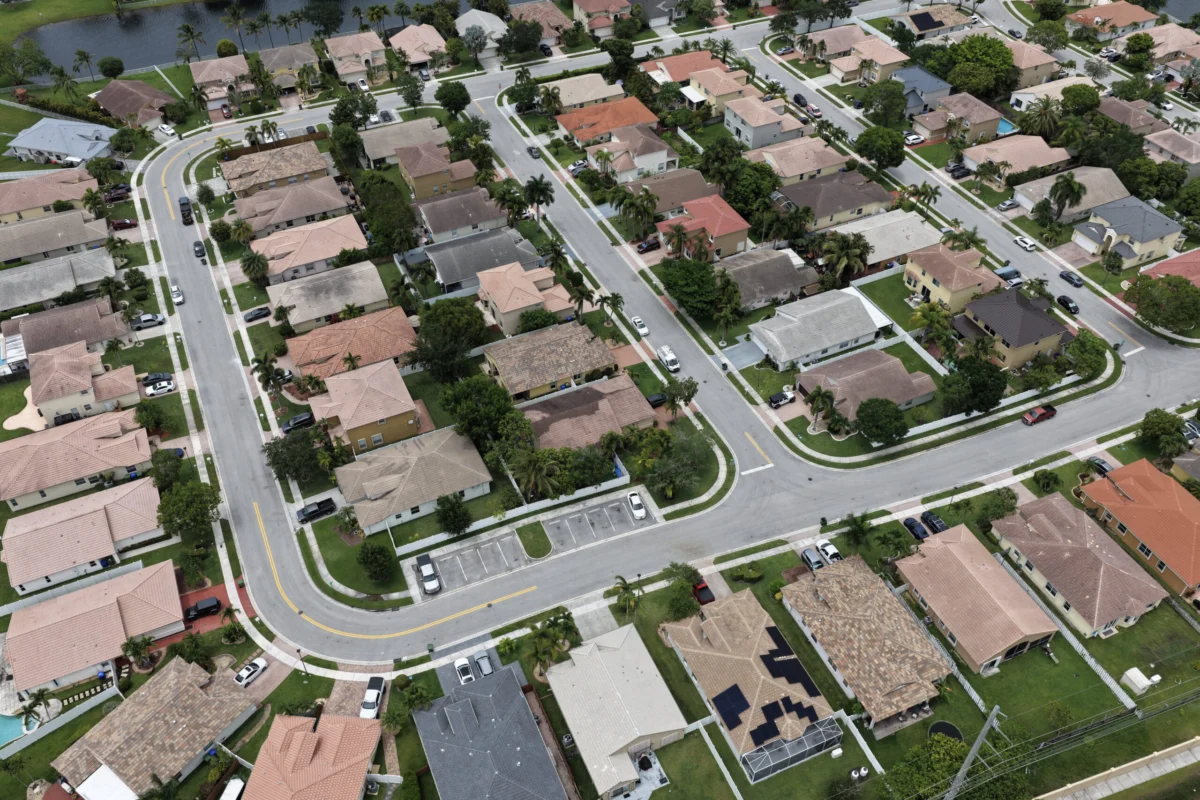
The residential housing market continues to grapple with escalating interest rates, which have reached their highest levels in several weeks, effectively anchoring demand for new home loans. This persistent upward trajectory in borrowing costs is simultaneously compelling a growing segment of prospective homeowners to consider riskier loan products in pursuit of more affordable monthly payments. According to the latest data from the Mortgage Bankers Association (MBA), overall mortgage application volume registered a marginal increase of just 0.8% last week compared to the preceding period, underscoring the constrained nature of current market activity.
The Economic Undercurrents Driving Rate Hikes
The primary drivers behind the sustained climb in mortgage rates are deeply rooted in broader macroeconomic concerns, specifically persistent inflation and the expanding national deficit. Mike Fratantoni, Senior Vice President and Chief Economist at the MBA, noted in a recent release that "Mortgage rates reached their highest levels in four weeks as investors’ concerns about inflation and growing deficits push yields higher across the globe." This statement highlights the intricate relationship between global financial markets, government fiscal policy, and the cost of consumer borrowing.
Inflationary pressures, which have proven more stubborn than initially anticipated by central banks, force bond investors to demand higher yields to compensate for the erosion of their investment’s purchasing power over time. The Federal Reserve, in its ongoing efforts to tame inflation, has signaled a commitment to maintaining a restrictive monetary policy stance, even if it means keeping interest rates elevated for a longer duration. While the Fed directly influences the federal funds rate, this rate indirectly impacts longer-term rates like mortgages through its influence on the 10-year Treasury yield, a key benchmark for fixed-rate mortgages. When investors perceive that inflation will remain elevated, they sell existing bonds with lower yields, pushing bond prices down and new bond yields up.
Concurrently, the burgeoning national deficit, fueled by increased government spending and potentially lower tax revenues, necessitates greater government borrowing. This increased supply of government bonds can also contribute to higher yields as the market demands a premium for absorbing larger quantities of debt. Both domestic and international investors weigh these factors, and their collective sentiment is reflected in the bond market, ultimately dictating the cost of capital for lenders and, subsequently, the rates offered to mortgage applicants.
Snapshot of Current Mortgage Rates
Last week saw the average contract interest rate for 30-year fixed-rate mortgages with conforming loan balances—those at or below $832,750—climb to 6.79%. This represents a slight but significant increase from 6.78% the previous week. Accompanying this rise, points, which represent an upfront fee paid to the lender to secure a particular interest rate, saw a minor decrease to 0.65 from 0.66, including the origination fee, for loans with a 20% down payment. While a seemingly small shift, even fractional increases in interest rates can translate into substantial differences in monthly payments and overall borrowing costs over the lifespan of a 30-year mortgage, severely impacting affordability for potential buyers.
This current rate of 6.79% marks a critical point, placing it among the highest levels observed in recent memory, and according to Mortgage News Daily, rates have continued to move up further this week, reaching the highest level since June 2025. This chronological context underscores a prolonged period of elevated borrowing costs, moving further away from the historically low rates witnessed during the peak of the pandemic housing boom.
Divergent Trends in Application Volume
Despite the overarching sluggishness in total application volume, a closer examination reveals nuanced trends within the purchase and refinance segments. Applications for a mortgage to purchase a home managed to eke out a modest gain, rising 2% for the week. However, this marginal weekly increase does little to offset the broader year-over-year decline, with purchase applications still 0.2% lower than the same week one year ago. This comparison is particularly telling, given that rates were approximately 15 basis points (0.15 percentage points) lower last year, indicating that even with a slight increase in recent activity, the underlying demand for home purchases remains sensitive to the higher cost of borrowing.
In many local markets across the nation, an emerging trend of increased housing inventory is beginning to provide potential buyers with more choices. Fratantoni elaborated on this, stating, "In many local markets, potential buyers have plenty of homes to choose, and this is likely supporting transaction volume." While this might appear to be a positive development, offering buyers more leverage, it simultaneously signals a cooling market where homes might sit longer and price reductions become more common, shifting power away from sellers who enjoyed unprecedented demand in recent years.
Conversely, applications to refinance an existing home loan experienced a further decline, dropping 1% for the week. More strikingly, refinance activity was a substantial 19% lower than the same week one year ago. This sharp reduction is entirely logical in the current rate environment. With mortgage rates hovering at multi-year highs, the vast majority of existing homeowners have loans secured at significantly lower rates. Consequently, there is very little incentive for them to refinance, unless they are in urgent need of tapping into their home equity through a cash-out refinance, or perhaps to consolidate other debts. The refinance market, which was a robust engine of mortgage activity during periods of declining rates, has largely evaporated.
The Growing Appeal and Inherent Risks of Adjustable-Rate Mortgages (ARMs)
One of the most significant shifts in borrower behavior highlighted by the MBA’s data is the increasing adoption of adjustable-rate mortgages (ARMs). The ARM share of total applications has climbed back to 8% last week, marking its highest level in five weeks. This resurgence indicates that as fixed rates remain stubbornly high, more borrowers are willing to take on the inherent risks of ARMs in exchange for a lower initial interest rate.
ARMs, unlike their fixed-rate counterparts, feature an interest rate that can change after an initial fixed period. Many popular ARM products, such as the 5/1 ARM, offer a fixed interest rate for the first five years, after which the rate adjusts annually based on a predetermined index plus a margin. The average contract interest rate for 5/1 ARMs last week fell to 5.94%, presenting a noticeable discount compared to the 6.79% for a 30-year fixed-rate mortgage. This spread of over 80 basis points can translate into hundreds of dollars in monthly savings during the initial fixed period, making ARMs an attractive option for buyers who are stretched financially or who anticipate moving or refinancing before the adjustment period begins.
However, the allure of a lower initial rate comes with significant future uncertainty. While ARMs can be fixed for periods ranging from 3 to 10 years, the fundamental fact remains that the rate will adjust to whatever the prevailing market rate is in the future, plus the lender’s margin. This exposes borrowers to the risk of substantially higher monthly payments if interest rates rise significantly during the adjustment period. For example, a borrower who secures a 5/1 ARM at 5.94% today could see their rate jump to 8% or even higher in five years if market conditions dictate, leading to payment shock. This risk is particularly salient in a volatile interest rate environment, where economic forecasts are subject to rapid change. Lenders typically include caps on how much the rate can adjust in a given period and over the life of the loan, but even with these protections, the potential for increased payments can be a substantial burden.
Historical Context and Broader Implications
To truly appreciate the current market dynamics, it is crucial to place current mortgage rates in historical context. While rates around 6.79% may seem high to those who entered the market in the last decade, they are still well below the double-digit rates seen in the late 1970s and early 1980s, when 30-year fixed rates soared above 18%. However, they represent a dramatic shift from the sub-3% rates that characterized much of 2020 and 2021, which fueled an unprecedented boom in home sales and price appreciation.
The current environment represents a stark recalibration for both buyers and sellers. For potential homebuyers, the combination of elevated home prices—which, despite some cooling, remain historically high in many regions—and rising interest rates has severely eroded affordability. Many first-time buyers find themselves priced out of the market entirely, while others must significantly compromise on location, size, or amenities to meet their budget. This contributes to longer rental periods for many households, exacerbating the rental market’s own affordability challenges.
For sellers, the market has transitioned from one dominated by bidding wars and quick sales to one requiring more strategic pricing and patience. While there may be "plenty of homes to choose" in some areas, this increased inventory suggests that demand has not kept pace with supply, leading to longer marketing times and potentially necessitating price adjustments to attract buyers struggling with higher mortgage payments. Homeowners who purchased or refinanced during the low-rate era are also less likely to sell, as doing so would mean relinquishing their historically low mortgage rate for a much higher one on a new property, further contributing to a ‘lock-in’ effect and limiting desirable inventory.
Lender Strategies and Future Outlook
Lenders are adapting to this evolving landscape by diversifying their product offerings and focusing on borrower qualification. While the refinance market is largely dormant, there’s an increased emphasis on government-backed loans (FHA, VA) which often feature more flexible qualification criteria and lower down payments, as well as the aforementioned ARMs. Strict underwriting standards remain crucial to mitigate risks, particularly with the uptick in ARM usage.
Looking ahead, the trajectory of mortgage rates will largely hinge on the Federal Reserve’s actions regarding inflation, the performance of the broader economy, and global financial stability. Should inflation show clear and sustained signs of decelerating towards the Fed’s target of 2%, there could be scope for future rate cuts, which would bring down mortgage rates. However, if inflation proves persistent or if unexpected economic shocks occur, rates could remain elevated or even climb further.
The housing market, a critical component of the national economy, will continue to be a key indicator. A prolonged period of high rates and stagnant demand risks dampening new construction, impacting ancillary industries like home improvement and furniture, and potentially slowing overall economic growth. Experts like Mike Fratantoni and others at the MBA will continue to monitor these trends closely, providing vital insights into the ever-shifting landscape of homeownership and mortgage finance. The current environment underscores a market in flux, where adaptation and strategic decision-making are paramount for all participants.
