

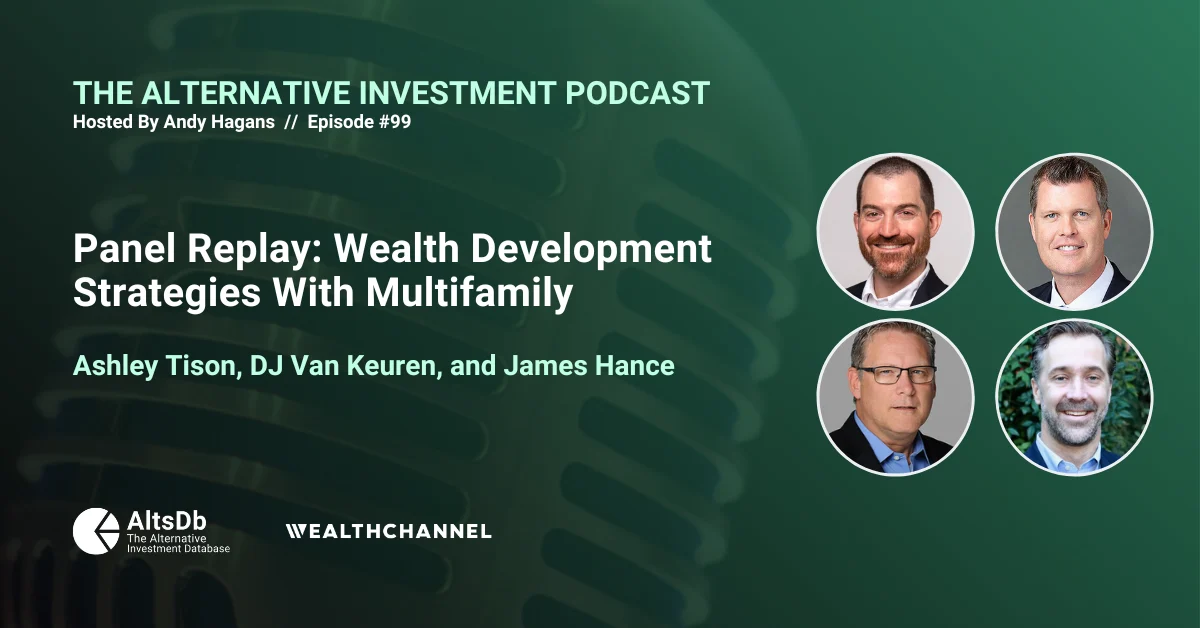
The Multifamily Investor Expo 2023, held at a pivotal time in the real estate and investment landscape, convened a distinguished panel of experts to dissect the multifaceted strategies for wealth development through multifamily real estate. Moderated by Andy Hagans of AltsDb and WealthChannel, the session featured insights from Ashley Tison, founder and CEO of OZPros; DJ Van Keuren, co-managing member at Evergreen Property Partners and founder of the Family Office Real Estate Institute; and James Hance, founder at Green Bison Capital. The discussion, available in its entirety on YouTube, delved into the enduring appeal and strategic advantages of multifamily investments, particularly for high-net-worth individuals and family offices seeking to build and preserve generational wealth.
The Enduring Appeal of Multifamily Real Estate
The foundational question posed to the panel was why multifamily real estate continues to be a cornerstone for wealth development. James Hance articulated the intrinsic value proposition, emphasizing the fundamental human need for shelter. "People always need a place to live," Hance stated, highlighting the stability offered by a diversified tenant base in multifamily properties, which mitigates the risk associated with single-family investments. He further underscored the income-generating potential, the ability to force appreciation through effective management, and the significant tax advantages, particularly depreciation, available to direct investors. This intrinsic stability and income potential, coupled with the capacity for operational improvements, positions multifamily as a robust asset class.
DJ Van Keuren corroborated Hance’s points, drawing from extensive research conducted by the Family Office Real Estate Institute. "Multifamily has continued to be the main property type for families to invest into," Van Keuren noted, pointing to the sector’s resilience, especially in the face of economic shifts. He elaborated on how rising housing costs and student loan burdens have amplified the demand for rental properties. This surge in demand, driven by demographic shifts and affordability challenges in homeownership, particularly in high-growth metropolitan areas, makes multifamily a critical component of the housing market. The inherent diversification of income streams within a single property, compared to the vulnerability of a vacant office building, further solidifies its appeal to sophisticated investors.
Ashley Tison added a unique perspective, emphasizing the scalability and efficiency of multifamily investments. He described how condensing a large number of residents into a concentrated area not only meets housing needs but also contributes to more sustainable urban development by reducing sprawl and infrastructure demands. This efficiency, Tison argued, translates to more manageable operational costs and a higher return on investment. His insights also touched upon related asset classes like mobile home parks and RV parks, which share similar principles of scale and concentrated management, aligning with the broader multifamily investment thesis.
Navigating Tax Advantages for Wealth Preservation
A significant portion of the discussion revolved around the tax advantages associated with multifamily investments, a critical factor for high-net-worth investors aiming to maximize their net returns. Ashley Tison, an expert in Opportunity Zones (OZ), detailed how this program offers a powerful wrapper for real estate investments. The OZ initiative allows investors to defer capital gains taxes from prior investments, eliminate those gains entirely if the new investment is held for ten years, and crucially, avoid depreciation recapture. Tison highlighted that layering OZ benefits onto multifamily projects can enhance Internal Rate of Returns (IRRs) by an estimated 3%, a substantial boost in an environment where cap rates have historically been compressed. He illustrated this with an example of a deal that might offer a 3% cap rate without the OZ benefit, potentially becoming a 6% cap rate equivalent with its inclusion, a scenario he described as "real estate investing nirvana."
DJ Van Keuren emphasized the widespread underutilization of the 1031 exchange, a strategy allowing investors to defer capital gains taxes by reinvesting proceeds from the sale of one investment property into another "like-kind" property. He noted that a significant percentage of families surveyed by his institute do not leverage this powerful tool, often due to a lack of education. Van Keuren stressed that 1031 exchanges are instrumental in compounding gains over time, enabling investors to continuously grow their portfolios tax-deferred. Beyond OZs and 1031s, he also mentioned other tax-advantaged avenues such as Low-Income Housing Tax Credits (LIHTC) and New Markets Tax Credits (NMTC), and even emergent opportunities like carbon credits, underscoring the diverse toolkit available for tax-efficient investing.
James Hance shared practical insights from Green Bison Capital’s experience, noting that approximately 20% of the capital they have raised in the past two years has originated from 1031 exchanges. He explained that the benefits of 1031 exchanges can be accessed even through syndication structures, allowing investors to transition from active property management to passive investing while deferring taxes. This shift can significantly enhance an investor’s return on time and capital, especially when investing in cash-flowing assets. Hance also touched upon the potential for Disqualified Person (DP) issues in certain investment structures and how carefully structured syndications can mitigate these concerns for certain investors.
The conversation then shifted to the current market environment of 2023, characterized by higher interest rates. Andy Hagans posed a critical question: is this an opportune moment to invest, or should investors hold cash? James Hance acknowledged that the era of cap rate compression is likely over, emphasizing the need for investors to be exceptionally diligent in vetting sponsors. He suggested that this environment will present opportunities, particularly with distressed properties resulting from debt challenges. Hance noted that some operators who may have relied on short-term interest rate caps are now facing refinancing hurdles, creating potential for well-capitalized investors to acquire assets at more attractive valuations.
DJ Van Keuren echoed this sentiment, indicating that family offices, having learned from past market cycles, are actively positioning themselves with "dry powder" to capitalize on emerging opportunities. Unlike the previous recession or the COVID-19 period, when many waited for the market to rebound, families are now more proactive in seeking out undervalued assets. He cautioned that while opportunities abound, a fundamental analysis of market fundamentals—cost of living, quality of life, and demand drivers—remains paramount. Van Keuren stressed the importance of stress-testing investments against adverse scenarios, such as increased vacancy rates or higher interest rates, to ensure viability. He also highlighted a critical shift: the expectation of sustained low interest rates and cap rate compression is no longer realistic, necessitating a more conservative underwriting approach.

Ashley Tison offered an optimistic yet pragmatic view, acknowledging the inherent risks but emphasizing the opportunities for those who conduct thorough due diligence. He pointed out that investors utilizing Opportunity Zone funds often have a built-in urgency to deploy capital due to program timelines, making them more inclined to invest in the current environment. Furthermore, Tison suggested that Opportunity Zones often target areas with projected growth, meaning that even if market conditions soften, there may still be inherent value-add potential within these investments.
Lessons from Family Offices for Generational Wealth
A significant segment of the discussion was dedicated to extracting wisdom from the practices of family offices managing generational wealth. DJ Van Keuren, through his work with the Family Office Real Estate Institute, identified patience and sound decision-making as paramount. He observed that while real estate fundamentals remain consistent regardless of investment size, successful family offices exhibit a long-term perspective. This patience, he argued, is facilitated by the illiquid nature of real estate, which discourages impulsive decisions. Van Keuren stressed the importance of building trust-based relationships with sponsors and conducting rigorous due diligence, including stress-testing investment theses against various market downturns. He also highlighted the power of referrals and networking within the family office ecosystem.
Andy Hagans prompted a discussion on humility, particularly for high-net-worth individuals who have achieved success in other fields. He noted that expertise in one area, such as business ownership or technology, does not automatically translate to real estate acumen. The most effective leaders, Hagans observed, are those who recognize this and strategically surround themselves with talented professionals, like the panelists, and partner with experienced operators who have navigated multiple market cycles. This collaborative approach, he contended, is the true hallmark of smart investing.
Ashley Tison elaborated on this, introducing the concept of "family core values" and "family constitutions." He explained that just as businesses define their mission and values, families seeking to preserve wealth for future generations must intentionally articulate their guiding principles. This proactive approach, Tison suggested, provides a framework for decision-making and can guide trustees in the responsible disbursement of assets, preventing common pitfalls such as impulsive spending or poor investment choices by heirs. He underscored the necessity of educating younger generations on wealth management and fostering strong relationships with trusted advisors.
DJ Van Keuren concurred, emphasizing that the wealth creation process often involves structured planning and objectives, a discipline that can be forgotten when managing inherited wealth. He likened the situation to lottery winners who may lack the foundational understanding of wealth preservation, leading to the rapid dissipation of fortunes. Van Keuren advocated for continuous education and intentional planning, urging individuals to involve younger family members in discussions about wealth management to instill these principles early on.
Current Market Dynamics: Ground Up vs. Value Add
In a rapid-fire closing round, the panelists addressed the question of whether ground-up development or value-add strategies offer a better outlook in the current environment. James Hance favored value-add, citing his personal preference for lower-risk opportunities and a desire to avoid the longer timelines and complexities associated with ground-up projects, especially in an uncertain economic climate.
Ashley Tison, however, leaned towards ground-up development, particularly within the context of Opportunity Zones. He explained that the substantial improvement threshold required for OZ benefits often necessitates new construction or extensive redevelopment, making ground-up projects a more frequent and logical choice within his specialized area.
DJ Van Keuren offered a nuanced perspective, stating that the optimal strategy depends heavily on the specific property type and market. He acknowledged that while value-add can be attractive for stalled projects or underperforming assets, ground-up development may be essential in sectors with significant supply-demand imbalances, such as cold storage facilities. Ultimately, he reiterated the importance of thorough underwriting and assessing whether the projected returns adequately compensate for the associated risks, regardless of the investment strategy.
The panel concluded with a strong emphasis on the importance of expert guidance and strategic partnerships. The experts stressed that while multifamily real estate presents compelling opportunities for wealth development, navigating its complexities, especially in the current economic climate, requires informed decision-making, a long-term perspective, and collaboration with seasoned professionals. The discussions at the Multifamily Investor Expo 2023 underscored that disciplined investing, coupled with a strategic approach to tax optimization and generational wealth planning, remains the most effective path to sustained financial success.
