

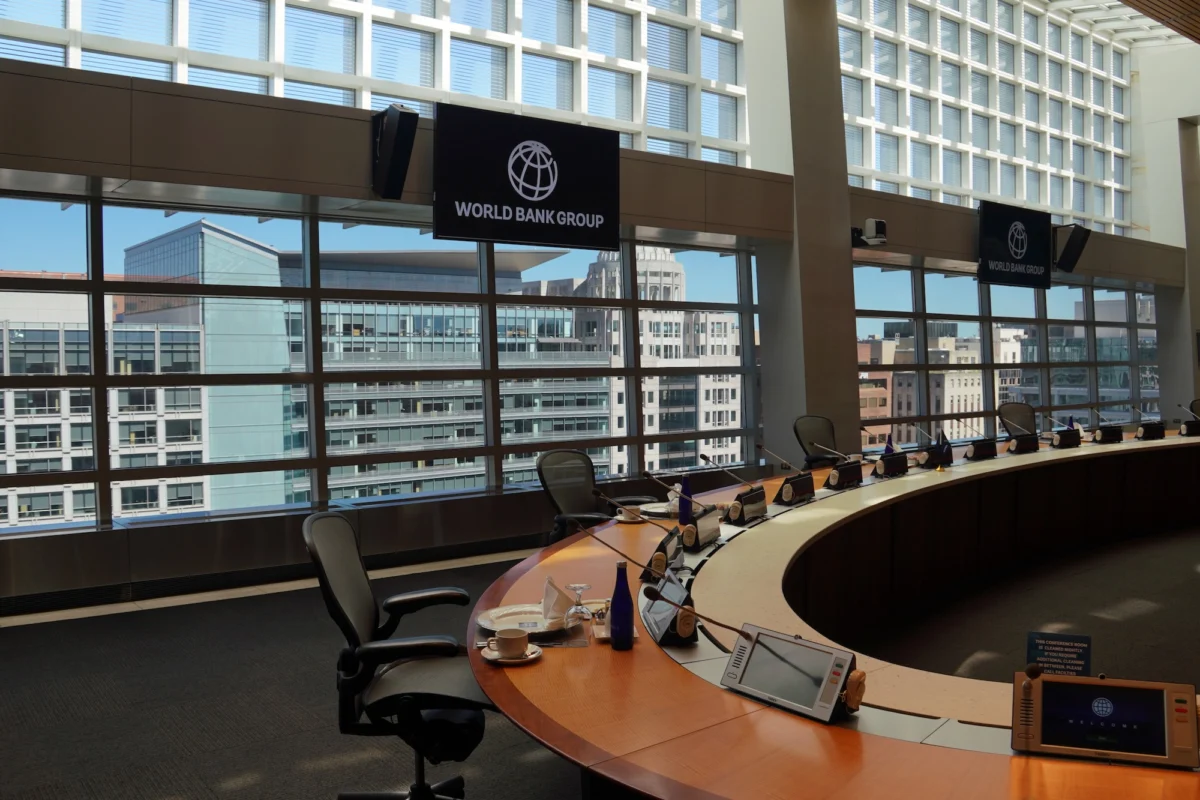
The World Bank Group’s Board of Executive Directors has taken the unprecedented step of overruling its own independent watchdog, the Office of the Compliance Advisor Ombudsman (CAO), following an investigation into predatory microfinance practices in Cambodia. This decision has sparked a governance crisis within the international financial institution, leading to the high-profile resignation of the CAO’s Director General and drawing condemnation from over 100 civil society organizations worldwide. The move signals a potential shift in the bank’s priorities, placing operational efficiency and "speed of delivery" above the rigorous accountability frameworks designed to protect vulnerable communities from the unintended harms of development finance.
Independent accountability mechanisms (IAMs), such as the CAO, serve as the primary recourse for individuals and communities who suffer environmental or social damage resulting from projects funded by development finance institutions (DFIs). These mechanisms address a wide spectrum of grievances, ranging from land dispossession and ecological destruction to gender-based violence and labor rights violations. Under standard operating procedures, when an IAM identifies non-compliance with institutional policies, the board is expected to approve an action plan that addresses the findings and provides a remedy for the affected parties. However, the recent intervention by the World Bank Board regarding the International Finance Corporation’s (IFC) investments in Cambodia has fundamentally disrupted this established process.
The Cambodian Microfinance Investigation and Findings
The controversy stems from a 2022 complaint filed on behalf of Cambodian communities against the IFC, the private sector arm of the World Bank Group. The complaint alleged that the IFC’s investments in six major microfinance institutions (MFIs) in Cambodia—Acleda, Prasac, Amret, CPBank, Hattha, and LOLC—facilitated a climate of predatory lending. A subsequent investigation by the CAO, finalized in late 2023 and published in early 2024, found that the IFC had indeed violated its own environmental and social sustainability frameworks.
The CAO’s investigation report detailed harrowing consequences for borrowers. It documented how aggressive debt collection and over-indebtedness led to widespread land loss, as borrowers were forced to sell their primary residences or ancestral lands to repay loans. The report also highlighted links between these financial pressures and increased rates of hunger, child labor, and mental health crises, including elevated risks of suicide. Furthermore, the CAO noted instances of retaliation and threats against those who attempted to speak out against the lending practices. Despite these documented harms, the World Bank Board took the extraordinary step of invalidating the CAO’s findings, arguing that the IFC’s sustainability framework did not apply to microfinance in the manner the ombudsman suggested.
Chronology of the Accountability Crisis
The timeline of the current dispute reflects a worsening rift between the World Bank’s executive leadership and its internal oversight bodies:
- May 2022: A formal complaint is filed with the CAO by Cambodian NGOs on behalf of affected borrowers, alleging systemic abuses in the IFC-funded microfinance sector.
- 2023 – Early 2024: The CAO conducts a field-based investigation, interviewing hundreds of stakeholders and reviewing internal IFC documents.
- October 2024: The CAO submits its final investigation report to the Board, confirming that the IFC failed to conduct adequate due diligence and ignored clear red flags regarding the Cambodian microfinance market.
- June 2025: In a landmark decision, the World Bank Board of Directors rejects the CAO’s findings. Instead of adopting the recommended remedial measures, the Board allows the IFC to develop its own "special" action plan, which critics argue lacks transparency and fails to provide direct compensation to harmed families.
- July 2025: Janine Feretti, the Director General of the CAO, tenders her resignation. In her departure, she emphasizes the importance of the office’s independence and the dangerous precedent set by the Board’s interference.
- August 2025: A coalition of 100+ civil society organizations, including Human Rights Watch and Accountability Counsel, issues a joint statement calling for the Board to reverse its decision and restore the CAO’s mandate.
The Tension Between Efficiency and Accountability
The Board’s decision to bypass the CAO is not an isolated incident but part of a broader "Evolution Roadmap" initiated by the World Bank three years ago. Under pressure from major shareholders to address global challenges like climate change and pandemics more rapidly, the bank has committed to becoming a "bigger and better bank" with a focus on "impact, speed, and efficiency."
However, international law experts and human rights advocates argue that this drive for efficiency is being used as a pretext to dismantle accountability. The bank has increasingly viewed the time-consuming process of investigating community complaints as a hurdle to rapid capital deployment. The Cambodia case serves as a litmus test for whether the bank is willing to sacrifice the "S" (Social) in its ESG (Environmental, Social, and Governance) commitments to maintain high lending volumes in the microfinance sector. The IFC remains one of the world’s largest funders of microfinance, with a global portfolio reaching into the billions. Critics suggest the Board feared that upholding the CAO’s findings would open the floodgates for similar complaints in other regions, potentially destabilizing the IFC’s financial intermediaries model.
Supporting Data: The Scope of the Microfinance Impact
The scale of the issue in Cambodia is significant. Research by local human rights groups, such as LICADHO and Sahmakum Teang Tnaut (STT), provides context to the CAO’s findings:

- Debt Per Capita: Cambodia has one of the highest microfinance debt-per-capita rates in the world, with average loan sizes often exceeding the annual income of rural households.
- Land Titles as Collateral: Unlike in many other countries, Cambodian MFIs almost universally require land titles as collateral for small loans, a practice that the CAO found contributed directly to landlessness when loans defaulted.
- IFC Exposure: At the time of the complaint, the IFC had over $400 million in active investments and syndicated loans tied to the Cambodian microfinance sector.
The CAO’s report suggested that the IFC was aware of the overheating market as early as 2017 but continued to increase its exposure, prioritizing the growth of the financial sector over the protection of individual consumers.
Broader Policy Implications: Mutual Reliance and Project Waivers
The erosion of accountability extends beyond the microfinance sector. In early 2026, the World Bank approved a series of "Full Mutual Reliance Frameworks" with other multilateral lenders. While these agreements are intended to streamline co-financed projects by using a single set of social and environmental standards, they effectively limit the ability of harmed communities to choose the strongest accountability mechanism. If a project is co-funded by the World Bank and a regional lender with weaker oversight, communities may be barred from accessing the World Bank’s more robust grievance channels.
A recent example of this trend is the hydroelectric power project in Bhutan. In this instance, the World Bank Board approved specific waivers that stripped affected communities of their right to access the CAO. The bank characterized this as a "One World Bank" approach to maximize efficiency, but local advocates viewed it as a pre-emptive strike against potential environmental litigation.
Official Responses and Global Reaction
In a statement following the CAO report rejection, the IFC Board maintained that it remains committed to financial inclusion but argued that the CAO had exceeded its jurisdiction by applying "retrospective standards" to microfinance. The Board stated that its "special" action plan for Cambodia focuses on systemic improvements to the regulatory environment rather than individual remedies, which it deems "impractical."
The reaction from the international community has been sharp. Civil society groups argue that if the World Bank can unilaterally invalidate the findings of its independent watchdog, the watchdog ceases to be independent. "This is a crisis of legitimacy," said a spokesperson for a legal nonprofit representing the Cambodian complainants. "Without a functioning, independent accountability mechanism, the World Bank loses its moral and legal standing to claim immunity from local courts."
Restoring Trust in the "No Regression" Principle
As the World Bank moves toward integrating the CAO with other public-sector accountability mechanisms, it has pledged a principle of "no regression"—promising that community protections will not be weakened during the merger. However, the current recruitment process for the head of the new integrated mechanism has raised concerns. Unlike previous searches, the current process excludes civil society representatives from the selection committee and allows current World Bank staff to apply, a move that critics say could lead to "institutional capture."
To restore its reputation, policy experts suggest the World Bank must take several critical steps:
- Eliminate Carve-outs: Ensure that no sector, including microfinance or "too big to fail" financial intermediaries, is exempt from CAO oversight.
- Explicit Remedy Mandate: Update policies to ensure that when harm is found, the institution is obligated to provide a direct remedy to victims, rather than just "learning lessons" for future projects.
- Respect Investigative Independence: Reaffirm that the Board will not overrule factual findings of the CAO, limiting its role to the approval and monitoring of remedy plans.
The outcome of the Cambodia case will likely determine the future of development finance accountability. If the World Bank continues to prioritize administrative speed over the rights of the people it intends to help, it risks undermining the very development goals it was created to achieve. Effective development, as the CAO’s resignation highlights, is impossible without the humility to listen to and compensate those harmed by progress.
