


United States Representative Chellie Pingree (D-Maine), a longtime organic farmer and a senior member of the House Agriculture Committee, has formally called upon the United States Department of Agriculture (USDA) to accelerate its response to the escalating threats posed by climate-driven diseases and pests. The congresswoman’s demand follows the release of a comprehensive report from the Government Accountability Office (GAO), which found that the USDA has been slow to address the increasing risks these biological threats pose to the nation’s farms and forests. The report, titled "Agricultural Diseases and Pests: Nationwide Assessment and Strategy Needed to Enhance the Climate Resilience of Farms and Forests," underscores a significant gap between the rising frequency of pest outbreaks and the federal government’s strategic preparation.
Representative Pingree’s advocacy comes at a critical juncture for American agriculture. As temperatures rise and weather patterns become increasingly volatile, traditional pest management strategies are failing to keep pace with the rapid migration and extended lifecycles of invasive species. In a letter addressed to USDA Secretary Rollins, Pingree emphasized that the USDA serves as the "first line of defense" for the nation’s producers and that any delay in implementing the GAO’s recommendations could have catastrophic economic and environmental consequences.
The GAO Findings: A Lack of Strategic Oversight
The GAO report is the result of an extensive investigation into how federal agencies are managing the intersection of climate change and agricultural health. The findings were stark: despite the clear evidence that climate change is exacerbating the spread of pests and diseases, the USDA has taken "few actions" to specifically enhance the climate resilience of farms and forests in this regard. The report noted that while the USDA manages various programs related to pest control and animal health, it lacks a unified, nationwide assessment of climate-related risks.
According to the GAO, the absence of a comprehensive strategy has led to fragmented efforts. Funding and staffing for critical climate-focused programs have, in some instances, been reduced rather than bolstered. This decline in capacity occurs even as the geographical range of destructive insects expands. The GAO identified four central areas requiring immediate federal attention: the coordination of monitoring and surveillance, the integration of climate data into predictive modeling, the expansion of technical assistance to producers, and the development of modernized management strategies that account for a changing environment.
The Economic Consequences of Inaction
The financial implications of pest and disease outbreaks are staggering. The GAO report highlights that between 1960 and 2020, invasive species—including various agricultural pests and forest diseases—cost the United States economy at least $550 billion. These costs manifest through direct crop loss, decreased timber yields, and the massive expenditures required for eradication and control efforts.
Looking forward, the economic burden is projected to grow. A 2024 fiscal analysis cited by Representative Pingree suggests that shifting climate conditions could drive up federal crop insurance costs by an additional $300 million to $2.2 billion annually. These figures represent a significant risk to taxpayers, as the federal government subsidizes a large portion of the premiums and administrative costs of the Federal Crop Insurance Corporation (FCIC). When pests destroy crops on a large scale, the resulting insurance payouts and disaster assistance programs put immense pressure on the national budget.
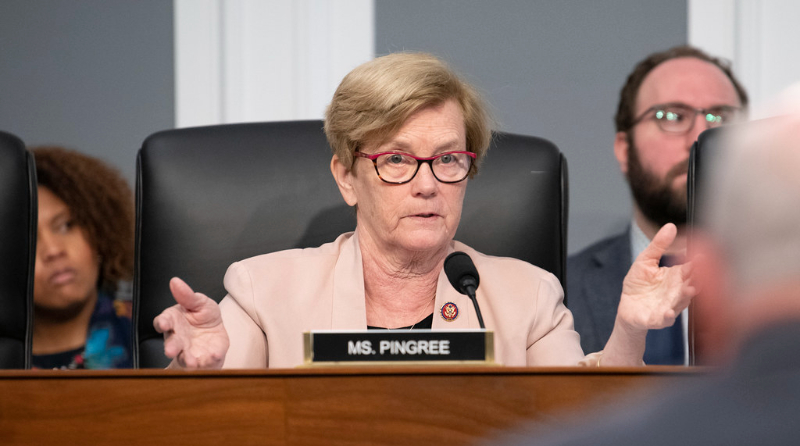
Pingree argued in her letter that ignoring these projections is "fiscally irresponsible." By failing to invest in resilience and early warning systems now, the USDA may be committing the government to much higher reactive spending in the future. The GAO’s roadmap is presented not just as an environmental necessity, but as a strategy for long-term fiscal solvency in the agricultural sector.
The Role and Erosion of USDA Climate Hubs
Central to the debate over the USDA’s climate strategy is the status of the USDA Climate Hubs. Established in 2014, these hubs were designed to be a collaborative network linking USDA research, program agencies, and regional stakeholders. Their primary mission is to deliver science-based tools and practical information to agricultural producers and forest professionals to help them adapt to climate variability.
However, Representative Pingree and the GAO report indicate that these hubs are currently under-resourced. The congresswoman pointed out that the expertise needed to confront emerging biological threats is being "shed" at the very moment it is most needed. Furthermore, there is significant political tension regarding the future of these entities. In the proposed fiscal year 2027 Agriculture Appropriations Bill, there have been moves to eliminate or severely restrict funding for the Climate Hubs.
Representative Pingree characterized these proposed cuts as "dangerously shortsighted." From a journalistic perspective, the Climate Hubs represent one of the few institutional structures specifically designed to bridge the gap between high-level climate science and on-the-ground farming practices. Their degradation suggests a shift away from proactive climate adaptation at the federal level, a move that Pingree warns will leave farmers and foresters to "shoulder the burden alone."
Regional Impacts: The Case of Maine’s Forests and Farms
The urgency of Pingree’s letter is rooted in the tangible changes occurring in her home state of Maine. As a state whose economy is deeply tied to both the timber industry and specialized agriculture, Maine serves as a bellwether for climate-driven shifts.
One of the most prominent examples cited is the northern migration of the southern pine beetle. Historically confined to warmer southern climates, this wood-boring insect has begun to expand its range into New England forests as winter temperatures fail to reach the sustained lows required to kill off larvae. The resulting tree mortality not only damages the timber economy but also increases the fuel load in forests, making them more susceptible to catastrophic wildfires.
Maine’s farmers are also facing unprecedented challenges. The "traditional boundaries" of pest activity have blurred; outbreaks are beginning earlier in the spring and persisting later into the autumn. This has forced many small-scale and organic producers to make significant capital investments that were previously unnecessary. Pingree noted that farmers in her state are spending thousands of dollars on high tunnels and specialized netting to protect crops from insects that were not a major threat a decade ago. These adaptations, while necessary, increase the cost of food production and reduce the profit margins of local agricultural businesses.

A Roadmap for Resilience: The Four Pillars of Reform
The GAO report does not merely criticize current failings; it provides a specific "roadmap" for the USDA to follow. Representative Pingree’s letter demands the swift implementation of these four pillars:
- Enhanced Monitoring and Surveillance: The GAO calls for a more coordinated system to track the movement of pests and the emergence of diseases. This includes better data sharing between state agencies, federal departments, and private land managers to ensure that an outbreak in one region can be predicted and mitigated in adjacent areas.
- Climate-Informed Modeling: Current predictive models often rely on historical data that may no longer be accurate in a warming world. The GAO recommends that the USDA incorporate advanced climate projection data into its pest risk assessments to better anticipate where and when new threats will emerge.
- Education and Outreach: There is a critical need to expand technical assistance. Many farmers are aware that conditions are changing but lack the specific scientific guidance needed to adapt their specific crops or soil management practices. The GAO emphasizes that the USDA must play a more active role in disseminating this information.
- Modernized Management Strategies: The report suggests that the USDA must lead the development of new management techniques. This includes researching pest-resistant crop varieties, biological control methods that are effective in higher temperatures, and forest management practices that increase overall ecosystem health.
Broader Implications for National Food Security
The issues raised by Representative Pingree and the GAO extend beyond the borders of Maine or the specific line items of a budget. They touch upon the fundamental issue of national food security. The United States is one of the world’s leading exporters of agricultural products, and its domestic food supply relies on a stable and predictable environment for growth.
When pests and diseases are allowed to spread unchecked due to a lack of federal strategy, the entire supply chain is affected. Crop failures lead to price volatility at the grocery store, affecting low-income populations most severely. Furthermore, the loss of forest health impacts everything from water filtration to carbon sequestration, complicating the nation’s broader environmental goals.
The political friction surrounding the USDA’s climate initiatives reflects a larger debate in Washington D.C. regarding the role of government in climate adaptation. While Representative Pingree and the GAO advocate for a robust, science-led federal response, other factions within the government favor a deregulatory approach and a reduction in climate-specific spending.
Conclusion and Future Outlook
The letter sent by Representative Pingree to Secretary Rollins serves as a formal marker of the growing tension between legislative oversight and executive implementation. As a member of the House Agriculture Committee, Pingree is positioned to influence the upcoming Farm Bill, which will be a primary vehicle for determining how the USDA allocates its resources for the next several years.
The GAO’s findings provide a non-partisan, evidence-based foundation for the argument that the USDA must evolve. The recommendation for a nationwide risk assessment is likely to become a central point of discussion in future committee hearings. For the farmers, ranchers, and foresters currently dealing with the "daily reality" of climate change, the speed at which the USDA acts on these recommendations will determine their ability to remain viable in an increasingly unpredictable landscape.
The USDA’s response to this pressure will be closely watched by environmental advocates, agricultural industry groups, and taxpayers alike. As the GAO report concludes, the cost of proactive strategy is significant, but the cost of continued inaction—measured in billions of dollars and the potential collapse of vital ecosystems—is far higher.
