

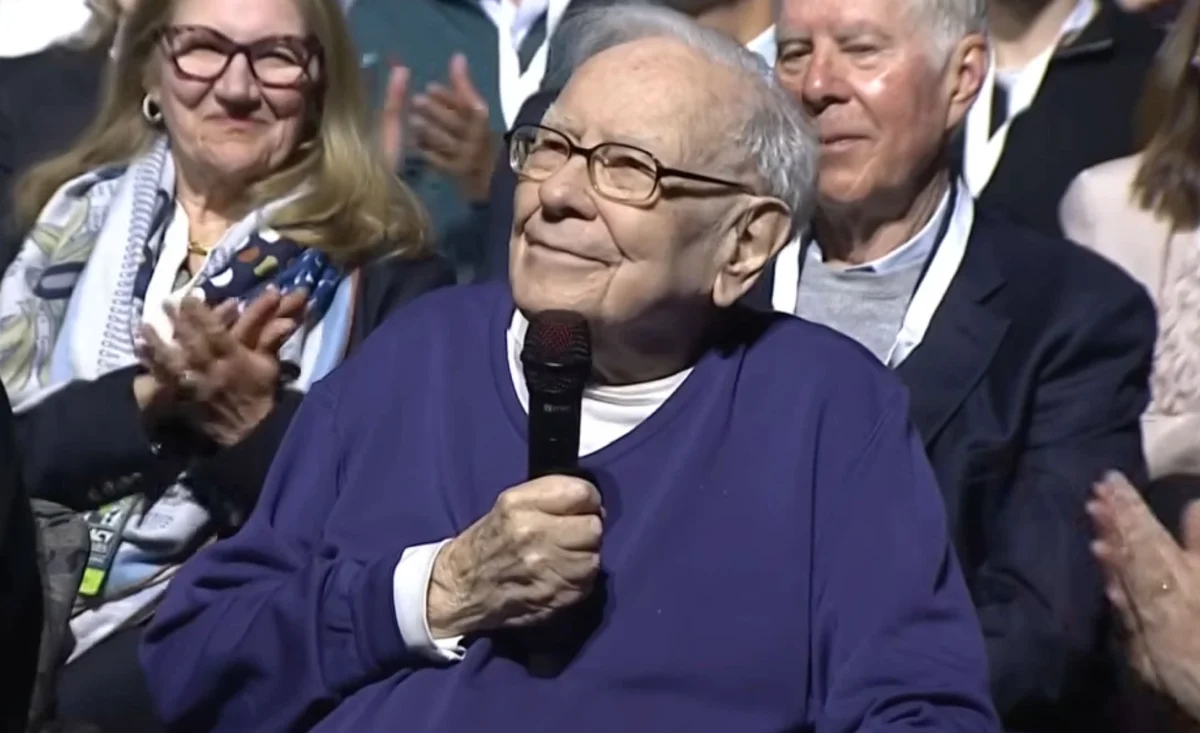
In a pivotal moment signaling the culmination of a meticulously orchestrated succession strategy, legendary investor Warren Buffett has announced his decision to step down as chairman of Berkshire Hathaway, the sprawling conglomerate he painstakingly built over six decades. Effective immediately, Buffett, who recently turned 96, will transition to the role of "chairman emeritus" and remain on the company’s board of directors, continuing to offer his "valued judgment and perspective." His son, Howard G. Buffett, a long-standing board member, will assume the chairmanship, a move designed to safeguard the unique culture and values that define the Omaha-based powerhouse. This latest development marks the third significant phase in Buffett’s multi-year plan to ensure Berkshire’s enduring stability and fidelity to its foundational principles long after his active leadership concludes.
A Carefully Orchestrated Succession: From Textile Mill to Trillion-Dollar Conglomerate
The news, initially reported in a special Friday morning edition of the Warren Buffett Watch newsletter, underscores a profound shift in leadership at one of the world’s most admired and valuable companies. Berkshire Hathaway, which began as a struggling Massachusetts textile manufacturer when Buffett took control in 1965, has been transformed into a diversified conglomerate with a market capitalization exceeding $1 trillion. This remarkable journey, characterized by Buffett’s astute capital allocation, unwavering adherence to value investing principles, and a decentralized management philosophy, has made him a revered figure on Wall Street and beyond.
Buffett’s succession plan has been a subject of intense speculation and careful preparation for years. The current announcement follows two prior, critical steps in this multi-stage transition. For many years, Berkshire veteran Greg Abel was progressively empowered to oversee the vast array of Berkshire’s operating companies, demonstrating his capability and understanding of the conglomerate’s diverse portfolio. This period allowed Abel to gain deep familiarity with the intricacies of each business unit, from insurance giants like GEICO to utilities, manufacturing, and retail operations.
The second major step occurred in May 2025, when Buffett formally announced his intention to step down as Chief Executive Officer at the end of that year. Greg Abel, long identified as Buffett’s chosen successor, officially assumed the CEO role on January 1, 2026. At that time, Buffett retained the chairmanship, maintaining a strategic oversight role while Abel took the reins of day-to-day operations and strategic execution. This staggered approach allowed for a smooth handoff, with Buffett continuing to mentor and advise Abel, ensuring continuity and stability during a significant leadership change.
Now, with the third and latest step, Howard Buffett’s elevation to chairman, the governance structure is further solidified. This move clearly delineates responsibilities: Abel as the chief executive leading the business operations and capital allocation, and Howard as the non-executive chairman, primarily tasked with upholding the company’s distinct corporate ethos. As Buffett himself articulated in a letter to shareholders accompanying the announcement, Howard’s "primary responsibility will be to guard [Berkshire’s] culture and values – both worth more than anything on our balance sheet." This statement powerfully reiterates the paramount importance of Berkshire’s intangible assets over its formidable financial might.
The Guardian of Berkshire’s Culture: A Unique Mandate

The emphasis on "culture and values" is not mere corporate jargon for Berkshire Hathaway; it is the very bedrock of its enduring success. These values, deeply ingrained by Warren Buffett and his late partner Charlie Munger, include a long-term investment horizon, a commitment to integrity, a decentralized management structure that empowers subsidiary leaders, a focus on intrinsic value, and a profound respect for shareholder capital, exemplified by its consistent share repurchase program and historical aversion to dividends.
Greg Abel echoed this sentiment in the company’s news release, stating, "The culture Warren built and the values he championed will remain at the heart of Berkshire, and Howard will be their guardian." This explicit division of labor – Abel as the operational leader and Howard as the cultural custodian – is central to Buffett’s vision for Berkshire’s future. It seeks to institutionalize the "Berkshire Way," making it resilient against the whims of future leaders or market pressures.
Buffett has often spoken about the "self-reinforcing" nature of Berkshire’s culture. In a 2015 discussion, he explained how the company attracts shareholders and directors who align with its principles, creating a virtuous cycle. He famously noted the extraordinary loyalty of Berkshire shareholders, exemplified by the overwhelming vote against a dividend. "It’s a vital part of Berkshire to have a clearly defined, deeply embedded culture that pervades the parent company, the subsidiary companies," Buffett stated. "It’s gotten reinforced over the years to an extreme degree… People who join us believe in it; people who shun us don’t believe in it, so we – it’s self-reinforcing." He expressed confidence that this culture would "continue and to become even stronger" once he and Munger were gone, proving it was institutionalized rather than solely dependent on their personalities. Howard’s role is designed to be the ultimate bulwark against any deviation from these principles.
Howard G. Buffett: A Profile in Philanthropy and Pragmatism
While widely recognized for his familial connection, Howard G. Buffett, who prefers to be known as "Howie," is not a typical corporate titan. His background, often described as "eclectic," reflects a life dedicated to diverse pursuits beyond the traditional confines of finance. Major news organizations like Bloomberg and The New York Times have highlighted his unique journey, which provides critical context for his new role.
Howard’s professional life began far from Wall Street. After attending three colleges without graduating, he embarked on a career in agriculture. Since 1986, he has actively operated a 400-acre farm north of Omaha, Nebraska, and a larger 1,500-acre farm in Illinois. His hands-on experience in farming has given him a grounded perspective and a deep understanding of practical operations, often contrasted with the abstract world of finance.
His commitment to public service extends to law enforcement. In 2017, he served for over a year as a county sheriff, a role he undertook after completing extensive training, including more than 3,300 hours of patrol and training and 76 weapons qualifications. This unconventional path speaks to a strong sense of civic duty and a willingness to engage directly with real-world challenges.
However, it is in philanthropy where Howard Buffett has made his most significant mark outside of Berkshire. As Chairman and CEO of The Howard G. Buffett Foundation, he oversees substantial charitable giving, primarily focusing on global food security, conflict mitigation, and countering human trafficking. The foundation, which receives an annual donation from Warren Buffett, disbursed a staggering $700 million last year, according to its 2025 annual report. A significant portion of this aid, approximately $350 million in 2025 and a total of $1.1 billion since Russia’s invasion in 2022, has been directed towards Ukraine. Howard has personally traveled to the war-torn country, telling CNBC in 2022, "I have never quite seen anything like this in my lifetime." This extensive philanthropic work demonstrates not only his compassion but also his experience in managing large-scale, complex initiatives with global impact.

Despite his non-traditional corporate background, Howard is "no stranger to corporate boards," as The Wall Street Journal noted. He has previously served as a director for major corporations such as Coca-Cola, Coca-Cola Enterprises, and ConAgra Foods, providing him with valuable insights into corporate governance and the responsibilities of a board member. Yet, the Journal also candidly acknowledged that his "main qualification to be Berkshire’s chairman is that his father is Warren Buffett." Warren Buffett himself corroborated this in 2025, stating, "He is getting it because he is my son." Howard, for his part, expressed readiness for the role, telling the newspaper, "I feel I’m prepared for it because [Warren] prepared me. That’s a lot of years of influence and a lot of years of teaching." This unique blend of practical experience, philanthropic leadership, and direct mentorship from his father positions him as a carefully chosen steward of Berkshire’s enduring ethos.
Market’s Measured Response: The Fading "Buffett Premium"
The market’s reaction to Warren Buffett’s latest step back was remarkably subdued, underscoring the success of the long-term succession planning. Both Berkshire Hathaway’s Class A and Class B shares initially saw a slight dip in early trading following the announcement but quickly recovered, ending the day nearly unchanged. This calm response suggests that investors largely view this transition as a continuation of a well-telegraphed strategy rather than a disruptive event.
The absence of significant market volatility also reflects a broader trend observed over the past few years: the gradual dissipation of the so-called "Buffett Premium." This term refers to the perceived additional value embedded in Berkshire Hathaway’s stock simply due to Warren Buffett’s direct involvement and legendary reputation. For decades, investors were willing to pay a premium for Berkshire shares, confident in Buffett’s unparalleled ability to allocate capital and generate superior returns.
However, since the announcement in May 2025 that Buffett would step down as CEO, Berkshire shares have underperformed the broader market. The Class B shares are down more than 5% since that announcement, lagging significantly behind the S&P 500, which has gained over 34% in the same period. Furthermore, since the beginning of the current year, Berkshire’s B shares have underperformed the benchmark by more than 10 percentage points. This divergence indicates that the market has progressively priced in the eventual full transition away from Buffett’s day-to-day leadership.
Analysts widely concur that the market’s measured reaction to this latest news is a testament to the meticulous succession planning. Brian Jacobsen of Annex Wealth Management told Reuters, "It was always a matter of when, not if. Buffett has made a graceful exit… This feels more like the completion of a carefully planned succession than a sudden changing of the guard." The predictability of these steps has allowed investors to adjust their expectations and valuations, minimizing knee-jerk reactions that might have occurred with a less transparent or sudden transition. The market is now, more than ever, evaluating Berkshire Hathaway based on its underlying businesses, its formidable cash position, and the leadership of Greg Abel, rather than solely on the mystique of its iconic founder.
Berkshire’s Financial Fortress: A Look at the Numbers
Despite the leadership transition, Berkshire Hathaway remains a financial titan, a testament to Buffett’s enduring legacy of value creation. As of the latest financial reports, Berkshire’s market capitalization stands at an impressive $1,090,754,504,023, solidifying its position as one of the world’s largest companies. This massive scale provides a robust foundation for future growth and resilience.

A defining characteristic of Berkshire’s financial strength is its colossal cash pile. As of June 30, 2026, the company held $365.5 billion in cash and cash equivalents, a figure that, while down 8.0% from March 31, still represents an extraordinary war chest. Excluding rail cash and subtracting T-bills payable, the adjusted cash position was $359.2 billion, down 3.8% from the previous quarter. This immense liquidity, often referred to as "dry powder" or Buffett’s "elephant gun," provides Greg Abel with unparalleled flexibility for future acquisitions, strategic investments, or further share repurchases. It reflects Buffett’s long-held philosophy of maintaining ample reserves to capitalize on opportune moments, particularly during market downturns.
Capital allocation, a core tenet of the Berkshire Way, continues to be a priority. In the second quarter of 2026, Berkshire repurchased $4.5 billion of its own shares, demonstrating its commitment to returning capital to shareholders when the stock trades below its intrinsic value. This consistent share repurchase program is a hallmark of Buffett’s shareholder-friendly approach.
Berkshire’s investment portfolio, a key driver of its long-term returns, remains robust. Its top equity holdings, disclosed in the 13F filing on August 14, 2026, include stakes in major American and Japanese companies. While specific names were not detailed in the original excerpt, historical top holdings typically include technology giants like Apple, financial institutions like Bank of America and American Express, and consumer staples like Coca-Cola. A notable recent investment, widely believed to be driven by Greg Abel with Buffett’s approval, is the $37 billion allocation to Alphabet’s AI ambitions. However, Buffett clarified in July that he initiated this particular investment, with Abel’s approval, reinforcing the collaborative yet clearly defined decision-making dynamic between them: "I am not doing anything that [Abel] doesn’t approve of. He’s not doing anything I don’t approve of. We talk all the time… but he is the decider." This dynamic, crucial for maintaining continuity while transitioning power, is expected to persist as Buffett assumes his new emeritus role.
The Road Ahead: Berkshire Without Its Architect at the Helm
Warren Buffett’s transition to chairman emeritus marks a symbolic, yet significant, shift for Berkshire Hathaway. While he explicitly stated in his letter that he still has "the best job in the world" and has "never felt better about what comes next," his physical departure from the chairman’s seat underscores the reality of a future Berkshire without its primary architect at the operational helm. The critical question for investors and observers is what this new title truly entails: will Buffett remain an active, albeit non-executive, advisor, or will his role become largely symbolic, akin to a revered elder statesman?
The existing dynamic between Buffett and Abel, where Buffett initiates ideas and Abel "is the decider," suggests that while Buffett may reduce his day-to-day engagement, his perspective will still be highly valued. His continued presence on the board ensures that his institutional knowledge and strategic wisdom remain accessible to the leadership team. However, the ultimate responsibility for capital allocation, strategic direction, and operational oversight now firmly rests with Greg Abel. Abel’s challenge will be to continue Berkshire’s remarkable trajectory, deploying its massive cash pile effectively and maintaining its decentralized, performance-driven culture, all while navigating an increasingly complex global economic landscape.
Howard Buffett’s role as chairman, focused on cultural guardianship, is unique in corporate governance. His task is to be the conscience of Berkshire, ensuring that the company’s core tenets – integrity, long-term thinking, and a shareholder-first mentality – are preserved. This mandate is crucial because, as Buffett himself has taught, culture is often the most powerful and enduring competitive advantage. Howard’s ability to fulfill this role effectively will largely depend on his interpersonal skills, his deep understanding of his father’s philosophy, and his capacity to command respect from both the board and the operating managers without interfering with Abel’s executive authority.
The enduring legacy of Warren Buffett is not merely in the financial empire he built but in the institutionalization of a distinct corporate philosophy. With Greg Abel now firmly in charge of operations and Howard Buffett tasked with safeguarding the culture, the "Berkshire Way" is being tested in its ultimate form: its ability to thrive without the daily presence of its legendary founder. This carefully planned transition, spanning years and involving multiple strategic steps, aims to prove that the principles, rather than just the personality, will guide Berkshire Hathaway for decades to come, ensuring it does not stray from the path Warren Buffett so painstakingly charted.
