

In a significant legal rebuke to the White House’s expanded immigration enforcement strategy, U.S. District Court Judge Brian Murphy of Massachusetts ruled on Wednesday that the Trump administration acted in direct violation of a federal court order. The ruling stems from a clandestine deportation operation conducted earlier this week, in which eight migrants—none of whom were originally from South Sudan—were reportedly flown toward the conflict-torn East African nation. The court found that the administration failed to provide the deportees with their constitutionally and legally mandated right to contest their removal to a third country, an act the judge described as an "unquestionable" breach of judicial authority.
The ruling has ignited a firestorm of criticism from legal advocates and human rights organizations, who argue that the administration is bypassing due process in its haste to fulfill mass deportation promises. The Department of Homeland Security (DHS) confirmed that the flight included individuals from Myanmar, Laos, Vietnam, Cuba, Mexico, and South Sudan. However, the crux of the legal dispute lies in the administration’s attempt to send those not native to South Sudan to a country where they have no ties and where their lives could be in immediate peril.
The Judicial Ruling and the March Injunction
Judge Murphy’s decision is rooted in a preliminary injunction he issued in March 2025. That injunction was designed to serve as a procedural safeguard, preventing the Department of Homeland Security and Immigration and Customs Enforcement (ICE) from removing individuals to a country other than their nation of origin without first allowing them a formal opportunity to raise claims of potential persecution or torture. Under the United Nations Convention Against Torture (CAT) and existing U.S. immigration law, the government is prohibited from "refoulement"—the forcible return of refugees or asylum seekers to a country where they are liable to be subjected to persecution.
During the Wednesday hearing, Judge Murphy expressed profound frustration with the government’s timeline. He noted that the individuals were only notified of their final destination late Monday evening, well outside of standard business hours. By the time legal clinics and attorneys could react, the migrants had already been moved from their ICE holding facilities between 9:00 a.m. and 10:00 a.m. the following morning.
"The department’s actions are unquestionably violative of this court’s order," Judge Murphy stated during the proceedings. He emphasized that the narrow window provided to the migrants made it "impossible" for them to consult with legal counsel or family members, thereby stripping them of any meaningful opportunity to object to their deportation to a third country.
Chronology of a Controversial Removal
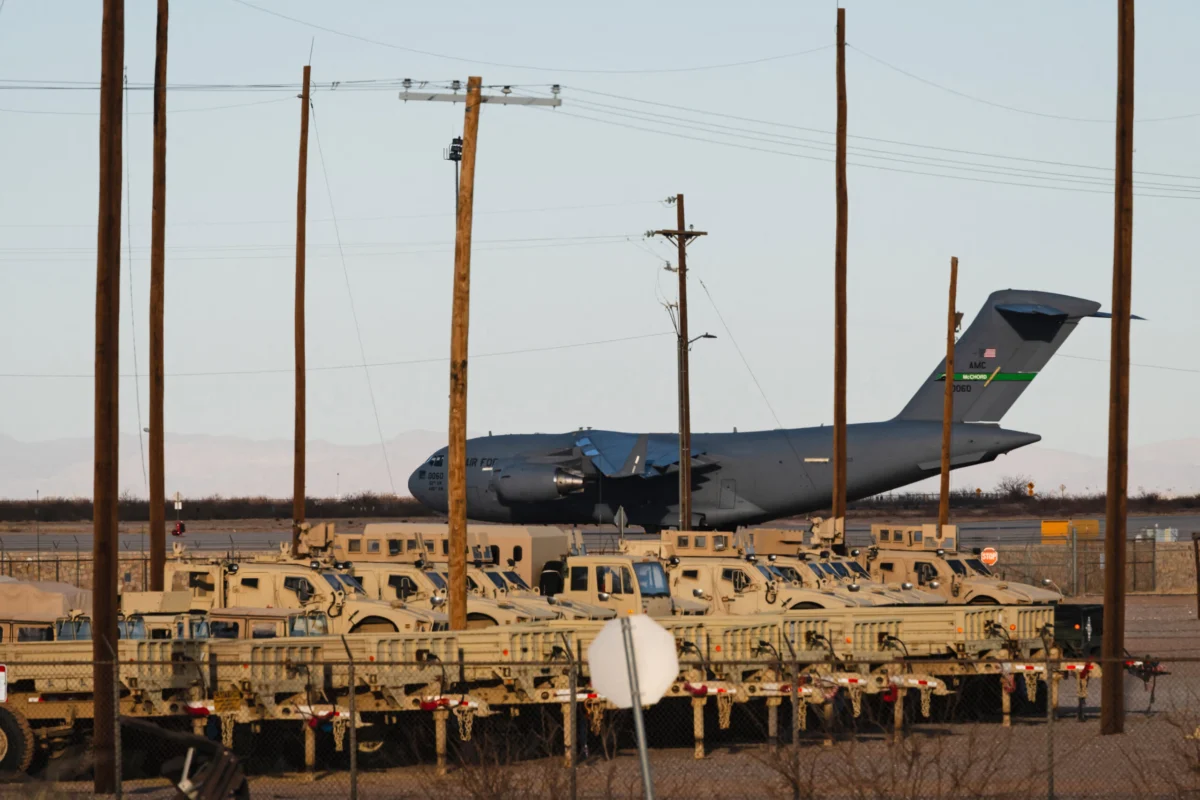
The events leading to Wednesday’s ruling began on Monday, when ICE officials prepared a Boeing C-17 Globemaster III—a large military transport aircraft—for a multi-stop deportation mission. While the use of military hardware for deportation flights has become a hallmark of the current administration’s "Operation Restore Sovereignty," the destination of this specific flight raised immediate red flags.
On Tuesday morning, the aircraft departed from Biggs Army Airfield at Fort Bliss in El Paso, Texas. Onboard were eight men: Enrique Arias-Hierro, Jose Manuel Rodriguez-Quinones, Thongxay Nilakout, Jesus Munoz-Gutierrez, Dian Peter Domach, Kyaw Mya, Tuan Thanh Phan, and Nyo Myint. According to DHS officials, several of these men had extensive criminal histories, including convictions for violent crimes such as murder and sexual assault. The administration has frequently cited these criminal records as justification for expedited removals.
However, the legal complication arose when it became clear that the government intended to use South Sudan as a "drop-off" point for migrants from Southeast Asia and the Caribbean. By Tuesday afternoon, immigration attorneys in the United States began receiving frantic reports that their clients were being sent to a country they had never visited.
By Wednesday morning, as the plane reportedly landed at an undisclosed location, government attorneys faced a stern inquiry from Judge Murphy. While they confirmed the plane had landed and that the migrants remained in ICE custody, they refused to disclose the exact coordinates or the final status of the deportees, citing operational security.
The "Disappearance" of Nyo Myint
One of the most high-profile cases involved in the flight is that of Nyo Myint, a migrant from Myanmar (Burma). His attorney, Jonathan Ryan, based in San Antonio, has raised the alarm regarding his client’s whereabouts. Ryan alleged that the government has essentially "disappeared" Myint, providing no confirmation as to whether he was actually offloaded in South Sudan or diverted back to Myanmar.
"I have not heard from my client," Ryan said following the hearing. "How am I supposed to take their word that they sent him to Burma? The government is acting as if due process is a privilege. It is a problem when we stop doing due process for unpopular people."
The case of Nyo Myint highlights a broader concern among the legal community regarding the lack of transparency in the administration’s "third-country" agreements. While the U.S. has historically sought "Safe Third Country" agreements with nations like Canada or certain Central American partners, the sudden pivot to utilizing South Sudan—a nation currently on the brink of renewed civil war—has been described by advocates as unprecedented and legally reckless.
Security Context: Why South Sudan?
The choice of South Sudan as a deportation destination has baffled international observers and security experts alike. The U.S. State Department currently maintains a "Level 4: Do Not Travel" advisory for South Sudan, the highest danger rating possible. The advisory cites rampant crime, kidnapping, and ongoing armed conflict. In fact, in March 2025, the State Department ordered the departure of all non-emergency U.S. government employees from the country due to the deteriorating security situation.
South Sudan’s internal politics are currently extremely volatile. While a 2018 power-sharing agreement between President Salva Kiir and Vice President Riek Machar technically ended a five-year civil war that killed nearly 400,000 people, the peace has been fragile. In early 2025, violent clashes between rival factions ramped up again, leading many experts to warn that the country is headed for another full-scale civil conflict.
For the Trump administration to select such a location for the deportation of individuals from Vietnam, Laos, or Cuba suggests a strategy of "deterrence through instability," according to some policy analysts. By sending migrants to high-risk zones, the administration may be attempting to send a message to prospective migrants, though critics argue this violates the basic human rights standards the U.S. is treaty-bound to uphold.
Legal Precedents and the Libya Connection
This week’s ruling is not the first time Judge Murphy has had to intervene in the administration’s third-country deportation attempts. Earlier this month, the same court blocked an attempt by the government to deport individuals from the Philippines, Vietnam, and Laos to Libya.
In the Libya case, the administration argued that because the individuals were "criminal aliens," the government held broad discretionary power to remove them to any country willing to accept them. Judge Murphy rejected this argument, reaffirming that the statutory right to a "fear-of-persecution" hearing applies regardless of an individual’s criminal background if they are being sent to a third country.
The repetitive nature of these attempts suggests a systemic effort by the Department of Justice and DHS to test the boundaries of judicial oversight. Legal scholars note that the administration is likely seeking a "circuit split"—a situation where different federal courts rule differently—to eventually bring the matter before a more sympathetic Supreme Court.
Broader Implications for U.S. Immigration Policy
The ruling in Massachusetts serves as a significant roadblock for the administration’s broader "Mass Removals" initiative. Since taking office, the administration has sought to streamline the deportation process by eliminating "credible fear" interviews and reducing the time between detention and removal.
The use of third countries like South Sudan or Libya appears to be part of a logistical solution to a diplomatic problem. Many countries, including Vietnam and Cuba, have historically been "recalcitrant," meaning they limit the number of their citizens they are willing to take back from the U.S., or refuse them altogether. By bypassing these diplomatic hurdles and sending migrants to third-party nations, the administration seeks to clear the backlog of detainees in U.S. facilities.
However, the legal implications are profound. If the government is allowed to deport individuals to any country willing to accept them without a hearing, the entire framework of political asylum and refugee protection in the United States could be dismantled.
"This isn’t just about these eight individuals," said Sarah Hernandez, a senior researcher at an immigration policy think tank. "This is about whether the executive branch can ignore a direct court order and international law simply because they find the legal process inconvenient. If the court doesn’t hold the line here, the concept of ‘due process’ becomes effectively meaningless for anyone in the immigration system."
Next Steps in the Litigation
Following Judge Murphy’s ruling on Wednesday, the Department of Justice is expected to file an emergency appeal. The government maintains that the President holds plenary power over matters of immigration and national security, which they argue should supersede the district court’s injunction.
In the meantime, the fate of the eight migrants remains unknown. Advocates are calling for the immediate return of the individuals to U.S. soil to undergo the proper legal screenings mandated by the March injunction. If the government is found to be in contempt of court, Judge Murphy could impose significant fines or other sanctions, though it remains to be seen how the administration would respond to such measures.
As the Boeing C-17 sits on a tarmac in an undisclosed location, the eyes of the legal world are on the federal courts. The outcome of this clash will define the limits of presidential power in the realm of immigration and determine whether the United States will continue to adhere to the humanitarian standards it helped establish on the global stage.
