

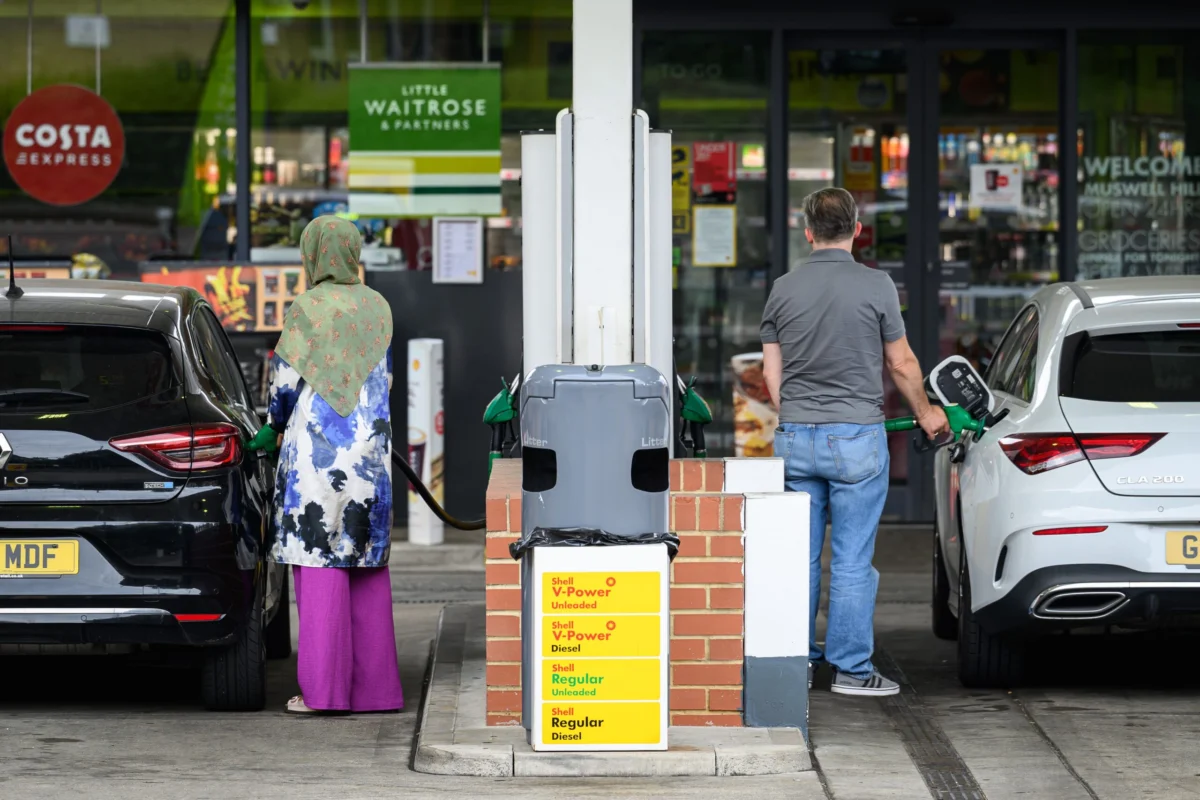
The United Kingdom’s annual inflation rate accelerated to 3.1% in August, a significant uptick driven primarily by a sharp increase in gasoline and diesel prices. This marks the first time the inflation reading has surpassed the 3% threshold since March, signaling persistent price pressures on consumers and posing a complex challenge for the Bank of England as it navigates global economic uncertainties. The surge in fuel costs, which saw a substantial 23% year-on-year increase, is directly linked to the ongoing volatility in global crude oil markets, with Brent crude prices remaining stubbornly above $100 per barrel.
This latest inflation print, which aligned with economists’ forecasts, underscores the vulnerability of energy-importing nations like the U.K. to external supply shocks. The Office for National Statistics (ONS) reported that the average price of gasoline climbed by 9.1 pence per liter between July and August, reaching its highest level since November 2022. Diesel prices experienced an even more pronounced increase, rising by 14.2 pence per liter in August alone. These figures paint a stark picture of the financial strain on households and businesses alike, particularly as the nation heads into the critical fourth quarter, often referred to as the "golden quarter" for retail sales.
The upward revision of the government-regulated energy price cap in July also contributed to the inflationary pressures, with electricity, gas, and other household fuels seeing a 6% year-on-year increase in August. This follows a period of significant cost-of-living challenges for Britons, exacerbated by post-pandemic inflation and the substantial surge in energy costs that emerged in the wake of Russia’s full-scale invasion of Ukraine in 2022. The current inflationary environment is a complex interplay of geopolitical events, supply chain disruptions, and domestic policy decisions.
The Shadow of Global Energy Markets
The persistent elevation of crude oil prices above $100 per barrel is a central driver of the U.K.’s inflation woes. Brent crude, a global benchmark, has been trading at these elevated levels since mid-July 2026, a situation largely attributed to the ongoing geopolitical tensions in the Middle East, particularly the conflict that began with Iran in early 2026. This prolonged period of high oil prices has a cascading effect on the global economy, impacting transportation costs, manufacturing inputs, and ultimately, consumer prices.
The British motoring body, the RAC, recently highlighted that petrol and diesel prices have reached levels not seen in four years, directly correlating with the prolonged conflict initiated by Iran. For the U.K., a nation heavily reliant on imported energy, these external shocks translate into tangible inflationary pressures. The country’s dependence on international markets for its energy needs makes it particularly susceptible to price fluctuations driven by geopolitical instability, supply constraints, or shifts in global demand.
A Chronology of Rising Costs
The inflationary pressures in the U.K. have been building over an extended period. The aftermath of the COVID-19 pandemic saw a global surge in inflation as economies reopened and supply chains struggled to keep pace with demand. This was further compounded by the energy crisis that began in earnest in late 2021 and escalated dramatically with Russia’s full-scale invasion of Ukraine in February 2022. The subsequent sanctions on Russia, a major energy producer, led to significant disruptions in global energy markets, sending prices spiraling.
In response to these escalating costs, the U.K. government implemented a regulated price cap on household energy bills. However, as global energy prices continued to climb, the cost of maintaining this cap became increasingly unsustainable for the Treasury. In July 2026, the price cap was revised sharply upwards, a move that, while necessary to reflect market realities, directly contributed to higher inflation figures in subsequent months. The August inflation data, therefore, represents a culmination of these ongoing trends, with fuel prices acting as the primary catalyst.
The ONS reported that inflation stood at 2.9% in July, indicating a clear upward trajectory that has now reached 3.1% in August. This trend is further corroborated by the latest data on motor fuel costs, which have seen a consistent and significant increase. The average price of gasoline in August was notably higher than in July, and diesel prices saw an even more substantial jump. This pattern suggests that the upward pressure on fuel prices is not a fleeting phenomenon but rather a sustained trend reflecting the underlying global energy market dynamics.
Market Reactions and Bank of England’s Dilemma
The release of the higher-than-expected inflation figures has had a noticeable impact on U.K. financial markets. Yields on U.K. government bonds, known as gilts, saw a decline across the curve following the announcement. The yield on the 30-year gilt, which had recently touched a 28-year high, fell by nearly 2 basis points to 5.907%. Similarly, the benchmark 10-year gilt yield decreased by almost 3 basis points to 5.365%. This suggests that investors are factoring in the possibility of a sustained period of higher inflation, which can influence bond yields.
The British pound remained relatively stable against the U.S. dollar and the euro, indicating that the market had largely priced in the inflation figures. However, the focus now shifts to the Bank of England’s Monetary Policy Committee (MPC), which is scheduled to announce its latest policy update on Thursday. Market participants, according to LSEG data, are anticipating with over an 80% probability that the central bank will maintain its key interest rate at the current level of 3.75%. Nevertheless, there is a growing expectation for a rate hike at the subsequent MPC meeting in November, as policymakers grapple with the dual challenge of controlling inflation without stifling economic growth.
Economic Analysts Weigh In
Economists and analysts are closely scrutinizing the inflation data to gauge its broader implications for the U.K. economy. James Smith, developed markets economist at ING, noted that the latest inflation numbers "don’t scream a need to hike interest rates." He suggested that the primary driver appears to be an "energy shock" that is not yet broadening significantly to other sectors of the economy. His analysis pointed to the relatively subdued inflation in food and non-alcoholic beverages, which slipped to 1.1% year-on-year in August.
Smith further highlighted that even for goods and services with high energy intensity, such as airfares and canteen services, inflation rates have actually decreased this year, with no sign of change in August. This suggests that while fuel prices are a major concern, the inflationary pressures may not be as widespread as initially feared, potentially offering some relief to the Bank of England in its decision-making process.
However, Bogdan Toma, a partner at McKinsey & Company, offered a more cautious outlook, characterizing the elevated gasoline prices as a signal of an "uncertain ‘golden quarter’ for consumers and retailers." He warned that with households already facing back-to-school expenses and the prospect of higher interest rates, consumer demand heading into the crucial fourth quarter might remain subdued. This could lead to intense competition among retailers, potentially squeezing profit margins further.
The Long-Term Outlook and Geopolitical Undercurrents
Scott Gardner, an investment strategist at J.P. Morgan Personal Investing, echoed the sentiment that the inflation increase is "unlikely to convince the Bank of England to hike interest rates just yet." However, he cautioned that it could raise fresh concerns among policymakers about the inflation outlook. Gardner pointed out that even though the U.S.-Iran conflict began over six months ago, higher energy costs are still filtering through to business input prices and household spending.
He added that while core and services inflation have shown resilience, industry surveys indicate renewed cost pressures for businesses, particularly in manufacturing and services sectors. The current muted wage growth in the private sector and a soft labor market could put further pressure on consumer spending in the coming months. J.P. Morgan Personal Investing is closely monitoring for potential "second and third round effects" of higher costs rippling through the economy.
The analysts are also keeping a close watch on the impact of rising fertilizer costs, which earlier in the year led to increased food prices. While other inflationary pressures are not immediately apparent, businesses may eventually pass on their higher operational costs to consumers. Furthermore, the growing demand for metals, semiconductors, and other supply chain goods, partly driven by advancements in artificial intelligence, is another factor that could influence inflation dynamics.
The overarching concern remains the duration of the conflict in the Middle East. The U.K.’s economic stability is intricately linked to global geopolitical developments. Any prolonged or intensified conflict could lead to further disruptions in energy supply, exacerbating inflationary pressures and creating a more challenging economic environment. The current inflation figures serve as a stark reminder of this interconnectedness and the significant headwinds the U.K. economy faces in the coming months. The Bank of England’s upcoming decision will be closely watched as a key indicator of how policymakers intend to balance the imperative of controlling inflation with the need to support economic growth in an increasingly uncertain global landscape. The government, under Prime Minister Andy Burnham, faces the unenviable task of addressing the cost-of-living crisis while simultaneously managing public finances and maintaining market confidence, a delicate balancing act that will define its economic policy in the near future.
