

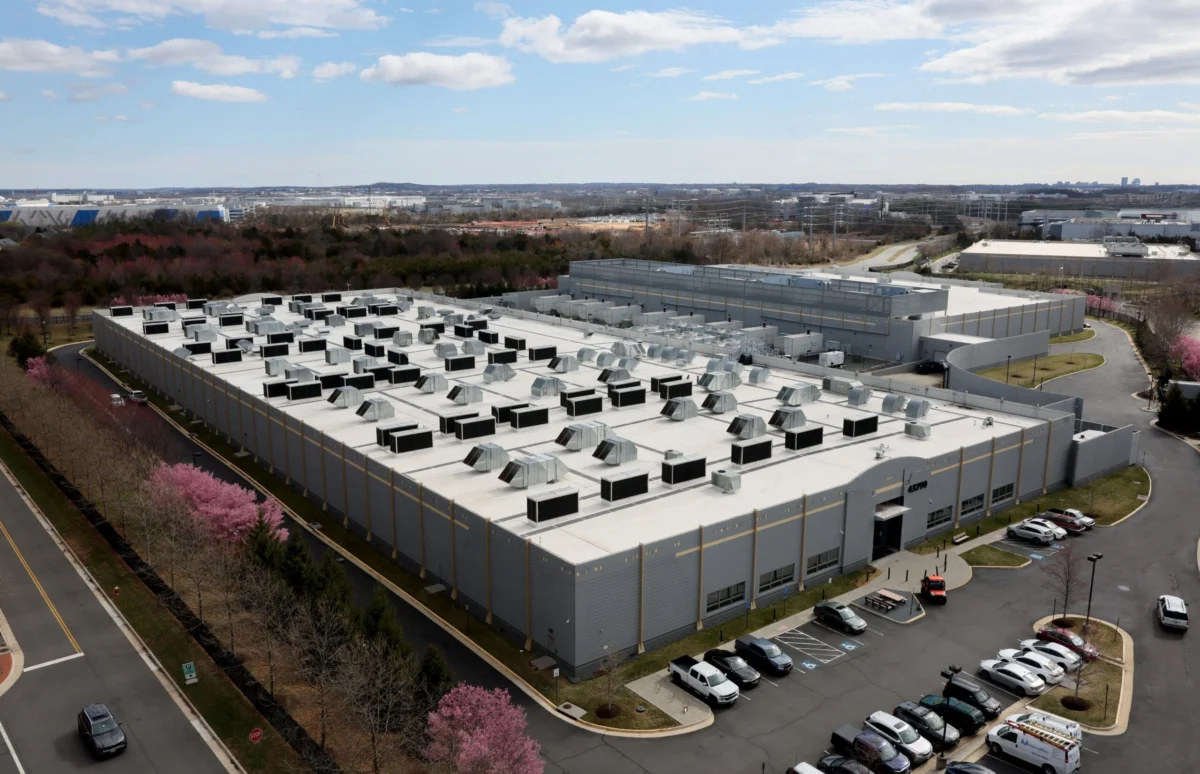
Recent calls for a deceleration in the pace of artificial intelligence development, emanating from influential figures and leading AI research organizations, have sent ripples through global financial markets, impacting the valuations of companies deeply intertwined with the burgeoning AI ecosystem. The real estate sector, particularly the specialized domain of data centers, stands at a critical juncture, facing questions about the potential ramifications of such a slowdown on its projected exponential growth. Despite these high-profile warnings, industry leaders and market analysts largely concur that the fundamental drivers of demand for digital infrastructure remain robust, underscoring a persistent need for significant capital deployment in data center facilities globally.
AI Slowdown Warnings and Market Reaction
The cautionary statements regarding AI advancements emerged prominently over the weekend of September 12-13, 2026, when key leaders in the artificial intelligence community voiced concerns about the rapid, unchecked progression of AI capabilities. Figures such as Anthropic’s co-founder Dario Amodei, and reportedly, OpenAI’s Sam Altman and xAI’s Elon Musk, contributed to a chorus advocating for a more measured approach to AI development. Their warnings highlighted a range of potential risks, including ethical dilemmas, safety concerns, the possibility of misuse, and the sheer computational power required, which raised questions about sustainability and governance.
These pronouncements quickly translated into market volatility, particularly affecting stocks perceived to be highly leveraged to the rapid expansion of AI. Companies across the semiconductor, cloud computing, and AI software sectors experienced downward pressure. The data center industry, a critical enabler of AI, was no exception. On Monday, September 14, 2026, major data center Real Estate Investment Trusts (REITs) like Digital Realty (DLR) and Equinix (EQIX), two of the world’s largest providers of colocation and interconnection services, saw their stock prices dip, reflecting investor apprehension regarding the future trajectory of AI-driven demand.
The Unstoppable Demand for Digital Infrastructure
While the headlines focused on a potential AI slowdown, the underlying reality for the digital infrastructure sector is one of persistent and accelerating demand. Artificial intelligence, with its insatiable appetite for computational power, storage, and networking, has indeed emerged as the dominant driver of new data center capacity. According to a comprehensive report by McKinsey & Company, AI applications alone are projected to account for approximately 70% of global data center capacity demand by 2030. This staggering figure underscores AI’s transformative impact on the digital landscape and its foundational reliance on physical infrastructure.
However, the demand for data centers extends far beyond AI. The ongoing global digital transformation, accelerated by trends such as cloud computing, the Internet of Things (IoT), 5G expansion, and enterprise IT modernization, continues to fuel significant growth. Cloud services, encompassing Infrastructure-as-a-Service (IaaS), Platform-as-a-Service (PaaS), and Software-as-a-Service (SaaS), require vast networks of data centers to host applications, store data, and deliver services to businesses and consumers worldwide. The proliferation of connected devices through IoT, coupled with the rollout of 5G networks, generates unprecedented volumes of data that must be processed, stored, and analyzed, often closer to the point of origin, driving demand for edge computing facilities. Furthermore, traditional enterprise IT systems are increasingly migrating from on-premise solutions to hybrid and multi-cloud environments, sustaining a steady need for secure, scalable, and resilient data center capacity.
McKinsey and JLL Forecast Trillion-Dollar Investments
Meeting this multifaceted demand, particularly the AI-driven surge, necessitates an unprecedented scale of capital investment. McKinsey’s analysis reveals that the total capital outlay required to satisfy global data center demand by 2030 could approach nearly $7 trillion. This figure encompasses everything from land acquisition and construction to specialized hardware, cooling systems, power infrastructure, and connectivity. Within this colossal sum, the real estate component alone is poised to attract monumental investment. JLL, a global leader in real estate services, estimates that the real estate portion of data center development could account for as much as $3 trillion in investment over the next five years.
These figures highlight the critical role of real estate in enabling the digital economy. Data centers are not merely warehouses for servers; they are complex, purpose-built facilities requiring highly specialized design, engineering, and construction expertise. They must be equipped with redundant power systems, advanced cooling technologies, robust physical security, and high-speed fiber optic connectivity. The significant capital requirements and the specialized nature of these assets make them attractive to a diverse range of investors, including institutional funds, private equity, and dedicated data center REITs.
Leading Data Center REITs Face Market Volatility
The immediate market reaction to the AI slowdown warnings illustrated the sensitivity of data center REITs to perceptions of future demand. Digital Realty and Equinix, both bellwethers of the industry, experienced stock declines. Digital Realty, with a market capitalization exceeding tens of billions of dollars, operates a vast global portfolio of data centers, primarily serving hyperscale cloud providers, large enterprises, and content companies. Equinix, similarly prominent, specializes in interconnection and colocation services, enabling customers to directly connect to partners, providers, and digital ecosystems within its global network of International Business Exchange™ (IBX®) data centers. The temporary dip in their stock prices underscored how investor sentiment, even when potentially misinformed about the nuances of the industry, can translate into immediate financial impact.
Digital Realty CEO Dispels "Pencils Down" Narrative
Despite the market’s initial jitters, industry leaders remain confident in the long-term outlook. Andrew Power, CEO of Digital Realty, offered a nuanced perspective in an exclusive interview with CNBC’s Property Play newsletter. He categorically stated that the pledges for an AI slowdown by major players like Anthropic, OpenAI, and xAI do not signify a "pencils down" moment for AI development or for the real estate infrastructure that supports it.
Power emphasized that the digital transformation underway is far broader than just AI. "There’s tremendous digital transformation happening that is not connected to AI," Power explained. "There is tremendous cloud computing growth. Frankly, from my business lens, my seat, I think those demand trends, which are massive drivers of our business, have been stifled in these days of AI." He highlighted that hyperscale cloud providers, which are critical customers for data center operators, have often faced difficult choices between expanding their commercial cloud offerings and allocating precious capacity to their internal AI research labs. This internal allocation dynamic suggests that even if AI development slows its training pace, the underlying compute infrastructure for existing AI models and general cloud services remains highly sought after.
Beyond AI: Diverse Drivers of Data Center Growth
The CEO’s perspective aligns with a broader understanding of the data center market’s resilience. Key demand drivers, often overshadowed by the AI narrative, include:
- Cloud Adoption: Enterprises globally are continuing their migration to public, private, and hybrid cloud environments, demanding flexible and scalable infrastructure.
- 5G and Edge Computing: The rollout of 5G networks is enabling new applications requiring ultra-low latency, driving the need for data processing closer to the user at the network edge.
- IoT Growth: Billions of connected devices generate continuous streams of data, necessitating robust infrastructure for collection, storage, and analysis.
- Data Sovereignty and Localization: Regulatory requirements in various countries mandate that certain data be stored and processed within national borders, compelling data center operators to build out global footprints.
- Cybersecurity: The increasing complexity of cyber threats requires sophisticated, secure infrastructure for data protection and incident response.
- Content Delivery and Streaming: The explosion of online video, gaming, and other digital content continues to drive demand for highly distributed data center networks.
These factors ensure a diversified demand profile, insulating the data center sector from over-reliance on any single technological trend, even one as impactful as AI.
Geographic Imperatives and Supply-Side Challenges
Power also underscored the localized nature of data center demand, noting that not all markets would be impacted equally. Digital Realty’s strategic markets, which include major hubs like Northern Virginia (often referred to as "Data Center Alley"), Dallas, Chicago, Singapore, Tokyo, Frankfurt, and Amsterdam, continue to experience demand that significantly outpaces supply. "Our markets’ demand has been outpacing supply now for several years," Power observed. "There’s pent-up need for infrastructure in those markets. There’s locational sensitivity. Those workloads can’t choose any one of the 50 states." He also pointed to the company’s global portfolio as a strategic advantage, allowing them to meet data sovereignty and support requirements in various countries.
The challenges in meeting this demand are considerable. Acquiring suitable land, securing massive amounts of reliable power, navigating complex permitting processes, and managing supply chain constraints for specialized equipment (such as generators, chillers, and switchgear) all contribute to extended development timelines and increased costs. A typical hyperscale data center can require hundreds of megawatts of power, equivalent to a small town, placing significant strain on local energy grids and necessitating substantial investment in new energy infrastructure, often with a focus on renewable sources to meet sustainability targets.
The Crucial Role of Inference in AI Adoption
Andrew Batson, Global Head of Data Center Research and Strategy at JLL, offered a crucial distinction that further alleviates concerns about a long-term slowdown. He emphasized that the primary growth in data centers over the coming years will be driven by "inference" rather than just the training of new AI models. "The real growth in data centers over the next handful of years is in inference — that’s the adoption by businesses and citizens of the tool into daily workflow," Batson explained.
Model training, which involves feeding vast datasets to AI algorithms to learn patterns and capabilities, is indeed compute-intensive and could potentially be affected by a "slowdown" in new model releases. However, inference refers to the process of deploying trained AI models to make predictions or decisions in real-world applications. This includes everything from AI assistants in smartphones, recommendation engines on e-commerce sites, fraud detection systems in banking, to predictive maintenance in industrial settings. As Batson noted, "Only 1 in 4 Americans use AI daily, so even if models are slow to be released, there is significant runway for adoption to grow and data center demand to increase." This wide gap between current adoption and potential ubiquity suggests a sustained, long-term demand for inference capacity as AI tools become integrated into every facet of daily life and business operations.
Institutional Conviction Remains Strong
The robust long-term outlook is reflected in the continued high conviction from institutional investors. Batson pointed to major global asset managers like Blackstone, BlackRock, and KKR, all of whom have made significant investments in the data center space, often through dedicated infrastructure funds or acquisitions of existing portfolios. "That, on paper, still looks quite strong, despite some of the headlines here," Batson affirmed. These institutional players are attracted by the data center sector’s essential nature, its long-term lease structures with creditworthy tenants (often hyperscalers), its inflation-hedging characteristics, and its alignment with fundamental technological trends. Their sustained commitment serves as a powerful indicator of the sector’s perceived stability and growth potential, irrespective of short-term market fluctuations related to specific AI development narratives.
Strategic Capital Deployment and Financial Resilience
For companies like Digital Realty, navigating market volatility is part of the operational landscape. Andrew Power’s message to shareholders underscored the importance of maintaining strategic focus. "The first, most important part is, make sure that the daily gyrations, our stock price, don’t affect our strategy, our business," he stated.
Digital Realty has proactively positioned itself for capital-intensive growth. Recognizing the immense funding requirements of the data center industry, the company "evolved our funding model a couple of years ago." This evolution includes raising private capital through joint ventures and partnerships, diversifying its sources of funding beyond traditional public markets. This approach not only provides access to substantial capital but also allows for shared risk in large-scale development projects. The company’s development pipeline is a testament to this strategy, having expanded from $10 billion at the end of 2023 to an impressive $20 billion under construction as of the article’s context date. Power also highlighted the company’s efforts to strengthen its balance sheet, achieving "the most liquidity, the lowest leverage, the best place it could be in any potential storm." This financial prudence ensures the company’s ability to execute its ambitious growth plans and weather any market turbulence.
Broader Economic and Infrastructural Implications
The ongoing expansion of data center infrastructure carries significant broader economic and infrastructural implications. It drives job creation in construction, engineering, operations, and cybersecurity. It stimulates regional economies, often becoming anchor tenants in industrial parks and drawing skilled labor. The strategic importance of data infrastructure for national competitiveness and security is also paramount, as countries increasingly recognize the value of controlling and protecting their digital assets. The push for greater sustainability within the data center industry, driven by both regulatory pressures and corporate responsibility, is also fostering innovation in energy efficiency, renewable energy procurement, and advanced cooling technologies.
In conclusion, while the calls for an AI slowdown introduced a degree of market uncertainty, the data center real estate sector appears well-equipped to manage these concerns. The diversified drivers of demand, extending far beyond new AI model training to encompass cloud computing, enterprise modernization, and AI inference, provide a robust foundation for continued growth. Backed by substantial institutional investment and proactive capital strategies from leading operators, the data center industry remains on a trajectory of significant expansion, poised to be a cornerstone of the global digital economy for decades to come.
