

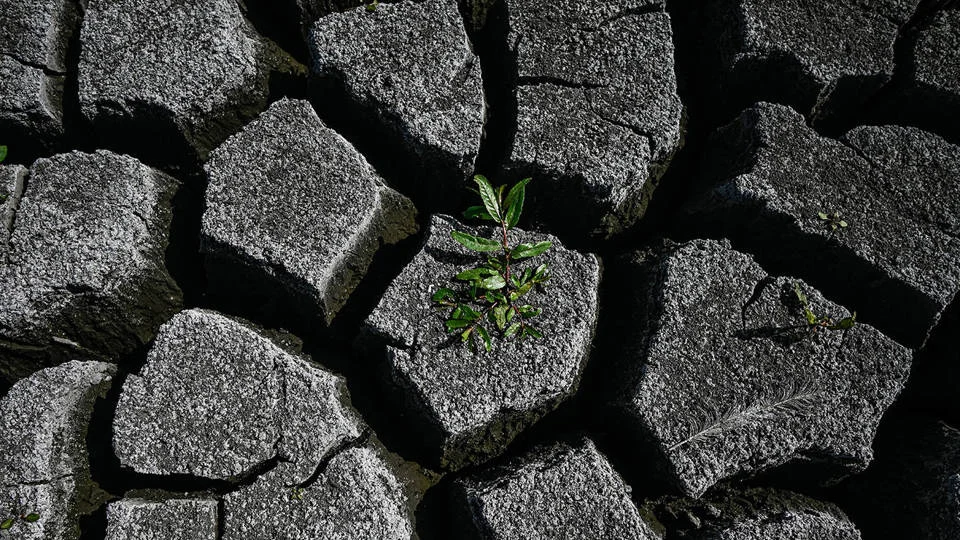
Europe’s fertile topsoil is facing a critical decline, a slow-motion environmental crisis that threatens food security, economic stability, and climate resilience. Despite the profound implications, the continent has yet to formally recognize its soil as a strategic asset, a glaring oversight that hinders effective action. While the European Union possesses many of the necessary tools to address this escalating problem, their potential remains largely untapped due to the absence of an overarching framework that incentivizes farmers for demonstrable improvements in soil health and ecosystem services. The urgency of this situation is underscored by the increasing frequency of extreme weather events and the staggering economic costs associated with soil degradation, demanding a paradigm shift in how Europe values and protects its fundamental natural resource.
The Unseen Foundation of European Prosperity
The European Union, in its strategic planning, often prioritizes assets where global competition is intense or emerging, such as semiconductors, advanced batteries, rare earth elements, and hydrogen technology. This focus, while understandable in a globally competitive market, has inadvertently overlooked a uniquely European resource: its soil. Unlike manufactured goods or mined minerals, Europe’s soil is an irreplaceable natural capital, the bedrock upon which its entire agricultural sector and food systems are built. Globally, soil is responsible for producing an astonishing 95% of the food consumed by humanity. Within Europe, the continent’s soils are not only vital for food production but also act as a massive carbon sink, holding an estimated 75 billion tons of carbon – several times the amount stored in the living biomass of its forests. This subterranean reservoir of organic matter is crucial for soil fertility, structure, and the sequestration of atmospheric carbon dioxide. Furthermore, the intricate porous structure of healthy soil plays a critical role in regulating water cycles, acting as a natural buffer against the intensifying impacts of droughts and floods. These destructive weather phenomena have become an increasingly common and costly feature of European summers, leading to billions of euros in damages and agricultural losses.
The Alarming State of European Soil Health
The stark reality is that Europe’s soil is in a state of alarming degradation. According to data from the European Commission, a significant majority, estimated between 60% and 70%, of EU soils are currently unhealthy. This pervasive decline is not merely an environmental concern; it carries a substantial economic burden, costing the European economy an estimated €50 billion (approximately $58 billion) annually. The slow pace of soil formation, where mere centimeters of fertile topsoil can take up to a thousand years to develop, highlights the long-term and potentially irreversible consequences of this ongoing degradation. The continued neglect of soil health risks a future characterized by diminished agricultural productivity, increased reliance on costly artificial inputs, and a heightened vulnerability to environmental shocks.
The Hidden Cost of Unaccounted-For Dependencies
A fundamental reason for the inaction on soil degradation lies in its insidious nature: what is not explicitly measured or valued is often not protected. Policymakers have historically struggled to assign a tangible economic value to healthy soil and its associated ecosystem services. While the collapse of a nation’s soil ecosystem undeniably impoverishes it, this decline is rarely reflected in immediate, significant shifts in Gross Domestic Product (GDP) figures. This contrasts sharply with more visible crises. Europe learned a painful lesson in 2022 when gas supplies from Russia were significantly curtailed following the full-scale invasion of Ukraine. The ensuing energy crisis forced European governments to allocate approximately €500 billion to cushion citizens and industries from soaring energy prices. This rapid, substantial financial response demonstrated the political will to address immediate threats to critical infrastructure.
The degradation of soil, however, presents a different kind of challenge. It is a gradual, self-inflicted wound for which European nations are primarily responsible. Unlike a sudden cut-off of a critical imported resource by a foreign adversary, the slow erosion of soil health is a domestic issue, often perceived as less urgent. This perception contributes to a failure to recognize that robust soil health is a cornerstone of national resilience – the inherent ability of a system to maintain its functions and adapt in the face of disruptions.
EU Initiatives: Laying the Groundwork for Action
Encouragingly, the European Union has begun to assemble the legislative and policy tools necessary to address soil degradation. The Soil Monitoring Law, which came into effect in December, establishes a common framework for assessing key soil health indicators. This includes the measurement of soil carbon content, erosion rates, biological activity, and the capacity of soil to retain and infiltrate water. These parameters are fundamental to understanding the health and functionality of European soils.
Furthermore, a significant 2024 regulation mandates that member states compile accounts for seven specific ecosystem services. While this is a step forward, the crucial services provided by soil, particularly water retention, remain inadequately represented in these accounts. More recently, in July, the European Commission adopted certification methodologies for carbon farming. These methodologies are designed to facilitate farmers’ access to financial incentives based on measurable outcomes related to carbon sequestration in soils, providing a pathway for economic reward for climate-friendly agricultural practices.
The Missing Link: An Overarching Framework for Soil Health
Despite these positive developments, a critical gap remains: the absence of a cohesive, overarching plan that connects these disparate measures and elevates healthy soil to a recognized strategic advantage for those who cultivate and manage it. The current Common Agricultural Policy (CAP) offers some support for sustainable farming practices, but it falls short of providing direct financial rewards for demonstrable and verifiable improvements in soil health and water retention capacity.
The European Commission has a timely opportunity to rectify this deficiency with its forthcoming framework for European climate resilience and risk management, expected later this year. This initiative, aimed at integrating resilience as a guiding principle for investment across various sectors, presents a crucial juncture for prioritizing soil health.
Key Commitments for a Resilient Future
As business leaders, investors, and advisors deeply involved in European value chains, we believe that this resilience framework must incorporate three fundamental commitments to effectively address soil degradation:
- Expand Mandatory Ecosystem Accounting: The framework should mandate the expansion of ecosystem accounting to encompass the vital services provided by healthy soil, with an immediate focus on water retention. This expansion should be followed by their formal inclusion in national economic accounts, thereby recognizing soil’s contribution to economic well-being.
- Extend Outcome-Based Rewards: Financial incentives and rewards for farmers and land managers should be broadened beyond carbon sequestration to include measurable improvements in overall soil health and water retention. This will create direct economic incentives for adopting practices that enhance these critical ecosystem functions.
- Integrate Soil Health into Public Support and Investment: Just as carbon metrics currently guide public support and investment decisions, so too should indicators of soil health and water retention. This will ensure that public funds are strategically directed towards initiatives that bolster the resilience of Europe’s natural capital.
The Economic Imperative of Healthy Soil
The argument that Europe cannot afford these commitments is fundamentally flawed. The reality is that degraded soil leads to a cascade of costly consequences: reduced agricultural yields, escalating food prices, and heightened vulnerability to the devastating impacts of drought and flooding. These environmental and economic strains represent a regressive, hidden tax, disproportionately affecting those with the fewest resources. To prevent the most vulnerable populations from bearing the brunt of higher food costs and intensifying climate disasters, it is imperative to abandon the dangerous fiction that soil degradation carries no real economic price.
A Global Challenge, European Leadership Opportunity
Europe is not alone in confronting the challenge of soil degradation. In August, the 17th Conference of the Parties (COP17) to the United Nations Convention to Combat Desertification convened in Ulaanbaatar, Mongolia, with a central theme of restoring degraded land. While governments agreed on the need to mobilize new funding for land restoration and drought resilience, a binding global framework on drought remained elusive, highlighting the persistent disconnect between scientific urgency and political action.
Despite these global challenges, there is a glimmer of hope. Many countries in the Global South, particularly those reliant on the production of coffee, cocoa, and fruits, have begun to recognize and treat soil health as a strategic asset. This growing awareness offers a potential avenue for international collaboration and knowledge sharing.
However, efforts to combat soil degradation remain fragmented. Europe has a unique opportunity to champion a soil alliance, bringing together governments that acknowledge the critical importance of robust measurement and the necessity of regulatory frameworks that reward soil restoration. This agenda should be prominently featured at upcoming international forums, including the UN Biodiversity Conference in Yerevan, Armenia, in October, and the UN Climate Change Conference in Antalya, Turkey, in November. Crucially, it must become a cornerstone of the EU’s new resilience framework.
As the French poet René Char poignantly wrote, "Our inheritance was left to us by no testament." Soil is a generational inheritance, a vital resource passed from one generation to the next. Yet, its immense value remains absent from our economic accounts. For decades, Europe has focused on what it produces, neglecting to account for what it truly possesses. Until this fundamental shift in perspective occurs, the silent, slow death of the continent’s soil will continue, with profound and lasting consequences for its prosperity and well-being.
