

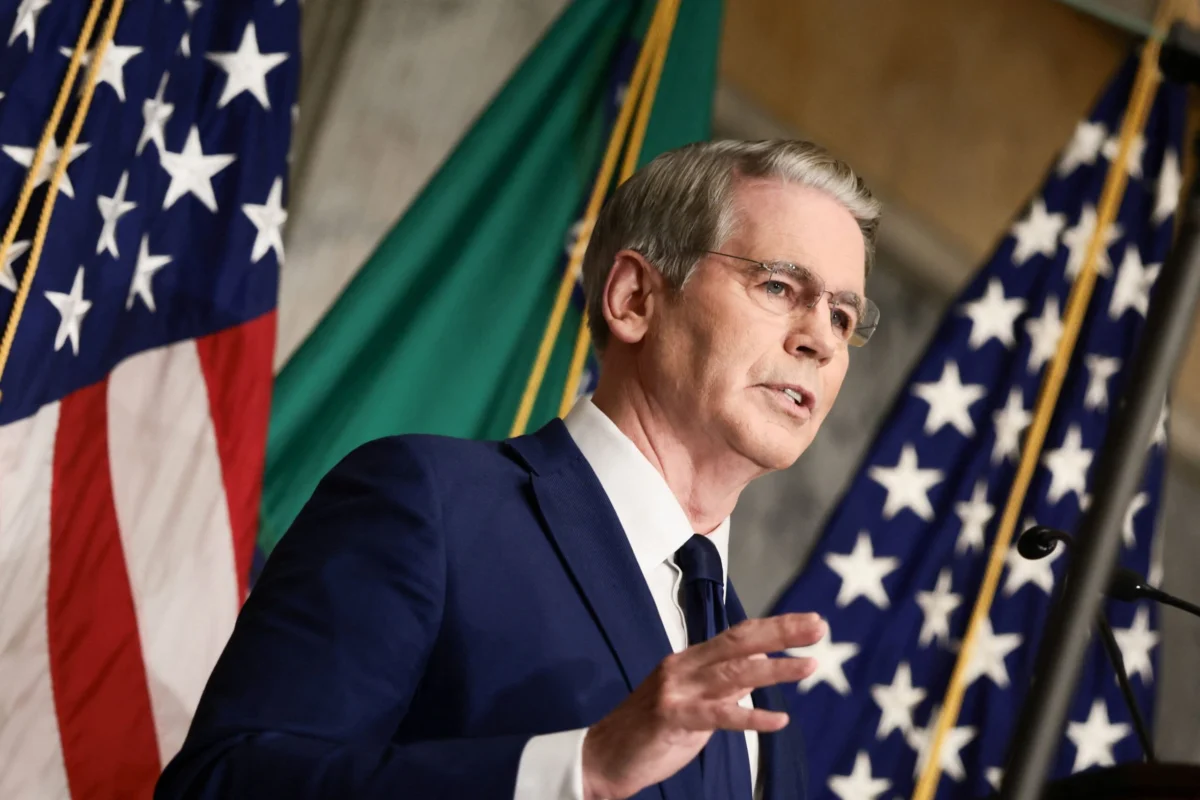
U.S. Treasury Secretary Scott Bessent is scheduled to appear before the House Financial Services Committee on Tuesday for his annual testimony, a highly anticipated event where he is expected to highlight the administration’s perceived successes in its economic campaign against Iran and tout rising wages for lower-income Americans. The session, however, is poised to be a multifaceted examination of the nation’s financial health, with Bessent likely facing intense scrutiny from lawmakers on pressing issues including persistent inflation, escalating energy prices, the trajectory of interest rates, and the burgeoning federal debt.
The testimony comes at a critical juncture for both domestic and international policy. Just weeks after Secretary Bessent outlined further sanctions against Iran at a press conference in Washington D.C. on August 24, 2026, the administration is keen to underscore the efficacy of its "maximum pressure" strategy. According to an advance copy of his prepared remarks obtained by CNBC, Bessent is expected to tell the committee, "The strength of our economy has allowed the United States to wage the greatest economic isolation campaign in the history of the world against the Islamic Republic of Iran and its enablers." This statement sets the stage for a robust defense of the administration’s foreign policy through economic means.
The Iran Sanctions Campaign: A Deeper Look
The "Iran war" referenced in the context of the Treasury Secretary’s testimony is primarily an economic one, characterized by an aggressive and expanding regime of sanctions designed to cripple Iran’s financial lifelines and compel changes in its regional and nuclear policies. This strategy has seen a significant escalation, particularly in recent months, following renewed tensions in the region. The U.S. Treasury Department, under Bessent’s leadership, has been at the forefront of this effort, systematically ratcheting up restrictions on Iran’s oil exports, its banking sector, and entities suspected of facilitating illicit trade or supporting its nuclear and missile programs.
The declared objective of this economic isolation is to sever Iran’s access to international financial markets and revenue streams, thereby limiting its capacity to fund its military, proxy groups, and controversial nuclear activities. Sanctions typically target specific individuals, entities, and sectors, imposing severe penalties on any international firm or financial institution that continues to engage in business with them. The success Bessent is expected to claim likely relates to quantifiable metrics such as reduced oil exports from Iran, a depreciation of the Iranian rial, and increased difficulty for Tehran to conduct international transactions.
However, the campaign is not without its complexities and criticisms. While proponents argue that sanctions are a non-military means of exerting pressure, critics often point to the humanitarian impact on the Iranian populace, the potential for destabilizing the global oil market, and the challenges of enforcing such a widespread economic blockade without unintended consequences. The recent surge in oil prices above $100 a barrel, directly linked by some analysts to the heating up of the "Iran war," underscores the intricate global economic reverberations of such policies. This connection will undoubtedly be a central point of discussion for lawmakers concerned about domestic energy costs.
Economic Crosscurrents: Inflation, Energy, and Monetary Policy
While the administration champions its foreign policy successes, the domestic economic landscape presents a more nuanced picture. Inflation remains a significant concern for American households and businesses. The Consumer Price Index (CPI) has risen 3.4% over the past year, indicating a persistent erosion of purchasing power. This figure, though potentially lower than peak inflation rates seen in previous years, continues to outpace wage growth for many, especially in the middle-income brackets, and fuels public anxiety.
The direct impact of geopolitical events on American consumers is most acutely felt at the gas pump. With oil prices surging past $100 per barrel due to heightened tensions, including those related to the Iran conflict, the average price of gasoline in the U.S. has climbed to $4.32 per gallon as of Monday, according to AAA data. This represents a substantial increase of $1.14 from a year ago. Diesel fuel, crucial for the nation’s supply chains, has seen an even more dramatic rise, reaching $6.23 per gallon, up $2.54 over the past twelve months. These rising energy costs contribute directly to inflation, making transportation and goods more expensive for everyone.
The inflationary environment places immense pressure on the Federal Reserve and its Chairman, Kevin Warsh. Investors, observing the sustained inflation, are "betting heavily on the Fed hiking rates" to cool the economy. However, President Donald Trump has publicly expressed a contrasting view, advocating for the Fed to cut rates. This divergence highlights a long-standing tension between political preferences and the Fed’s traditional mandate for independent monetary policy. Bessent, a long-time friend of Warsh’s, maintains weekly meetings with the Fed’s top official, a customary practice designed to ensure coordination without compromising independence. His testimony will likely delve into how the Treasury views the Fed’s role and how the administration believes monetary policy should address current economic challenges, navigating the delicate balance between supporting economic growth and taming inflation.
Fiscal Landscape: Debt and Interest Rate Pressures
Another significant area of congressional scrutiny for Secretary Bessent will be the administration’s fiscal track record. The national debt has ballooned, crossing the unprecedented $40 trillion mark. This staggering figure raises alarms about the nation’s long-term financial sustainability and its ability to manage future economic shocks. The colossal supply of government debt, combined with substantial spending initiatives—including investments in artificial intelligence and the inflationary pressures from surging oil prices—has contributed to significantly higher funding costs for government borrowing.
This reality is starkly reflected in the bond markets. The yield on the 10-year Treasury note, a benchmark for various consumer and business loans, briefly touched 5.0% on Monday before settling. While a higher yield can sometimes signal investor optimism for U.S. economic growth, in this context, it also underscores the increased cost of borrowing for the government. Critically, these higher benchmark rates translate directly into more expensive consumer debt. The average rate for a 30-year fixed mortgage, for instance, topped 7% last week, making homeownership less affordable for millions of Americans. Lawmakers are expected to press Bessent on how the administration’s emphasis on "affordability" reconciles with these rising borrowing costs, which directly impact housing and other major consumer purchases. The interplay between fiscal policy (government spending and debt) and monetary policy (interest rates) will be a central theme.
Congressional Scrutiny: Bipartisan Concerns and Priorities
The House Financial Services Committee, responsible for oversight of the financial services industry, including the Department of the Treasury and the International Monetary Fund, will serve as a crucial platform for both support and challenge to Bessent’s agenda.
Democrats are anticipated to lead the charge with pointed questions regarding the economy’s challenges. Their focus will likely be on the impact of inflation on everyday Americans, the administration’s strategies (or lack thereof) to alleviate rising energy costs, and the potentially detrimental influence of presidential pressure on the Federal Reserve’s independence. They will also likely scrutinize the rapid accumulation of national debt under the current administration, questioning its long-term economic implications and the fairness of its distribution. Questions about the affordability crisis, particularly in housing, will also be prominent, linking high mortgage rates to the administration’s fiscal policies.
Conversely, House Republicans are expected to use Bessent’s appearance to highlight the positive aspects of the Trump economy. They will likely emphasize the strong job market, with unemployment holding low at 4.1%, and point to the administration’s policies on immigration as contributing to a tighter labor market and upward pressure on wages. The S&P 500’s performance, up approximately 27% since President Trump began his second term despite recent volatility, will be presented as evidence of investor confidence and economic dynamism. Republicans will also likely champion the tax cuts passed last year, which Bessent’s prepared testimony notes have been claimed by "more than 64 million tax returns," framing them as a catalyst for economic growth and individual prosperity. The success of the Iran sanctions campaign will also be a key talking point for Republican members, aligning with the administration’s foreign policy objectives.
International Engagement: The IMF and American Interests
Beyond domestic economic concerns, Bessent’s testimony is formally part of Congress’s oversight of the International Monetary Fund (IMF). Established in 1944, the Washington-based international organization plays a pivotal role in ensuring global financial stability, facilitating international trade, promoting high employment and sustainable economic growth, and reducing poverty around the world.
Secretary Bessent has been a vocal critic of what he perceives as "mission creep" within the IMF, advocating for a more focused approach that prioritizes American interests. His former chief of staff, Dan Katz, notably became the IMF’s No. 2 official last year, a move that could signify a strategic effort to realign the organization’s priorities. Bessent is expected to reiterate the U.S. government’s commitment to "ensuring that American time and resources serve American interests," signaling a potentially more nationalistic stance on international financial cooperation. This perspective may lead to questions from lawmakers about the U.S.’s role in global financial governance and the balance between domestic priorities and international responsibilities. The discussion will likely touch on how the U.S. leverages its influence within institutions like the IMF to advance its foreign policy and economic objectives, including the enforcement of sanctions.
The Administration’s Economic Defense and Looking Ahead
In his prepared testimony, Secretary Bessent will present a narrative of robust economic health and strategic success. He is expected to underscore that wages for the bottom 25% of earners have reportedly risen faster than those for the top income group, a statistic intended to demonstrate an equitable distribution of economic gains. The 4.1% unemployment rate, combined with job creation and a slowing of immigration, will be presented as evidence of a strong labor market. The administration will also highlight the resilience of the stock market, with the S&P 500’s significant gains since the start of President Trump’s second term.
However, the reality facing many Americans—from rising gas prices and housing costs to the broader inflationary environment—will ensure that Bessent’s testimony is far from a mere victory lap. The committee hearing will be a crucial forum for a comprehensive public accounting of the administration’s economic policies, both at home and abroad. The questions posed by lawmakers will not only seek to understand the current state of affairs but also to project the implications of these policies for the future, influencing public perception and potentially shaping legislative action on fiscal responsibility, energy policy, and international relations. The outcome of this testimony will provide significant insights into the administration’s priorities and its capacity to navigate the complex economic challenges of the coming year.
Karen James Sloan contributed to this report.
