

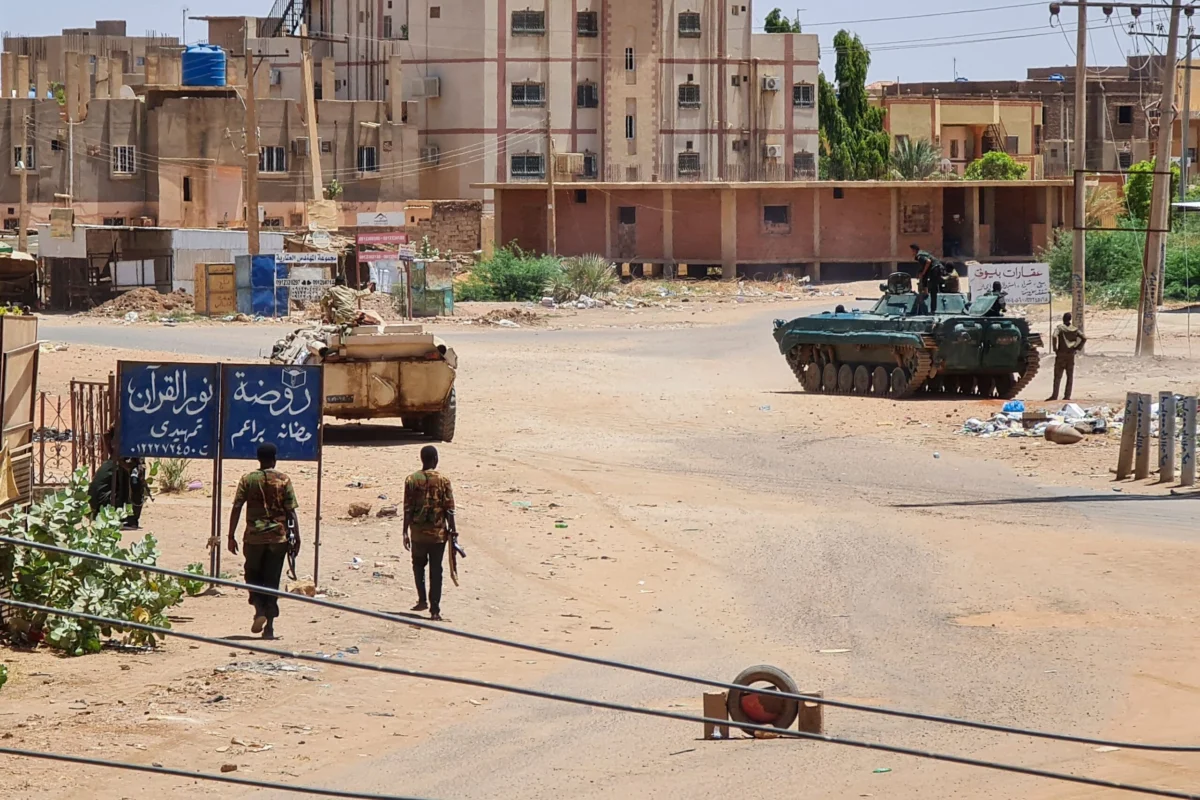
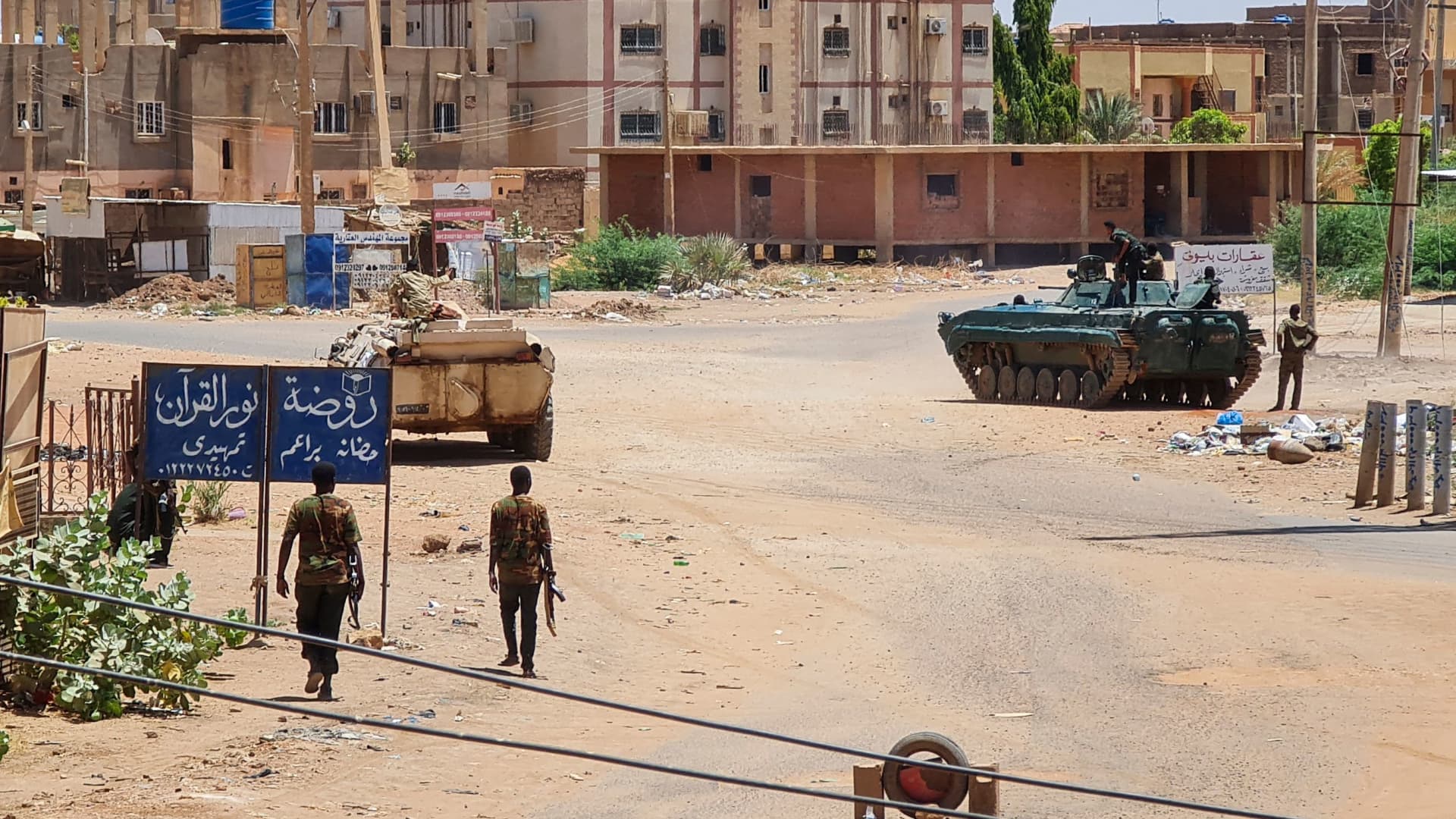
The conflict between Sudan’s two primary military factions has entered its second month, leaving a trail of devastation across the capital city of Khartoum and igniting fresh fears of a protracted civil war. Despite high-level, internationally-brokered peace talks held in Jeddah, Saudi Arabia, a meaningful resolution remains elusive. While the Sudanese Armed Forces (SAF) and the paramilitary Rapid Support Forces (RSF) have engaged in several rounds of negotiations, the reality on the ground is characterized by relentless airstrikes, heavy artillery fire, and a rapidly deteriorating humanitarian landscape that threatens to destabilize the entire Horn of Africa.
Since the outbreak of hostilities on April 15, 2023, the violence has migrated beyond the urban centers of the capital into the long-embattled Darfur region in the west. This expansion of the theater of war has revived memories of the genocidal violence that plagued the region two decades ago. As the two warring generals—General Abdel Fattah al-Burhan of the SAF and Mohamed Hamdan Dagalo, known as "Hemedti," of the RSF—vie for absolute control over the nation’s 46 million inhabitants and its vast natural resources, the civilian population continues to pay the highest price.
The Human Cost: Displacement and Casualties
The International Rescue Committee (IRC) released a somber assessment on Monday, confirming that more than 600 people have been killed and over 5,000 injured since the fighting began. However, humanitarian organizations and local medical groups warn that these figures are likely a significant underestimate. Many deaths go unrecorded as families are forced to bury their loved ones in backyards or public parks, unable to reach hospitals due to the intensity of the street fighting and the presence of snipers.
The displacement crisis has reached staggering proportions. According to United Nations data, nearly one million people have been forced to flee their homes. Approximately 700,000 are internally displaced within Sudan, while more than 200,000 have crossed the borders into neighboring countries, including Egypt, Chad, Ethiopia, and South Sudan. These neighboring states, many of which are already grappling with their own internal economic and security challenges, are now facing a secondary humanitarian crisis as they struggle to accommodate the influx of refugees.
In Khartoum, the situation for those who remain is dire. Despite a theoretical commitment from both factions to restore essential services, the city’s infrastructure is in a state of collapse. Power outages are frequent and prolonged, and the water supply has been cut off in several districts. The price of basic commodities, including food and fuel, has soared by over 300% in some areas, exacerbating an already critical malnutrition crisis. Hospitals have been looted or occupied by military forces, leaving the wounded with few options for life-saving care.
A Chronology of Instability: From Revolution to Civil War
To understand the current conflict, one must look back at the volatile political transition that began with the 2019 popular uprising. The revolution successfully ousted the long-time dictator Omar al-Bashir, who had ruled the country for three decades. Following his fall, a fragile power-sharing agreement was established between civilian leaders and the military, intended to guide Sudan toward democratic elections.
However, this transition was derailed in October 2021 when General Burhan and Hemedti joined forces to lead a military coup. They dissolved the civilian-led government of Prime Minister Abdalla Hamdok and declared a state of emergency. While the international community responded by freezing billions of dollars in aid and debt relief, the military junta remained entrenched.
The current explosion of violence is the culmination of months of rising tensions over a proposed plan to reintegrate the RSF into the regular army. This plan was a key component of a new framework agreement aimed at restoring civilian rule. However, the two generals could not agree on the timeline for integration or who would hold ultimate command over the unified force. By early April 2023, the SAF and RSF began mobilizing troops in Khartoum, leading to the first shots being fired on April 15 at the Soba military base and Khartoum International Airport.
The Jeddah Talks and the Failure of Diplomacy
The United States, the United Nations, and Saudi Arabia have spearheaded efforts to bring the warring parties to the negotiating table. The talks in Jeddah were designed to establish a "declaration of principles" that would allow for humanitarian corridors and a temporary cessation of hostilities. While a document was signed in mid-May committing both sides to protecting civilians, it lacked a formal ceasefire mechanism.
Critically, many Sudanese activists and political analysts argue that the Jeddah talks are fundamentally flawed. A primary criticism is the lack of a substantial civilian voice in the negotiations. By focusing exclusively on the two generals, critics argue that the international community is inadvertently legitimizing the very men who dismantled the democratic transition in 2021.
Furthermore, the absence of credible threats of international sanctions has allowed both Burhan and Hemedti to maintain their belligerence. Without significant pressure on their financial networks—which include gold mining interests and foreign investments—there is little incentive for either leader to compromise. The cycle of impunity that has defined Sudanese politics for decades remains unbroken, as both factions believe they can achieve a total military victory.
Regional Implications and Foreign Influence
Sudan’s conflict is not merely an internal affair; it is deeply entangled with the interests of regional and global powers. The country’s strategic location on the Red Sea and its wealth of natural resources, particularly gold, make it a focal point for foreign influence.
The Sudanese Armed Forces traditionally enjoy the support of Egypt, which views a stable, military-led Sudan as a vital partner for its own national security and its interests in the Nile River water dispute. Conversely, the RSF has cultivated strong ties with the United Arab Emirates and has reportedly received support from the Wagner Group, a Russian private military company active in neighboring Libya and the Central African Republic. Saudi Arabia, while acting as a mediator, also has significant agricultural and security interests in Sudan.
Experts suggest that these complex foreign alignments make a resolution more difficult. As long as external actors continue to provide political or financial cover to either side, the incentive to engage in good-faith negotiations remains low. Activists like Yassmin Abdel-Magied have called for the international community to exert targeted pressure on the countries supporting the military factions, arguing that "throttling" their resources is the only way to force a halt to the fighting.
The Role of Resistance Committees
Amidst the failure of high-level diplomacy, the most effective response to the crisis has come from the grassroots. Resistance committees—informal neighborhood networks that were the backbone of the 2019 pro-democracy protests—have pivoted to humanitarian work. These groups have organized "emergency rooms" to coordinate evacuations, distribute food and medicine, and repair damaged infrastructure.
These committees represent a form of decentralized governance that many believe should be the foundation of a future Sudanese state. Advocates for a civilian-led transition argue that these grassroots leaders should be given a seat at the negotiating table. By empowering those who are actually providing for the population, the international community could shift the balance of power away from the generals and toward the people.
As Abdel-Magied noted, the framework for civilian representation already exists within these committees. Their involvement would ensure that any peace agreement addresses the needs of the majority rather than the ambitions of two military leaders.
Analysis: The Threat of State Failure
The longer the conflict persists, the higher the risk of complete state failure. Sudan was already one of the world’s most fragile states before April 15, with an economy crippled by triple-digit inflation and a massive external debt. A prolonged war could lead to the total collapse of the banking system, the permanent displacement of the professional middle class, and the fragmentation of the country into various fiefdoms controlled by rival militias.
The situation in Darfur is particularly alarming. Reports of ethnically motivated killings and the burning of villages suggest that the conflict is taking on a sectarian dimension. If the central government in Khartoum loses control, the vacuum could be filled by extremist groups or regional warlords, creating a security black hole in the heart of Africa.
Preventing the "worst-case scenario" requires more than just temporary ceasefires; it requires a fundamental restructuring of the Sudanese political and military apparatus. The international community must move beyond "haste" and toward "intentional, diligent action." This includes implementing strict sanctions on the generals’ financial assets, supporting the legal accountability for past and present atrocities, and ensuring that any future government is led by the civilian forces that have consistently risked their lives for a democratic Sudan.
As the conflict enters its second month, the window for a peaceful resolution is closing. The resilience of the Sudanese people remains high, but without a decisive shift in international strategy, the nation faces the grim prospect of a "lost generation" and decades of dysfunction. The global community must act fast enough to arrest the fall, prioritizing the protection of civilians and the restoration of a path toward legitimate, representative governance.
