

The integration of alternative investments into client portfolios presents a significant opportunity for financial advisors to enhance diversification, potentially boost returns, and ultimately improve client outcomes. However, the complex nature of these assets, often referred to as a "beast" by industry professionals, has created a persistent education gap within the advisor community. Addressing this challenge is paramount for the continued growth and sophistication of the financial advisory landscape.
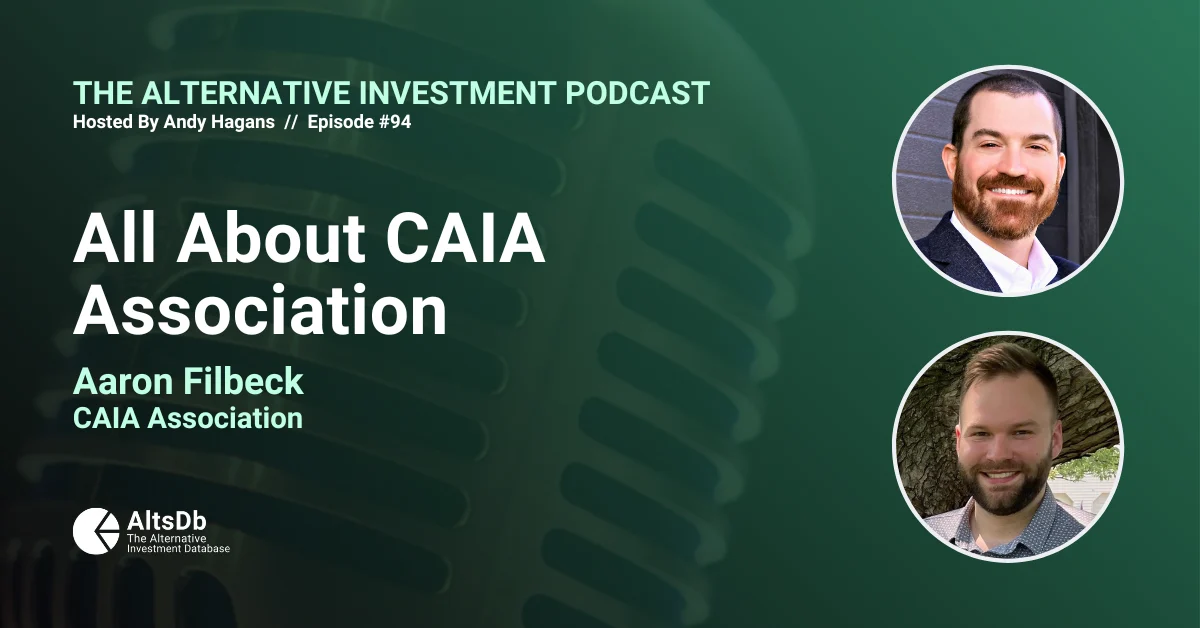
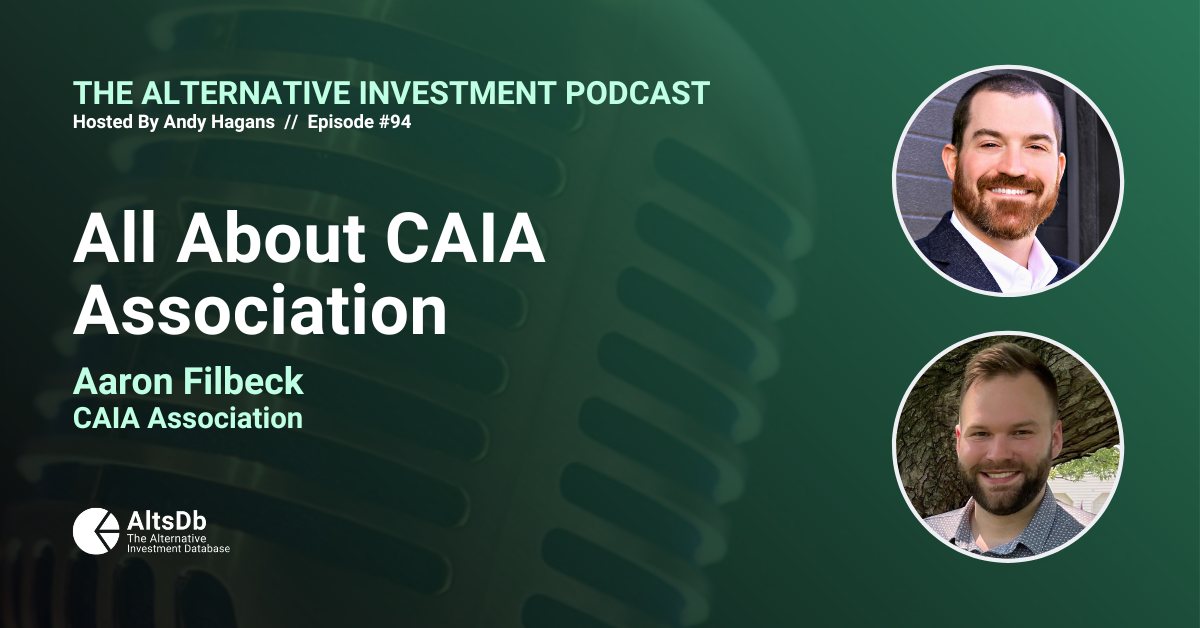
In a recent discussion on "The Alternative Investment Podcast," Aaron Filbeck, managing director and head of UniFi at CAIA Association, highlighted the organization’s mission to bridge this knowledge gap. CAIA Association is dedicated to fostering greater alignment, transparency, and knowledge across the global investment community, with a particular emphasis on alternative investments. Filbeck detailed the various educational initiatives CAIA offers, from its flagship charter program to its newer online learning platform, UniFi, all aimed at equipping advisors with the necessary expertise to confidently navigate and recommend alternative strategies.
The Growing Importance of Alternative Investments
Alternative investments, encompassing asset classes such as private equity, venture capital, hedge funds, real estate, infrastructure, and commodities, have historically been the domain of institutional investors like pension funds and endowments. However, in recent years, there has been a notable shift, with an increasing number of retail investors seeking access to these strategies. This trend is driven by a desire for enhanced diversification beyond traditional stocks and bonds, the potential for uncorrelated returns, and the opportunity to tap into growth areas not readily available in public markets.
Data from the Preqin Global Alternative Assets Report consistently shows robust growth in the alternative investment sector. For instance, assets under management in private equity have seen significant year-over-year increases, reaching trillions of dollars globally. Similarly, venture capital continues to attract substantial capital, fueling innovation across various industries. This expansion underscores the growing relevance of alternatives in modern portfolio construction.
Despite this growth, a significant portion of financial advisors still face challenges in fully understanding and incorporating these complex asset classes. A survey by Cerulli Associates indicated that while advisor interest in alternatives is high, many cite a lack of education and confidence as primary barriers to adoption. This sentiment was echoed by podcast host Andy Hagans, who noted that the need for greater advisor education in alternatives has been a recurring theme in virtually every episode of his podcast.
CAIA Association: A Global Leader in Alternative Investment Education
CAIA Association, a global professional body, has been at the forefront of addressing this educational deficit. With a membership base of approximately 13,000 professionals spread across over 100 countries, CAIA offers a diverse range of resources and credentials designed to elevate understanding and expertise in alternatives.
"We are a member-based organization dedicated to creating greater alignment, transparency, and knowledge for all investors, with a particular focus on the world of alternative investments," Filbeck explained during the podcast. He elaborated on CAIA’s multifaceted approach, which includes formal education programs, thought leadership, and advocacy. This comprehensive strategy aims to "raise the bar for the industry" by providing professionals with the knowledge and skills needed to make informed decisions.
CAIA’s membership is notably diverse, comprising limited partners (LPs), general partners (GPs), financial advisors, regulators, and distribution professionals. This broad representation allows for a rich exchange of perspectives and ensures that CAIA’s educational offerings are relevant across the entire alternative investment ecosystem. Filbeck emphasized that regardless of an individual’s specific role, the ultimate goal is to serve the end client, whether that client is an individual investor or an institutional entity.
The CAIA Charter: A Deep Dive into Institutional Alternatives
The cornerstone of CAIA’s educational offerings is the CAIA Charter program. This rigorous, two-level examination process is designed for professionals seeking in-depth knowledge of institutional-quality alternative investments. The program typically requires candidates to dedicate 200-250 hours of self-study per level, totaling 400-500 hours of preparation.
Level I of the CAIA Charter introduces candidates to various alternative strategies, including private equity, real assets, hedge funds, and structured credit. It covers the fundamental concepts, risk-return profiles, and operational aspects of these investments. Level II then builds upon this foundation, shifting the focus to a portfolio management and allocator’s perspective. This includes crucial elements such as risk management, investment and operational due diligence, and the integration of Environmental, Social, and Governance (ESG) factors.
The CAIA Charter is not exclusively for institutional investors. Filbeck highlighted that its curriculum is designed to teach professionals "how to think like an allocator," a mindset that is invaluable for anyone involved in investment decision-making. This includes financial advisors who may not directly manage institutional assets but need to understand how alternatives fit into a broader portfolio strategy to benefit their individual clients. The program’s evolution over the past two decades reflects the dynamic nature of the alternative investment landscape and the increasing sophistication of institutional allocation strategies.
UniFi by CAIA: Bridging the Gap for Private Wealth Management
Recognizing the specific needs of the private wealth management industry, CAIA launched UniFi by CAIA in 2022. This online learning platform is specifically tailored to educate asset managers, intermediaries, and individual advisors on alternative investments. UniFi offers a more accessible and flexible learning experience compared to the CAIA Charter, utilizing online courses, videos, and self-directed modules.
"UniFi is a learning platform that was announced by CAIA Association last year… and is really designed to educate the private wealth management industry on alternatives," Filbeck stated. The platform aims to upskill distribution teams, advisors at wirehouses, and independent registered investment advisors (RIAs) who need to understand how alternative investments function and how they can be integrated into client portfolios.
UniFi’s flagship offering is the "Fundamentals of Alternative Investments" certificate program, a 20-hour course providing a comprehensive overview of alternative strategies. The platform also plans to introduce micro-credentials, shorter, focused programs delving deeper into specific topics such as private debt and digital assets. These micro-credentials are designed to equip professionals with targeted knowledge to enhance their conversations with clients and investment teams.
Filbeck emphasized the distinction between CAIA and UniFi: "CAIA is gonna be much more for the professional that’s much closer to the investment process… UniFi is much more for kind of more of the individual client wealth management industry." While the CAIA Charter is suited for those requiring deep technical expertise, UniFi is ideal for client-facing professionals who need to be conversant in alternatives and effectively communicate their value proposition to clients.
The Financial Data Professional (FDP) Charter: Navigating the Data Revolution
Beyond alternative investments, CAIA Association also offers the Financial Data Professional (FDP) Charter. This program addresses the increasing intersection of data science and financial services. As data analytics, machine learning, and artificial intelligence become integral to investment strategies across all asset classes, the FDP Charter equips financial professionals with the skills to understand and leverage these technologies.
The FDP program bridges the gap between data scientists and financial professionals, enabling better communication and more effective application of data-driven insights. "The program is really the intersection of data science and financial services," Filbeck explained. It aims to help financial professionals translate complex data science concepts into actionable investment strategies and avoid common pitfalls such as overfitting data. This program is particularly relevant as even firms in traditionally less data-intensive sectors like private equity real estate are increasingly adopting advanced analytical tools.
Addressing the Education Gap: Progress and Future Outlook
The financial industry’s journey in addressing the alternative investment education gap has been ongoing. Filbeck drew a parallel to the early days of liquid alternatives around 2010, characterizing it as a "1.0 of this democratization wave." He acknowledged that this initial phase, which often led with product rather than client needs, "went pretty poorly" in terms of adequate education.
However, Filbeck expressed optimism about the progress made, particularly with the recent acceleration in private capital. He believes the industry is now doing a "much better job" but acknowledges that "there’s still a lot of ground to cover." The focus, he asserts, has shifted towards educating wealth management professionals on the foundational "why" behind allocating to alternative strategies and how these investments ultimately impact client outcomes.
A significant trend Filbeck observes is the increasing willingness of financial professionals to acknowledge their knowledge gaps and actively seek education. "People are much more willing to say, ‘I really need to learn about this. I need to find something,’" he noted. This demand, coupled with advancements in educational technology and a growing emphasis on client-centric approaches, suggests a positive trajectory for alternative investment education.
The increasing client demand for alternative investments is also acting as a powerful catalyst for education. As younger generations of investors become more engaged with diverse asset classes and actively inquire about their inclusion in portfolios, advisors are compelled to enhance their understanding to meet these client needs effectively. This proactive engagement from clients, Filbeck believes, is a key driver for advisors to "bite the bullet and learn about this stuff."
Conclusion
The integration of alternative investments into client portfolios is no longer a niche strategy but a growing imperative for financial advisors seeking to provide comprehensive and sophisticated wealth management solutions. CAIA Association, through its robust charter programs and innovative online learning platform UniFi, is playing a pivotal role in equipping professionals with the knowledge and expertise required to navigate this complex landscape. As the industry continues to mature and client demand for alternatives rises, the commitment to ongoing education remains critical for fostering informed decision-making, improving client outcomes, and ultimately driving the responsible growth of the alternative investment sector. The journey towards closing the education gap is ongoing, but the current momentum, fueled by both industry initiatives and evolving client expectations, signals a promising future for alternative investment literacy among financial advisors.
