

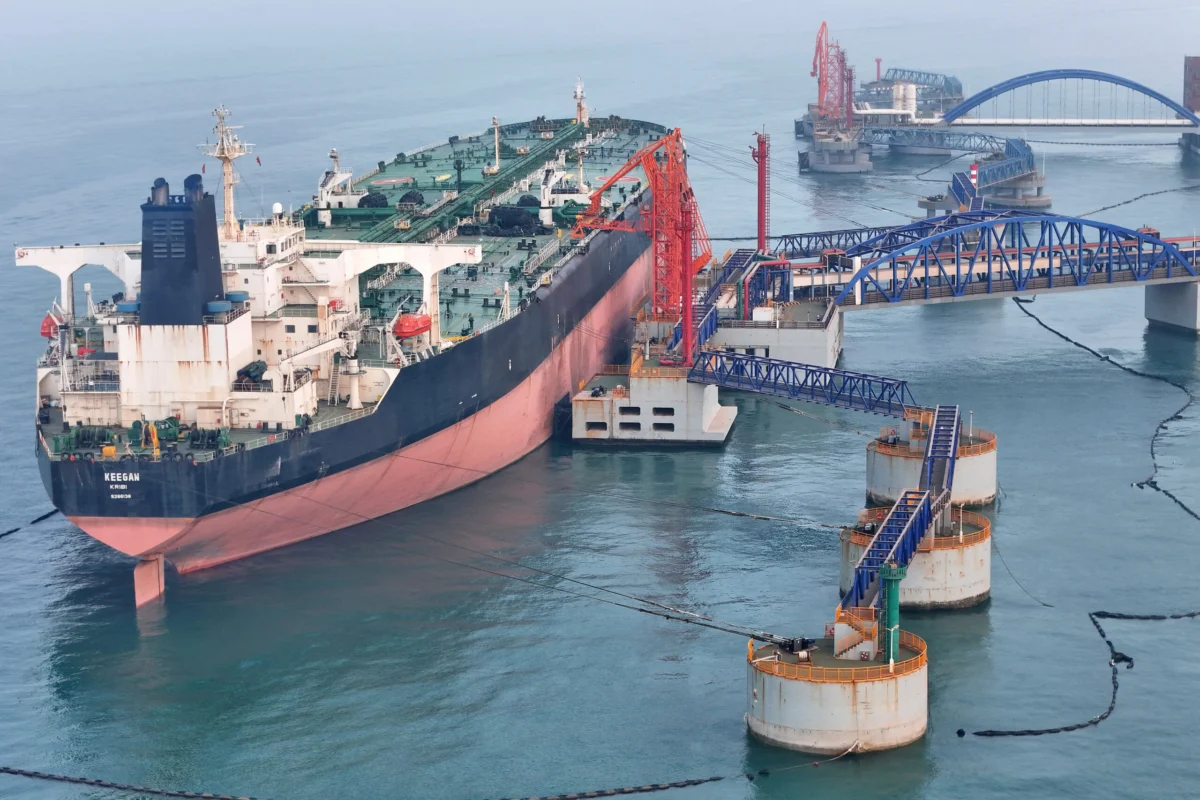
The global oil market is experiencing a significant resurgence, with prices rallying sharply and threatening to test the wartime highs observed earlier in the year. At the heart of this renewed upward pressure lies China, whose evolving demand dynamics are now poised to play a pivotal role in determining the sustainability and magnitude of this price surge. As geopolitical tensions escalate in the Middle East and global supply buffers dwindle, the world’s second-largest economy is transitioning from a mitigating "swing consumer" to a potent demand driver, fundamentally reshaping market expectations.
Oil Market Rebounds Amidst Geopolitical Volatility
This week witnessed a pronounced rally in crude oil futures, with the U.S. crude oil price surpassing $102 per barrel on Thursday, marking its highest close since May. This significant ascent represents an approximately 50% surge from its summer low of $68.55, a trough reached just weeks after the initial signing of a now-defunct memorandum of understanding (MOU) between Washington and Tehran on June 17. The market’s current trajectory is a stark departure from the relative calm that characterized the summer months, reflecting a confluence of supply-side concerns and an unexpected demand revival.
The primary catalyst for this week’s intensified rally has been a sharp escalation of fighting in the Middle East. Critically, this unrest led to the shutdown of Saudi Arabia’s crucial East-West oil pipeline following multiple attacks. This development immediately injected a substantial risk premium into prices, underscoring the enduring vulnerability of global energy infrastructure to regional conflicts.
According to Bob McNally, president of Rapidan Energy, the oil market has been gradually restoring a risk premium since the US-Iran MOU collapsed and the U.S. reimposed its naval blockade of Iran in July. However, despite the recent gains, U.S. crude prices still remain below their April 7 wartime closing high of $112.95, indicating that while the market is reacting to current events, there might still be room for further upward movement should underlying conditions persist or worsen. The memory of crude hitting a staggering $140 per barrel in the early months of the conflict, a level not seen since the 2008 financial crisis, serves as a stark reminder of the potential for extreme volatility under duress.
China: The Undisputed Swing Consumer Turns Demand Driver
While the immediate market reaction has focused on Middle Eastern supply disruptions, analysts are increasingly pointing to China as the long-term determinant of whether this rally sustains or falters. Rebecca Babin, senior energy trader at CIBC Private Wealth, highlights that the market may not have fully factored in China’s impending increase in imports. "What isn’t reflected is the fact that we may actually see a stronger demand pull for crude as refiners start to really try to ramp up in China, tightening the market further," Babin stated on CNBC’s "Squawk Box" on Friday.

For much of the ongoing global geopolitical crisis, China has played a unique and crucial role in tempering oil price increases. By acting as a "swing consumer," Beijing had previously slashed its crude imports dramatically, ranging between 3 million barrels per day (bpd) to 5 million bpd. This strategic reduction was facilitated by China’s colossal petroleum reserve, estimated to hold more than 1 billion barrels, providing a substantial buffer against supply shocks and allowing the nation to weather periods of high prices without immediately re-entering the market as a major buyer.
McNally succinctly termed this phenomenon "China’s crash diet." Speaking on CNBC’s "The Exchange" on Tuesday, he elaborated, "The biggest factor containing crude oil prices since this thing started is China’s crash diet. It’s coming off the diet and it’s thirsty and it’s hungry – it’s starting to bid crude up." This shift signifies a critical pivot in global energy dynamics, as the world’s largest energy consumer re-enters the market with renewed vigor.
The Mechanics of China’s Renewed Thirst for Crude
The incentive for Chinese refiners to re-enter the market is compelling and largely driven by economic realities. The profit margin to produce diesel has soared dramatically, a direct consequence of the Iran and Ukraine wars which have collectively knocked out a significant amount of global refining capacity. The conflict in Ukraine, in particular, disrupted traditional European refining operations and supply chains, while the protracted tensions involving Iran have curtailed crude flows and influenced product markets.
"Now that these refining margins are so extreme, they literally can’t pass it up," Babin explained. "They’re going to buy crude and they’re going to put product on the market and make money." This commercial imperative is a powerful force, pushing Chinese refiners, many of which are state-owned or heavily influenced by government directives, to capitalize on lucrative opportunities in the global products market. The sheer scale of China’s refining sector means that even a moderate increase in their crude purchases can send significant ripples through the global market.
Data Chronicles China’s Import Fluctuations
The data underscores China’s volatile import patterns throughout the crisis. According to Kpler data, China’s crude imports plummeted to a wartime low of approximately 6 million bpd in June. This represented a staggering nearly 50% decline compared with the 11.5 million bpd observed in February, prior to the full impact of global supply disruptions and China’s strategic demand suppression. However, Kpler’s figures also reveal a subsequent increase, with imports rising to around 7 million bpd in July and August. This incremental rise signals the initial stages of China’s return to the market.
Despite this upward trend, some analysts suggest a cautious approach to extrapolating future demand. Matt Smith, director of commodity research at Kpler, notes that China’s buying activity this month is at a similar level to July and August and is unlikely to dramatically ramp up beyond that. Smith believes that Beijing is a "very savvy buyer" and will likely "lean more on inventories and keeping refinery runs in check rather than buying oil in triple digits." This perspective suggests that while China is back in the market, its purchases might be more measured and opportunistic rather than a full-throttle return to pre-war levels, especially if prices remain elevated.

Amrita Sen, founder of Energy Aspects, echoed this sentiment in an interview with CNBC’s "Access Middle East" on Friday, stating that while China’s crude purchases are not expected to return to pre-war levels, they have indeed increased over those seen in the spring. This nuanced view highlights the strategic complexity of China’s energy policy, balancing domestic economic stability with international market leverage.
Eroding Buffers: Depleting Global Inventories and Strategic Reserves
Beyond China’s shifting demand, another critical factor pushing oil prices higher is the rapid depletion of global oil inventories. Emergency stockpile releases, a key policy tool employed by major consuming nations to mitigate price spikes, are nearing their conclusion. The U.S. Energy Information Administration (EIA) reports that global inventories have plunged by a staggering 400 million barrels after more than six months of war. This massive draw-down has effectively eroded one of the primary buffers that had prevented oil prices from skyrocketing even further earlier this year.
The Strategic Petroleum Reserve (SPR) of the United States, for instance, has seen its lowest levels in decades, a consequence of repeated releases aimed at stabilizing the market. While these releases achieved their short-term goal of increasing supply and taming prices, they also diminished the world’s collective ability to respond to future supply shocks. The impending end of these releases means that the market will soon lose a significant source of additional crude, placing greater pressure on existing production and commercial inventories.
McNally encapsulated the broader market sentiment, stating, "Summer is over, peace didn’t happen, the war is still going on." He also noted a significant shift in the market’s psychological resilience. Efforts by administrations to "talk down the market" or engage in "jawboning" about imminent peace prospects, which were previously effective in dampening speculative buying, are now proving less potent. "The market’s optimism bias, its willingness to sell off on verbal intervention, jawboning about peace being around the corner, seems to be ebbing a little bit," McNally observed. This indicates a more hardened market perspective, less swayed by rhetoric and more focused on tangible supply-demand fundamentals and geopolitical realities.
The Broader Geopolitical and Economic Landscape
The sustained rally in oil prices, driven by both supply concerns and resurgent Chinese demand, carries significant broader implications. Economically, higher crude prices translate directly into increased inflationary pressures globally. Consumers will face higher costs at the pump, impacting discretionary spending and potentially slowing economic growth in already fragile economies. Industries reliant on energy, from transportation to manufacturing, will see their operational costs rise, potentially leading to higher prices for goods and services across the board. Central banks, already battling persistent inflation, will face renewed pressure to tighten monetary policy, even at the risk of inducing a recession.
Geopolitically, the escalating conflict in the Middle East and the ongoing war in Ukraine underscore the fragility of global energy security. The targeting of critical infrastructure, such as Saudi Arabia’s East-West pipeline, highlights the vulnerability of supply routes and the potential for widespread disruption. For nations heavily reliant on oil imports, such as those in Europe and Asia, the prospect of sustained high prices and supply volatility raises urgent questions about diversification, renewable energy investments, and strategic alliances.

China’s re-entry into the market also has geopolitical dimensions. As a major global player, its energy demands are intricately linked to its economic growth and strategic ambitions. Beijing’s careful management of its reserves and its measured return to buying reflect a sophisticated understanding of market dynamics and a desire to secure its energy needs without unnecessarily inflating prices against itself. However, its sheer purchasing power means that its actions will inevitably influence global energy flows and prices, affecting other consuming nations.
Future Outlook: Navigating an Uncertain Energy Future
The convergence of escalating geopolitical tensions, dwindling strategic reserves, and China’s renewed demand signals a challenging period ahead for the global oil market. The "inflection point" suggested by some analysts could indeed see prices moving significantly higher, potentially surpassing the previous wartime highs if these factors persist or intensify.
The market will be closely watching several key indicators: the resolution or further escalation of conflicts in the Middle East, particularly around critical oil infrastructure; the pace and scale of China’s crude imports, especially as its economy navigates its post-pandemic recovery and industrial activity ramps up; and the overall global economic outlook, which will dictate underlying demand. The nearing end of strategic petroleum reserve releases removes a key safety net, making the market more susceptible to supply shocks.
In this environment, energy security will remain a paramount concern for governments worldwide. Investments in alternative energy sources, efforts to enhance energy efficiency, and diversification of supply chains are likely to accelerate. However, for the foreseeable future, the world remains heavily dependent on crude oil, and the interplay of geopolitical forces, economic imperatives, and the strategic decisions of major players like China will continue to dictate its price trajectory. The current rally is not merely a transient fluctuation; it represents a fundamental recalibration of risk and demand in a world grappling with persistent instability.
