

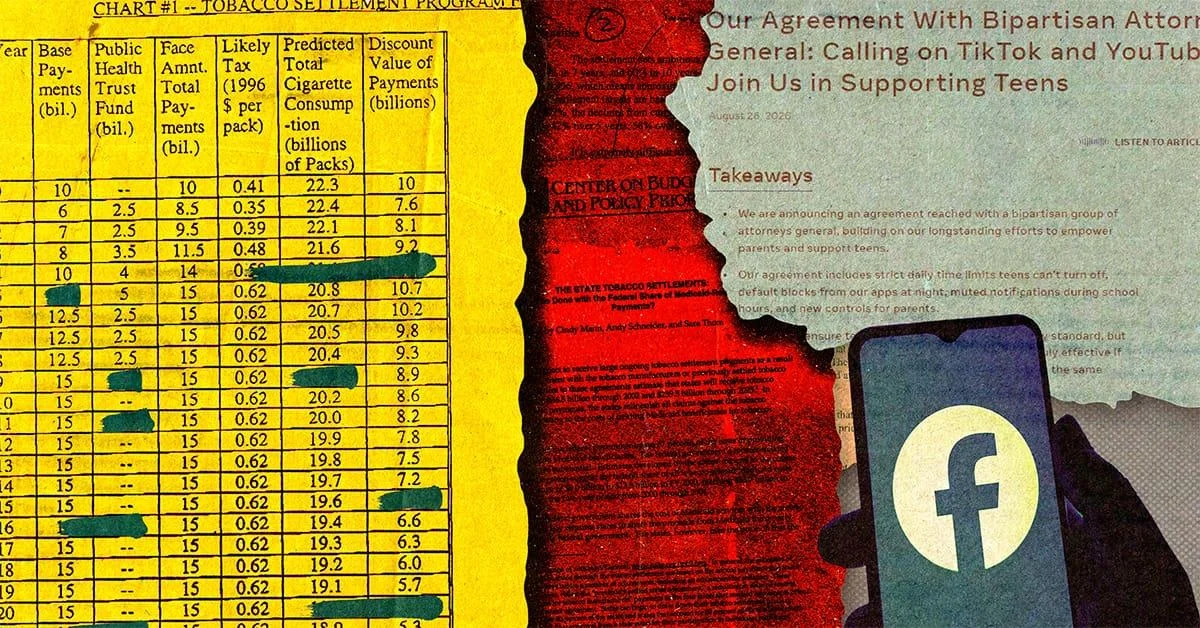
The recent $18 billion settlement reached between Meta Platforms Inc. and a coalition of state attorneys general has been widely characterized as the social media industry’s "Big Tobacco moment." While the ultimate parallel between this landmark agreement and the tobacco industry’s historic legal battles remains to be seen, the profound risk management and compliance lessons embedded within the Meta settlement extend far beyond the confines of social media, according to legal and industry experts. The implications are particularly salient for any company whose technology intersects with the public, especially vulnerable young users, underscoring the imperative of integrating compliance and legal considerations from the earliest stages of product development.
The settlement, approved by U.S. District Judge Yvonne Gonzalez Rogers in Oakland, California, concluded a significant federal trial that had seen attorneys general from 29 states allege that Meta’s platforms, Facebook and Instagram, were designed in ways that harmed children’s privacy and consumer product safety. The states had initially sought approximately $200 billion, highlighting the gravity of their claims. Meta, in agreeing to implement a raft of child safety-related changes, including new time limits, notification blackout periods, and enhanced age verification measures, has not formally admitted its platforms cause harm to children. Instead, the company focused its concessions on protections for minors, thereby sidestepping broader consumer safety claims. This strategic approach has drawn comparisons to the tobacco industry’s past practices, where concessions were made to limit usage rather than fundamentally alter the product’s inherent risks.
"Waiting for the product to be built and then adding compliance features at the end will not mitigate the risk of enforcement in this increasingly active regulatory environment, especially for child- and teen-focused technology products," stated Charlie Germano, counsel and chief technologist at BBB National Programs. This sentiment was echoed by Carol Villegas, a partner at Labaton, who emphasized the financial implications for smaller organizations. "Think about the effect that this is going to have on companies that aren’t as big as Meta. The fear and risk that they would face: ‘Even a fraction of $17 billion could bankrupt us’," Villegas cautioned.
The Shadow of Big Tobacco: Parallels and Precedents
The comparison to the Master Settlement Agreement (MSA) signed by tobacco companies in the late 1990s is compelling due to several striking similarities. Both involved bipartisan coalitions of state attorneys general, resulted in multi-billion dollar financial settlements, mandated significant changes in corporate behavior, and crucially, were underpinned by internal documents revealing that the companies possessed greater knowledge about the potential harms of their products than they publicly disclosed.
In both cases, internal communications proving that employees had voiced concerns, which were subsequently ignored or suppressed, proved particularly damning. Monte Mann, an attorney at Armstrong Teasdale, identified this as one of the most actionable lessons for corporate integrity leaders across all industries. "Problems arise when the documents show that employees recognized a risk, discussed it among themselves and then allowed the issue to disappear without a meaningful response," Mann explained. "If those same documents also suggest that revenue or engagement concerns influenced the decision, they can be very difficult to explain to a jury years later." This underscores the principle that a robust speak-up culture is not merely an ethical imperative but a critical component of effective risk management.
A New Era of Platform Accountability?
The Meta settlement mandates significant changes to the design of Facebook and Instagram, aiming to curb the addictive nature and potential harms associated with prolonged engagement, particularly for younger users. Features like "infinite scroll," a primary target of the attorneys general’s allegations regarding addictiveness, will remain, but other changes are intended to limit the depth of engagement for teens. However, notably absent from the list of mandated changes are direct messages, which by default will not be subject to notification blocks. This aspect is particularly concerning, as a separate, earlier New Mexico case identified direct messaging as a primary conduit for adult contact with minors.
By settling, Meta avoided a potentially more damaging outcome: a court ruling that could have provided a blueprint for future litigation by states, schools, and private plaintiffs. Stanford law professor Nora Freeman Engstrom had warned that a loss for Meta could have established a legal precedent. The core question – whether engineering algorithmically compelling platforms while concealing known harms constitutes a defective product under consumer protection law – remains unanswered. While this outcome is beneficial for Meta’s immediate financial standing, it leaves companies in adjacent industries, particularly those with engagement-driven products such as artificial intelligence (AI), without definitive legal clarity.
The Long Road to Genuine Oversight
The settlement’s effectiveness hinges on the implementation of mechanisms for independent oversight. While Meta has committed to changes and hopes to influence similar shifts in other social media platforms, the lasting impact is yet to be determined. The settlement envisions an independent research foundation with access to user data and a third-party auditor tasked with verifying compliance with product changes annually for five years. However, the specifics of these governance structures – including the selection process for the auditor, the scope of their access, and the procedures for addressing noncompliance – are not yet publicly defined.
Dona Fraser, senior vice president of privacy initiatives at BBB National Programs, emphasized the distinction between independent self-regulation and industry self-regulation. "The latter is simply self-policing; the results of that are clearly on display," Fraser stated, referencing the historical shortcomings of industry-led oversight. "A settlement can tell a company what it must do today. Independent self-regulation can help create the culture and systems that determine how a company makes decisions tomorrow. We need both, but we shouldn’t wait for a multibillion-dollar lawsuit before independent accountability begins."
Alexandra Ryabova, head of operations at Wizz App, a platform that has also faced scrutiny over child safety, concurred. "The historical pattern across industries is pretty consistent: voluntary self-policing coalitions without external teeth or independent access tend to have a mixed record," Ryabova observed. "That’s less a verdict on any one company and more just what tends to happen when accountability stays voluntary. For smaller organizations, compliance will require real costs tied to the product, which will be needed to adjust investment and how it is redistributed across the business stack and development priorities."
Lessons for the Future of Technology and Compliance
The Meta settlement serves as a potent reminder that a company’s public pronouncements must align with its internal practices, especially when significant potential harms are involved. The financial implications for Meta, while substantial, are relatively modest for a company of its size. However, for smaller entities operating in the child-facing technology space, the potential for crippling liability due to inadequate safety features is a stark reality.
The settlement’s impact on future litigation is also significant. While Meta has settled, other major platforms like TikTok and YouTube, which Meta sought to include in the agreement, have not yet joined. Their decision to participate would trigger additional protections and substantial conditional payments, further shaping the landscape of online child safety. Furthermore, Meta itself continues to face individual and school district lawsuits, with some trials slated for later this year.
The Emerging Frontier: Artificial Intelligence
Looking beyond social media, legal experts see a direct parallel to the burgeoning field of artificial intelligence (AI). Carol Villegas, who has extensive experience litigating against Meta, anticipates that the playbook developed for social media litigation will be adapted for AI chatbots. These AI systems, often designed to maximize engagement, have demonstrated a particular appeal to vulnerable young users. As they accumulate vast amounts of human behavioral data, this information could become as damaging in discovery as Meta’s internal documents proved to be.
"I think we’re going to see some COPPA lawsuits coming from that," Villegas predicted, referring to the Children’s Online Privacy Protection Act. She cautioned that even companies that do not develop their own AI are not absolved of risk, as attempts to delegate AI liability are increasingly being rejected by courts and regulators.
Ultimately, the core lesson from the Meta settlement, and one that companies should have internalized by now, is the critical importance of aligning internal communications and actions with public statements. As Monte Mann aptly put it, "The best time to conduct that review is before a regulator or plaintiffs’ lawyer conducts it for you." This proactive approach to compliance and risk management is not just a defensive strategy but a fundamental requirement for building trust and ensuring long-term sustainability in an increasingly scrutinized digital world. The Meta settlement, while a significant step, is likely just the beginning of a broader reckoning for the technology industry, forcing a more profound and sustained commitment to ethical product development and robust child safety measures.
