

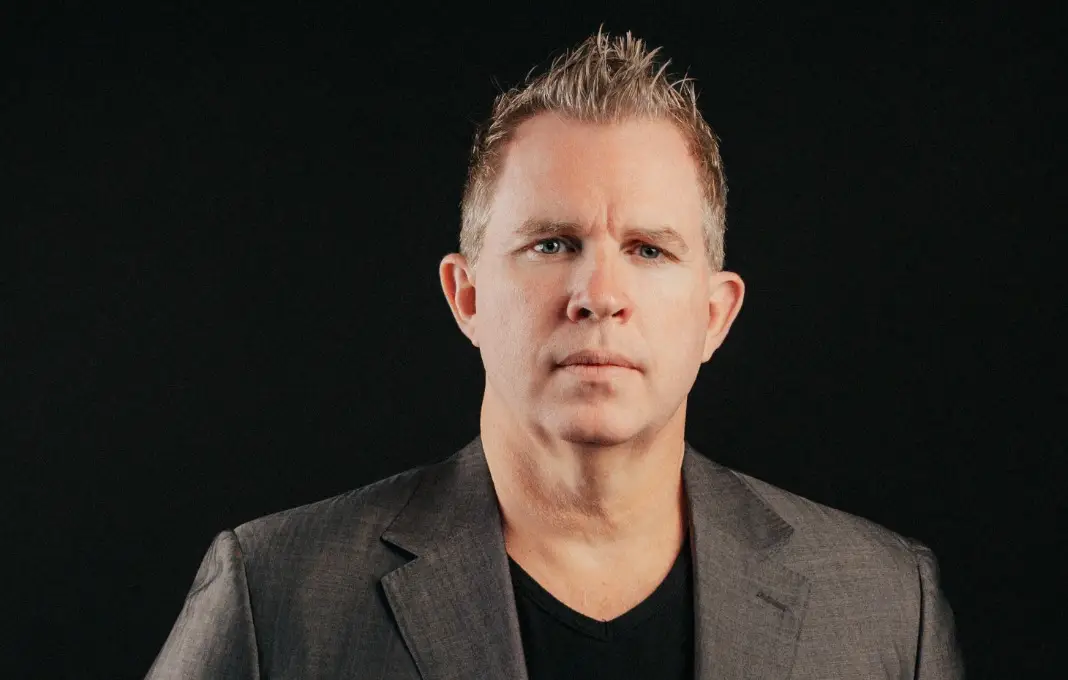
In a landscape increasingly defined by the imperative for energy independence and resilient domestic supply chains, U.S. Modules, a burgeoning solar manufacturer, is charting a course focused on disciplined execution, fostering a healthy team and culture, and strategically strengthening its infrastructure to create meaningful American jobs. Spearheaded by manufacturing developer Charles Carey, founder of CIG Companies, the venture is built on a mission extending beyond mere commercial expansion. Carey articulates a vision rooted in bolstering American energy independence, fortifying critical infrastructure, and generating sustainable employment opportunities within the United States, a commitment he emphasizes as deeply personal.
U.S. Modules is actively establishing domestic solar panel production capabilities, commencing with an initial 400-megawatt (MW) production line. The facility is meticulously designed with scalability in mind, capable of expanding to approximately 1.4 gigawatts (GW) as additional production lines are brought online. This expansion is projected to create a workforce of roughly 250 employees, underscoring the company’s commitment to job creation. A key tenet of their hiring strategy involves a dedicated focus on recruiting veterans, recognizing the invaluable leadership qualities and discipline honed through military service, which are being integrated into the company’s executive and leadership development programs.
The U.S. Modules Distinction: Beyond Panel Production
What sets U.S. Modules apart, according to Carey, is its foundational philosophy: "We are building domestic capability that supports American energy independence, strengthens infrastructure and creates meaningful U.S. jobs. For me, that matters." This mission-driven approach is coupled with an unwavering commitment to operational excellence. "Just as important, we are trying to build it the right way," Carey states. "That means disciplined execution, a healthy team and a culture that does not treat people like an afterthought."
The company’s operational ethos is encapsulated in three core values: hunger, humility, and zeal. "Hunger to keep improving," Carey explains, drives continuous innovation and refinement. "Humility to serve the team and stay coachable" fosters a collaborative and learning-oriented environment. "Zeal to bring real pride and energy to the work" imbues the workforce with a sense of purpose and dedication. Carey believes that by adhering to these principles, U.S. Modules will not merely produce solar panels but will construct a durable and impactful enterprise.
Operational Backbone: Precision, Safety, and Scalability
The manufacturing operations at U.S. Modules are centered on precision, safety, and the capacity for significant growth. The first production line was commissioned in March of the current year, marking a significant milestone in their expansion. The facility itself is engineered to support cutting-edge, utility-scale solar module manufacturing, with safety, quality, and stability identified as paramount priorities. At the inception of Production Line 1, the team comprised approximately 50 individuals, encompassing production support, engineering, quality assurance, supervision, and operational personnel. The site’s strategic layout is optimized for the integration of two production lines as the company scales.
Operationally, the focus remains resolutely on establishing a manufacturing environment characterized by robust process control and clearly defined standards, enabling team members to achieve success. While acknowledging the ongoing refinement of technical details concerning process flow, equipment, and line optimization during this early growth phase, the overarching model prioritizes safe, repeatable production underpinned by a long-term strategic outlook.
The Veteran Advantage: Leadership, Discipline, and Resilience
A distinguishing feature of U.S. Modules is its emphasis on veteran leadership, a strategic choice that permeates the manufacturing floor and influences team dynamics. Carey elaborates on how this translates into practical operational benefits: "For us, it’s about how leadership shows up. It means clarity. Accountability. Calm under pressure. Respect for standards. Respect for each other. On a manufacturing floor, those things matter."
This emphasis on veteran leadership is intrinsically linked to the company’s comprehensive leadership development initiatives. The executive and leadership programs are significantly informed by lessons drawn from military service, focusing on the discipline, clarity, and resilience essential for effective leadership in demanding environments. Furthermore, these programs integrate a grit-based approach to development, empowering leaders and team members to clarify objectives, cultivate persistence, and maintain long-term commitment. Consequently, on the manufacturing floor, this translates into steadier leadership, enhanced follow-through, stronger interpersonal trust, and teams that possess a clear understanding of both established standards and the underlying mission.
The advantages of hiring veterans into manufacturing roles, particularly during periods of scaling production, are multifaceted. Veterans frequently possess inherent qualities that align seamlessly with manufacturing demands, including discipline, adaptability, accountability, and a strong sense of teamwork. As production capacity expands, these attributes become increasingly critical, as growth inherently places pressure on both operational efficiency and organizational culture. U.S. Modules has been deliberate in its support for this demographic through targeted leadership development and recruitment strategies. The company’s leadership model, influenced by military principles of persistence, clarity, and commitment, actively shapes their approach to team building. This is not merely a matter of fulfilling diversity quotas but a recognition that veterans often bring ingrained habits of execution and resilience that tangibly strengthen the workplace environment.
Addressing Workforce Gaps: Skills, Readiness, and Retention
Despite the advantages, U.S. Modules acknowledges existing challenges in cultivating a reliable manufacturing workforce within the United States. A significant gap lies not only in specific technical skills but also in overall workforce readiness. Hiring for a specific role is distinct from developing a workforce capable of sustaining high standards over extended periods.
The company’s challenge, therefore, is to build a comprehensive pipeline that encompasses technical proficiency, operational consistency, robust leadership development, and long-term employee retention. This is why U.S. Modules places a strong emphasis on culture during the hiring process. "We can teach a lot," Carey notes. "What is harder to teach is hunger, humility and zeal." The synergistic combination of teachable skills and innate character traits is seen as the key to forging a more resilient and effective workforce.
Strategic Location: College Station and the Texas A&M Nexus
The decision to establish U.S. Modules in College Station, Texas, was significantly influenced by the availability of engineering and technical talent, particularly given its proximity to Texas A&M University. Carey describes the choice as "a pretty easy decision." The location provides direct access to a substantial pool of engineering and technical expertise, with Texas A&M recognized for its long-standing contributions to engineering, manufacturing, and practical problem-solving – attributes crucial for a company focused on scalable growth. Beyond the strategic advantages, the company also expresses a genuine affinity for the College Station community, viewing it as a strong base from which to grow in collaboration with local residents, businesses, and leadership. The sentiment, "Go Aggies!" reflects a commitment to fostering deep community ties.
Nurturing Talent: Bridging Early-Career and Experienced Hires
U.S. Modules employs a dual strategy for recruiting and training talent, recognizing the distinct contributions of both early-career professionals and experienced manufacturing hires. Early-career talent brings fresh perspectives, enthusiasm, and significant long-term potential, while experienced hires offer invaluable judgment, pattern recognition, and operational maturity. The company’s objective is to cultivate an environment where both groups can thrive collaboratively.
The overarching priority remains culture-centric recruitment. U.S. Modules seeks individuals who demonstrate genuine care, a capacity for learning, strong teamwork skills, and a desire to contribute to something meaningful. This is complemented by robust training programs, with the company aiming to develop training initiatives that become industry benchmarks, thereby creating genuine opportunities across all career levels.
Scaling Challenges and the Pursuit of Capability
As production capacity scales, U.S. Modules identifies specific skill sets that prove more challenging to source locally. The difficulty escalates when seeking individuals who possess a confluence of technical competence, leadership acumen, and manufacturing discipline. This reality underscores why relying solely on local hiring is insufficient. A successful strategy necessitates a blend of local talent, experienced professionals from outside the immediate area, and a well-developed internal growth system that empowers individuals to advance into larger roles. The company’s focus is not merely on filling immediate vacancies but on systematically building organizational capability.
The Road Ahead: Expanding Production and Powering America
The immediate future for U.S. Modules is centered on the launch of its second production line. This represents a significant step forward in production capacity and an enhanced opportunity for continued growth. Production Line 1 served to validate the company’s operational systems and quality standards, proving its capability. Production Line 2 will amplify this by expanding manufacturing capacity, bringing the company closer to the scale required to meet market demands. The ultimate objective, though complex in execution, is straightforward: to increase panel production, facilitate their widespread installation, and contribute to powering America with dependable domestic energy infrastructure. This strategic expansion aligns with broader national objectives of energy security and the development of a robust clean energy sector. The implications of U.S. Modules’ growth extend beyond its immediate economic impact, contributing to the vital rebuilding and strengthening of America’s manufacturing base in a critical sector.
