


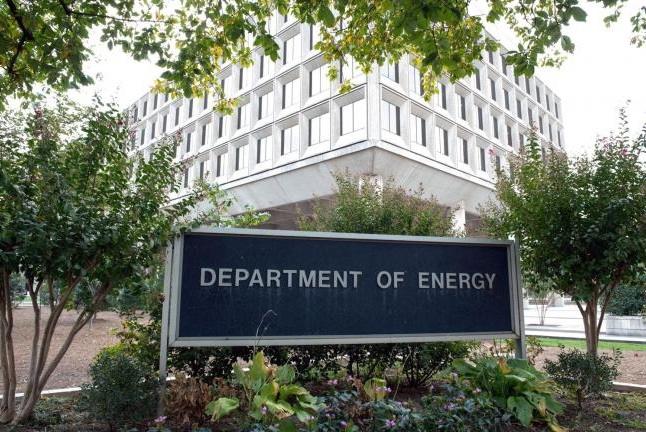
The United States Department of Energy (DOE), through its newly established Office of Critical Minerals and Energy Innovation (CMEI), has officially authorized the allocation of $500 million in federal funding to accelerate a suite of high-impact projects designed to fortify the nation’s domestic supply chain for critical minerals and battery materials. This substantial investment marks a pivotal moment in the administration’s efforts to internalize the production, processing, and recycling of materials that are essential to both national security and the broader energy infrastructure. By targeting the midstream and downstream segments of the battery life cycle, the DOE aims to mitigate the long-standing vulnerabilities associated with a heavy reliance on foreign adversaries for the raw materials that power modern technology.
This announcement follows a strategic roadmap laid out in early 2025, during which the DOE signaled its intent to deploy nearly $1 billion in total funding toward the domestic mineral sector. The $500 million released this week represents the first major tranche of that commitment, specifically earmarked for seven selected projects that demonstrate high potential for commercial scalability and technological innovation. These projects are distributed across several key industrial hubs in the United States, focusing on the refining of "black mass" from spent batteries, the rejuvenation of cathode materials, and the domestic production of chemical precursors that were previously imported in vast quantities.
A Strategic Shift Under the Unleashing American Energy Framework
The funding programs are fundamentally aligned with the current administration’s "Unleashing American Energy" Executive Order. This policy framework emphasizes a multifaceted approach to energy production, aiming to secure American energy dominance by leveraging every available domestic resource. While the administration has notably shifted federal priorities toward the expansion of fossil fuel production and the deregulation of traditional energy sectors, the DOE’s continued support for critical minerals highlights a pragmatic recognition of the role these materials play in the global economy and national defense.
By framing critical mineral independence as a matter of national security rather than strictly an environmental initiative, the DOE has secured bipartisan interest in rebuilding the American industrial base. The goal is to ensure that the U.S. is not merely a consumer of advanced battery technologies but a primary manufacturer and recycler. This shift is intended to decouple American high-tech industries from the global supply chains currently dominated by China, which currently controls over 80% of the world’s rare earth processing and a significant majority of the lithium-ion battery component market.
Deep Dive into Selected Projects and Technologies
Among the seven projects selected for this round of funding, three have emerged as cornerstones of the DOE’s strategy to create a "circular" battery economy. These projects focus on different stages of the material lifecycle, from the recovery of waste to the synthesis of high-purity chemicals.
Nth Cycle: Refining Black Mass in the Southeast
One of the most significant awards was granted to Nth Cycle, an innovative metals processing company. The funding will support the establishment of a facility in the Southeastern United States dedicated to refining "black mass"—the shredded remains of end-of-life lithium-ion batteries and manufacturing scrap. Traditionally, black mass is exported to overseas facilities for processing, where valuable metals like cobalt, nickel, and lithium are extracted. Nth Cycle’s facility will use advanced electro-extraction technology to process this material domestically, converting it into high-purity, battery-grade metals. This not only reduces the carbon footprint associated with shipping waste across oceans but also ensures that valuable minerals remain within the U.S. borders.
Princeton NuEnergy: Cathode Rejuvenation in Georgia
Princeton NuEnergy has been selected to develop a demonstration facility in Georgia that utilizes a proprietary low-temperature plasma process. Unlike traditional pyrometallurgical methods, which involve melting batteries at high temperatures, or hydrometallurgical methods, which use heavy chemicals, the plasma process allows for the direct recovery and rejuvenation of nickel-containing cathode materials. By cleaning and restoring the crystalline structure of the cathode material from manufacturing scrap, the company can produce "second-life" materials that meet the performance standards of virgin minerals at a fraction of the energy cost. This project is expected to serve as a blueprint for localized battery recycling centers located near major automotive manufacturing hubs.
Arcanum Ventures: Gulf Coast Chemical Production
Addressing a critical gap in the chemical supply chain, Arcanum Ventures will receive funding to construct a facility on the U.S. Gulf Coast for the production of battery-grade ethylene carbonate. Ethylene carbonate is a vital solvent used in the electrolytes of lithium-ion batteries. Despite its importance, the U.S. has historically lacked large-scale domestic production capacity for this chemical, leaving battery manufacturers dependent on imports from East Asia. By situating this facility in the Gulf Coast, Arcanum Ventures can tap into existing petrochemical infrastructure to create a reliable, domestic source of electrolyte components, further insulating the U.S. battery industry from international market fluctuations.
The Economic and Geopolitical Context
The urgency of these investments is underscored by the rapidly growing demand for high-capacity batteries, not only for consumer electronics and electric vehicles but also for grid-scale energy storage and advanced military hardware. Market analysts project that the global demand for lithium, nickel, and cobalt will increase fourfold by 2030. Without the infrastructure to process these minerals at home, the U.S. risks a "supply squeeze" that could stifle economic growth and weaken military readiness.
Furthermore, the geopolitical landscape has made the "just-in-time" supply chain model increasingly risky. Trade tensions and the potential for export restrictions on critical minerals have prompted a global "arms race" for resource security. Assistant Secretary of Energy Audrey Robertson emphasized this during the announcement, stating that the DOE is taking "decisive action" to prevent foreign entities from holding American energy security hostage. The $500 million investment is viewed as a down payment on a future where the U.S. possesses a "mine-to-market" capability.
Chronology of U.S. Critical Mineral Policy
To understand the significance of this $500 million investment, it is necessary to view it within the timeline of U.S. industrial policy over the last several years:

- September 2023: The DOE first announced a broad intent to invest $1 billion in the battery supply chain, citing the need for domestic resiliency.
- January 2025: The "Unleashing American Energy" Executive Order was signed, reorienting the DOE’s mission toward energy dominance and the reduction of regulatory hurdles for mining and processing.
- March 2025: The Office of Critical Minerals and Energy Innovation (CMEI) was formally empowered to oversee the distribution of grants and loans to private sector partners.
- August 2026: The current $500 million allocation is finalized, identifying the first seven major recipients of the CMEI’s funding program.
Implications for the Energy Transition and Industrial Growth
While the current administration has placed a renewed emphasis on fossil fuels, the $500 million investment in battery materials reveals a nuanced reality: the "energy transition" is as much about industrial competition as it is about environmental policy. Even as the U.S. expands its natural gas and oil exports, it is simultaneously building the foundation for a next-generation energy economy.
The implications for the American labor market are also substantial. The DOE estimates that the seven selected projects will create over 4,000 high-paying industrial jobs during the construction and operational phases. Many of these jobs are located in regions that have seen a decline in traditional manufacturing, providing a significant economic boost to local communities in the Southeast and the Gulf Coast.
Moreover, the focus on recycling and "black mass" refining signals a shift toward a more sustainable industrial model. By treating old batteries as a "renewable mine," the U.S. can reduce the environmental degradation associated with new mining operations while simultaneously lowering the cost of raw materials for manufacturers.
Future Outlook and Challenges
Despite the optimism surrounding the $500 million investment, significant challenges remain. The U.S. still faces a rigorous and often lengthy permitting process for new industrial facilities, a hurdle that the administration has promised to address through further regulatory reform. Additionally, the global price volatility of minerals like lithium and nickel can make long-term domestic investments risky for private companies without continued government backing.
However, the DOE’s move to provide direct capital to these seven projects provides a level of de-risking that is essential for attracting further private investment. By providing the "first-loss" capital or the initial funding necessary for demonstration-scale facilities, the government is signaling to Wall Street that the domestic mineral sector is a viable and strategic bet.
In the coming years, the success of these projects will be measured by their ability to reach full commercial production and their impact on reducing the "import reliance" metrics tracked by the U.S. Geological Survey. As Audrey Robertson noted, the goal is "American energy dominance," a state that can only be achieved when the country controls the materials that define the 21st-century energy landscape. The $500 million released today is a cornerstone of that long-term vision, ensuring that the next generation of energy innovation is designed, built, and powered by American resources.
