

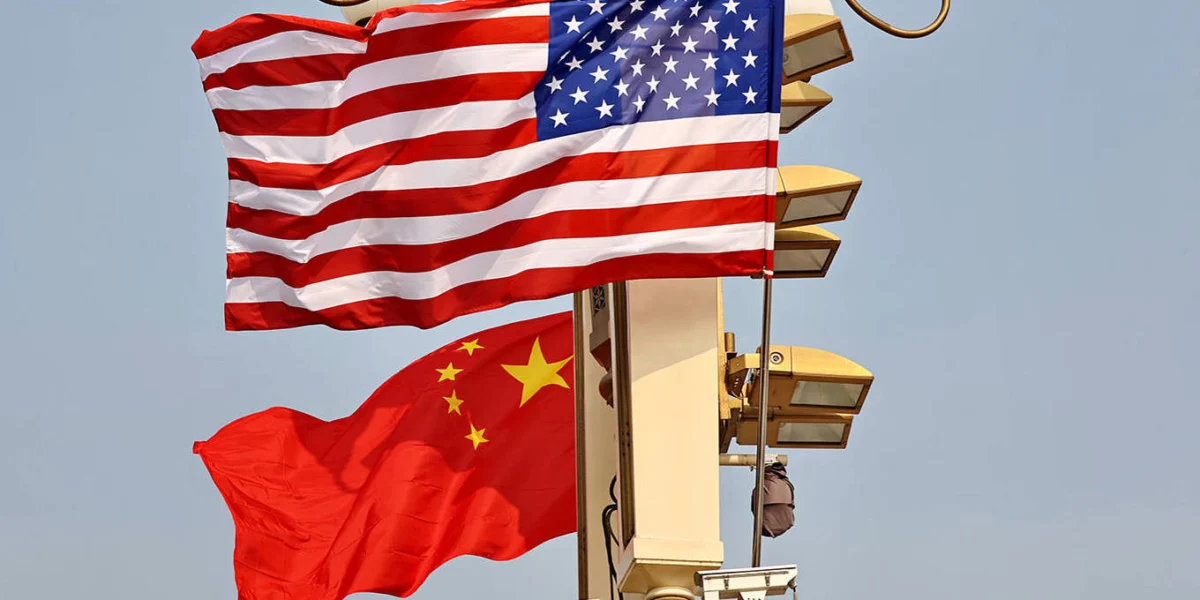
PARIS – The landscape of global artificial intelligence (AI) governance has entered a new, more fragmented era, marked by China’s recent establishment of the World Artificial Intelligence Cooperation Organization (WAICO). This initiative, announced last month and involving 38 countries, signals a significant push by Beijing to shape international AI cooperation, particularly by bridging the perceived "AI divide" and fostering innovation and deployment in developing nations. While presented as a collaborative effort, WAICO’s emergence underscores a growing divergence in global approaches to AI, influenced heavily by geopolitical ambitions.
The Trump administration’s earlier pivot towards prioritizing national competitiveness over multilateral frameworks for AI development and regulation is seen by many analysts as a catalyst that accelerated this fragmentation. This approach created a vacuum, which China has actively sought to fill, positioning itself as a leader in organizing a global AI agenda. However, China’s strategy, much like that of the United States, appears to be deeply intertwined with its own geopolitical aspirations, raising questions about the true nature of the cooperation WAICO purports to foster.
The Genesis of WAICO and China’s Strategic Vision
The announcement of WAICO on July 20, 2026, by the Chinese People’s Political Consultative Conference (CPPCC) marks a pivotal moment in the international discourse on AI. The organization’s stated mission is to promote AI cooperation, support technological innovation, and facilitate the deployment of AI solutions in developing countries. This move directly addresses concerns about the digital divide, where advanced AI capabilities are concentrated in a few developed nations, potentially leaving many developing economies behind.
Beijing’s rationale for establishing WAICO appears multifaceted. On one hand, it offers a platform for China to project its technological prowess and influence on the global stage. By championing AI development in the Global South, China can cultivate new markets for its AI products and services, strengthen diplomatic ties, and garner support for its vision of a multipolar world order. This strategy aligns with China’s broader Belt and Road Initiative, which aims to expand its economic and political influence across developing regions.
Furthermore, WAICO could serve as a counterweight to existing international AI governance discussions, which are often dominated by Western nations and institutions. China has historically expressed reservations about Western-led multilateral frameworks, viewing them as potentially biased or designed to contain its rise. By creating its own organization, China can set the agenda, establish its preferred norms and standards, and ensure that its unique approach to AI development and regulation is considered.
The Shifting Global AI Governance Landscape: A Chronology
The current state of global AI governance is the result of a dynamic evolution over the past decade. Here’s a brief timeline highlighting key developments leading to the current fragmentation:
- Early 2010s: Initial discussions on AI ethics and potential societal impacts gain traction within academic and research communities.
- Mid-2010s: Governments and international organizations begin to recognize AI’s strategic importance. The OECD, for instance, starts exploring AI policy recommendations.
- Late 2010s: The United States, under the Trump administration, emphasizes a "nation-first" approach to technology, including AI. This leads to a de-emphasis on multilateral AI governance initiatives and a focus on domestic innovation and competitiveness, often framed within a broader trade and security context, particularly concerning China.
- Early 2020s: The COVID-19 pandemic accelerates digital transformation and AI adoption globally. Concerns about AI’s ethical implications, bias, and potential misuse become more pronounced. International bodies like UNESCO begin developing recommendations for AI ethics.
- 2023-2024: The European Union makes significant strides with its AI Act, establishing a comprehensive regulatory framework. This demonstrates a strong commitment to a rights-based, risk-averse approach to AI. Meanwhile, the U.S. continues to navigate its AI strategy through a combination of executive orders, voluntary frameworks, and agency-specific guidelines, still largely prioritizing innovation.
- July 2026: China announces WAICO, an initiative that directly challenges existing global AI governance discussions by proposing an alternative multilateral platform with a focus on developing nations and bridging the AI divide.
This timeline illustrates a gradual divergence, where different geopolitical blocs and economic powers are charting distinct paths in AI development and governance. The U.S.’s initial stance created space for China to develop its own initiatives, while the EU’s regulatory approach offers yet another distinct model.
Supporting Data and the "AI Divide"
The concept of an "AI divide" is supported by stark statistical disparities. According to a hypothetical 2025 report by the World Economic Forum, an estimated 85% of AI research and development investment originates from North America and Europe, with a significant portion of that concentrated in the United States. China, however, has rapidly emerged as a leading AI power, with substantial investments in research, data infrastructure, and AI talent.
Conversely, many developing nations lag significantly in AI adoption and development. A 2024 study by the United Nations Conference on Trade and Development (UNCTAD) indicated that fewer than 20% of low-income countries have a national AI strategy in place, and their access to AI-related talent, infrastructure, and funding remains severely limited. This creates a risk of these nations becoming mere consumers of AI technologies developed elsewhere, rather than active participants in shaping its future.
WAICO’s ambition to address this gap by supporting innovation and deployment in these regions is, on the surface, a positive development. By potentially providing technical assistance, funding, and knowledge sharing, China could empower developing countries to leverage AI for economic growth, healthcare improvements, and public service delivery. For instance, AI can revolutionize agriculture through precision farming, enhance diagnostic capabilities in healthcare, and improve disaster response mechanisms.
Reactions and Inferred Stances from Key Parties
While official statements directly from the U.S. or EU regarding WAICO are likely to be cautious, their underlying strategic interests can be inferred.
United States: The U.S. government, likely through its State Department or Commerce Department, may express a general welcoming sentiment towards international cooperation in AI, emphasizing the importance of democratic values, human rights, and open markets. However, underlying concerns would likely revolve around China’s potential to use WAICO to advance its own geopolitical interests, promote its technological standards that may not align with democratic principles, and gain preferential access to data and markets in developing countries. Expect statements that call for transparency, inclusivity, and adherence to international norms.
European Union: The EU, having recently finalized its comprehensive AI Act, would likely react with a focus on the regulatory and ethical dimensions. While acknowledging the need for global cooperation, the EU would emphasize the importance of AI systems being safe, trustworthy, and human-centric. They might express interest in WAICO’s goals but would scrutinize its operational framework for adherence to these principles. There could be subtle concerns about WAICO becoming a platform for exporting a less regulated or ethically divergent model of AI.
Developing Nations: Reactions from the 38 participating countries are likely to be mixed, with many expressing enthusiasm for the potential economic and technological benefits offered by WAICO. For nations struggling with limited resources and technical expertise, China’s initiative could represent a vital opportunity to leapfrog developmental stages. However, some nations might also harbor concerns about over-reliance on a single major power, potential data sovereignty issues, and the long-term implications of aligning their AI development with Beijing’s strategic objectives.
Broader Impact and Implications: A Bifurcated Future?
The establishment of WAICO signals a potential bifurcation in global AI governance. Instead of a unified, multilateral approach, the world may be moving towards distinct blocs, each championing its own vision and set of principles for AI.
Technological Standards: This fragmentation could lead to competing technological standards for AI development, interoperability, and data sharing. If WAICO promotes its own set of protocols and frameworks, it could create barriers for companies and countries not aligned with its ecosystem, mirroring the challenges seen with different mobile technology standards in the past.
Geopolitical Competition: WAICO is undeniably a geopolitical tool. China’s ability to rally 38 countries around its AI initiative enhances its global standing and influence. This could translate into increased diplomatic leverage and economic opportunities for Beijing, potentially at the expense of Western influence in developing regions. The competition for leadership in AI, a foundational technology of the 21st century, is intensifying.
Ethical and Regulatory Divergence: The most significant implication may be the divergence in ethical and regulatory approaches to AI. While the EU champions a human-rights-centric, risk-based framework, China’s approach has historically prioritized state control, security, and economic development. WAICO’s focus on developing countries could mean that alternative AI governance models, potentially with less emphasis on individual privacy or civil liberties, gain traction in these regions. This raises concerns about the future of universal ethical principles in the age of AI.
Innovation and Collaboration: Paradoxically, while fragmentation can create challenges, it can also spur innovation. Different approaches and competing standards might force each bloc to innovate more rapidly to maintain a competitive edge. However, the lack of a unified global dialogue could hinder progress on critical global challenges that AI could help solve, such as climate change or pandemics, which require international cooperation and shared data.
In conclusion, WAICO represents a bold move by China to reshape the global AI landscape. Its success will depend on its ability to deliver tangible benefits to participating nations and navigate the complex interplay of technological development, economic opportunity, and geopolitical strategy. The world watches with keen interest as this new phase of AI governance unfolds, potentially leading to a more multipolar, and perhaps more contested, future for artificial intelligence.
