

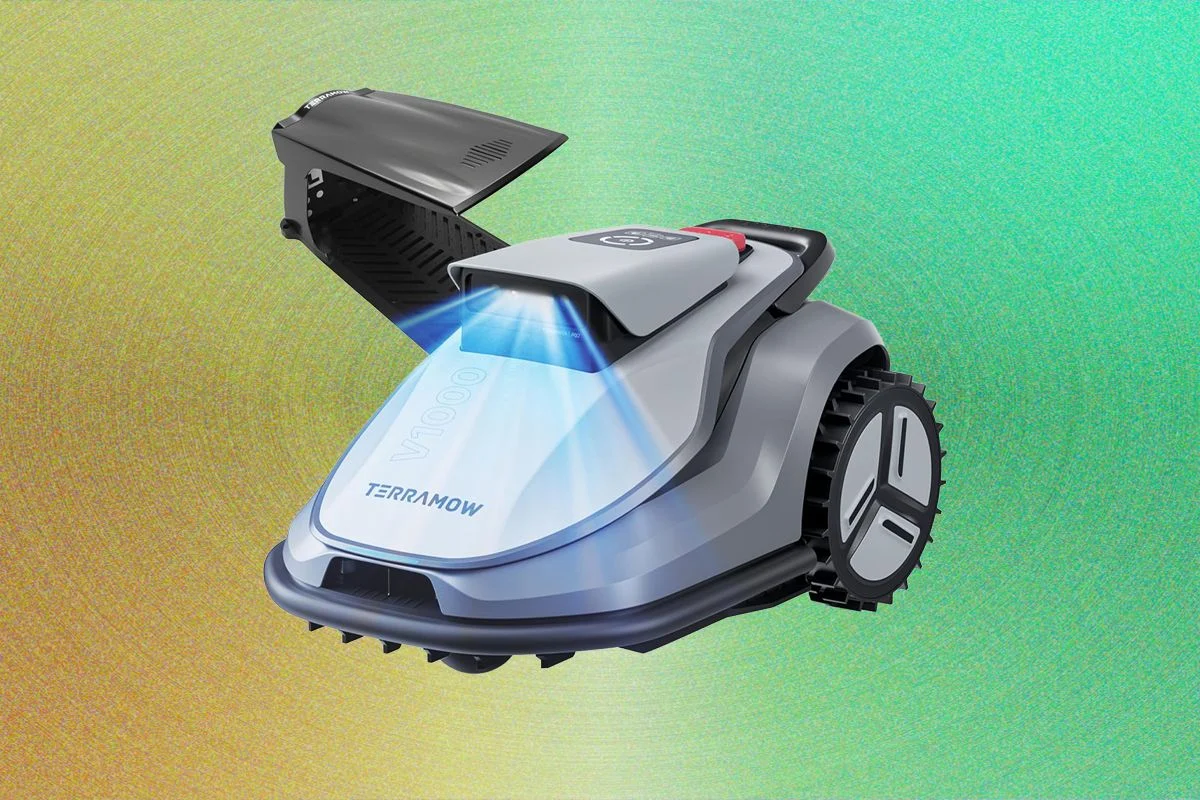
The emergence of the TerraMow V1000 marks a significant shift in the consumer robotics industry, specifically within the automated lawn care sector. As the market moves away from cumbersome perimeter wires and complex satellite-based navigation systems, the V1000 introduces a vision-centric approach that promises to simplify the user experience while maintaining high-precision performance. In an industry where setup time has historically been a major barrier to adoption, the TerraMow V1000’s integration of triple-camera AI technology and automated mapping functionality positions it as a disruptive force in the smart home landscape.
The Evolution of Robotic Mowing: From Boundary Wires to AI Vision
For nearly two decades, the robotic mower market was dominated by systems requiring the installation of physical boundary wires. These wires, buried or pegged around the perimeter of a lawn, acted as an invisible fence. While effective, the installation process was labor-intensive and prone to failure if the wire was accidentally severed by gardening tools or burrowing animals. The second generation of mowers utilized Real-Time Kinematic (RTK) GPS, which eliminated wires but introduced new challenges, such as the need for a clear line of sight to satellites and the installation of bulky signal-boosting antennas.
The TerraMow V1000 represents the third generation of this technology: the vision-based autonomous system. By relying on a sophisticated triple-camera array and onboard artificial intelligence, the V1000 can "see" its environment in real-time. This approach mimics human navigation, allowing the device to distinguish between grass, obstacles, and boundaries without the need for external hardware or stable satellite connections. This technological leap is particularly beneficial for properties with significant tree cover, narrow side yards, or proximity to tall buildings—environments where GPS-based mowers often struggle with signal dropouts.
Hardware Design and Initial Installation Logistics
The physical footprint of the TerraMow V1000 reflects a focus on durability and weather resistance. One of the most notable inclusions in the retail package is a dedicated, covered charging base. In a market where competitors often charge an additional $150 to $300 for a protective "garage" or hood, TerraMow’s decision to include this as a standard accessory provides immediate value. The cover is designed to shield the unit’s sensitive camera lenses and charging contacts from UV degradation and heavy precipitation, potentially extending the operational lifespan of the hardware.
However, potential owners should note the logistical requirements of the power system. Like many high-voltage outdoor appliances, the power adapter for the V1000 is substantial in size. Standard outdoor electrical sockets with weatherproof covers may not accommodate the bulk of the adapter, necessitating the use of an external weatherproof electrical box and a heavy-duty extension lead. Once the power source is secured, the hardware setup is remarkably minimal; the lack of an RTK antenna or boundary wire transmitter means the physical installation is limited to placing the base station and plugging it in.
A Breakthrough in Automapping and User Onboarding
The most significant advancement found in the TerraMow V1000 is its proprietary automapping feature. Traditionally, even "wire-free" mowers required a "remote-control" phase where the user would use a smartphone app to manually drive the mower around the perimeter of the lawn to establish a digital map. This process could be tedious and often required multiple attempts to achieve precision.
The V1000 eliminates this step through its autonomous exploration mode. Upon initial deployment, the mower utilizes its AI vision to scout the area, identifying the difference between the lawn and non-mowable surfaces like mulch beds, pavement, or patios. In testing environments, the V1000 has demonstrated an ability to map straightforward residential lawns with zero user input. While more complex landscapes with "islands" or intricate garden beds may still require minor manual adjustments within the app, the V1000’s ability to generate a functional map autonomously sets a new benchmark for the industry.
Technical Specifications and Operational Capacity
Under the hood, the TerraMow V1000 is engineered for mid-sized residential properties. Its technical specifications provide a balance between efficiency and precision:
- Cutting Dimensions: The unit features a cutting width of 8 inches (20 cm) and an adjustable cutting height ranging from 0.98 to 2.95 inches (25 to 75 mm). This range allows homeowners to choose between a short, manicured look or a taller, more resilient lawn during peak summer heat.
- Terrain Management: The mower is rated to handle slopes of up to 18 degrees. While this may not suffice for extremely hilly estates, it covers the gradient found in the vast majority of suburban yards.
- Battery Life and Charging: The V1000 offers a continuous runtime of approximately 150 minutes on a full charge. When the battery is depleted, the unit autonomously returns to its station, requiring roughly two hours for a full recharge before resuming its schedule.
- Zone Management: Through the companion app, users can define specific zones with varying parameters. This allows for customized "edge mowing" or different cutting heights for front and back yards, providing a level of granular control previously reserved for high-end professional models.
AI Vision: Performance and Obstacle Avoidance
The efficacy of a vision-based mower hinges entirely on its software’s ability to interpret visual data. The V1000 utilizes its triple-camera system to execute a systematic mowing pattern. Unlike older "random bounce" mowers that wander aimlessly until the battery dies, the V1000 cuts in efficient, straight lines. At the end of each pass, it performs a unique "fish-tail" maneuver, ensuring that it aligns perfectly for the next row. This results in the "striped" aesthetic often associated with professional landscaping.

The AI’s obstacle avoidance capabilities are a critical safety and convenience feature. In rigorous testing, the V1000 has successfully identified and navigated around small objects that typically pose threats to robot mowers. For example, it can detect a football or even the thin, vertical poles of a badminton net, skirting around them without making physical contact. This level of sensitivity is vital for households with children or pets, where the lawn is rarely a completely clear surface.
Furthermore, the V1000’s edge-cutting performance is notably superior to many of its peers. On boundaries where the lawn meets a level surface, such as a paved walkway, the mower is programmed to overlap the edge, leaving virtually no uncut grass. On boundaries with vertical obstacles like sheds or fences, a small margin remains, but the vision system allows the unit to get closer than many GPS-reliant models that require a "buffer" zone to account for signal variance.
Connectivity, Security, and Long-Term Maintenance
TerraMow has equipped the V1000 with a robust connectivity suite, including Bluetooth, Wi-Fi, and 4G LTE. The inclusion of a 4G cellular radio is particularly important for large properties where Wi-Fi signals may not reach the far corners of the yard. While the first year of 4G service is included, the subsequent $19 annual fee is a modest cost for the ability to receive remote status updates, firmware improvements, and anti-theft alerts.
Security is addressed through integrated GPS tracking. If the mower is moved outside of its designated "geofence" while in a locked state, the owner receives an immediate notification via the app. This serves as both a deterrent and a recovery tool, addressing one of the primary concerns regarding high-value outdoor robotics.
From a maintenance perspective, the V1000 follows the "mulching" philosophy. By cutting only a few millimeters of grass at a time and doing so frequently, the mower returns nutrient-rich clippings directly into the soil. This eliminates the need for bagging grass and acts as a natural fertilizer, promoting a healthier root system over time.
Market Implications and Industry Reaction
The introduction of the TerraMow V1000 comes at a time when the outdoor power equipment (OPE) industry is under pressure to electrify. With several US states and European municipalities moving to ban gas-powered leaf blowers and mowers due to noise and air pollution, the demand for high-performance electric alternatives is at an all-time high.
Industry analysts suggest that the "vision-only" approach of the TerraMow could force legacy manufacturers to accelerate their R&D cycles. "The ease of setup is the ‘holy grail’ of this category," says a market analyst specializing in home automation. "If TerraMow can prove that AI vision is as reliable as physical wires over a multi-year period, the entire market will have to pivot."
While some purists argue that RTK-GPS offers superior accuracy in wide-open spaces, the consensus among tech reviewers and early adopters is that the convenience of the V1000’s automapping and its ability to function in "shaded" environments (both literal and signal-based) makes it a more versatile solution for the average consumer.
Conclusion: A New Standard for the Modern Lawn
The TerraMow V1000 is more than just a labor-saving device; it is a demonstration of how mature AI and computer vision have become. By solving the primary pain points of robotic mowing—installation complexity and navigation failure—TerraMow has created a product that appeals to both tech enthusiasts and pragmatic homeowners.
While the large power adapter and the eventual subscription fee for 4G service are minor drawbacks, they are far outweighed by the unit’s precision, ease of use, and the inclusion of protective hardware as standard. As the V1000 enters the market, it sets a high bar for what consumers should expect from autonomous home maintenance tools: a system that respects the user’s time as much as it respects the aesthetics of their lawn. For those looking to transition to an automated lawn care routine, the TerraMow V1000 stands as one of the most capable and user-friendly options currently available.
