

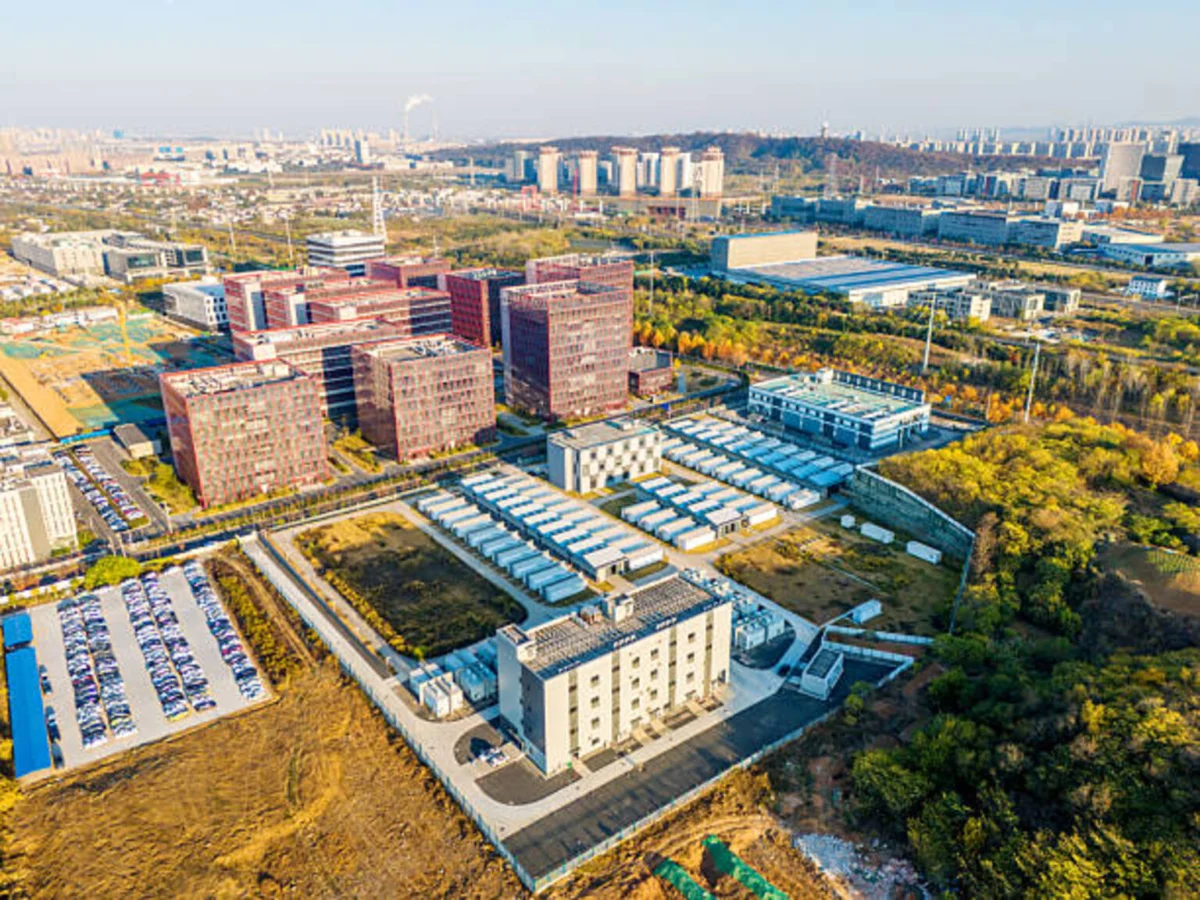
The rapid expansion of artificial-intelligence infrastructure is prompting state and local governments to reconsider the tax breaks that helped turn the U.S. into the world’s largest data-center market. Officials from Virginia to Nebraska, New York, and Texas are demanding that technology companies contribute more significantly to the public coffers, challenging a long-standing economic development strategy as the energy and resource demands of AI surge to unprecedented levels. This re-evaluation marks a critical juncture, forcing states to balance the allure of high-tech investment with the increasing strain on local infrastructure, energy grids, and water supplies, a shift driven primarily by the insatiable computational appetite of generative AI models.
The Genesis of Incentives: A Historical Perspective
For decades, state and local governments across the United States actively courted data center developers with generous tax incentives, including sales tax exemptions on equipment purchases, property tax abatements, and energy cost reductions. The rationale behind these programs was multifaceted: data centers were perceived as a clean industry, requiring minimal on-site staffing but generating substantial capital investment, creating high-paying technical jobs, and broadening the local tax base through ancillary services and construction. Early adopters of these strategies, such as Northern Virginia, transformed into global hubs for digital infrastructure, attracting tech giants like Amazon Web Services, Microsoft, Google, and Meta. This approach was largely successful in establishing the U.S. as a dominant force in cloud computing and digital services, with the market value of data center infrastructure reaching hundreds of billions of dollars annually. States competed fiercely, viewing these facilities as symbols of modernization and future economic resilience.
The AI Catalyst: Unprecedented Demand and Strain
The advent of widespread artificial intelligence, particularly the explosion of generative AI technologies like large language models (LLMs) since late 2022, has fundamentally altered the calculus. Traditional data centers primarily house servers for enterprise applications, cloud storage, and web hosting. AI data centers, however, demand vastly more powerful and energy-intensive graphics processing units (GPUs) to handle the complex computations required for training and inference of AI models. This shift translates into significantly higher power densities per server rack, requiring more robust cooling systems and, consequently, a dramatic increase in electricity and water consumption.
According to a 2023 report by the International Energy Agency (IEA), global data center electricity consumption was estimated at 240-340 terawatt-hours (TWh) in 2022, accounting for 1-1.5% of global electricity demand. Projections indicate that this figure could double by 2026, largely driven by the exponential growth of AI. Some estimates suggest that training a single advanced LLM can consume as much electricity as several hundred U.S. homes in a year. The energy demands of AI are not just about quantity but also about quality and reliability, requiring constant, high-power input, often straining local grids that were not designed for such concentrated industrial loads. This intense resource consumption is now prompting a re-evaluation of the net benefit these facilities provide, particularly when substantial tax breaks are factored into the equation.
States on the Front Lines: Case Studies and Legislative Action
The reconsideration of data center tax breaks is not a hypothetical discussion but an active legislative and community debate unfolding across several key states.
Virginia’s "Data Center Alley": Northern Virginia, particularly Loudoun County, is famously known as "Data Center Alley," hosting the highest concentration of data centers in the world, processing an estimated 70% of the world’s internet traffic. This dominance was built on a foundation of aggressive tax incentives. However, the sheer scale of expansion now presents significant challenges. Dominion Energy, Virginia’s largest utility, has publicly acknowledged the immense strain on its grid, warning of potential delays in connecting new facilities and the need for billions of dollars in infrastructure upgrades. Local communities voice concerns about rising electricity costs, noise pollution from cooling units, and the visual impact of sprawling data center campuses. In response, Virginia lawmakers and local officials have begun discussing potential caps on incentives, stricter environmental requirements, and impact fees to offset infrastructure costs. While no sweeping changes have been enacted, the dialogue signifies a departure from the previous unreserved embrace of data center growth. Local supervisors have expressed frustration, with one stating, "We welcomed them, but the scale of what’s coming now is something we never anticipated, and it’s time to ensure our residents aren’t shouldering all the costs."
New York’s Balancing Act: New York State, particularly its upstate regions, has offered significant incentives to attract tech companies, including data centers, often leveraging access to cheaper hydroelectric power. However, concerns about energy consumption and environmental impact have led to a more cautious approach. Governor Kathy Hochul’s administration has emphasized the need for sustainable economic development. While specific legislation targeting AI data center tax breaks is still emerging, there’s a growing push to tie incentives to verifiable renewable energy usage and local job creation beyond construction. Environmental advocates in New York have been particularly vocal, citing the potential for increased carbon emissions if data centers rely on fossil fuel-generated electricity and the need for stronger regulatory oversight.
Texas and Nebraska’s Resource Concerns: In states like Texas and Nebraska, known for their vast land and relatively low energy costs, data center expansion has also been robust. However, these regions face distinct challenges, particularly regarding water scarcity. The arid climate in parts of Texas makes the substantial water requirements for evaporative cooling systems a significant concern, especially during droughts. Critics argue that tax breaks incentivize a resource-intensive industry in areas already under water stress. Similarly, Nebraska, while benefiting from data center investment, is evaluating its incentive programs in light of increasing energy demands and the long-term sustainability of relying on tax abatements for industries with a relatively small direct employment footprint compared to their resource consumption. Officials in these states are reportedly exploring policies that would encourage or mandate more efficient cooling technologies and the use of recycled water, tying these requirements to future incentive eligibility.
The Economic Equation: Weighing Benefits Against Costs
The economic benefits of data centers, while real, are increasingly scrutinized in the context of AI’s demands. Historically, a data center could represent hundreds of millions or even billions in capital investment, generating construction jobs and a handful of high-paying IT positions. However, the direct operational workforce of a hyperscale data center is often small, typically ranging from dozens to a few hundred employees. Critics argue that the tax revenue forgone through incentives often outweighs the direct economic benefits to the local community, especially when considering the indirect costs.
These indirect costs include:
- Infrastructure Strain: Upgrades to power grids, water lines, and even road networks often fall to local governments, potentially financed by existing taxpayers.
- Environmental Impact: Increased carbon emissions contribute to climate change, incurring societal costs. Water usage can deplete local aquifers or strain municipal water systems.
- Opportunity Cost: Land used for data centers might otherwise be developed for industries that create more direct jobs or provide more diverse community benefits.
A 2023 study by the Center for Economic Accountability found that data center tax incentives often fail to deliver on their promised economic returns, particularly when factoring in the limited direct job creation. The study highlighted that many incentive programs lack robust clawback provisions, allowing companies to receive benefits even if they don’t meet initial job targets or investment promises. State auditors and budget committees are now keenly examining these programs, seeking to quantify the "net benefit" more accurately in the AI era.
Environmental Footprint: Powering and Cooling the Future
The environmental implications of AI-driven data center expansion are profound. The sheer volume of electricity required to power AI models is a major contributor to greenhouse gas emissions, particularly in regions still reliant on fossil fuels for power generation. While many tech companies have pledged to power their operations with 100% renewable energy, achieving this at the scale required by AI is a monumental challenge. It often involves purchasing renewable energy credits (RECs) rather than directly powering facilities with new, local renewable generation, leading to questions about the true carbon impact.
Water usage is another critical environmental concern. Data centers use water primarily for cooling, either through evaporative cooling towers or direct liquid cooling systems. A typical hyperscale data center can consume millions of gallons of water per day, comparable to a small city. With increasing climate variability and water scarcity in many regions, this demand places significant stress on local water resources. Environmental groups like Greenpeace have intensified their advocacy, calling for greater transparency on data center energy and water consumption and urging policymakers to prioritize sustainable practices over unchecked growth driven by incentives. "We cannot afford to subsidize an industry that exacerbates climate change and water stress without robust commitments to genuine sustainability," stated a representative from a prominent environmental advocacy group.
Industry’s Stance and Future Outlook
Technology companies, while acknowledging the resource demands, emphasize their significant contributions to local economies through investment, job creation (both direct and indirect in construction and supply chains), and the provision of essential digital services. They argue that stable, predictable regulatory environments and competitive incentive structures are crucial for continued investment in the U.S. Some industry representatives have indicated that overly aggressive curtailment of incentives could lead to companies reconsidering their expansion plans in certain states or even shifting investment to other countries with more favorable conditions.
Many tech giants have committed to ambitious sustainability goals, including achieving net-zero emissions and replenishing more water than they consume. They are investing in advanced cooling technologies, exploring alternative energy sources, and engaging in power purchase agreements (PPAs) for renewable energy. However, the pace of AI growth often outstrips the development of these sustainable solutions, creating a gap that governments are now scrutinizing.
The Path Forward: Policy Rethink and Sustainable Growth
The current re-evaluation of data center tax breaks signals a broader policy shift. States are moving away from blanket incentives towards more targeted, performance-based approaches. Future policies are likely to include:
- Performance-Based Incentives: Tying tax breaks to verifiable metrics such as actual job creation, renewable energy usage percentages, water efficiency benchmarks, and community benefit agreements.
- Impact Fees: Imposing fees on data center developers to directly offset the costs of infrastructure upgrades (power, water, roads) borne by local communities.
- Environmental Requirements: Mandating the use of advanced cooling technologies, recycled water, and a verifiable commitment to sourcing new, local renewable energy.
- Moratoriums and Strategic Planning: Some localities might consider temporary moratoriums on new data center construction to allow for comprehensive infrastructure planning and environmental impact assessments.
- Transparency and Reporting: Requiring data centers to publicly report their energy and water consumption, providing greater accountability.
This recalibration is essential for the United States to maintain its leadership in digital infrastructure while addressing the pressing environmental and economic challenges posed by the AI revolution. The decisions made in states like Virginia, New York, Texas, and Nebraska will set precedents for how governments worldwide manage the growth of AI infrastructure. It underscores the critical need for a holistic national strategy that integrates energy policy, environmental stewardship, and economic development to ensure that the promise of AI can be realized sustainably, without unduly burdening communities or depleting vital resources. The era of unquestioning tax breaks for data centers appears to be drawing to a close, replaced by a more nuanced approach that demands greater accountability and a clearer demonstration of net public benefit.
