

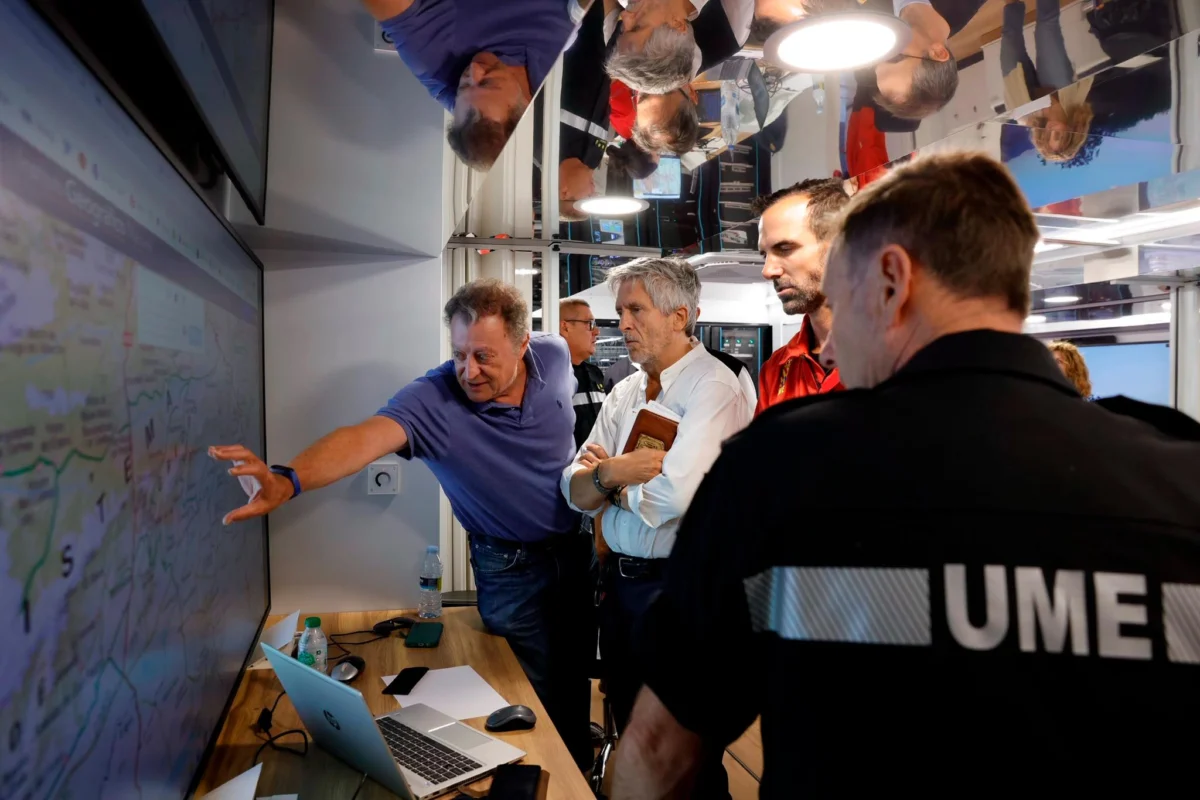
The European continent is currently grappling with a humanitarian and ecological catastrophe of historic proportions as a relentless succession of heatwaves fuels some of the most destructive wildfires ever recorded in Western Europe. Over the past week, the scale of the crisis has forced hundreds of thousands of residents in France and Spain to abandon their homes, often under the cover of darkness, as rapidly advancing fire fronts outpaced emergency containment efforts. As evacuation orders begin to lift in select regions, the returning populace faces a grim reality: while some towns remain partially intact, others have been reduced to little more than scorched earth and ash. This unfolding disaster represents one of the largest mass displacements of people on the European continent since the Second World War, signaling a profound shift in the region’s climate stability.
According to a comprehensive study released by World Weather Attribution (WWA), a scientific non-profit specializing in the real-time analysis of extreme weather events, this crisis is the direct result of human-induced global warming. The organization’s findings indicate that climate change has made the likelihood of such fire-prone conditions at least twice as likely in France and a staggering 20 times as likely in central Spain. This data underscores a burgeoning consensus among the scientific community that the extreme weather patterns witnessed this summer are not merely seasonal anomalies but are part of a systemic "new normal" driven by the continued combustion of fossil fuels.
The Chronology of a Tinderbox: From Wet Winter to Weather Whiplash
The genesis of the current wildfire crisis can be traced back several months, illustrating a phenomenon climatologists refer to as "weather whiplash." The early months of the year, specifically January and February, saw unusually high levels of precipitation across much of Western Europe. This surplus of moisture triggered a period of vigorous vegetation growth during the spring, covering the landscape in a lush carpet of grasses and shrubs. However, as the spring transitioned into summer, the weather patterns shifted violently.
A series of back-to-back heatwaves, beginning as early as May and June, combined with an extended, severe drought, began to rapidly desiccate this new growth. The atmosphere, warmed by rising global temperatures, became increasingly "thirsty," sucking moisture from the soil and vegetation at an accelerated rate. By mid-summer, the once-vibrant greenery had been transformed into a vast expanse of highly flammable tinder. When the fourth major heatwave of the season arrived in late July, the landscape was primed for ignition.
The speed with which these fires have spread is largely attributed to this specific sequence of events. "As the atmosphere warms, it gets spongier and thirstier," explains Clair Barnes, a research associate at World Weather Attribution. This increased atmospheric demand for moisture leads to more intense rainfall followed by longer, more severe dry periods. When lightning strikes or human activity provides an ignition source, the result is a "monster fire" that is nearly impossible to contain through traditional firefighting methods alone.
Quantifying the Destruction: A Record-Breaking Season
The statistical data emerging from the 2026 wildfire season is sobering. By late July, approximately 430,000 hectares had already been consumed by flames across Europe. To put this figure in perspective, it is roughly 100,000 hectares more than the area burned during the same period in the previous year, which was itself considered the worst wildfire season in the continent’s history. In Spain alone, the total area of scorched land is now roughly equivalent to the entire geographic footprint of Greater London.
The human toll is equally staggering. At the peak of the evacuations this week, more than 300,000 people were displaced across the two nations. The International Federation of Red Cross (IFRC) has been at the forefront of the humanitarian response, coordinating temporary shelters and providing essential supplies to thousands of families who fled with nothing but the clothes on their backs. Maria Alcazar Castilla, the deputy regional director of the IFRC in Europe, emphasized that this is not an isolated event. "This is part of a pattern," she stated, noting that the long-term impact on the livelihoods of those in rural areas—particularly those dependent on agriculture and tourism—will be "huge" and potentially permanent.
The Science of Attribution: Linking Carbon to the Flame
The field of attribution science has matured rapidly in recent years, allowing researchers to provide the public with near-instantaneous data on how much global warming has influenced a specific weather event. By using complex simulations to compare the current world with a hypothetical "world without climate change," groups like World Weather Attribution can quantify the increased probability of extreme heat and drought.
The recent study on the Franco-Spanish fires utilized historical weather data and advanced climate modeling to determine that the current "fire weather"—a combination of high temperatures, low humidity, and high wind speeds—is becoming a permanent fixture of the Southern European summer. The research indicates that summer days prone to extreme fires have more than doubled in recent decades. The message from the scientific community is clear: as long as greenhouse gas emissions continue to rise, the planet will continue to warm, and these events will only grow in frequency and intensity.
Landscape Management and the Flammability of Modern Europe
While climate change provides the environmental spark, experts argue that land-use policies and changes in rural demographics have exacerbated the crisis. Robert Field, a fire and climate researcher at Columbia University, suggests that the way people interact with the land has made the landscape more susceptible to "megafires."
In many parts of France and Spain, traditional agricultural practices have declined. The abandonment of farmland and a shift away from livestock like cattle and goats—which naturally graze on the undergrowth that fuels fires—has allowed biomass to accumulate unchecked. Furthermore, in regions like the Landes de Gascogne in southwest France, the prevalence of planted pine forests has created a dangerous monoculture. Research has shown that these timber plantations can be twice as flammable as natural, biodiverse forests.
"I don’t think it’s an issue of firefighting capacity or investment," Field argues. "It’s fundamentally an issue of landscape management in the face of global warming." This perspective suggests that preventing future catastrophes will require more than just better firefighting equipment; it will necessitate a fundamental rethinking of how European forests and rural lands are managed and inhabited.
Socio-Economic Consequences and the Threat to National Security
The impact of the wildfires extends far beyond the immediate burn zones. The extreme heat that set the stage for the fires has crippled infrastructure and claimed lives across the continent. This past June was recorded as the hottest ever in Western Europe, leading to the shutdown of nuclear reactors due to cooling water shortages and causing train lines to buckle under thermal expansion. The oppressive heat is estimated to have killed thousands of people across Europe in just a few weeks, primarily among elderly and vulnerable populations.
The crisis has reached a level of severity that has prompted high-level political intervention. In a rare joint statement, officials from the United Kingdom and Spain characterized the current climate situation as a "national security emergency." The statement emphasized that climate change is no longer a distant threat but a current reality that "threatens our way of life." This framing marks a significant shift in political rhetoric, elevating climate policy from an environmental concern to a core pillar of national defense and economic stability.
The economic fallout is particularly acute in the agricultural sector. The combination of drought and fire has devastated crops and killed livestock, threatening food security and driving up prices in an already volatile market. For rural communities that rely on summer tourism, the sight of smoke-filled skies and evacuated resorts represents a total loss of seasonal income, which many small businesses may not survive.
Meteorological Outlook: A Brief Reprieve or Continued Peril?
As of the end of the week, firefighters have gained a tenuous foothold, partially containing several major blazes in southwest France. This has allowed some of the 100,000 evacuees in that region to return to their properties. Meteorologists, including Jason Nicholls of AccuWeather, point to a weak cold front moving toward Europe that may provide a brief window of relief.
However, any reprieve is expected to be short-lived. Forecasts indicate that another surge of intense heat could arrive by the weekend, with more extreme temperatures projected for mid-August. "I don’t see any drought relief in the near term, which would mean the wildfire risk will stay very elevated," Nicholls warned. The persistent drought continues to smother France, Spain, Germany, and Hungary, leaving little hope for a significant reduction in fire risk before the autumn rains arrive.
Nicholls, who has two decades of experience in international forecasting, noted that these wildfires are among the worst he has ever witnessed. The scale of the current crisis serves as a stark reminder that the window for adaptation is closing. As Europe continues to bake under a warming sun, the record-breaking fires of today may soon become the baseline for tomorrow, necessitating urgent global action on emissions and a radical transformation of local land management strategies to protect the continent’s future.
