

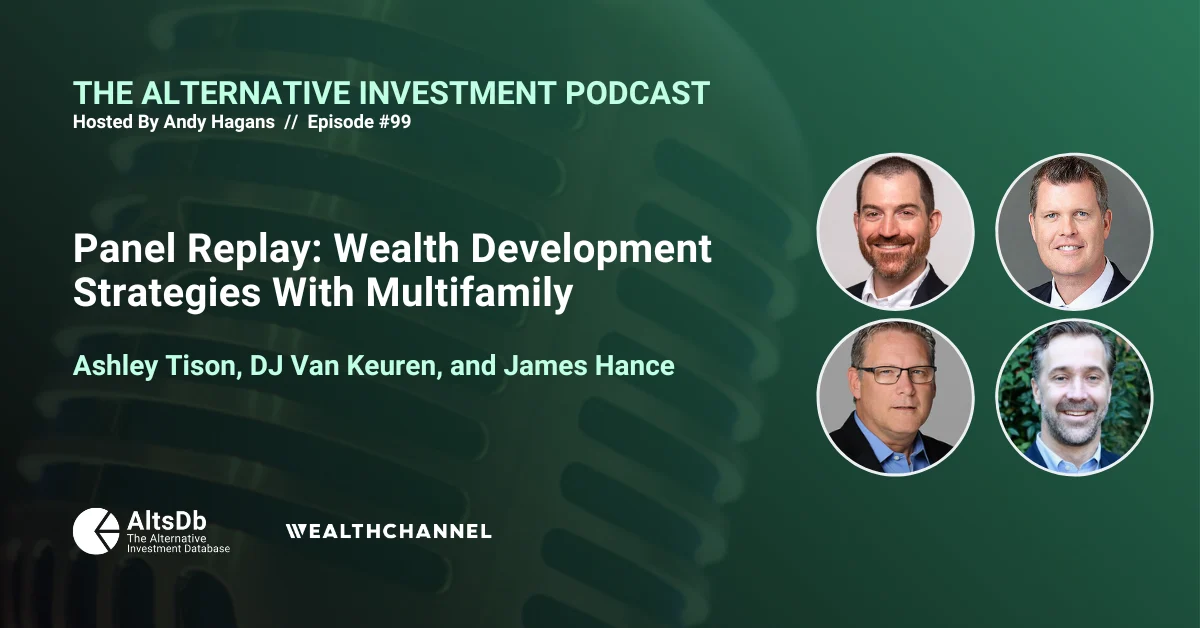
The Multifamily Investor Expo 2023, a premier event for real estate professionals and investors, recently hosted a pivotal panel discussion titled "Wealth Development Strategies with Multifamily." The session, moderated by Andy Hagans of AltsDb and WealthChannel, brought together leading experts in the field to dissect the enduring appeal and strategic advantages of multifamily real estate for long-term wealth creation. Panelists included Ashley Tison, founder and CEO of OZPros; DJ Van Keuren, co-managing member at Evergreen Property Partners and founder of the Family Office Real Estate Institute; and James Hance, founder at Green Bison Capital. The discussion, now available for viewing on YouTube, delved into the core reasons behind multifamily’s dominance, tax-efficient investment wrappers, current market conditions, and timeless lessons from family office investment philosophies.
The Enduring Appeal of Multifamily Real Estate
The panel unanimously underscored the fundamental strengths of multifamily as an investment vehicle. James Hance articulated a core principle: the intrinsic value of a building, coupled with the consistent human need for shelter. "People always need a place to live," Hance stated, highlighting the inherent stability of multifamily properties. He emphasized the advantage of multiple units, which mitigates risk compared to single-family investments. The consistent cash flow generated by rental income, combined with the potential for forced appreciation through effective property management and operational improvements, makes multifamily a compelling asset. Hance also pointed to the significant tax efficiencies available to direct investors, particularly the benefit of depreciation, which can offset tax liabilities.
DJ Van Keuren, drawing from his extensive experience with family offices and his annual study on family office real estate investments, confirmed multifamily’s perennial popularity. "Multifamily has continued to be the main property type for families to invest into," he noted. Van Keuren elaborated on the risk mitigation inherent in a diversified unit portfolio. Unlike a single-tenant commercial property, the departure of one resident in a large apartment complex represents a minimal occupancy loss, preserving a more stable income stream. He also highlighted the macroeconomic factors driving demand, such as the rising cost of homeownership and student loan burdens, which have increased reliance on rental housing. This trend is particularly pronounced in high-growth areas experiencing an influx of new residents seeking affordable living and employment opportunities.
Ashley Tison added another dimension to the discussion, framing multifamily investments as a more sustainable and environmentally conscious approach to housing development. He argued that consolidating residents into smaller, denser areas reduces urban sprawl and necessitates less infrastructure compared to widely dispersed single-family homes. This "green" aspect, he suggested, could be a powerful argument in favor of multifamily development when addressing community concerns or "Not In My Backyard" (NIMBY) sentiments. Tison also noted that this consolidation is not limited to traditional apartment buildings, extending to mobile home parks, RV parks, and even strategically developed single-family rental communities, all aligning with the core multifamily concept of efficient housing provision.
Navigating Tax Advantages: Wrappers for Wealth Growth
A significant portion of the discussion focused on the various tax-advantaged strategies available to investors, particularly those with substantial capital gains. Ashley Tison provided a detailed overview of Opportunity Zones (OZ), a program designed to incentivize investment in distressed communities through tax deferral and elimination of capital gains. He explained how investors can defer capital gains taxes by reinvesting them into qualified opportunity funds. Furthermore, OZ investments offer a reduction in the initial deferred gain and, crucially, eliminate depreciation recapture upon sale after a 10-year holding period. Tison illustrated the impact of OZ benefits by stating they can increase Internal Rate of Return (IRR) by approximately 3%, a substantial boost, especially in a market with historically low cap rates.
DJ Van Keuren championed the 1031 exchange as another cornerstone of tax-efficient real estate investing. He expressed surprise that a significant percentage of families do not utilize this provision, attributing this to a lack of education. The 1031 exchange allows investors to defer capital gains taxes by reinvesting proceeds from the sale of one investment property into a "like-kind" property. Van Keuren emphasized its compounding effect, where a 15% annual return can effectively become 21% through reinvestment without immediate tax liabilities. He also briefly touched upon other tax credit programs like Low-Income Housing Tax Credits (LIHTC) and New Markets Tax Credits (NMTC) as potential avenues for tax-advantaged investments.
James Hance corroborated the widespread use of 1031 exchanges within his investor network, noting that approximately 20% of the capital his group raises comes from these exchanges. He highlighted the feasibility of utilizing 1031 exchanges within syndication structures, particularly through tenancy-in-common (TIC) arrangements. This allows active investors, perhaps managing a family-owned property, to transition to passive roles within a syndication, leveraging the 1031 for tax deferral while also realizing a significant return on their time by avoiding active management. Hance also mentioned that some investors, seeking better returns, have shifted from Delaware Statutory Trusts (DSTs) to syndication-based 1031 exchanges.
Market Dynamics in 2023: Navigating Higher Interest Rates

The panel addressed the prevailing concern of higher interest rates and their impact on investment decisions in 2023. James Hance acknowledged that the era of cap rate compression is likely over. He stressed the increased importance of due diligence on sponsors, particularly those who are vertically integrated, possess a strong track record, and are well-capitalized. Hance indicated that the current environment is ripe with opportunities, especially for properties experiencing distress due to debt challenges. He cited instances where maturing loans are forcing distressed sellers to divest, creating opportunities for well-positioned investors.
DJ Van Keuren echoed this sentiment, noting that family offices, having learned from previous market cycles, are strategically deploying "dry powder" rather than waiting for a full market recovery. He cautioned that while opportunities exist, a fundamental analysis of market fundamentals such as cost of living, quality of life, and demand remains paramount. Van Keuren warned of a potential "reckoning" for operators who have thrived solely on market tailwinds, emphasizing that the current environment will expose the strength of their underwriting and operational capabilities. He also highlighted the potential for negative leverage and the challenges posed by floating interest rates, suggesting a more conservative approach to underwriting future deals, including stress-testing scenarios for increased vacancy rates and higher interest expenses.
Ashley Tison offered an optimistic perspective, framing the current caution as a potential bullish sign. He advocated for robust stress-testing of investment assumptions, a sentiment echoed by DJ Van Keuren. Tison pointed out that investors within Opportunity Zones, driven by program deadlines, often feel a sense of urgency to deploy capital, which can counterbalance market anxieties. He also noted that OZ investments often involve value-add components, providing an inherent buffer against market downturns due to the potential for growth and improvement within the designated zones.
Lessons from Family Offices: Patience, Planning, and Partnerships
A significant portion of the discussion revolved around the timeless principles of wealth management, particularly those employed by successful family offices. DJ Van Keuren, despite acknowledging that wealth preservation across generations can be challenging, highlighted the core tenets of patience and sound decision-making. He emphasized that the fundamental principles of real estate investment—sponsor quality, market analysis, and diligent underwriting—remain consistent regardless of investment size. Van Keuren stressed the importance of long-term perspectives, facilitated by real estate’s inherent illiquidity, and the cultivation of trusted partnerships with operators who have navigated multiple market cycles.
Andy Hagans, the moderator, posed a question about what independent high-net-worth investors could learn from family offices. DJ Van Keuren reiterated the importance of patience and making well-quantified decisions, including rigorous stress-testing of investment scenarios. He also highlighted the value of referrals and building strong relationships within the investment community, a practice common among established families.
Ashley Tison shared an anecdote about a client who, after a substantial capital gain, struggled with liquidity due to market volatility. This experience underscored the critical need for careful planning and the strategic use of advisors to navigate complex financial situations. Tison emphasized that while exuberance for opportunities is valuable, it must be tempered with practical considerations and a clear understanding of potential risks. He also touched upon the importance of establishing family core values and a mission statement to guide wealth distribution and decision-making across generations, a concept often overlooked by those who have recently acquired wealth.
Ground Up vs. Value Add: A Forward-Looking Perspective
In a rapid-fire lightning round, the panelists were asked to weigh in on whether ground-up development or value-add strategies present a better outlook in the current environment. James Hance favored value-add, citing his personal preference for a lower risk-return profile and the complexities and longer timelines associated with ground-up development. Ashley Tison, however, leaned towards ground-up development, particularly within his specialization of Opportunity Zones, where achieving the "substantial improvement" threshold for value-add projects can be challenging. DJ Van Keuren offered a more nuanced view, stating that the optimal strategy depends on the specific property type and market conditions. He suggested that opportunities exist in both ground-up development (e.g., cold storage facilities with high demand and limited supply) and value-add scenarios (e.g., stalled apartment projects or underperforming existing properties) where a strong operator can unlock hidden potential.
The panel concluded with a strong emphasis on humility, the importance of surrounding oneself with expert advisors, and the value of track record when selecting investment partners. The overarching message was clear: multifamily real estate, when approached with strategic planning, diligent execution, and a long-term perspective, remains a powerful engine for wealth development. The experts’ insights at the Multifamily Investor Expo 2023 provided attendees with actionable strategies and a renewed understanding of this dynamic asset class.
