

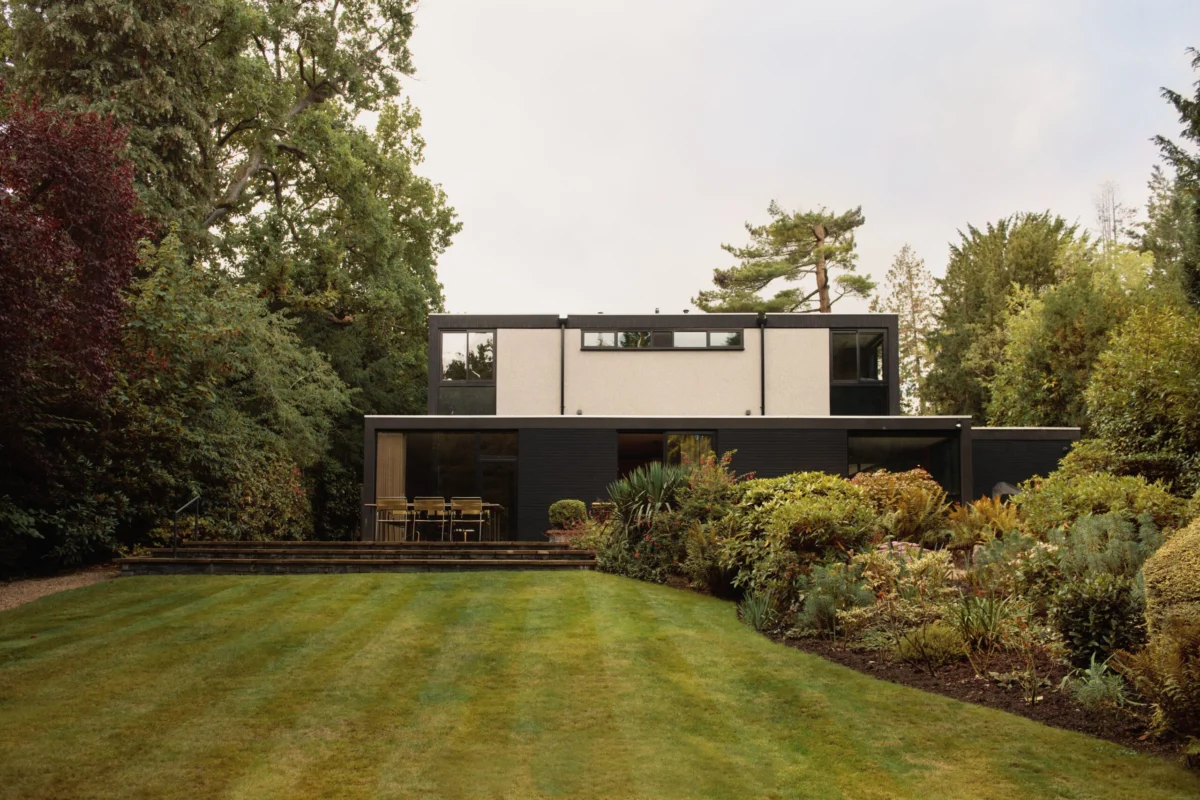
On a secluded residential lane in the affluent London neighborhood of Hampstead, a midcentury architectural landmark has undergone a transformative restoration that bridges the gap between 1960s radicalism and 21st-century domesticity. Designed by the seminal British modernist architect Patrick Gwynne, the split-level residence serves as a primary example of the era’s experiments with geometry, light, and materiality. The project, recently completed by the London-based interior design firm Daytrip Studio, represents a sophisticated effort to preserve the historical integrity of a Grade II–listed building while updating its interiors for a contemporary family.

The residence is defined by its quintessential modernist hallmarks: a flat roofline, a structural composition of brick and stuccoed concrete, and expansive floor-to-ceiling glass walls that dissolve the boundary between the interior and its half-acre landscaped garden. Iwan Halstead and Emily Potter, cofounders of Daytrip Studio, were tasked with the renovation following a previous, more conservative update. The objective was to honor Gwynne’s original vision—characterized by functionalism and a seamless flow of space—while introducing a warmth and richness that would accommodate the daily life of the new owners and their dog.
The Architectural Legacy of Patrick Gwynne
To understand the significance of the Hampstead project, one must look to the pedigree of its creator. Patrick Gwynne (1913–2003) was a titan of British modernism, perhaps best known for his own home, The Homewood in Surrey, which is now maintained by the National Trust. Gwynne’s work was often characterized by a fastidious attention to detail and a preference for bespoke cabinetry and innovative layouts that maximized the potential of suburban plots.

The Hampstead house, designed in the 1960s, reflects Gwynne’s mature style. At the time of its construction, the split-level configuration was considered avant-garde, offering a fluid alternative to the rigid, compartmentalized Victorian and Edwardian housing stock that dominated the London landscape. The house’s listing as a Grade II property by Historic England signifies that it is a building of "special interest, warranting every effort to preserve it." Under UK law, such a designation places strict limitations on alterations to both the exterior and key interior features, ensuring that the architectural narrative remains intact for future generations.
Chronology and Scope of the Restoration
The property has transitioned through several phases of ownership since its completion more than six decades ago. While it had undergone a respectful renovation several years prior to the current project, the new owners sought a more comprehensive interior curation that would better reflect their personal aesthetic while celebrating the home’s midcentury roots.

The restoration timeline was dictated by a need for historical research and the sourcing of period-appropriate materials. Daytrip Studio spent considerable time studying Gwynne’s archives to ensure that new additions would harmonize with the existing structure. Key architectural elements, such as the white-painted brick walls, grooved pine paneling, and the original open-tread staircase, were meticulously preserved.
The most significant technical challenge involved the kitchen. A remarkable example of 1960s design, the space had suffered from decades of wear. The restoration team worked to strike a balance between historical accuracy—manifested in the vibrant orange mosaic tiles—and the demands of a high-functioning modern kitchen. Similarly, the original built-in folding desk in the office, a testament to Gwynne’s obsession with functional cabinetry, was restored to its original mechanical precision.

Materiality and Interior Curation
Daytrip Studio’s intervention is characterized by what Emily Potter describes as a "warm color palette that combines richness with simplicity." The foundational elements of the home—the original pine and rich wood floors—provided a natural canvas for a sophisticated layering of textures.
In the primary living area, the designers installed a custom-made 16-foot-long sofa upholstered in a rust-orange fabric. This bold piece sits atop a fawn-brown alpaca rug, creating a focal point that is both sculptural and inviting. The room is further accented by brass-toned elements, including an Encchi lamp by Matthew Verdon. A large steel-and-glass partition separates the living and dining areas; this unit features restored shelves finished in Verde Alpi marble mosaic, a material that echoes the luxury of midcentury European modernism.

The dining room continues the home’s dialogue with international design. A hand-lacquered black-and-gold bar echoes Chinese motifs, a recurring theme in several of Gwynne’s residential projects. The space is anchored by a crimson silk rug with ivory trim, a color scheme that evokes the "mod" aesthetic of the 1960s. Lighting plays a crucial role throughout, with sheer curtains made of a natural silk blend used to diffuse the abundant light entering through the floor-to-ceiling windows, highlighting the delicate sheen of the interior finishes.
A Global Dialogue of Design Pieces
The curation of furniture within the home represents a cross-continental survey of modernist and contemporary design. Halstead and Potter intentionally mixed custom Daytrip designs with iconic pieces from renowned Italian, Swedish, and American designers.

- The Living Area: Features a Cloud coffee table by the Swedish studio Veermakers (designed by Louise Liljencrantz) and a pair of Hi Tech armchairs by Piero Lissoni for Living Divani. A 1950s copper vase by Angelo Bragalini is positioned near the original terrazzo and glass staircase, serving as a sculptural bridge between the home’s construction date and the present.
- The Dining Room: Centered around a rosewood-and-brass table by Angelo Mangiarotti, surrounded by Niels Moller’s Model No. 80 chairs. Sculptural candlesticks by artist Grace Prince and an Eye pendant light by Kevin Reilly complete the ensemble.
- The Bedrooms: The principal bedroom features a custom rosewood and silk bed. The walls are adorned with textured plant-fiber wallpaper, an exact replica of the original 1960s design, maintaining the home’s tactile history.
- The Garden and Terraces: The outdoor spaces are furnished with Walter Lamb-designed tables and armchairs in a monochromatic moss green, designed to blend into the lush, half-acre garden.
Supporting Data and Preservation Standards
The restoration of Grade II listed buildings in London is a high-stakes endeavor, often requiring approval from local planning authorities and heritage consultants. According to data from Historic England, only about 2.5% of the UK’s listed buildings fall into the "modern" category (post-1945), making the preservation of Gwynne’s work particularly vital for the representation of 20th-century history.
The real estate value of such properties in Hampstead—an area known for its high concentration of modernist architecture, including the Isokon Building and works by Ernő Goldfinger—has seen a steady incline. Market analysis suggests that "architectural homes" with verified provenance and high-quality restorations command a premium of 20% to 30% over standard luxury properties in the same postal code. This economic reality incentivizes the type of meticulous, high-budget restoration undertaken by Daytrip Studio.

Official Responses and Design Philosophy
Reflecting on the project, Iwan Halstead emphasized the importance of architectural continuity. "We drew inspiration from Patrick Gwynne’s most famous house, The Homewood, as well as his favorite furniture designers," Halstead stated. "The goal was not to create a museum piece, but to create a home that feels as avant-garde today as it did in 1960."
Design critics have noted that Daytrip’s work on the Hampstead house represents a shift in interior design trends away from "cold minimalism" toward "tactile modernism." By utilizing plant fibers, alpaca wool, and silk alongside hard surfaces like concrete and glass, the firm has demonstrated how modernist structures can be softened for family life without compromising their geometric rigor.

Broader Impact and Implications
The successful restoration of the Gwynne house in Hampstead serves as a blueprint for the treatment of midcentury residential architecture. As many buildings from this era reach the 60-year mark, they often face the threat of neglect or insensitive modernization. The Hampstead project illustrates that with a deep understanding of an architect’s original intent, it is possible to integrate modern amenities—such as updated en suite bathrooms for all four bedrooms and a contemporary kitchen—without erasing the historical soul of the building.
Furthermore, the project highlights the enduring relevance of the "split-level" concept in urban living. By providing distinct yet connected zones for living, dining, and working, Gwynne’s 1960s layout anticipates the multi-functional requirements of the modern home office and the open-plan family environment. As London continues to grapple with the preservation of its diverse architectural heritage, the revival of this Patrick Gwynne masterpiece stands as a testament to the timelessness of well-considered modernist design. It remains a quiet yet powerful statement on a Hampstead lane, proving that the radical visions of the past remain remarkably suited for the way we live today.
