

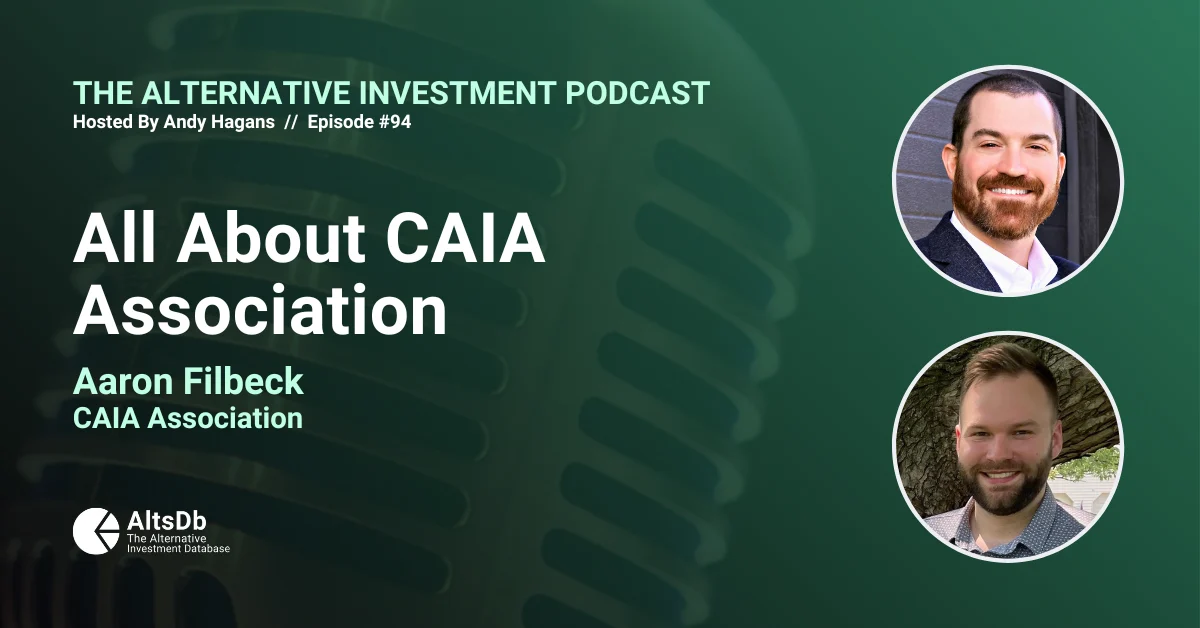
The integration of alternative investments into client portfolios presents a significant opportunity for financial advisors to enhance wealth management strategies and drive better business outcomes. However, the inherent complexity of these assets, often described as a "beast" to navigate, has created a substantial education gap within the advisor community. Addressing this challenge is paramount for the broader adoption and effective utilization of alternatives. Aaron Filbeck, Managing Director and Head of UniFi at CAIA, recently discussed the crucial role of the CAIA Association in bridging this knowledge divide, with the ultimate goal of improving financial outcomes for clients and society.
The Growing Demand for Alternative Investments
The landscape of investment management has been steadily evolving, with a growing recognition of the benefits that alternative investments can bring to diversified portfolios. Historically, institutional investors such as pension funds, endowments, and sovereign wealth funds have been the primary adopters of alternatives like private equity, venture capital, real estate, and hedge funds. These sophisticated investors leverage alternatives to seek enhanced returns, reduce overall portfolio volatility, and gain access to unique investment opportunities not readily available in traditional public markets.
However, in recent years, there has been a pronounced shift towards democratizing access to these asset classes for the retail and high-net-worth investor segments. This trend is fueled by several factors, including the prolonged period of low interest rates, which has pressured traditional fixed-income returns, and a desire among individual investors to capture the potential alpha and diversification benefits that alternatives offer. As a result, the demand for advisor education on alternative investments has surged.
CAIA Association: A Global Leader in Alternative Investment Education
The CAIA Association, a global professional body, is at the forefront of addressing this critical need for education. With a mission to foster greater alignment, transparency, and knowledge in the investment world, CAIA has a particular focus on alternative investments. The organization boasts a diverse global membership of approximately 13,000 individuals across over 100 countries, representing a broad spectrum of the financial ecosystem, including limited partners (LPs), general partners (GPs), financial advisors, regulators, and distribution professionals.
Aaron Filbeck, Managing Director and Head of UniFi at CAIA, highlighted the association’s commitment to elevating industry standards through formal education, thought leadership, and advocacy. "Our mission is to create better alignment, transparency, and knowledge for all investors," Filbeck stated. "We do this through a number of different ways, including formal education programs and a wealth of resources available to the industry at large."
Bridging the Gap: The CAIA Charter Program
The flagship offering of the CAIA Association is the CAIA Charter program, a rigorous two-level examination process designed to equip professionals with a deep understanding of institutional-quality alternative investments. Candidates typically dedicate 200-250 hours of self-study per level, totaling 400-500 hours, to master the curriculum.
Level I of the CAIA program introduces candidates to a range of alternative strategies, including private equity, real assets, hedge funds, and structured credit. It focuses on understanding the fundamental nature of these strategies, their risk-return profiles, and their underlying mechanics. Level II then shifts to a more top-down, allocator’s perspective, examining how to integrate these diverse alternative strategies into a broader institutional portfolio. This level delves into critical areas such as risk management, investment and operational due diligence, and environmental, social, and governance (ESG) considerations.
The CAIA Charter is not solely for institutional investors. Filbeck emphasized that the program teaches individuals to "think like an allocator," a mindset valuable across various roles. "Whether you are a GP focused on a specific strategy, an advisor, or in distribution, by the end of this program, you will walk away with a better understanding and appreciation for how an allocator thinks across the entire portfolio and the entire risk spectrum." This holistic approach ensures that professionals, regardless of their specific role, can effectively contribute to informed investment decisions that benefit end clients.
UniFi by CAIA: Accessible Education for the Private Wealth Industry
Recognizing the specific needs of the private wealth management sector, CAIA launched UniFi by CAIA, a learning platform designed to make alternative investment education more accessible. UniFi offers a different delivery mechanism than the comprehensive CAIA Charter.
"UniFi by CAIA is a learning platform designed to educate the private wealth management industry on alternatives," explained Filbeck. "It’s for asset managers with distribution teams new to the space, for intermediaries and wirehouses, and for individual RIAs and advisors sitting across from clients."
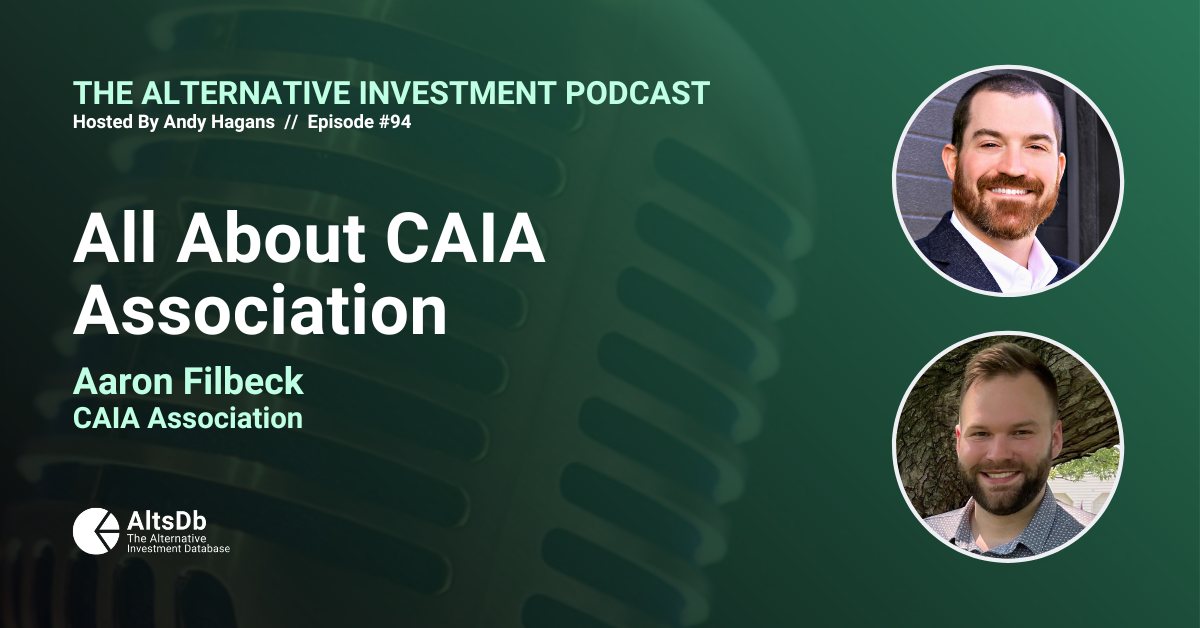
The platform features online, self-directed courses, including a flagship certificate program, "Fundamentals of Alternative Investments," a 20-hour course providing a 101 overview of alternatives. UniFi is also expanding its offerings with a series of micro-credentials, shorter (approximately 5-hour) programs that delve deeper into specific topics. Upcoming micro-credentials will focus on private debt and digital assets, reflecting the dynamic nature of the alternatives landscape.
The UniFi platform’s accessible, video-based content is particularly beneficial for financial professionals who may not have a formal finance degree but need to gain a strong working knowledge of alternatives to effectively advise their clients. This approach democratizes education, allowing professionals to upskill at their own pace and focus on areas most relevant to their practice.
The Financial Data Professional (FDP) Charter: Navigating the Data Revolution
Beyond alternative investments, CAIA also offers the Financial Data Professional (FDP) Charter, a program that addresses the rapidly growing intersection of data science and financial services. Launched approximately four years ago, the FDP Charter is designed to bridge the gap between data scientists and financial professionals.
"The program is really the intersection of data science and financial services," Filbeck elaborated. "As you’ve seen the rise of data science, data analytics, computer programming, and computer science, and that intersection with finance, it’s become a very popular tool across all investment spaces."
The FDP program equips financial professionals with the knowledge to understand data science concepts and translate them effectively. This is crucial for ensuring that data scientists, while possessing technical expertise, are not over-fitting data or creating algorithms without practical financial relevance. The FDP Charter is a single-level examination that fosters essential communication and collaboration between these two vital disciplines.
The Evolving Education Gap: Progress and Future Outlook
The financial industry has made strides in addressing the education gap in alternative investments over the past decade, particularly since the initial wave of liquid alternatives emerged around 2010. However, Filbeck suggests that while progress has been made, there is still considerable ground to cover.
"Compared to what we saw 10 years ago with this move in private capital, which has really accelerated over the past couple of years, I would say that we’ve done a much better job than we did," Filbeck observed. "But I think there’s still a lot of ground to cover in terms of providing education."
A significant focus for CAIA and UniFi is on educating the wealth management sector about the fundamental "why" behind allocating to alternative strategies and how these investments ultimately impact client outcomes. Filbeck stressed the importance of starting with the client’s objectives rather than leading with product. "The point isn’t really that I understand the product; the point is that I understand how all of this stuff is a part of improving outcomes for clients," he explained. This client-centric approach is seen as a key differentiator in the current educational landscape.
The trend of increased demand for education is a positive indicator. Filbeck noted, "We get a lot of people reaching out saying, ‘Hey, I have this gap. Our team has this gap and we really need to get upskilled on this particular area.’ So, that gives me a lot of optimism."
Looking ahead, Filbeck sees promising trends in the educational space. Advancements in technology have significantly improved the delivery of educational content, making it more accessible and palatable for learners. Furthermore, there is a growing shift in conversations towards client-centric approaches, moving away from product-first strategies. The increasing engagement of younger clients with diverse investment options, such as digital assets, is also compelling advisors to proactively seek education to meet evolving client needs and preferences.
The CAIA Association, through its comprehensive CAIA Charter, accessible UniFi platform, and forward-thinking FDP Charter, is playing a pivotal role in equipping financial professionals with the knowledge and skills necessary to navigate the complexities of alternative investments and data science. As the demand for these asset classes continues to grow, the importance of robust education initiatives like those offered by CAIA will only intensify, ultimately benefiting both advisors and the clients they serve.
For those seeking to deepen their understanding of alternative investments and data science, the CAIA Association’s website, caia.org, serves as a primary resource. The organization is also active on social media platforms including Twitter, LinkedIn, and Instagram.
