

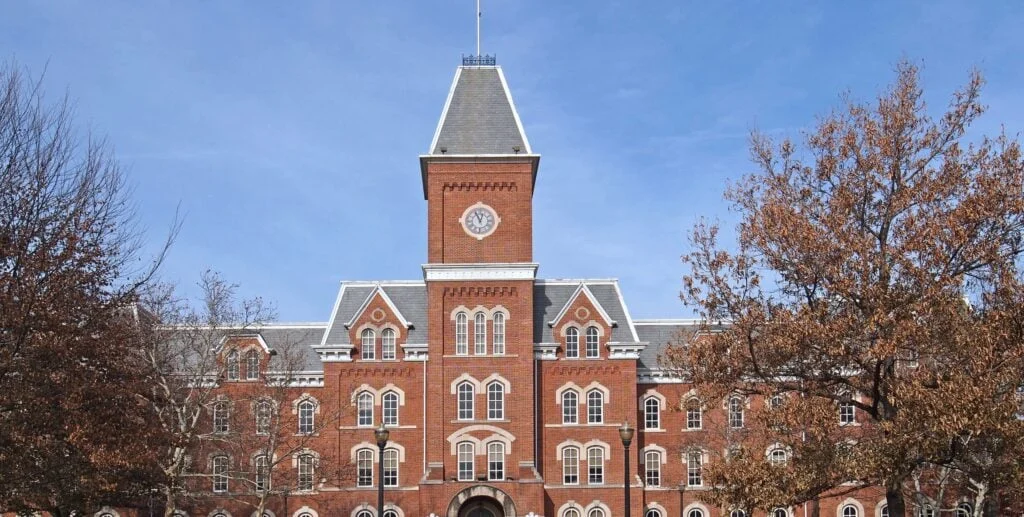
While the broader United States housing market grapples with the dual pressures of high mortgage rates and a persistent inventory shortage, a specific niche is demonstrating remarkable resilience: the inland college town. Recent data indicates that these markets, once considered secondary or tertiary investment options, are now outperforming major metropolitan areas in both price appreciation and rental demand. This shift represents a fundamental realignment of investor interest, driven by the stability of higher education institutions and a growing migration toward affordability.
The Divergence of the College Town Market
A comprehensive analysis by Redfin, utilizing Multiple Listing Service (MLS) data for the period ending in late May 2026, reveals a stark contrast between expensive coastal university hubs and their more affordable inland counterparts. While luxury markets in cities like Boston or the San Francisco Bay Area are seeing cooling demand due to prohibitive entry costs, inland towns anchored by major state universities are seeing double-digit price increases.
Morgantown, West Virginia, home to West Virginia University; Syracuse, New York, home to Syracuse University; and Tuscaloosa, Alabama, home to the University of Alabama, have emerged as the primary beneficiaries of this trend. These locations are characterized by a "reliable foundation of demand" provided by the universities, according to Yingqi Xu, a senior economist at Redfin. Xu notes that these markets are attracting a new wave of buyers who have been priced out of larger metros but still seek the economic stability that a major educational institution provides.
In State College, Pennsylvania, the seat of Pennsylvania State University, the market velocity has reached unprecedented levels. Homes in this area went under contract in a median of just five days, a staggering contrast to the national average of 49 days. Furthermore, State College recorded a 10.6% year-over-year price gain, bringing the median home value to $459,050. This rapid appreciation suggests that even within "affordable" inland sectors, the window for high-yield entry may be narrowing.
Enrollment Trends and the Student Housing Deficit
The primary engine behind this real estate surge is a rebound in national college enrollment. After years of post-pandemic fluctuations, total U.S. college enrollment reached 19.4 million students in the fall of 2025, marking a 1% year-over-year increase and the highest level of attendance since 2018.
This influx of students has created a critical shortage of housing. According to a March 2026 update from the real estate consulting firm Capright, 52.3% of student beds across tracked campuses were already leased for the 2026-2027 academic year by early spring. This represents a significant jump from the 45.6% pre-leasing rate recorded the previous year.
Jonathan Rivera, a director at Capright, points to the South as a particularly high-growth region. "You’re seeing a lot of population growth, which has helped to grow a lot of universities," Rivera stated. "Student housing is a subset of housing generally, and it will continue to be in high demand while the amount of housing continues to be constrained."
The demand extends beyond the immediate perimeter of campus. RealPage, a real estate software management company, reported that properties located more than a mile from campus—typically the domain of single-family rentals and independent apartments—had nearly 40% of their beds pre-leased by January. This indicates that the traditional "off-campus" market is no longer a last-resort option but a primary target for students seeking autonomy and better living conditions.
The Impact of Industrial and Technological Investment
The growth of these inland markets is not solely dependent on student populations; it is also being fueled by massive industrial and technological investments. Syracuse, New York, serves as a prime example of this "town-gown" economic synergy. Beyond the presence of Syracuse University, the region is set to undergo a massive transformation due to the "Syracuse Surge," a multi-billion dollar technological and manufacturing initiative.
Micron Technology, a leading manufacturer of computer memory and data storage, has committed to investing $250 billion in the Syracuse area through 2035. This investment is driven by the global demand for semiconductors in the age of Artificial Intelligence. Such large-scale corporate commitments create a "multiplier effect," bringing in thousands of high-paying jobs and a permanent workforce that competes with the student population for housing.
Similarly, other inland towns are seeing partnerships between academia and industry. Carnegie Mellon University in Pittsburgh (which, while a larger metro, shares many inland college town characteristics) has secured research partnerships with Alphabet (Google) and Nvidia for robotics and AI development. These collaborations ensure that the local economy remains robust even if student enrollment numbers fluctuate, as the demand for professional housing and research facilities remains constant.
Policy Shifts and the Opportunity for Small Landlords
A significant shift in federal housing policy has further cleared the path for individual "mom-and-pop" investors in these markets. Recent legislative efforts to curb the dominance of institutional investors—specifically those owning more than 350 single-family homes—have altered the competitive landscape.
While institutional investors are still permitted to "fix and flip" properties, their ability to buy and hold massive portfolios of single-family homes in tenant-heavy college towns is being constrained. This policy shift leaves a gap in the market that smaller landlords are uniquely positioned to fill.
For small investors, the student housing sector offers superior yields compared to conventional multifamily properties. Capright estimates that national student housing cap rates currently range between 5.5% and 6.5%, roughly 25 to 50 basis points higher than standard multifamily investments. This premium is a reflection of the specialized management required for student rentals, including yearly turnover cycles and the management of "rent-by-the-room" lease structures.
The Evolution of the Student Living Experience
The nature of student housing is also evolving, moving away from high-density, low-amenity dormitories toward "curated" living experiences. A report by StarRez, a housing software solutions provider, highlighted that "housing-related stress" and "tenant conflicts" are major concerns for modern students, impacting their mental health and academic performance.
Jason Day, CEO of StarRez, noted that housing teams are being asked to manage buildings at higher occupancy while supporting increasingly complex student needs. This creates an opening for private landlords who can offer a "home away from home" experience. Students, often backed by parental guarantees, are increasingly willing to pay a premium for well-furnished, private residences that offer a quieter and more professional environment than traditional campus housing.
Professional property management in this sector requires a nuanced approach. Successful landlords in inland college towns often utilize specialized leases that include parental co-signers, ensuring financial security even when tenants lack a personal credit history. By offering a boutique, "Airbnb-style" experience for responsible groups of students, small investors can achieve cash flow levels that far exceed those of single-family homes in traditional suburban markets.
Comparative Analysis: Inland vs. Coastal Risks
The Redfin data underscores a vital lesson for real estate investors: high demand does not always equate to a good investment. Coastal cities like Boston, Seattle, and Los Angeles host some of the world’s most prestigious universities, but the entry price for real estate in these markets often results in negative cash flow for leveraged buyers.
In contrast, inland markets like Dayton, Ohio (home to Wright State University) and Mount Pleasant, Michigan (home to Central Michigan University) offer median house prices under $185,000. While not every inland town is seeing the explosive 12.5% growth of Syracuse, the low cost of entry provides a much higher "ceiling" for yield.
Investors are cautioned, however, to look beyond simple enrollment numbers. The long-term viability of a college town investment is increasingly tied to the academic success and corporate integration of the university. Towns where graduates find high-paying local jobs or where the university is a leader in high-growth fields like biotechnology, engineering, or AI are significantly safer bets than those anchored by smaller, struggling liberal arts colleges.
Conclusion and Outlook
The emergence of inland college towns as a premier real estate sector marks a new chapter in the post-pandemic economy. As the "affordability crisis" continues to reshape where Americans live and work, the stability of the American university system provides a rare anchor of certainty.
For the savvy investor, these markets offer a unique combination of high rental demand, lower competition from institutional giants, and the potential for significant capital appreciation driven by industrial growth. As the 2026-2027 academic year approaches, the data suggests that the "smart money" is moving away from the coasts and toward the heartland, where the halls of higher education are proving to be the most profitable neighbors in the real estate market.
