

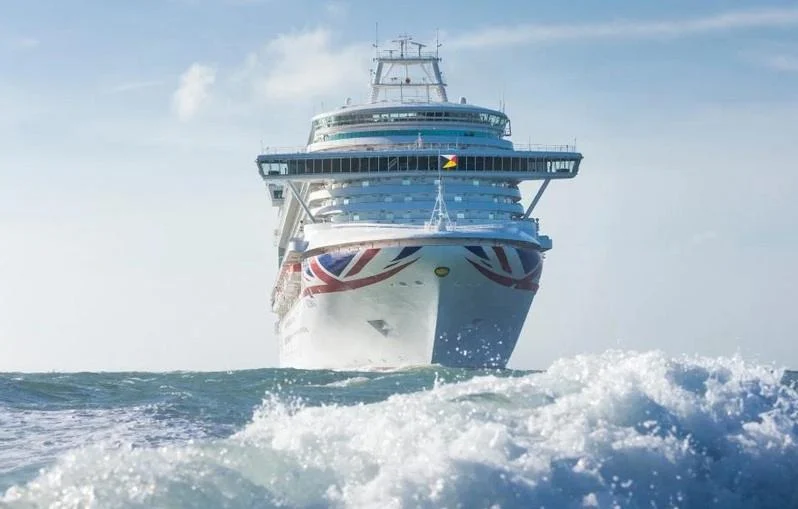
The world’s largest cruise company, Carnival Corporation & plc, has officially transitioned to a more aggressive climate roadmap, raising its greenhouse gas (GHG) emissions intensity reduction target to 25% by 2029. This new objective, measured against a 2019 baseline, represents a significant acceleration of the company’s previous commitment to achieve a 20% reduction by 2030. The decision to revise these targets comes after the corporation successfully met its original 2030 goal five years ahead of schedule, signaling a rapid maturation of its internal decarbonization strategies and a shift in the maritime industry’s approach to environmental stewardship.
As detailed in the company’s newly released 2025 Sustainability Report, the updated 2029 target is part of a broader, multi-decade strategy aimed at reaching net-zero emissions from ship operations by 2050. This trajectory is built upon three primary pillars: the modernization of the global fleet, the implementation of advanced energy-efficient technologies, and a strategic shift toward low-carbon power generation. The maritime sector, which accounts for nearly 3% of global carbon emissions, has faced increasing pressure from international regulators and environmentally conscious consumers to mitigate its carbon footprint. Carnival’s latest move positions it at the forefront of this transition, moving beyond compliance to drive operational transformation.
A Decadal Shift in Fleet Efficiency and Composition
The cornerstone of Carnival’s progress lies in a massive overhaul of its fleet composition. Since 2019, the company has executed a rigorous fleet optimization program, which involved the retirement of 27 older, less efficient vessels. These ships, which consumed significantly more fuel per passenger-mile, have been replaced by a new generation of "green" ships. To date, Carnival has introduced 11 vessels powered by Liquefied Natural Gas (LNG), a fuel that produces nearly zero sulfur oxides and significantly lower particulate matter compared to traditional heavy fuel oil.
According to the 2025 Sustainability Report, the introduction of these 11 LNG-powered ships represents approximately 21% of the company’s total fleet capacity. While LNG is often viewed as a "bridge fuel" in the transition to zero-emission maritime power, its role in Carnival’s current success is undeniable. These vessels are designed to reduce carbon emissions by approximately 20% compared to standard propulsion systems. Looking ahead, the company has confirmed that seven additional ships scheduled for delivery through 2033 are engineered to be at least 20% more efficient than the vessels they are intended to replace.
The impact of these changes is reflected in the company’s long-term data. Since 2008, Carnival has reduced its GHG emissions intensity by 44%, effectively cutting the carbon footprint of each individual guest by nearly half. This metric—emissions intensity—is crucial for the cruise industry, as it measures efficiency relative to capacity and distance traveled, allowing for a standardized comparison as the company continues to grow its global passenger volume.
Technological Innovations: From Shore Power to Battery Storage
Beyond the transition to cleaner fuels, Carnival is investing heavily in "cold ironing" or shore power capabilities. This technology allows ships to turn off their primary engines while in port and plug into the local electrical grid. By utilizing land-based power, ships can eliminate emissions of carbon dioxide, sulfur dioxide, and nitrogen oxides during their stay at a destination, provided the local grid is powered by renewable or low-carbon sources.
Currently, 74% of the Carnival fleet is equipped with shore power capabilities. The company has set a firm target to increase this figure to 80% by 2030. However, the efficacy of this technology remains dependent on port infrastructure. While Carnival’s ships are increasingly ready to plug in, many global ports have yet to install the necessary high-voltage connections. To address this, the corporation is actively collaborating with port authorities and governments worldwide to accelerate the rollout of shoreside electrical infrastructure.
In addition to shore power, the company is exploring the frontiers of maritime energy storage. Carnival has initiated pilots for large-scale battery energy storage systems, which can provide peak-shaving capabilities and allow for zero-emission operations in sensitive ecological zones. Furthermore, the company is increasing its use of biofuels—renewable fuels derived from organic matter—which can be "dropped in" to existing engines to further lower the carbon intensity of the fuel mix.
Operational Excellence and the Economics of Sustainability
The push for decarbonization is not merely an environmental imperative but a financial one. Carnival anticipates that its fuel efficiency improvements will generate approximately $650 million in annual savings by 2026 when compared to 2019 levels. This significant figure underscores the "efficiency-first" approach that has become the hallmark of the company’s operational strategy.
Key to these savings are fleet-wide energy efficiency measures that target every aspect of shipboard life. These include:
- HVAC System Upgrades: Heating, ventilation, and air conditioning (HVAC) systems are among the largest energy consumers on a cruise ship. By installing variable frequency drives and advanced sensors, Carnival has optimized these systems to respond to real-time occupancy and weather conditions.
- LED Lighting Transitions: The company has replaced traditional lighting with high-efficiency LED systems across its fleet, contributing to a substantial reduction in electricity demand.
- Advanced Energy Management Systems: Utilizing artificial intelligence and real-time data analytics, ship captains and engineers can now monitor energy consumption patterns with unprecedented precision, allowing for micro-adjustments that save fuel without impacting the guest experience.
Collectively, these measures have reduced annual shipboard energy demand by approximately 535,000 Megawatt-hours (MWh) compared to 2019 levels. This reduction is equivalent to the annual energy consumption of tens of thousands of average households, illustrating the scale of the company’s internal efficiency drive.

Leadership Perspective and Strategic Alignment
Josh Weinstein, CEO of Carnival Corporation, emphasized that the early achievement of the 2030 goals was the result of a disciplined, long-term investment strategy rather than a momentary shift. "Achieving our 2030 GHG reduction goal five years early is a significant milestone that reflects years of disciplined investment, innovation, and operational focus across our global fleet," Weinstein stated in the report. "But we’re not treating it as a finish line. Our new 2029 target ensures we’re continuing to improve every part of the equation, from using less fuel to advancing the tools, technologies, and infrastructure that will help us lower emissions even further over time."
The company’s strategy aligns with the International Maritime Organization’s (IMO) revised 2023 Strategy on Reduction of GHG Emissions from Ships. The IMO has set a target for the global shipping industry to reach net-zero GHG emissions by or around 2050, with "indicative checkpoints" for 2030 and 2040. By setting a 2029 target of 25% reduction, Carnival is positioning itself to exceed the current regulatory trajectory, mitigating the risk of future carbon taxes and more stringent environmental mandates.
Broader Impact and the Road to Net-Zero
The implications of Carnival’s accelerated targets extend beyond the company’s own balance sheet. As a dominant player in the cruise industry, Carnival’s investments in LNG and shore power create a "demand pull" for the entire maritime supply chain. When a company of this scale commits to a specific technology, it incentivizes fuel suppliers and port operators to invest in the corresponding infrastructure, creating a ripple effect that benefits smaller operators and the broader shipping industry.
However, the path to net-zero by 2050 remains fraught with challenges. The industry currently lacks a "silver bullet" solution for long-haul, carbon-free maritime travel. While LNG and biofuels offer immediate reductions, they are not zero-carbon in the absolute sense. The future of the industry likely depends on the development and scaling of hydrogen, green ammonia, or synthetic fuels (e-fuels), as well as the maturation of carbon capture technologies at sea.
Carnival’s 2025 Sustainability Report acknowledges these hurdles, noting that the corporation is participating in several research and development initiatives to explore next-generation propulsion. These include partnerships with maritime technology firms to test fuel cell applications and wind-assisted propulsion systems.
Chronology of Carnival’s Climate Journey
- 2008: Carnival establishes its initial baseline for greenhouse gas emissions intensity.
- 2019: The company sets a new baseline year for its modern sustainability goals, focusing on a 20% intensity reduction by 2030.
- 2020-2023: Accelerated retirement of 27 less-efficient ships and the introduction of the first wave of LNG-powered vessels.
- 2024: Internal data confirms the 20% reduction target has been met, six years ahead of the original 2030 deadline.
- 2025: Release of the Sustainability Report announcing the new 25% reduction target by 2029.
- 2026: Projected milestone of $650 million in annual fuel-related savings due to efficiency gains.
- 2030: Target date for 80% of the fleet to be shore-power ready.
- 2033: Completion of the delivery cycle for seven new, high-efficiency ships.
- 2050: Goal for net-zero carbon emissions from ship operations.
As Carnival Corporation moves toward its 2029 objective, the focus will likely shift from internal efficiency to external collaboration. The success of the next phase of decarbonization will depend not only on the company’s engineering prowess but also on the global availability of green fuels and the willingness of international ports to support the transition. For now, Carnival has demonstrated that a large-scale industrial operator can decouple business growth from carbon intensity, providing a blueprint for the future of sustainable tourism.
