

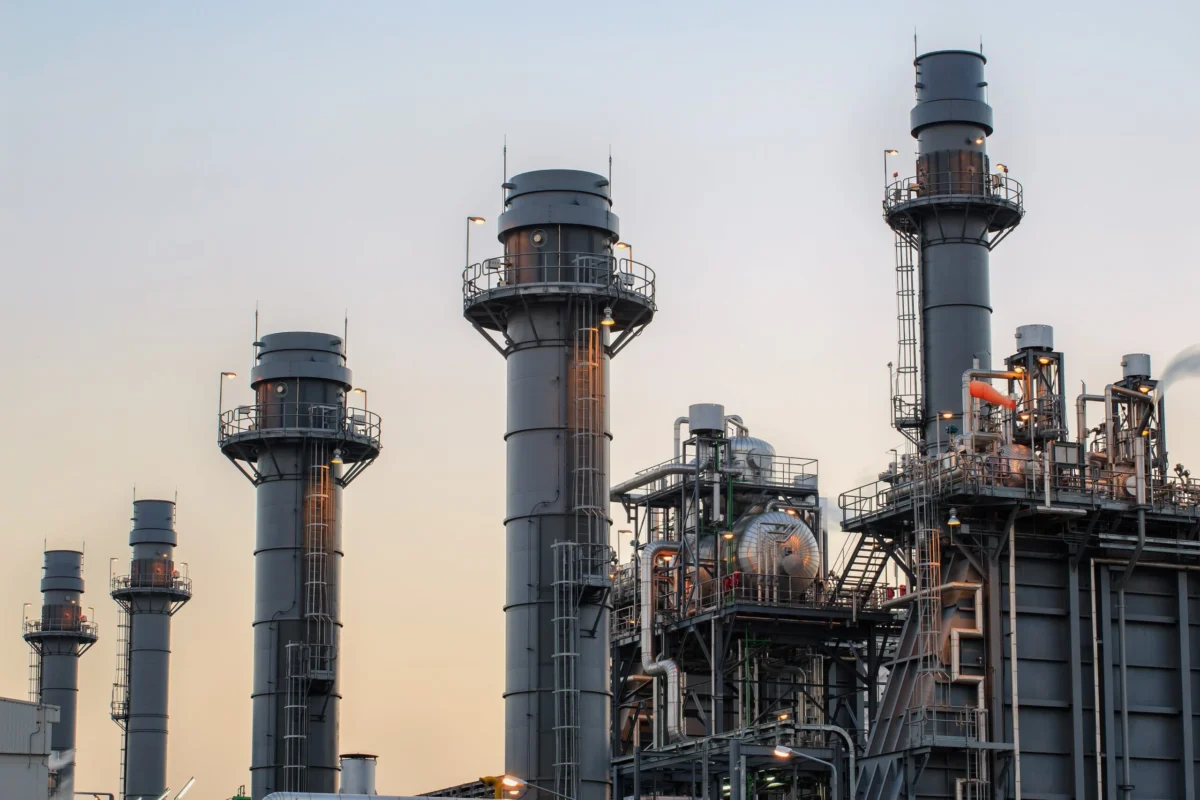
Amazon is moving forward with plans to construct a massive data center complex in Pecos County, Texas, supported by an on-site natural gas power plant that environmental analysts suggest could become the single largest source of climate pollution in the United States. According to a report by The New York Times, the proposed facility has secured permits allowing it to emit up to 33 million tons of carbon dioxide annually. This figure represents a staggering volume of greenhouse gas, surpassing the emissions of any existing individual power plant currently operating across the country. The project highlights a growing tension between the aggressive infrastructure requirements of the artificial intelligence boom and the ambitious sustainability commitments made by the world’s largest technology companies.
The development in West Texas marks a significant shift in how "Big Tech" manages its energy consumption. Historically, companies like Amazon, Google, and Microsoft have relied on the public electrical grid and purchased renewable energy credits to offset their carbon footprint. However, the unprecedented power demands of generative artificial intelligence (AI) are forcing these corporations to seek dedicated, high-capacity power sources that can provide constant "baseload" electricity—something that wind and solar energy, without massive battery storage, struggle to provide consistently. By building its own natural gas-fired plant, Amazon aims to ensure a stable power supply for its Pecos County data center without competing for resources on the Texas state grid.
The Scale of Emissions and Environmental Impact
To understand the magnitude of the 33 million tons of carbon dioxide Amazon’s proposed plant is permitted to emit, it is necessary to compare it to existing industrial infrastructure. Currently, the James H. Miller Jr. Electric Generating Plant in Alabama is often cited as the nation’s largest carbon emitter, typically releasing between 16 million and 20 million tons of CO2 per year. Amazon’s permitted limit for the Pecos County site is nearly double that amount.
In terms of broader environmental impact, 33 million tons of CO2 is equivalent to the annual emissions of approximately 7.8 million gasoline-powered passenger vehicles. This volume of pollution would represent a significant setback for national efforts to decarbonize the energy sector. While natural gas is often marketed as a "bridge fuel" because it burns cleaner than coal, the sheer scale of the Amazon project suggests that the total volume of emissions will far outweigh the relative efficiency of the fuel source. Furthermore, the extraction and transport of natural gas frequently result in methane leaks, a greenhouse gas that is significantly more potent than carbon dioxide in the short term.
The Tension Between AI Growth and Climate Pledges
The timing of this project is particularly notable given Amazon’s public stance on climate change. In 2019, Amazon co-founded "The Climate Pledge," a commitment to reach net-zero carbon emissions across its entire business by 2040. This pledge was intended to set a gold standard for corporate responsibility, encouraging hundreds of other companies to follow suit. However, the rapid integration of AI into Amazon’s Web Services (AWS) and retail operations has caused the company’s energy needs to skyrocket.
In its most recent sustainability reporting, Amazon disclosed that its carbon emissions rose by 16% over the previous year. This upward trend is moving in the opposite direction of the company’s stated goals. In a statement addressing the Pecos County project, an Amazon spokesperson acknowledged the difficulty of the current landscape, stating, “The world looks different now than when we co-founded the climate pledge.” Despite this acknowledgment, the company maintains that its commitment to the 2040 goal remains unchanged, though it has not provided a detailed roadmap for how a massive new natural gas plant fits into a net-zero future.
Chronology of Amazon’s Energy Strategy and AI Expansion
The path toward on-site natural gas generation has been several years in the making, driven by the convergence of hardware evolution and grid instability.
- 2019: Amazon co-founds The Climate Pledge, aiming for net-zero carbon by 2040 and 100% renewable energy usage by 2030 (a goal the company recently claimed to have met through the purchase of renewable energy credits).
- 2021-2022: The emergence of large language models (LLMs) increases the power density required for data centers. Traditional data center racks that required 10-15 kilowatts began evolving into high-density configurations requiring 50-100 kilowatts or more.
- 2023: Amazon and other tech giants begin facing "power queues" in major hubs like Northern Virginia and Texas. Local utilities inform tech companies that new grid connections could take five to seven years to complete.
- Early 2024: Amazon reports a 16% year-over-year increase in total carbon emissions, primarily attributed to the expansion of its data center footprint to support AI.
- Mid-2024: Reports surface regarding Amazon’s interest in "behind-the-meter" power solutions, including nuclear and natural gas, to bypass grid congestion.
- 2026 (Projected/Reported): Details of the Pecos County natural gas plant emerge, revealing the 33-million-ton emission permit.
Regional Context: Why Texas and Pecos County?
Texas has become the primary battleground for the future of data center energy. The state’s independent power grid, managed by the Electric Reliability Council of Texas (ERCOT), offers a deregulated environment that is attractive to large industrial users. Pecos County, located in the Permian Basin, is already a hub for energy production, particularly oil and natural gas extraction.
By locating the data center in the heart of natural gas country, Amazon can minimize the costs associated with transporting fuel. However, the decision to build on-site generation is also a defensive move. Across the United States, data centers are facing growing political and social opposition. Residents in various states have expressed concerns that the massive energy consumption of these facilities will drive up electricity prices for households and lead to brownouts during peak summer and winter months.
An Amazon spokesperson emphasized this point, stating that the Pecos County data center will be "powered by new on-site generation that won’t raise electricity costs for Texas families." By operating independently of the ERCOT grid, Amazon can argue that it is not placing an undue burden on the public infrastructure. However, this "islanded" approach does nothing to mitigate the atmospheric impact of the carbon emissions generated on-site.
Technical Analysis of Data Center Power Demands
The specialized chips required for AI, such as NVIDIA’s H100 and Blackwell GPUs, consume significantly more power than standard CPUs used in traditional cloud computing. A single AI data center can now require upwards of 1 gigawatt of power—enough to supply a medium-sized city.
When a company like Amazon commits to building a 1-gigawatt facility, it requires "five nines" of reliability (99.999% uptime). While Texas has a high volume of wind and solar power, these sources are intermittent. Without a breakthroughs in long-duration battery storage or a rapid expansion of small modular nuclear reactors (SMRs), natural gas remains the only scalable, "always-on" energy source that can be deployed quickly enough to meet the current AI demand. This technical reality is currently clashing with the corporate ESG (Environmental, Social, and Governance) goals that have defined the tech industry for the last decade.
Official Responses and Stakeholder Reactions
The revelation of the Pecos County plant’s emission permits has sparked a range of reactions from industry observers and environmental advocates.
Environmental Organizations: Groups such as the Sierra Club and Greenpeace have criticized the move, suggesting that tech companies are "hiding" their true carbon impact by building private power plants. "Amazon cannot call itself a climate leader while simultaneously permitting what could become the nation’s largest point-source of carbon pollution," a representative from a prominent environmental NGO noted in a preliminary reaction to the reports. "The ‘Climate Pledge’ is becoming a secondary priority to AI market dominance."
Industry Analysts: Some market analysts argue that Amazon has little choice if it wishes to remain competitive with Microsoft and Google. "The race for AI supremacy is an energy race," said one infrastructure analyst. "If you don’t have the power, you can’t run the models. Amazon is choosing to prioritize speed to market and operational reliability over its 2030 and 2040 targets because the cost of falling behind in AI is perceived as higher than the reputational cost of increased emissions."
Amazon’s Stance: The company continues to highlight its investments in carbon capture technology and its status as the world’s largest corporate buyer of renewable energy. They argue that their overall portfolio still trends toward sustainability, even if specific projects like the one in Pecos County require fossil fuel backups in the short term.
Broader Implications for National Climate Goals
The development in Pecos County raises a critical question for federal and state regulators: can the United States meet its Paris Agreement commitments if the private sector builds a new generation of massive, fossil-fuel-powered infrastructure to support AI?
If Amazon’s model of on-site natural gas generation becomes the industry standard, it could trigger a "relapse" into fossil fuel dependency across the technology sector. Microsoft and Google have also explored natural gas and nuclear options to power their facilities, indicating a broader industry trend toward energy autonomy. While these companies often claim they will eventually transition these plants to run on hydrogen or equip them with carbon capture and storage (CCS) technology, those technologies are not yet available at the scale required to neutralize 33 million tons of CO2 annually.
Furthermore, the Pecos County project may set a precedent for how "permitted emissions" are viewed. If a single corporate campus is allowed to emit more than a traditional utility-scale power plant, the regulatory framework for industrial pollution may need to be overhauled to account for the unique nature of data center "megaprojects."
Conclusion
The planned Amazon data center and power plant in Pecos County represent a pivotal moment in the history of the digital age. It serves as a physical manifestation of the massive physical resources required to sustain a virtual world driven by artificial intelligence. While Amazon remains officially committed to its 2040 net-zero goal, the reality of 33 million tons of permitted CO2 emissions suggests that the path to that goal has become significantly more complex.
As the project moves from the permitting phase to construction, it will likely remain a focal point for debates regarding corporate accountability, the true cost of AI, and the feasibility of a rapid transition to green energy in the face of unprecedented industrial growth. For now, the Permian Basin stands to host not just a center for data, but a new and controversial centerpiece in the American energy landscape.
