

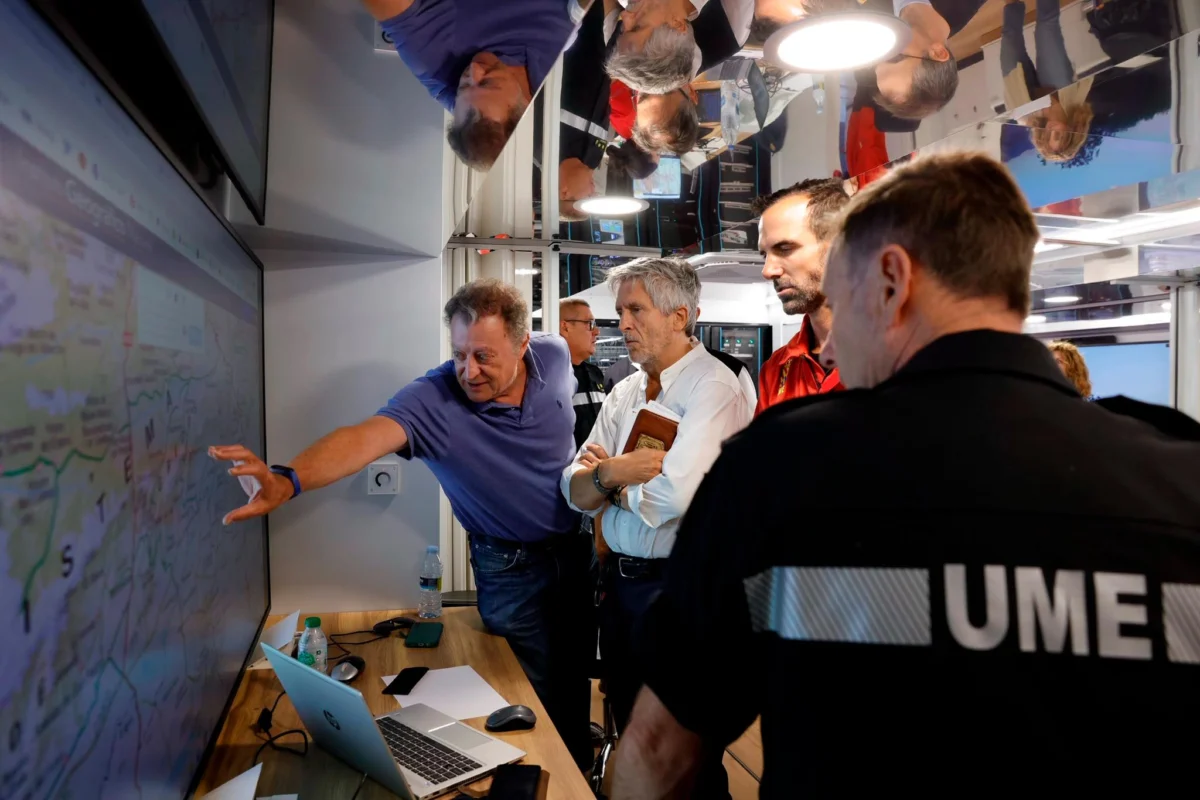
The European continent is currently grappling with a climate catastrophe of historic proportions as a relentless fourth heat wave of the summer fuels a series of "monster" wildfires across France and Spain. In what has become one of the most destructive wildfire seasons on record, hundreds of thousands of residents have been forced to flee their homes, often under the cover of darkness with only the belongings they could carry. As evacuation orders begin to lift in certain regions, the grim reality of the destruction is coming into focus: while some will return to partially damaged neighborhoods, others will find their entire lives reduced to ash. This crisis, characterized by the displacement of over 300,000 people, represents one of the largest movements of civilians on the continent since the Second World War, signaling a fundamental shift in the European environmental and security landscape.
The scale of the disaster has prompted immediate scientific scrutiny. According to a comprehensive study released by World Weather Attribution (WWA), a scientific non-profit dedicated to analyzing the fingerprints of global warming on extreme weather, these events are no longer "natural" disasters in the traditional sense. The researchers concluded that human-induced climate change has made the likelihood of such fire-prone conditions at least twice as likely in France and a staggering 20 times as likely in central Spain. This data underscores a terrifying trend: the "new normal" for European summers is one of extreme volatility and life-threatening heat.
A Pattern of Escalating Extremes
The current crisis is not a localized incident but rather the latest chapter in a broader pattern of climatic destabilization. Maria Alcazar Castilla, the deputy regional director of the International Federation of Red Cross in Europe, emphasized that the continent is witnessing a systemic shift. The Red Cross has been at the forefront of the disaster response, coordinating temporary shelters and providing essential supplies to thousands of displaced families. However, the sheer frequency of these events is stretching humanitarian resources to their limits.
The conditions that led to this summer’s infernos were months in the making. Western Europe has been trapped in a cycle of "back-to-back" heat waves and a prolonged, multi-year drought. This extended period of desiccation has effectively turned the European landscape—from the pine forests of France to the scrublands of Spain—into a tinderbox. Scientific consensus indicates that climate change is the primary driver behind the confluence of these extremes, making it increasingly rare for the land to recover between high-heat events.
Last year, Europe experienced what was then considered its worst wildfire season in history, with over two million hectares burned by September. Current data suggests that the present year is on a trajectory to surpass even those devastating figures. As of late July, approximately 430,000 hectares have already been consumed by flames—roughly 100,000 more than at the same point last year. In Spain alone, the total burned area has reached a size equivalent to the entire city of London, illustrating the geographic scale of the devastation.
The Chronology of a Climate Emergency
The path to the current crisis began in early winter. In a phenomenon known as "weather whiplash," January and February saw unexpectedly high rainfall in parts of Western Europe. While this initially seemed beneficial, it prompted a massive burst of vegetation growth in the spring. However, this growth was quickly met by an unprecedented spring and summer drought. As the moisture was sucked out of the environment by rising temperatures, the lush spring greenery died and dried, providing an abundance of fine fuel for the fires that would follow.
By June, the situation reached a breaking point. Western Europe recorded its hottest June in history, with temperatures soaring past 40 degrees Celsius (104 degrees Fahrenheit) in many regions. This extreme heat had immediate cascading effects: nuclear power plants, which rely on river water for cooling, were forced to reduce output or shut down entirely; train lines buckled under the thermal expansion of metal rails; and thousands of heat-related deaths were reported across the continent within just a few weeks.
By July, the combination of high temperatures, low humidity, and variable winds created the perfect conditions for "fire weather." In France, the Landes de Gascogne region became the epicenter of the outbreak, while in Spain, central and northwestern provinces faced uncontrollable blazes that jumped highways and threatened major population centers.
The Role of Attribution Science
The rapid analysis provided by World Weather Attribution is part of a growing field known as attribution science. Traditionally, scientific peer review can take months or years, but WWA utilizes standardized, rapid-response methods to provide answers while the events are still unfolding. By comparing historical weather data with computer simulations of a world without human-induced greenhouse gas emissions, scientists can quantify exactly how much more likely an event has become due to global warming.
Clair Barnes, a research associate at WWA and lead author of the recent study, noted that the analysis drew upon previous research into heat and drought patterns in Europe. "As long as we continue to emit fossil fuels into the atmosphere, those greenhouse gases are going to continue to warm the planet more," Barnes stated. "This is just the beginning of how bad it’s going to be." The study highlights that the "spongy" nature of a warming atmosphere—which holds more moisture for longer periods—leads to longer dry spells followed by intense, infrequent rainfall, a cycle that exacerbates wildfire risk.
Landscape Management and Fire Vulnerability
While climate change provides the spark and the heat, land-use policies in Europe have provided the fuel. Robert Field, a fire and climate researcher at Columbia University, points out that human intervention in the landscape has inadvertently increased fire risk. In France, the fires were particularly intense in the Landes de Gascogne, a region dominated by planted pine forests. Research indicates that these industrial timber plantations can be twice as flammable as natural, biodiverse forests.
Furthermore, a socio-economic shift in rural Europe has contributed to the problem. The abandonment of traditional farmland and a decline in livestock grazing have allowed flammable shrubs and undergrowth to proliferate unchecked. In previous decades, cattle and goats acted as natural "lawnmowers," reducing the fuel load on the forest floor. "I don’t think it’s an issue of firefighting capacity or investment," Field argued. "It’s fundamentally an issue of landscape management in the face of global warming."
Socio-Economic and National Security Implications
The impact of these fires extends far beyond the immediate loss of property. Rural communities that depend on agriculture and tourism have been hit the hardest. In Spain and France, the destruction of vineyards, olive groves, and pastureland threatens the long-term livelihoods of thousands. Maria Alcazar of the Red Cross warned that the economic recovery for these regions will be a multi-year process, with some sectors potentially never fully recovering.
The severity of the situation has led to a significant shift in political rhetoric. In a rare joint statement, officials from the United Kingdom and Spain characterized the current climate conditions as a "national security emergency facing Europe and threatening our way of life." This framing marks a departure from viewing wildfires as mere environmental issues, instead positioning them as fundamental threats to state stability and public safety.
The public health toll is equally staggering. Beyond the thousands of direct heat-related deaths, the smoke from the fires has degraded air quality across the continent, leading to a spike in respiratory and cardiovascular admissions in hospitals hundreds of miles away from the fire lines.
The Forecast and the Path Forward
As of late this week, a weak cold front has provided a temporary reprieve, allowing firefighters to partially contain some of the largest blazes and permitting over 100,000 people to return to their communities in southwest France. However, meteorologists warn against complacency. Jason Nicholls, international forecasting lead at AccuWeather, notes that another surge of extreme heat is expected by mid-August.
"I don’t see any drought relief in the near term, which would mean the wildfire risk will stay very elevated," Nicholls warned. For countries like Germany, Hungary, and Italy, the risk remains acute as the drought continues to migrate across Central Europe.
The 2024 season serves as a stark reminder that the window for climate adaptation is closing. Experts suggest that Europe must now look toward radical changes in land management, including the restoration of natural wetlands, the diversification of forests, and the reintroduction of traditional grazing practices. Without a significant reduction in global carbon emissions and a fundamental rethinking of how the European landscape is managed, the "ash and evacuation" seen this summer will likely become a recurring feature of the European experience. For now, the continent remains on high alert, waiting for the next spark in a world that is increasingly too hot to handle.
