

The United States Department of Agriculture is moving forward with a sweeping reorganization and the forced relocation of thousands of federal employees, a move that critics and agricultural advocates warn could cripple the nation’s food security infrastructure. This administrative overhaul comes at a period of unprecedented vulnerability for the American farming sector, which is currently grappling with the reemergence of eradicated parasites, a massive outbreak of foodborne illness, and the looming threat of a "Super El Niño" weather event. While the administration frames the restructuring as a necessary measure to reduce bureaucracy and move decision-making closer to rural communities, experts suggest the resulting "brain drain" may leave farmers without the essential support systems required to navigate a mounting series of crises.
The Scope of the USDA Reorganization
Agriculture Secretary Susan Rollins confirmed in late July that the agency will proceed with the mandatory relocation of approximately 3,000 Washington, D.C.-based employees to new "regional hubs" located in North Carolina, Missouri, Indiana, Colorado, and Utah. The plan, which was first unveiled last summer, aims to decentralize the agency’s operations. Proponents of the move, led by the Donald Trump administration, argue that the transition will save taxpayers hundreds of millions of dollars by taking advantage of lower costs of living outside the capital and by reducing the influence of "Beltway bureaucracy."
However, the transition has been met with significant internal and external resistance. According to surveys conducted by the American Federation of Government Employees (AFGE), approximately 76 percent of the affected researchers and specialized staff have indicated they will resign or retire rather than relocate. This sentiment mirrors the results of a similar relocation effort during President Trump’s first term, where the move of the Economic Research Service (ERS) and the National Institute of Food and Agriculture (NIFA) to Kansas City resulted in a 75 percent staff loss.
The loss of institutional knowledge is a primary concern for stakeholders. Out of more than 46,000 public comments submitted regarding the current plan, 82 percent expressed alarm over the potential for diminished oversight and the loss of experienced personnel. Union representatives argue that by forcing an accelerated timeline without guaranteed financial assistance for moving, the USDA is effectively dismantling decades of scientific and administrative expertise.
A Staffing Crisis Compounded by DOGE
The relocation of 3,000 workers is only one component of a broader staffing contraction at the USDA. Since the beginning of last year, the agency has lost more than 24,000 employees. Many of these departures were facilitated by the Deferred Resignation Program, a budget-cutting initiative managed by the newly established Department of Government Efficiency (DOGE). Headed by Elon Musk, DOGE has focused on aggressive workforce reductions, offering buyouts to 15,000 employees while summarily terminating thousands of others.
The impact of these cuts has been felt most acutely in rural areas. Despite the administration’s stated goal of moving resources closer to farmers, an analysis by the National Sustainable Agriculture Coalition (NSAC) revealed that 98 percent of the USDA staff lost since last year were actually based in field offices outside of Washington, D.C. This reduction in boots-on-the-ground personnel has led to delays in program delivery, loan processing, and technical assistance at a time when farm debt has reached an all-time high.
The Reemergence of the New World Screwworm
One of the most alarming consequences of the USDA’s reduced capacity is the return of the New World screwworm, a deadly parasite that was eradicated in the United States in the 1960s. The screwworm fly lays its eggs in the open wounds of warm-blooded animals; the larvae then consume the living flesh of the host, often leading to death if left untreated. For decades, the U.S. maintained a "buffer zone" in Central America through joint monitoring programs and the release of sterile flies to prevent the parasite from migrating north.
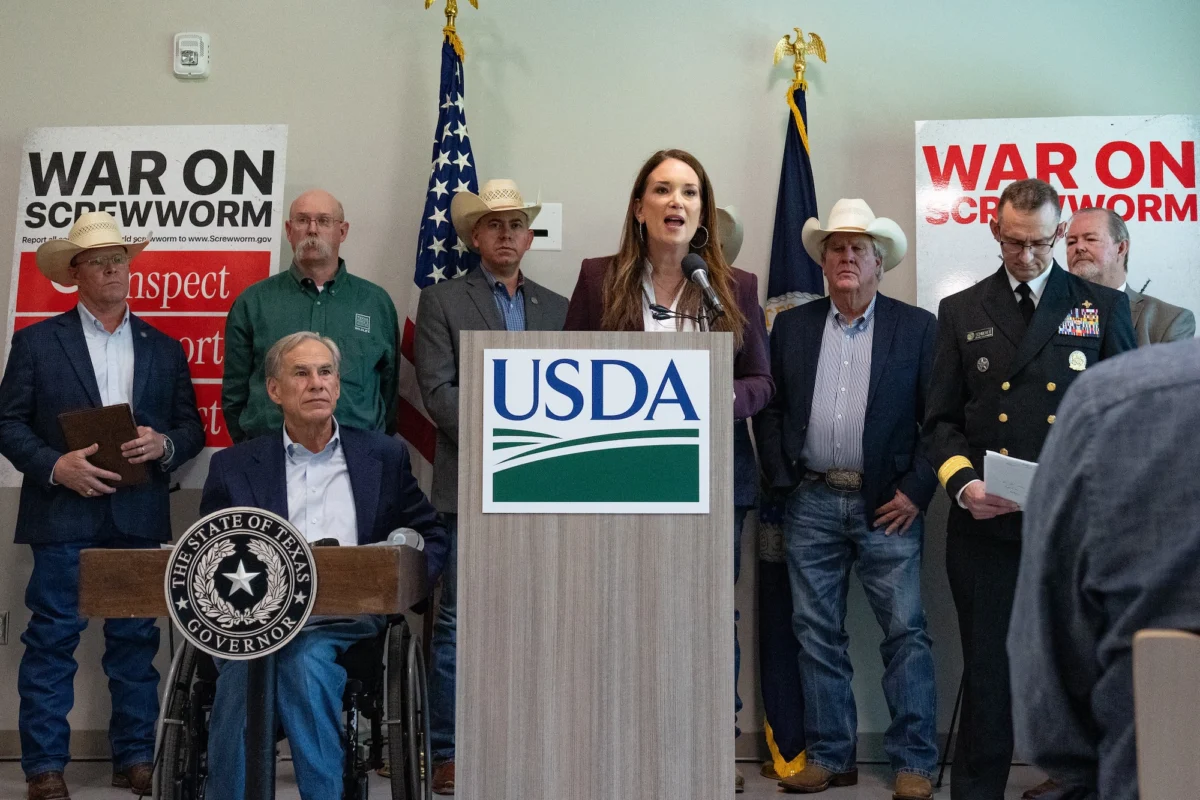
Last year, the dismantling of the U.S. Agency for International Development (USAID) and associated foreign aid programs effectively ended these joint monitoring efforts. By June of this year, the first domestic case of screwworm in over 50 years was confirmed on a farm in Texas. Since then, 45 cases of animal infection have been detected across Texas and New Mexico. Agriculture Secretary Rollins has declared a "War on Screwworm," but critics point out that the USDA is severely understaffed to manage a widespread outbreak. The containment of such a parasite requires intensive field inspections and rapid response capabilities—functions that have been weakened by recent personnel cuts.
Public Health and the Cyclospora Outbreak
While livestock face the threat of screwworm, the American public is currently facing a massive outbreak of cyclosporiasis, a parasitic infection caused by Cyclospora cayetanensis. The parasite is typically transmitted through contaminated fresh produce and causes severe gastrointestinal distress, often described as "explosive diarrhea."
The Centers for Disease Control and Prevention (CDC) has reported over 6,707 laboratory-confirmed cases of domestic-sourced infections between May and July, with two confirmed deaths and an additional 11,000 cases under investigation across 15 states. This outbreak far exceeds the numbers recorded during the last major surge in 2019.
The spike in cases follows the administration’s decision a year ago to stop the mandatory tracking of Cyclospora through the CDC, USDA, and FDA, a practice that had been in place since 1997. Secretary Rollins has stated that the outbreak is an "FDA issue," but agricultural advocates argue that the USDA’s Food Safety and Inspection Service (FSIS) plays a critical role in identifying contamination at the farm and processing levels. The reduction in oversight has created a vacuum in the nation’s food safety net, leaving consumers at risk.
Economic Pressures and Environmental Threats
The administrative and biological challenges facing the USDA are occurring against a backdrop of severe economic strain for American farmers. Farm debt has hit record levels, driven by a 63 percent increase in diesel fuel costs and a significant spike in fertilizer prices. The latter is largely attributed to ongoing geopolitical conflicts and the impact of trade tariffs, which have disrupted global supply chains.
In a recent survey, 70 percent of farmers reported that they could not afford the necessary fertilizer for the spring planting season. This financial squeeze is exacerbated by the "tariff wars" and the "terrorization" of migrant farm workers, which has led to critical labor shortages during harvest cycles.
Environmental factors are further complicating the landscape. Meteorologists have warned of a "Super El Niño" event that could trigger weather patterns reminiscent of the 1930s Dust Bowl. Severe drought conditions in the Midwest and South are already threatening crop yields. Without a fully staffed USDA to manage soil conservation programs and provide disaster relief, many family farms may face bankruptcy. Already, the industry is seeing a rise in HLB (citrus greening) destroying Florida orange groves and the glassy-winged sharpshooter threatening California’s wine country.
Legal Challenges and Future Outlook
The USDA’s restructuring plan is currently facing a significant legal challenge. The American Federation of State, County and Municipal Employees (AFSCME) and other labor groups have filed for an injunction in federal court to halt the reorganization. The plaintiffs argue that the administration is bypassing Congressional authority and intentionally gutting the agency to facilitate further tax cuts for the wealthy.
AFSCME President Lee Saunders stated that the administration is "trying to gut the agency that helps farmers stay in business and puts food on working families’ tables." A federal judge in California is scheduled to hear the request for an injunction on September 1.
The outcome of this legal battle will likely determine the USDA’s operational capacity for the foreseeable future. If the reorganization proceeds as planned, the agency will have to rebuild its research and inspection divisions almost from scratch, a process that experts say could take a decade. In the interim, the American agricultural sector remains in a state of heightened risk, caught between a radical administrative shift and a series of converging biological, economic, and environmental crises.
As the September court date approaches, farmers and policymakers alike are watching closely. The stability of the U.S. food supply depends not only on the resilience of those who work the land but also on the efficacy of the federal institutions designed to protect them. With 20 percent of the USDA’s workforce already gone and thousands more facing relocation, the margin for error has never been thinner.
