

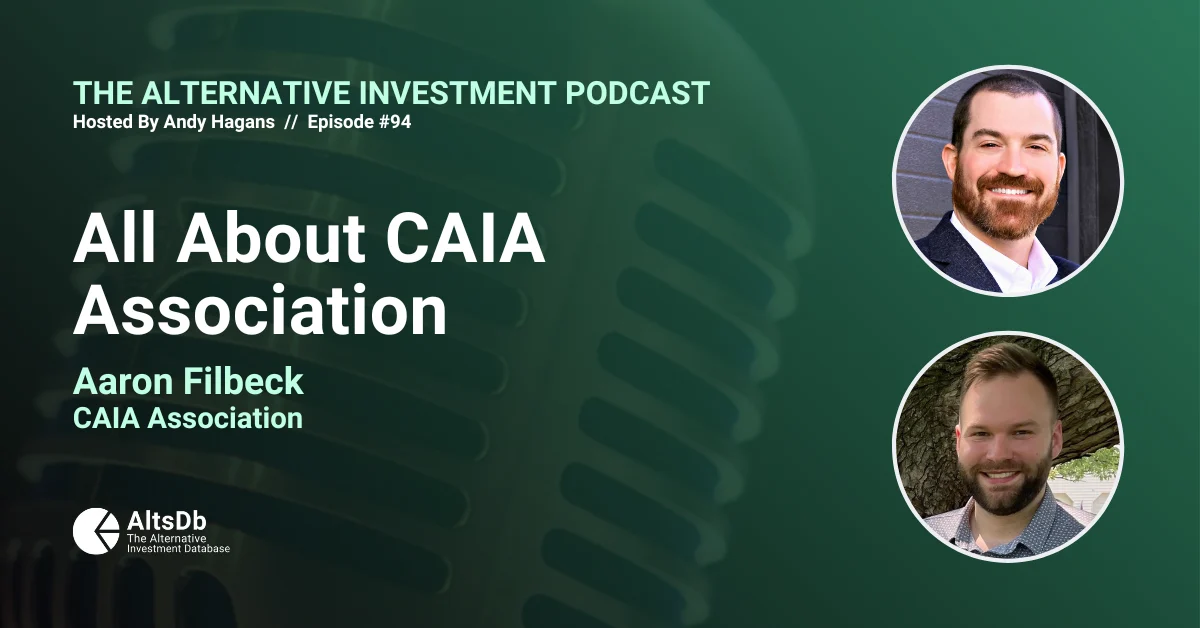
The landscape of financial advisory services is undergoing a significant transformation, with alternative investments emerging as a crucial component for enhancing client portfolios and driving business growth. However, the inherent complexity of these investments presents a substantial challenge for many advisors, creating a pronounced education gap within the industry. Addressing this critical need, Aaron Filbeck, Managing Director and Head of UniFi at CAIA, recently joined "The Alternative Investment Podcast" to discuss how the CAIA Association is actively working to bridge this knowledge deficit, ultimately aiming to improve financial outcomes for clients and society at large.
The Growing Significance of Alternative Investments
For decades, traditional investment portfolios have primarily consisted of publicly traded equities and fixed income securities. However, recent market dynamics, including increased volatility in traditional markets and a quest for uncorrelated returns, have propelled alternative investments into the spotlight. These encompass a broad spectrum of assets such as private equity, venture capital, hedge funds, real estate, infrastructure, and private debt. Data from industry reports, such as those by Preqin, consistently highlight the substantial and growing assets under management in these alternative strategies. For instance, global private equity AUM has seen consistent double-digit annual growth, signaling a strong investor appetite.
This shift is driven by several factors:
- Diversification: Alternatives can offer low correlation to traditional asset classes, potentially reducing overall portfolio risk.
- Enhanced Returns: Certain alternative strategies aim to generate alpha and higher risk-adjusted returns than public markets.
- Access to Niche Opportunities: They provide exposure to unique investment themes and sectors not readily available in public markets.
Despite these benefits, the successful integration of alternatives into client portfolios hinges on the advisor’s understanding and expertise. This is where the challenge lies, as many financial professionals lack the specialized knowledge required to navigate the intricacies of illiquid markets, complex fund structures, and unique risk-return profiles.
CAIA Association: A Global Leader in Alternative Investment Education
The Chartered Alternative Investment Analyst (CAIA) Association stands as a prominent global professional body dedicated to fostering alignment, transparency, and knowledge across the investment community, with a specific emphasis on alternative investments. With a membership base exceeding 13,000 professionals spread across approximately 100 countries, CAIA plays a pivotal role in elevating industry standards through comprehensive educational programs, thought leadership, and advocacy.
Aaron Filbeck, in his discussion, elaborated on the multifaceted approach CAIA employs to address the education gap. "We are a member-based organization, and our mission is to create better alignment, transparency, and knowledge for all investors, particularly in the world of alternative investments," Filbeck stated. He further explained that CAIA’s efforts extend beyond formal education to include extensive thought leadership initiatives and advocacy, providing resources for the broader industry.
The diversity within CAIA’s membership is a key strength, encompassing limited partners (LPs), general partners (GPs), financial advisors, regulators, and distribution professionals. This broad representation ensures that CAIA’s educational content and perspectives are informed by a wide array of industry participants, fostering a holistic understanding of the alternative investment ecosystem.
Bridging the Gap: CAIA’s Educational Offerings
CAIA offers a tiered approach to education, catering to different levels of expertise and career objectives. The cornerstone of its offerings is the CAIA Charter Program, a rigorous, two-level examination process designed to equip professionals with in-depth knowledge of institutional-quality alternative investments.
The CAIA Charter Program: Cultivating Allocator Mindsets
The CAIA Charter program is not merely about understanding individual alternative asset classes; it emphasizes developing an "allocator’s perspective." This means teaching candidates how to think about portfolio construction, risk management, and due diligence from the viewpoint of institutional investors like pension funds and endowments.
- Level I: This level introduces candidates to fundamental alternative investment strategies, including private equity, real assets, hedge fund strategies, and structured products. It focuses on understanding the underlying mechanics, risk-return profiles, and operational aspects of these strategies.
- Level II: Building upon Level I, this stage delves into the application of alternative investments within a broader portfolio context. It covers advanced topics such as portfolio construction, risk management, investment and operational due diligence, ESG considerations, and the role of alternatives in achieving multi-faceted investment objectives.
The program typically requires candidates to dedicate 400 to 500 hours of self-study to successfully pass both levels. This significant time commitment underscores the depth and breadth of knowledge required to earn the CAIA designation. Importantly, the program is designed for professionals across the spectrum, not just those already in allocator roles. "We’re really teaching you to think like an allocator," Filbeck explained. "And that doesn’t mean that you need to be an allocator. You may be a GP…or you could be an advisor…But by the end of this program, you’ll walk away with a better understanding and appreciation for how an allocator thinks across the entire portfolio."
UniFi by CAIA: Democratizing Alternatives Education for Wealth Management
Recognizing that the CAIA Charter program’s depth may be more than what many client-facing professionals require, CAIA launched UniFi by CAIA in 2022. This initiative is specifically tailored to educate the private wealth management industry on alternatives. UniFi offers a more accessible, online learning platform designed for asset managers, intermediaries, wirehouses, and individual Registered Investment Advisors (RIAs) who need to understand and effectively communicate alternative investment strategies to their clients.
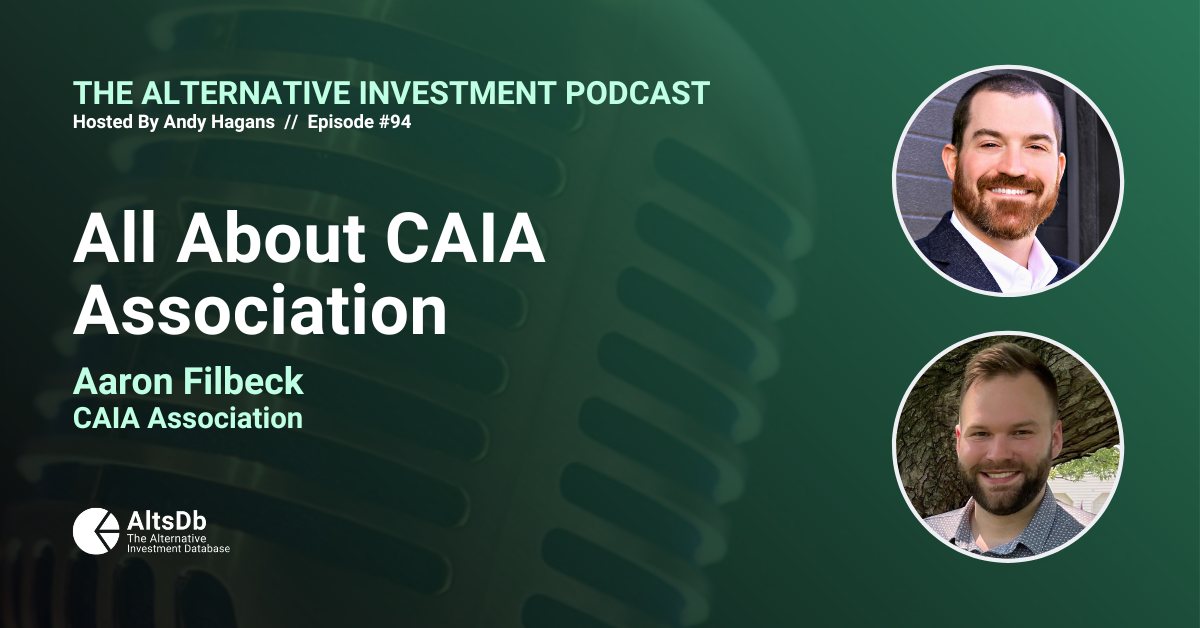
UniFi’s delivery mechanism is distinct from the CAIA Charter. It features online courses, self-directed learning modules, videos, and instruction. The flagship offering, the Fundamentals of Alternative Investments certificate program, provides a 20-hour overview of various alternative strategies. CAIA is also expanding its UniFi offerings with micro-credentials, shorter (approximately 5-hour) programs focusing on specific topics. For instance, upcoming micro-credentials will cover private debt and digital assets, addressing the evolving landscape of alternative investments.
"UniFi is much more for kind of more of the individual client wealth management industry," Filbeck clarified. "If you don’t need the level of depth, you don’t need the level of rigor but you need to at least be conversant in this stuff, the UniFi platform is probably gonna be most appropriate for you." This approach allows financial professionals to gain practical knowledge that can be immediately applied in client conversations and portfolio decisions, without the extensive time commitment of a full charter.
The FDP Charter: Navigating the Intersection of Data and Finance
In addition to its focus on alternative investments, CAIA also offers the Financial Data Professional (FDP) Charter. Launched approximately four years ago, this program addresses the burgeoning intersection of data science and financial services. The FDP Charter equips professionals with the skills to understand and leverage data analytics, machine learning, and programming within the financial industry, bridging the communication gap between data scientists and finance professionals.
"This program was kind of the genesis of saying, ‘Okay. Well, you’ve got this new kind of brand of computer scientists that’s being brought into an asset manager…and those two need to be able to speak to each other’," Filbeck explained. The FDP Charter is particularly valuable for financial professionals seeking to understand how data science can inform investment strategies, identify trends, and manage risks, especially in areas like quantitative trading, algorithmic strategies, and even in the application of data analytics in private markets.
The State of the Education Gap: Progress and Future Outlook
The journey to close the education gap in alternative investments has been a long one. Filbeck reflected on the past decade, noting the initial wave of liquid alternatives in the early 2010s. "That democratization wave probably went pretty poorly, you know, relative to what it could have been in terms of education. We kinda led with product and there was this desire to kind of jam these hedge fund strategies into a more liquid wrapper and kind of hope for the best."
However, he expressed optimism about the current trajectory. "Compared to what we saw 10 years ago with kind of this move in private capital, which has, you know, really accelerated over the past couple of years, I would say that we’ve done a much better job than we did, but I think there’s still a lot of ground to cover in terms of providing education."
A significant trend Filbeck observes is the increasing willingness of financial professionals to acknowledge and address their knowledge gaps. "People are much more willing to say, ‘I really need to learn about this. I need to find something’," he stated. This growing awareness is fueled by several factors:
- Client Demand: As alternative investments become more mainstream, clients are increasingly inquiring about them, prompting advisors to seek education.
- Industry Push: Large financial institutions and asset managers are investing heavily in alternative products, creating an internal demand for knowledgeable staff.
- Technological Advancements: Improved online learning platforms and digital resources make education more accessible and engaging.
Filbeck emphasizes that the focus of education is shifting from a product-centric approach to a client-centric one. "The point isn’t really that I understand the product…the point is that I understand how all this stuff is a part of improving outcomes for clients," he articulated. This signifies a move towards understanding the "why" behind alternative investments – how they align with client goals and objectives – before delving into the "how" of specific products.
Implications for the Financial Advisory Industry
The continuous effort to bridge the education gap in alternative investments has profound implications for the financial advisory industry:
- Enhanced Client Outcomes: Well-informed advisors can better construct diversified portfolios, manage risks effectively, and guide clients through market cycles, ultimately leading to improved financial well-being.
- Increased Advisor Competence and Confidence: Deeper knowledge empowers advisors to confidently recommend and implement alternative strategies, fostering trust with their clients.
- Growth and Innovation: A more educated advisor base can unlock new opportunities for product development and service innovation within the alternatives space.
- Industry Professionalization: Robust educational standards, like those offered by CAIA, contribute to the ongoing professionalization of the financial advisory sector, building greater public trust.
As the alternative investment landscape continues to evolve, driven by technological advancements and changing investor preferences, the demand for specialized education will only intensify. Organizations like the CAIA Association, through their comprehensive and accessible programs, are playing an indispensable role in equipping financial professionals with the knowledge and skills necessary to navigate this complex and rewarding frontier, ensuring better outcomes for investors and the broader financial ecosystem.
For those seeking to learn more about CAIA Association and its educational programs, the official website is caia.org. The organization is also active on various social media platforms, including Twitter, LinkedIn, and Instagram.
