

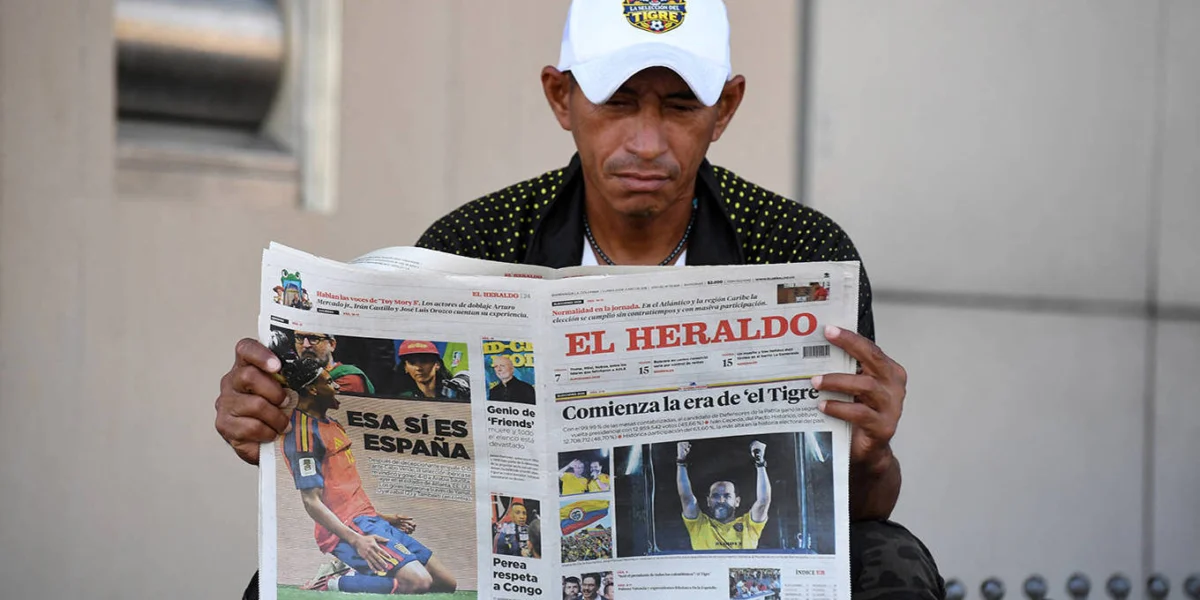
NEW YORK – Colombian President-elect Abelardo de la Espriella faces a daunting economic inheritance as he prepares to assume office on August 7, 2026, succeeding outgoing left-wing President Gustavo Petro. The nation’s economy is currently grappling with a significant slowdown in investment and a critical fiscal deficit, presenting a formidable challenge for the incoming right-wing administration. The success of de la Espriella’s tenure will hinge on his ability to navigate these economic headwinds and restore fiscal stability without dismantling the social progress achieved in recent decades, a delicate balancing act that will ultimately determine the longevity of Colombia’s discernible rightward political shift.
The transition marks a significant juncture for Colombia, mirroring a broader trend observed across several Latin American nations that have recently elected right-leaning leaders. This regional pattern often portends increased political polarization, suggesting that a robust opposition, potentially spearheaded by the outgoing President Petro himself, is likely to coalesce. De la Espriella’s administration will therefore need to contend not only with economic realities but also with a potentially fractious political landscape.
Economic Headwinds and Fiscal Realities
Colombia’s economic performance in the lead-up to the transition has been characterized by a deceleration in key indicators. Gross Domestic Product (GDP) growth, which had shown resilience in previous years, has moderated, largely attributed to a decline in both foreign direct investment (FDI) and domestic capital expenditure. Data from the Colombian National Department of Statistics (DANE) indicates that FDI inflows in the first half of 2026 saw a 15% decrease compared to the same period in 2025, a trend attributed to global economic uncertainties and specific domestic policy concerns.
The fiscal situation is equally pressing. The national budget faces a substantial deficit, estimated by the Ministry of Finance to be around 4.5% of GDP for the fiscal year 2026. This deficit is exacerbated by increased public spending on social programs, infrastructure projects, and a growing debt servicing burden. Analysts at the International Monetary Fund (IMF) have repeatedly highlighted the need for fiscal consolidation, urging the government to implement revenue-enhancing measures and expenditure controls to ensure long-term macroeconomic stability.
A Shifting Political Landscape: The Rightward Turn
The election of Abelardo de la Espriella, a prominent businessman and politician known for his free-market advocacy and conservative stance, signals a departure from the progressive policies championed by President Petro. Petro’s presidency, which began in 2022, was marked by ambitious social reforms, including an emphasis on environmental protection, wealth redistribution, and a peace-building agenda focused on addressing the root causes of internal conflict.
De la Espriella’s campaign, conversely, centered on promises of economic revitalization through deregulation, tax incentives for businesses, and a more stringent approach to public spending. His victory, by a narrow margin of 51.2% to 48.8% in the August 4, 2026, runoff election, reflects a segment of the electorate concerned about the pace of economic growth and seeking a return to more traditional economic policies.
Pre-Election Context and Key Promises
The electoral campaign was largely dominated by debates surrounding economic management and social policy. Petro’s administration faced criticism for its perceived overspending and the impact of certain reforms on investor confidence. De la Espriella capitalized on these concerns, pledging to create a more favorable business environment.
Key promises made by de la Espriella included:
- Fiscal Discipline: A commitment to reducing the fiscal deficit through efficiency gains in public administration and a review of non-essential expenditures.
- Investment Stimulation: Implementing tax reforms designed to attract both domestic and foreign investment, with a particular focus on the extractive industries, manufacturing, and technology sectors.
- Job Creation: A strategy to boost employment by supporting private sector growth and reducing regulatory burdens on businesses.
- Social Program Review: While not explicitly promising cuts, de la Espriella indicated a review of existing social programs to ensure their efficiency and sustainability, a point that has raised concerns among social welfare advocates.
Chronology of Key Events Leading to the Transition
- August 4, 2026: Abelardo de la Espriella wins the presidential runoff election, securing a mandate for his right-leaning platform.
- August 6, 2026: President Gustavo Petro formally concludes his term, preparing for the handover of power.
- August 7, 2026: Abelardo de la Espriella is inaugurated as the 65th President of Colombia.
- August 2026 – December 2026: The de la Espriella administration is expected to outline its initial economic and fiscal policy proposals, facing immediate scrutiny from markets and the public.
- Early 2027: The new government will likely present its first budget, revealing the extent of its fiscal consolidation plans.
Reactions and Inferred Statements
While official transition protocols are underway, the political and economic ramifications are already being discussed by various stakeholders.
Business Community: Representatives from the Colombian Chamber of Commerce have expressed optimism regarding de la Espriella’s election, anticipating a more business-friendly environment. "We look forward to working closely with the new administration to foster an economy that is both dynamic and inclusive," stated a spokesperson for the Chamber. "The focus on attracting investment and streamlining regulations is crucial for sustainable growth."
Social Welfare Advocates: Conversely, organizations that have championed Petro’s social agenda have voiced concerns about potential cutbacks. "We are deeply concerned about any measures that could undermine the social safety net," said a representative from a prominent Colombian NGO. "The progress made in poverty reduction and access to essential services must be protected and built upon, not dismantled."
International Financial Institutions: The IMF and the World Bank have acknowledged the upcoming transition and expressed readiness to engage with the new government. Their statements have consistently emphasized the importance of fiscal prudence and structural reforms to ensure Colombia’s continued economic stability and development.
Opposition Politics: While President Petro has maintained a dignified silence during the transition, it is widely anticipated that he will remain a significant voice in Colombian politics. His supporters are expected to form a vocal opposition, scrutinizing de la Espriella’s policies and advocating for the continuation of progressive reforms.
Analysis of Implications: A Tightrope Walk for De la Espriella
President-elect de la Espriella faces a complex challenge. His mandate, while indicating a desire for economic change, also necessitates careful consideration of the social fabric woven over the past few years.
Economic Stability vs. Social Progress
The core dilemma lies in balancing fiscal austerity with the preservation of social gains. Implementing deep spending cuts, as some fiscal hawks might advocate, could disproportionately affect vulnerable populations, potentially leading to social unrest and undermining de la Espriella’s broader goals of national unity. Conversely, failing to address the fiscal deficit could erode investor confidence, further dampen investment, and lead to a downgrade of Colombia’s credit rating, increasing borrowing costs and limiting future policy options.
Political Polarization and Governance
The significant vote share for the outgoing president suggests a deeply divided electorate. De la Espriella will need to govern with a keen awareness of this polarization. His administration’s ability to foster dialogue and seek consensus, particularly on critical economic reforms, will be paramount. A confrontational approach could exacerbate divisions, making effective governance exceedingly difficult and potentially hindering the implementation of necessary policies. The emergence of a strong opposition, as is probable, will necessitate a robust parliamentary strategy and a willingness to engage in constructive debate.
Investment and Growth Prospects
The success of de la Espriella’s economic agenda hinges on his administration’s ability to reignite investment. This requires not only attractive fiscal incentives but also a stable and predictable regulatory environment. Concerns about the rule of law, corruption, and policy continuity have historically been factors influencing investor decisions in Colombia. The new president’s commitment to addressing these underlying issues will be as crucial as his fiscal and tax policies. If successful, a surge in investment could drive job creation and economic diversification, providing a tangible benefit to the Colombian populace and solidifying the rightward shift.
International Relations and Trade
Colombia’s engagement with the international community will also be under the spotlight. De la Espriella’s administration will need to navigate trade agreements, international financial commitments, and diplomatic relations with a focus on promoting economic partnerships. A proactive and pragmatic approach to foreign policy could attract further investment and support for his economic agenda.
In conclusion, President-elect Abelardo de la Espriella inherits a nation at a critical economic and political crossroads. His journey to restore fiscal health while safeguarding social advancements will be closely watched, not only within Colombia but across the region, as a test case for navigating the complex interplay of economic policy, social welfare, and political ideology in contemporary Latin America. The coming months will be pivotal in defining the trajectory of his presidency and the enduring impact of Colombia’s recent political realignment.
