

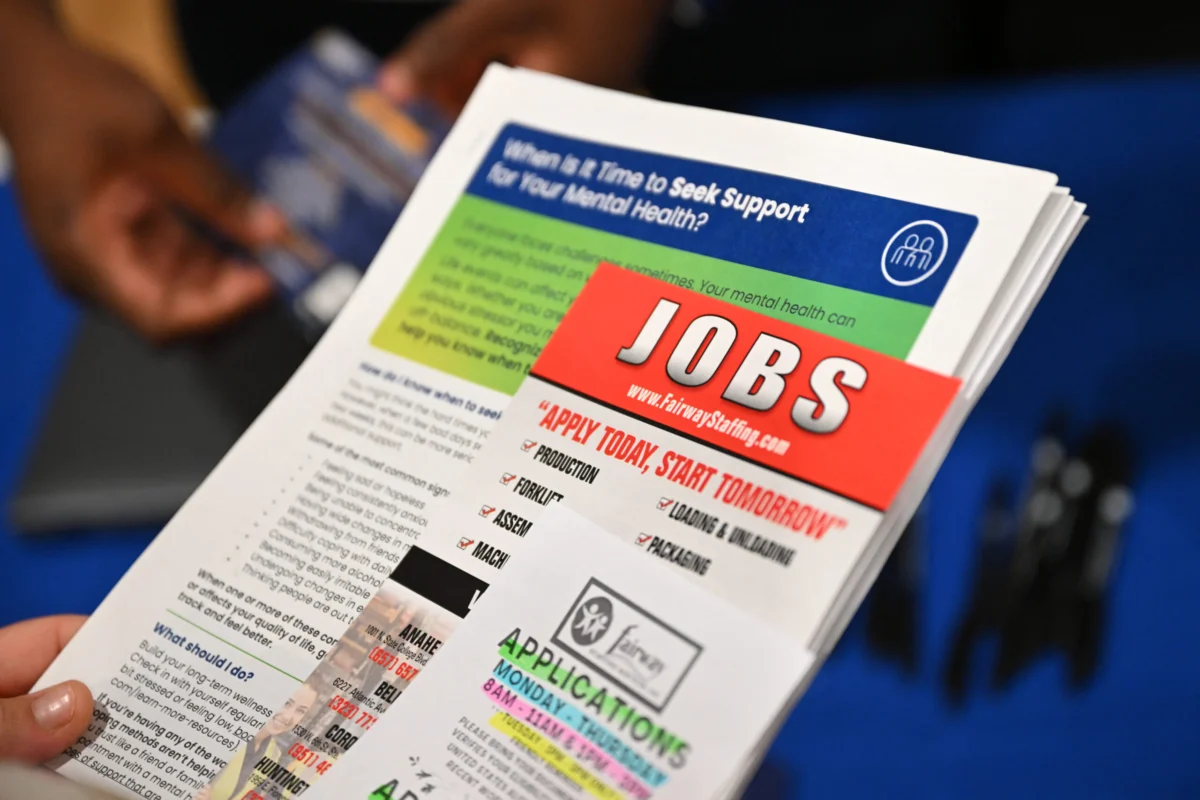
Hiring at private companies experienced a significant slowdown in July, adding only 44,000 new jobs, a figure considerably below economists’ expectations and a marked decrease from the previous month. The latest employment report from payroll processing firm ADP painted a picture of a cooling labor market, with the vast majority of job growth concentrated in the healthcare sector. This deceleration comes at a critical juncture as the Federal Reserve navigates persistent inflation concerns and weighs its next policy moves.
The ADP National Employment Report, a closely watched precursor to the government’s official jobs figures, revealed that nonfarm private sector employment increased by a seasonally adjusted 44,000 in July. This performance fell short of the Dow Jones consensus forecast, which had predicted 75,000 new jobs. For context, June’s figures were also revised downward, showing an addition of 95,000 jobs, down from the initially reported 105,000. The July reading represents the smallest monthly job gain since January of this year, underscoring a trend of moderating employment growth throughout 2024.
Sectoral Breakdown Reveals Healthcare Dominance
A deeper dive into the ADP data highlights a stark concentration of job creation within the services sector. This broad category accounted for all of the month’s gains, adding a net 47,000 positions. In contrast, the goods-producing sector experienced a contraction, shedding 3,000 jobs. This divergence suggests that while service-oriented industries continue to expand, those reliant on the production of physical goods are facing headwinds.
Within the services sector, the education and health services industry once again emerged as the primary engine of job growth, contributing a substantial 36,000 new roles. This has been a consistent trend over an extended period, with healthcare and related fields demonstrating resilience and ongoing demand for personnel, likely driven by an aging population and evolving public health needs. Financial activities followed, adding 10,000 jobs, while professional and business services saw a more modest increase of 9,000. The "other services" category, which encompasses a diverse range of personal and repair services, also posted a gain of 6,000 jobs.
Conversely, several sectors within the goods-producing and services categories experienced job losses. Trade, transportation, and utilities shed 8,000 positions, indicating potential softening in consumer demand for goods or disruptions in supply chains. The natural resources and mining sector also saw a decline of 6,000 jobs, possibly reflecting fluctuations in commodity prices or shifts in energy production. Manufacturing, a key barometer of industrial activity, added a meager 2,000 jobs, suggesting a lack of robust expansion in this area. Construction, another vital sector, contributed only 1,000 new jobs, signaling a leveling off in building activity.
Company Size and Pay Dynamics
The ADP report also offered insights into hiring patterns based on company size. The distribution of job gains was relatively balanced, with small businesses, defined as those employing fewer than 50 people, leading the pack. These firms accounted for 23,000 of the new jobs created, demonstrating their continued role in absorbing a significant portion of the workforce. Mid-sized companies (50-499 employees) added 16,000 jobs, and large enterprises (500+ employees) contributed 5,000 jobs. This suggests that while small businesses are a significant driver, a broad-based hiring effort is not necessarily underway across all firm sizes.
Perhaps one of the most significant takeaways from the ADP report concerns wage growth. For workers who remained in their jobs, annual pay gains held steady at 4.4%. This indicates that while companies are not significantly increasing compensation for their existing workforce, they are maintaining a level of wage stability. However, for those who switched jobs, the picture was markedly different. Job switchers experienced a 7% increase in pay, the largest annual gain recorded since August 2025. This substantial difference in pay growth between job stayers and job changers points to a tight labor market for specific skills and a strong incentive for workers to seek new opportunities to advance their earnings.

Economist Commentary and Market Implications
Nela Richardson, ADP’s chief economist, provided context for these findings, suggesting that the dynamics observed in the report reflect evolving labor market conditions. "Job-changers are highly sensitive to real-time economic conditions, and their rapid pay growth implies supply constraints in parts of the labor market," Richardson stated. She further elaborated, "Typical hiring patterns, meanwhile, are changing as employers react to shifting macroeconomic conditions." This commentary suggests that while overall job creation may be slowing, pockets of intense demand for labor, particularly for experienced workers, persist. The higher pay for job switchers could be a signal that companies are increasingly willing to offer premium compensation to attract and secure talent in a competitive environment.
The slowing pace of job creation in July, as indicated by the ADP report, has potential implications for the Federal Reserve’s monetary policy decisions. The central bank has been closely monitoring the labor market as a key indicator of economic health and inflationary pressures. While the Fed has maintained its benchmark interest rate at its current level, policymakers have expressed confidence in the overall strength of the jobs picture, even as they prioritize combating inflation. The market has been anticipating a potential interest rate hike later in the year if inflation data does not show sustained improvement. A cooler jobs report, like the one from ADP, could influence the Fed’s calculus, potentially tempering expectations for aggressive rate hikes, although inflation remains the dominant concern.
Broader Economic Context and Future Outlook
The ADP report serves as a crucial advance indicator for the Bureau of Labor Statistics’ (BLS) more comprehensive Employment Situation report, which is scheduled for release two days after the ADP data. Economists surveyed by Dow Jones are anticipating that the official BLS report will show an increase in nonfarm payrolls to 83,000 hires for July, a rise from June’s figure of 57,000. The unemployment rate is expected to hold steady at 4.2%. While these projections represent an improvement over the ADP figures, they still suggest a moderating trend in job growth compared to earlier in the year.
The labor market in 2024 has shown a general trend of steadiness after a period of less pronounced progress in 2025. The initial surge in job creation following the pandemic recovery has given way to a more gradual expansion. This normalization of hiring activity is occurring against a backdrop of elevated inflation, which has prompted the Federal Reserve to adopt a hawkish stance. The Fed’s dual mandate of maximizing employment and maintaining price stability is currently heavily weighted towards controlling inflation. Therefore, while a slower job market might typically be viewed as a sign of economic weakness, in the current environment, it could be seen by some as a necessary adjustment that may help alleviate wage pressures and, by extension, inflation.
The persistent gap in pay growth between job stayers and job switchers is a particularly interesting facet of the current labor market. It suggests that while overall hiring may be slowing, there are still specific areas or skill sets where demand outstrips supply. This could be a lingering effect of the pandemic-induced labor market disruptions, where many workers re-evaluated their career paths, leading to shortages in certain industries. The ability of job switchers to command significantly higher salaries indicates that companies are actively competing for talent, potentially driving up labor costs in specific segments of the economy. This dynamic can contribute to inflationary pressures, even as overall job growth moderates.
The consistency of job growth in education and health services underscores the demographic and societal trends that continue to shape the demand for labor. As the population ages and the healthcare system continues to evolve, the need for qualified professionals in these fields is expected to remain robust. This sector’s outperformance provides a stable foundation for overall employment, even as other sectors experience more volatility.
The reported decline in the trade, transportation, and utilities sector could be an early indicator of shifts in consumer spending patterns or ongoing adjustments in global supply chains. Companies in these sectors are often sensitive to fluctuations in demand for goods and the efficiency of logistics networks. A slowdown here might suggest that consumers are becoming more cautious with their spending or that businesses are recalibrating their inventory management strategies.
Looking Ahead
The coming months will be crucial in determining the trajectory of the U.S. labor market and its interaction with the Federal Reserve’s monetary policy. The ADP report offers a valuable glimpse into the early trends, highlighting a notable slowdown in private sector hiring in July, driven largely by a concentration of gains in healthcare. The significant pay increase for job switchers, however, points to persistent demand for skilled labor in certain areas and a dynamic that could continue to influence wage growth and inflation. As the BLS prepares to release its official jobs report, economists and policymakers will be scrutinizing these figures for further confirmation of the labor market’s evolving landscape and its implications for the broader economic outlook. The Federal Reserve’s commitment to taming inflation will likely remain paramount, but the evolving nature of job creation and wage dynamics will undoubtedly play a significant role in shaping its future decisions.
