

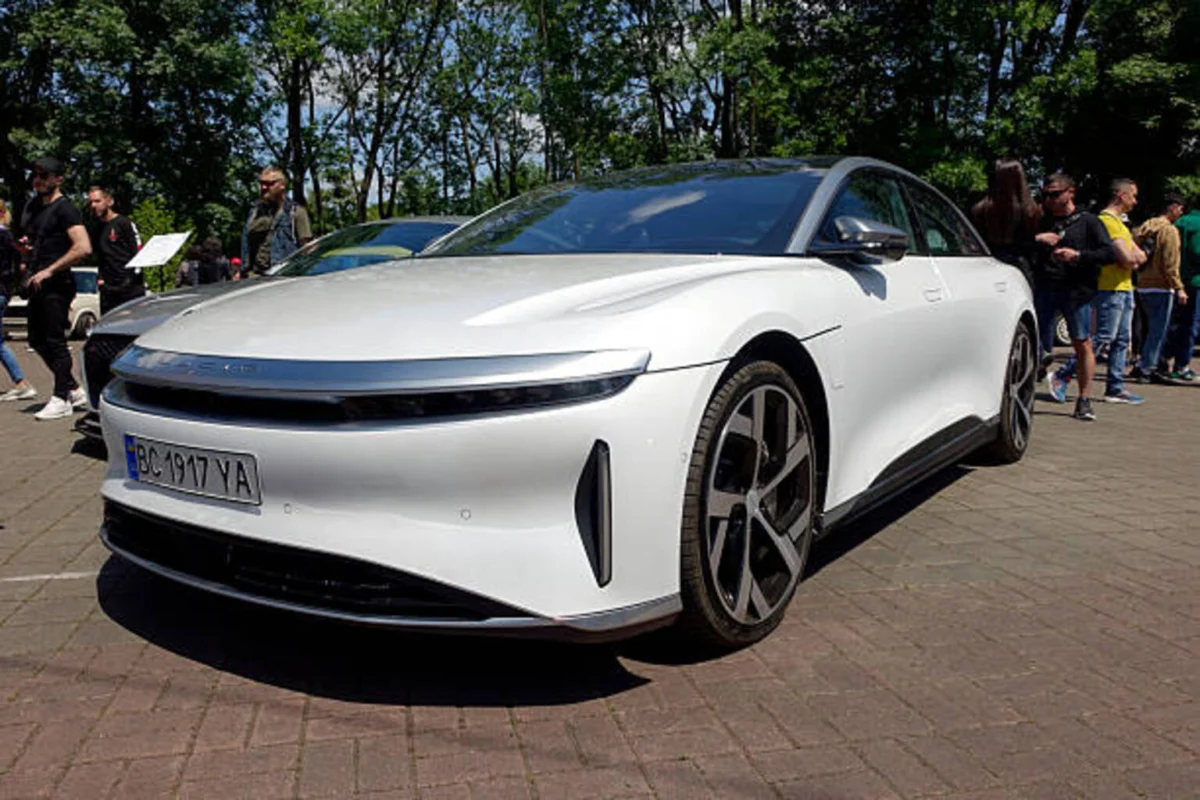
Lucid Group, Inc. (LCID), the Newark, California-based luxury electric vehicle manufacturer, has faced intensified scrutiny regarding its strategic future, particularly after recent reports suggested the company was evaluating a potential take-private scenario. However, these speculations were definitively put to rest by CEO Silvio Napoli, who unequivocally stated that there are no ongoing discussions concerning such an offer. Napoli’s direct and forceful denial aims to quash persistent market rumors and stabilize investor sentiment amidst a challenging landscape for nascent electric vehicle companies.
The Genesis of the Take-Private Speculation
The rumors concerning a potential take-private offer for Lucid Group first surfaced prominently in late April, originating from a report by Bloomberg News. This report, citing anonymous sources familiar with the matter, suggested that Lucid had been exploring various options, including the possibility of its largest shareholder, Saudi Arabia’s Public Investment Fund (PIF), acquiring the remaining shares it does not already own. The speculation gained traction due to the PIF’s substantial existing stake in Lucid, which stands at approximately 60%, and its well-documented strategy of investing in innovative and strategically important global industries as part of Saudi Arabia’s Vision 2030 economic diversification plan.
The Bloomberg article detailed that Lucid was reportedly working with financial advisors to assess the feasibility and implications of such a transaction. The mere circulation of these reports had a noticeable, albeit temporary, impact on Lucid’s stock price, causing it to fluctuate as investors weighed the potential benefits and drawbacks of a delisting. For some, a take-private deal could offer stability and long-term focus away from the quarterly pressures of public markets, while for others, it would remove a high-growth, albeit volatile, investment opportunity.
Lucid’s Financial Landscape and Market Performance
Lucid Group, since its public debut via a SPAC merger in July 2021, has navigated a tumultuous journey marked by ambitious production targets, significant capital expenditures, and intense competition within the luxury EV segment. The company’s financial performance has been characterized by substantial operating losses, typical of a growth-stage automotive manufacturer scaling production. In its latest reported quarter, Lucid continued to grapple with production challenges, delivering fewer vehicles than originally anticipated, though showing sequential improvements.
For instance, in the first quarter of 2024, Lucid reported producing 1,728 vehicles and delivering 1,967, which, while representing a year-over-year increase, still falls short of the higher-volume production rates needed to achieve profitability. The company has guided for full-year 2024 production of approximately 9,000 vehicles, a figure that analysts closely watch as a key indicator of operational efficiency and market demand for its flagship Lucid Air sedan.
Lucid’s stock (LCID) has experienced considerable volatility since its listing, mirroring the broader market sentiment towards speculative growth stocks and the electric vehicle sector, which has seen a cooling off after an initial boom. Shares have traded significantly down from their post-SPAC highs, reflecting investor concerns over profitability timelines, cash burn rates, and the intense capital requirements of ramping up automotive manufacturing. The company’s market capitalization, while still substantial for an early-stage automaker, has contracted considerably from its peak, making it potentially more attractive for a large institutional investor like the PIF to consider a full acquisition at a perceived discount. Lucid’s cash reserves, while still robust due to previous capital raises and PIF injections, are continuously scrutinized given the high costs associated with factory expansion in Arizona and the development of new models, including the upcoming Gravity SUV.
The Saudi Arabian Public Investment Fund (PIF) Connection
The Saudi Arabian Public Investment Fund’s involvement with Lucid Group is a critical piece of the puzzle. The PIF first invested in Lucid in 2018, injecting over $1 billion, a lifeline that was crucial for the company’s survival and the development of its groundbreaking Lucid Air vehicle. This initial investment secured the PIF a significant stake and a strategic position in the burgeoning EV market. Over the years, the PIF has continued to participate in Lucid’s funding rounds, consistently increasing its ownership percentage.
The PIF’s strategy is deeply rooted in Saudi Arabia’s Vision 2030, an ambitious plan to diversify the kingdom’s economy away from its traditional reliance on oil. Investing in cutting-edge technologies and future-oriented industries, such as electric vehicles, advanced manufacturing, and renewable energy, is central to this vision. The PIF’s investments are not merely financial; they often come with strategic objectives, including fostering technology transfer, creating high-skilled jobs, and building local industrial capabilities. In 2023, Lucid announced plans to build its first international manufacturing plant in King Abdullah Economic City, Saudi Arabia, a clear manifestation of the PIF’s strategic intent to localize advanced manufacturing. This facility is expected to eventually produce 155,000 vehicles annually, a testament to the long-term vision shared by Lucid and the PIF.
Given the PIF’s substantial investment and strategic interest, the notion of a take-private deal was not entirely without logical foundation. Such a move would grant the PIF complete control over Lucid’s strategic direction, allowing for long-term planning free from the short-term demands of public shareholders. It could also facilitate deeper integration with Saudi Arabia’s industrial ecosystem and provide a stable platform for Lucid to achieve its full potential without constant market speculation. The PIF has a track record of significant global investments, and its vast financial resources make it one of the few entities capable of orchestrating such a large-scale acquisition.
CEO Silvio Napoli’s Definitive Denial
In a direct and unequivocal statement, Lucid CEO Silvio Napoli addressed the swirling rumors head-on. "These were false rumors, deprived of any truth," Napoli stated, leaving no room for ambiguity. This firm denial came during a public appearance or an investor call, specifically aimed at clarifying the company’s position and dispelling the market’s uncertainties. Napoli’s language, emphasizing the complete lack of truth, suggests a strong corporate stance against the notion of a take-private transaction.
The timing and nature of this denial are crucial. It provides clarity to investors, employees, and partners, signaling that Lucid’s current strategy remains focused on its public market trajectory, operational execution, and continued growth as an independent entity. Such a strong statement from the CEO is designed to instill confidence and redirect focus back to the company’s core business objectives rather than speculative corporate maneuvers. It also serves to protect Lucid’s reputation and avoid any perception of internal instability or strategic indecision.
Market Reaction and Investor Confidence
Following the initial reports of a potential take-private offer, Lucid’s stock experienced a temporary bump, driven by the prospect of a premium buyout. However, this rally was short-lived as market participants digested the implications and waited for official confirmation or denial. Upon CEO Napoli’s definitive denial, the stock’s reaction would typically involve a retracement of any gains associated with the rumor, potentially even a slight dip as the market adjusts to the confirmed public status of the company.
Investor confidence in a company like Lucid is highly sensitive to strategic clarity. Uncertainty around ownership or future corporate structure can deter potential investors and create volatility. Napoli’s statement aims to restore confidence by providing that clarity, reassuring stakeholders that the company is focused on its operational roadmap: scaling production, expanding its product line with the Gravity SUV, and penetrating new markets. While the denial removes one source of speculation, investors will continue to scrutinize Lucid’s financial results, production figures, and cash management as the primary drivers of its valuation. The long-term trajectory of LCID will depend more on its ability to meet production targets, control costs, and demonstrate a clear path to profitability than on M&A speculation.
Challenges of a Public EV Startup
Operating as a public EV startup presents a unique set of challenges. Unlike established automakers with decades of production experience and diversified revenue streams, companies like Lucid are under constant pressure to demonstrate rapid growth, achieve economies of scale, and manage significant capital outlays for research and development, manufacturing infrastructure, and market expansion.
- Capital Intensity: Building an automotive company from the ground up requires billions of dollars. Public markets offer access to large pools of capital through equity and debt offerings, but this comes with the expectation of transparency and accountability to a diverse shareholder base.
- Production Ramp-Up: Scaling production from hundreds to tens of thousands of vehicles annually is incredibly complex, involving supply chain management, quality control, and factory automation. Delays or inefficiencies can significantly impact financial performance and investor sentiment.
- Competition: The EV market is increasingly crowded, with both legacy automakers and numerous new entrants vying for market share. Lucid, positioned in the luxury segment, competes with established players like Tesla, Mercedes-Benz, and Porsche, requiring continuous innovation and brand differentiation.
- Profitability Pressure: Public companies face intense pressure to show a clear path to profitability. For many EV startups, achieving consistent positive cash flow remains a distant goal, leading to investor fatigue and stock price depreciation.
- Market Volatility: Growth stocks, especially in emerging sectors, are prone to high volatility based on macroeconomic trends, interest rate changes, and shifts in investor sentiment. This makes long-term planning challenging.
Remaining a public entity means Lucid must continuously communicate its strategy and progress to a wide array of stakeholders, managing expectations and delivering on promises to maintain investor trust.
Strategic Outlook for Lucid
Lucid’s definitive denial of take-private talks signals a commitment to its current strategic path as a publicly traded company. This implies several key strategic imperatives:
- Continued Access to Public Capital: Lucid will likely continue to rely on public equity markets for future capital raises as needed to fund its growth ambitions, including the development of new models, factory expansion, and market entry into new geographies. This requires maintaining a favorable valuation and demonstrating consistent progress.
- Focus on Operational Execution: The emphasis will remain squarely on ramping up production of the Lucid Air, successfully launching the Gravity SUV, and improving manufacturing efficiency to reduce costs and narrow losses.
- Brand Building and Market Expansion: Lucid will need to intensify its efforts in marketing and sales to grow its customer base and differentiate its luxury EV offerings in a competitive market. Expanding its service network and charging infrastructure will also be critical.
- Technological Leadership: Maintaining its technological edge, particularly in battery efficiency and powertrain performance, will be vital for Lucid to justify its premium pricing and attract discerning buyers.
- PIF as a Strategic Partner: While not acquiring the entire company, the PIF will continue to be a crucial strategic partner and a major anchor investor. Their long-term commitment and financial backing provide a degree of stability that many other EV startups lack. The collaboration on the Saudi Arabian manufacturing plant underscores this deep strategic alignment.
The CEO’s statement reinforces that Lucid intends to continue leveraging the benefits of being public, including brand visibility, the ability to attract top talent with stock incentives, and access to diverse funding sources, while simultaneously working closely with its largest shareholder, the PIF, on long-term strategic initiatives.
Broader Implications for the EV Industry
Lucid’s situation and the CEO’s denial also offer broader insights into the current state of the electric vehicle industry. The initial euphoria surrounding EV startups has matured into a more sober assessment of the immense challenges involved in scaling an automotive business.
- Consolidation Pressure: The industry is ripe for consolidation. Many smaller EV startups, unable to secure sufficient funding or achieve production scale, may either be acquired, merge, or face bankruptcy. The take-private rumors around Lucid, despite being denied, highlight this underlying trend.
- Role of Sovereign Wealth Funds: The PIF’s significant role in Lucid underscores the growing influence of sovereign wealth funds in strategic global industries. These funds can provide patient capital and long-term vision, which are critical for capital-intensive sectors like automotive manufacturing, especially in a transformative period like the shift to EVs.
- Public Market Scrutiny: The intense scrutiny faced by public EV companies serves as a reminder of the pressures of quarterly reporting and investor expectations. This can be a double-edged sword: providing capital but also demanding rapid results.
- Shift from Hype to Fundamentals: The market is increasingly shifting its focus from ambitious promises and futuristic concepts to fundamental business metrics: production volume, delivery numbers, revenue growth, gross margins, and a clear path to profitability. Companies that fail to demonstrate progress on these fronts will struggle to maintain investor confidence.
In conclusion, CEO Silvio Napoli’s definitive denial of take-private discussions for Lucid Group firmly steers the company’s narrative back to its operational strategy and public market trajectory. While the underlying factors that sparked the rumors—Lucid’s financial challenges, the PIF’s large stake, and the broader EV market pressures—remain relevant, the company’s leadership has made it clear that its future lies in executing its ambitious plans as a publicly traded entity, supported by its strategic anchor investor. The coming quarters will be crucial for Lucid to demonstrate its ability to scale production, manage costs, and ultimately, drive towards sustainable profitability in the highly competitive luxury EV market.
