

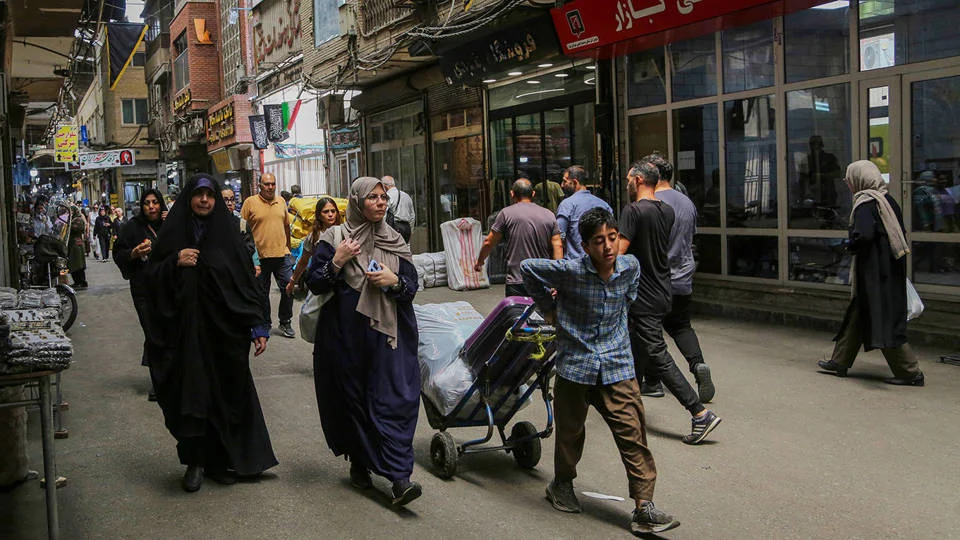
BLACKSBURG, VIRGINIA – August 5, 2026 – A durable peace agreement between the United States and Iran necessitates a strategic approach that extends beyond the realm of military deterrence. Without the crucial element of financial sanctions relief, designed to stimulate job creation and foster tangible economic opportunities for the Iranian populace, any such accord faces a precarious future, mirroring the challenges encountered by the 2015 Joint Comprehensive Plan of Action (JCPOA). This sentiment, articulated by economics analyst Djavad Salehi-Isfahani, underscores a critical vulnerability in current geopolitical considerations surrounding Iran.
The protracted US-Israeli engagement with Iran, characterized by a series of strategic miscalculations, commenced with the flawed premise that targeting the Islamic Republic’s leadership would precipitate its collapse or compel an unconditional surrender. The assumption by US President Donald Trump that Iran is poised to transition from conflict to reconstruction is similarly based on a misreading of the nation’s complex socio-economic realities.
Historical Context: A Legacy of Sanctions and Shifting Alliances
The imposition of extensive sanctions on Iran by the United States and its allies has had a profound and multifaceted impact on the nation’s economy and its people. These measures, initiated in earnest following the 1979 Iranian Revolution and escalating significantly in the aftermath of the September 11, 2001 attacks and concerns over Iran’s nuclear program, aimed to cripple the regime’s financial capacity and influence its behavior on the international stage.
Timeline of Key Sanctions Imposed:
- 1979: Following the seizure of the US embassy in Tehran, comprehensive economic sanctions were implemented.
- Early 2000s: Increased sanctions were levied due to concerns over Iran’s nuclear ambitions and alleged support for terrorism.
- 2010-2012: The UN Security Council, along with the US and EU, imposed increasingly stringent sanctions, targeting Iran’s oil exports, financial institutions, and access to international markets. This period saw a dramatic decline in Iran’s GDP and a significant devaluation of its currency.
- 2015: The JCPOA was signed, leading to the partial lifting of sanctions in exchange for limitations on Iran’s nuclear program. This period saw a brief economic rebound.
- 2018: The Trump administration withdrew from the JCPOA and reimposed a "maximum pressure" campaign of sanctions, severely impacting Iran’s economy and prompting renewed tensions.
- 2022-2024: Following escalations in regional conflicts and continued nuclear enrichment by Iran, further sanctions and diplomatic pressures were applied by the US and its allies, complicating any potential for a return to the JCPOA or new agreements.
These sanctions, while intended to isolate the Iranian government, have disproportionately affected the average Iranian citizen. The economic hardship has manifested in soaring inflation, widespread unemployment, reduced access to essential goods and medical supplies, and a general decline in living standards. This has created a deep well of economic frustration, which geopolitical strategies often overlook or underestimate.
The Economic Scars of Conflict and Sanctions
The ongoing US-Israeli military actions, while perhaps intended to weaken Iran’s regional influence, have inflicted further damage on an already beleaguered economy. The destruction of infrastructure, disruption of trade routes, and the diversion of resources towards defense have exacerbated existing economic woes.
Supporting Data on Economic Impact:
- Currency Devaluation: The Iranian Rial has experienced significant depreciation in recent years, especially following the re-imposition of stringent sanctions in 2018. This inflation erodes purchasing power and makes imports prohibitively expensive. Prior to 2018, the Rial traded at roughly 42,000 to the dollar; by mid-2024, it had fallen to over 500,000 to the dollar in some unofficial markets, representing a catastrophic loss of value.
- Unemployment Rates: Official unemployment figures, while often subject to debate, have consistently remained high, particularly among the youth demographic. Estimates from various international bodies suggest youth unemployment rates have hovered around 25-30% in recent years, with underemployment being an even more pervasive issue.
- Inflation: Inflation has been a persistent challenge, often exceeding double digits annually. In some periods, annual inflation rates have surpassed 40%, driven by currency depreciation, supply chain disruptions, and government spending.
- GDP Contraction: Following the withdrawal from the JCPOA and the subsequent sanctions, Iran’s Gross Domestic Product (GDP) experienced significant contractions in multiple years. While official figures vary, analyses by institutions like the International Monetary Fund (IMF) indicated substantial negative growth in several fiscal years between 2018 and 2023.
- Foreign Investment Decline: The climate of sanctions and geopolitical uncertainty has severely curtailed foreign direct investment (FDI) into Iran, limiting the injection of capital needed for industrial development and job creation.
These economic realities create fertile ground for social unrest and a deep-seated skepticism towards external actors and their proposed solutions. For any peace agreement to be sustainable, it must address these fundamental economic grievances.
The Misconception of Military Solution
The notion that military might alone can achieve lasting peace with Iran is a strategic fallacy that has repeatedly proven ineffective. The history of US foreign policy towards Iran is replete with examples where military pressure and the threat of force have not yielded the desired long-term stability. Instead, such approaches have often entrenched hardline factions, fueled anti-American sentiment, and inadvertently strengthened the very elements the US sought to marginalize.
The current conflict, characterized by a series of proxy engagements and direct skirmishes, has further destabilized the region and drained valuable resources that could otherwise be channeled into economic recovery. The focus on military deterrence, while perhaps providing a sense of immediate security for some, fails to address the root causes of Iran’s grievances and its people’s aspirations.
The Imperative of Economic Reintegration and Opportunity
Salehi-Isfahani’s assertion that sanctions relief must be a cornerstone of any peace initiative stems from a clear understanding of Iran’s economic dependencies. The lifting of sanctions would not merely be a symbolic gesture; it would unlock Iran’s potential to reintegrate into the global economy.
Key Economic Benefits of Sanctions Relief:
- Revival of Trade: Sanctions have severely hampered Iran’s ability to export its oil and gas, a primary source of revenue. Relief would allow for the resumption of these critical exports, injecting much-needed foreign currency into the economy.
- Access to International Finance: Iranian businesses and the government have been largely cut off from international banking systems and credit markets. Sanctions relief would restore access, enabling investment in infrastructure, technology, and industrial expansion.
- Job Creation: With renewed investment and trade, sectors such as manufacturing, energy, and agriculture could experience significant growth, leading to the creation of much-needed employment opportunities, particularly for Iran’s large youth population.
- Improved Living Standards: Increased economic activity would lead to higher incomes, greater access to imported goods, and improved public services, thereby enhancing the quality of life for ordinary Iranians.
- Reduced Reliance on Unofficial Economies: The stringent sanctions have fostered a robust black market and unofficial economic channels. Sanctions relief would help legitimize economic activity and bring it under formal governance.
The 2015 JCPOA, despite its eventual collapse, demonstrated the tangible economic benefits that sanctions relief could bring. During the period of its implementation, Iran experienced a period of economic growth, increased foreign investment, and a stabilization of its currency. The subsequent reimposition of sanctions reversed these gains, highlighting the direct correlation between economic engagement and national prosperity.
Analyzing the Implications: A Cycle of Instability
The current trajectory, prioritizing military solutions over economic ones, risks perpetuating a cycle of conflict and instability. Without a robust economic component, any peace agreement will likely be fragile, susceptible to political shifts and the persistent economic grievances of the Iranian population.
Broader Impact and Implications:
- Regional Stability: A prosperous Iran with a revitalized economy is more likely to be a stable regional actor. Economic hardship, conversely, can fuel extremism and regional proxy conflicts.
- Humanitarian Concerns: The long-term economic suffering caused by sanctions has significant humanitarian implications, affecting health, education, and social well-being.
- Geopolitical Realignment: A successful economic reintegration of Iran could shift regional power dynamics, potentially fostering greater cooperation and reducing reliance on adversarial relationships.
- Public Perception: For any peace agreement to be domestically viable in Iran, it must be perceived by the populace as delivering tangible improvements to their lives. Economic benefits are a critical factor in shaping this perception.
Official Responses and Diplomatic Pathways
While specific official statements regarding Salehi-Isfahani’s analysis were not immediately available in the provided context, the broader discourse surrounding US-Iran relations has consistently grappled with the dichotomy of military pressure versus diplomatic engagement, often with an economic component.
- US Administration: Past US administrations have vacillated between pursuing diplomatic solutions, often contingent on Iran’s nuclear program, and employing robust sanctions as a primary tool of leverage. The current administration’s approach is likely a complex calculus of deterrence, diplomatic overtures, and continued economic pressure, though the efficacy of the latter without accompanying relief remains a subject of debate.
- Iranian Government: The Iranian leadership has consistently called for the lifting of sanctions as a prerequisite for meaningful engagement. They often frame the economic hardship as a direct consequence of US aggression and a barrier to national development.
- International Community: Many international actors have expressed concerns over the humanitarian impact of sanctions and have advocated for diplomatic solutions that address both security and economic dimensions. However, consensus on the specifics of sanctions relief and verification remains a significant challenge.
Conclusion: A Call for a Balanced Strategy
The argument presented by Salehi-Isfahani is a compelling one: sustainable peace with Iran cannot be achieved through military might alone. It requires a comprehensive strategy that prioritizes the economic well-being of the Iranian people. The historical record, replete with the devastating impact of sanctions, serves as a stark reminder of the need for a balanced approach.
For the United States and its allies, the path forward lies in a nuanced understanding of Iran’s economic realities. A genuine commitment to peace must involve the strategic and verifiable lifting of sanctions, coupled with robust initiatives aimed at fostering job creation and generating real economic opportunities. Without this crucial element, any peace agreement, however well-intentioned, is destined to remain an ephemeral aspiration, vulnerable to the persistent economic grievances that fuel instability. The lessons of the past, particularly the fate of the 2015 nuclear deal, offer a clear and urgent imperative: economic revival must be at the heart of any lasting peace with Iran.
