

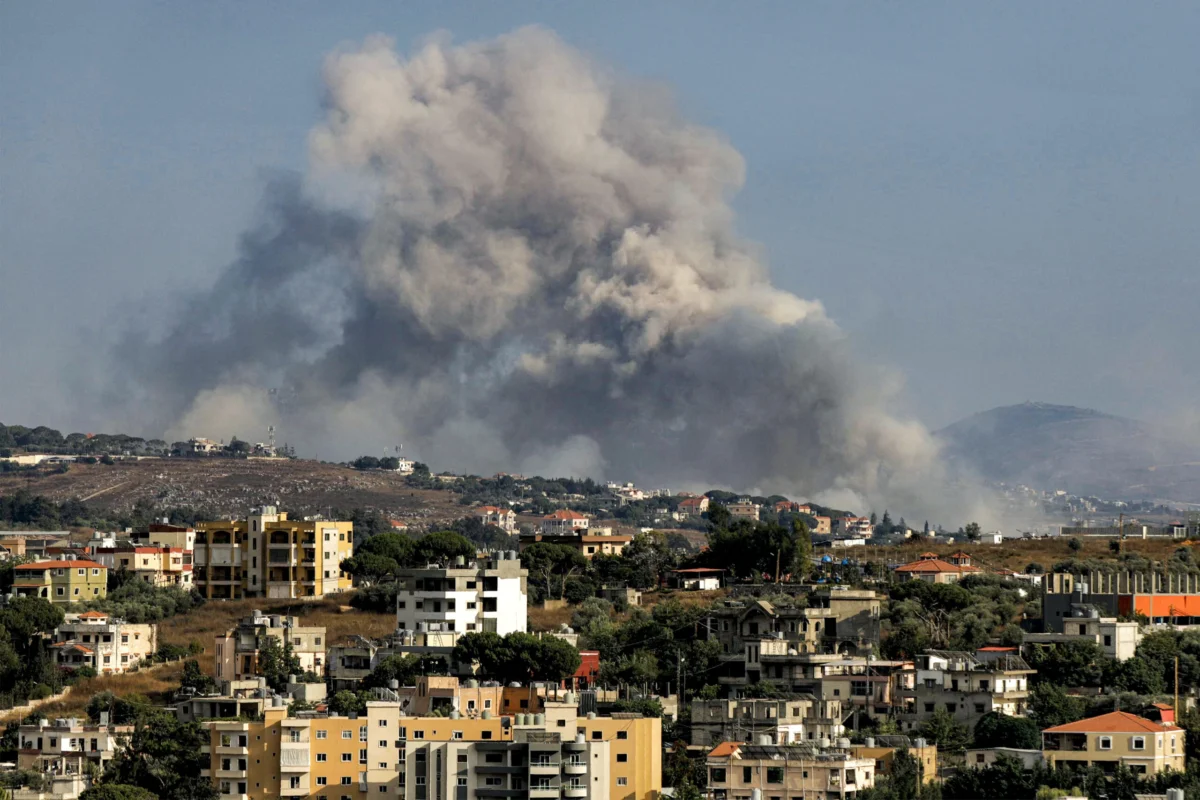
The Italian capital has become the focal point of intense diplomatic efforts as high-level delegations from Israel and Lebanon gather for a seventh round of United States-mediated negotiations aimed at de-escalating one of the most volatile border conflicts in the Middle East. These three-day talks, which commenced this week, are centered on the ambitious and contentious goal of establishing "pilot zones" in southern Lebanon—areas where Israeli Defense Forces (IDF) would theoretically withdraw to allow the Lebanese Armed Forces (LAF) to assert sovereign control. However, the diplomatic atmosphere remains heavy with skepticism, as the start of the summit coincides with continued Israeli military strikes across the Nabatieh and Tyre governorates, underscoring the vast gap between the rhetoric of the negotiating table and the reality on the ground.
The Rome Summit: Strategic Objectives and Pilot Zones
The primary agenda for this seventh round is the operationalization of a "sequenced process" first outlined in a June 26 framework agreement. Under this US-brokered deal, the transition of power in southern Lebanon is intended to be incremental. The "pilot zone" program is designed to test the viability of the Lebanese army’s ability to maintain security and prevent the return of non-state armed groups—specifically Hezbollah—to the border regions.
During the previous sixth round of talks, held in mid-July, negotiators reportedly agreed on the structure and guidelines for this process. The first designated pilot area, the town of Zawtar al-Gharbiyeh, has served as the initial test case. In the current Rome sessions, the Lebanese delegation is expected to propose a second phase of withdrawals. According to Lebanese officials, the government intends to designate either Bint Jbeil or Khiam—both strategic locations south of the Litani River—as the next zones for Israeli redeployment.
The Lebanese military delegation, led by Brigadier-General George Rizkallah, has brought detailed maps and logistical documentation to the summit. These papers outline the planned deployment of LAF personnel and the establishment of security infrastructure intended to replace Israeli positions. Joining the military leaders are seasoned diplomats, including former Ambassador to the US Simon Karam and current Ambassador Nada Mouawad, alongside legal and technical experts Antoine Sfeir and Najib Massihi. Their presence indicates the complex legal and territorial disputes that underpin the negotiation, particularly regarding land-surveying and the exact demarcation of the withdrawal lines.
Historical Context: A Conflict Born of Regional Tensions
The current hostilities between Israel and Hezbollah erupted into full-scale conflict on March 2, 2024. This followed a significant escalation on February 28, when US and Israeli forces conducted strikes against Iranian interests, prompting Hezbollah to launch retaliatory rocket barrages into northern Israel. Since that time, the conflict has evolved into a devastating war of attrition.
The human cost has been staggering. Since March, more than 4,000 people have been killed in Lebanon, with the majority of casualties occurring in the south and the densely populated southern suburbs of Beirut, known as Dahiyeh. The displacement crisis is equally severe; over one million Lebanese citizens have been forced to flee their homes as the IDF targets what it describes as Hezbollah strongholds. On the Israeli side, tens of thousands of residents from northern communities remain displaced, unable to return due to the constant threat of anti-tank missiles and rocket fire.
This conflict is layered upon a previous bout of violence linked to the war in Gaza. While a brief ceasefire was established in November 2024, it proved fragile. Israel has maintained that Hezbollah’s continued presence and alleged violations of previous agreements necessitated a buffer zone—a "Yellow Line" extending approximately 10 kilometers (6 miles) into Lebanese territory. Currently, Israel occupies nearly 20 percent of Lebanon’s landmass in the south, a move it justifies as a defensive necessity until Hezbollah is verified to be disarmed.
The June 26 Framework: A Roadmap for Sovereignty and Disarmament
The June 26 framework agreement represents the most significant diplomatic attempt to end the occupation, yet its implementation has been stalled by mutual distrust. The deal does not mandate an immediate or total Israeli withdrawal. Instead, it calls for a "progressive redeployment" contingent upon the Lebanese army restoring "effective sovereign authority."
The most contentious element of the framework is the disarmament of non-state armed groups. While the document does not mention Hezbollah by name, the reference is unambiguous. Israel’s Prime Minister Benjamin Netanyahu has been vocal about this condition, stating in a video address following the agreement that the IDF would maintain its presence in the buffer zone until the threat to northern Israel is permanently neutralized. "We will maintain the buffer zone until Hezbollah disarms and as long as there is a threat to the State of Israel," Netanyahu emphasized, signaling that the "Yellow Line" remains a non-negotiable military reality for the foreseeable future.

The Diplomatic Chronology: A Path Littered with Deadlocks
The journey to the current Rome talks has been characterized by a series of high-stakes meetings, many of which failed to produce tangible changes on the ground:
- April 14 (Washington, DC): The first round of US-mediated talks began with US Secretary of State Marco Rubio in attendance. Hezbollah immediately labeled the talks "futile," urging the Lebanese government to withdraw.
- April 23 (Washington, DC): A second round was chaired by US President Donald Trump, highlighting the high priority the administration placed on regional stabilization.
- May 14 (Washington, DC): The third round took place just as a temporary truce was expiring. The talks failed to prevent a renewed surge in cross-border violence.
- June 2-3 (Washington, DC): The fourth round saw a breakthrough in principle, with both sides agreeing to a conditional ceasefire that required a "complete cessation" of fire by Hezbollah.
- June 23-26 (Washington, DC): The fifth round resulted in the formal announcement of the framework deal by Marco Rubio.
- July 14-15 (Rome): The sixth round shifted the venue to Italy, focusing on the technicalities of the "pilot zone" process and the first withdrawal from Zawtar al-Gharbiyeh.
Military Realities: The ‘Yellow Line’ and Recent Hostilities
Despite the ongoing diplomatic efforts in Rome, the military situation in southern Lebanon remains critical. Reports from the state-run National News Agency (NNA) indicate that Israeli forces have recently employed phosphorus bombs in the towns of Yaroun and Arnoun, leading to widespread fires in agricultural groves. Such tactics have drawn sharp criticism from Beirut, which views them as a "scorched earth" policy that undermines the trust necessary for negotiations.
Furthermore, Israeli drone strikes and missile attacks have targeted the Ali al-Taher hill and areas near the UNESCO-listed Beaufort Castle. Lebanese President Joseph Aoun has described these strikes as a "direct threat" to the framework deal, noting that the timing of these attacks—occurring just days before the Rome summit—sends a "negative message" to the international community and the Lebanese people.
Domestic Friction: The Political Divide in Beirut
The negotiations in Rome are further complicated by the deep political divisions within Lebanon. Hezbollah, while a major political and military force in the country, is not a direct party to the talks. Naim Qassem, Hezbollah’s secretary-general, recently delivered a televised speech denouncing the negotiations. He characterized the direct talks as a source of "shame and humiliation," arguing that they only lead to concessions without guaranteeing Lebanese security.
Qassem also directed sharp criticism toward President Aoun, accusing him of failing to act as a "unifier" and instead becoming a source of internal division. This internal friction places the Lebanese delegation in a precarious position; they must negotiate a deal that satisfies international demands for disarmament while managing the domestic reality of Hezbollah’s military power and its rejection of the diplomatic process.
US Mediation and the International Outlook
The United States remains the primary architect of these talks, viewing the "pilot zone" process as the only viable path to a long-term ceasefire. US Ambassador to Lebanon Michel Issa expressed a cautious optimism regarding the Rome sessions but warned against the dangers of rushing the implementation.
"There is a meaningful difference between drafting an agreement on paper and implementing it responsibly," Issa stated. He emphasized that the technical work required to ensure civilian safety and verified withdrawal is extensive. The US position is that taking the time to "get it right the first time" in the initial pilot zones will create a template that can be applied more efficiently to the rest of the occupied territory.
Geopolitical Implications: The Fragile Path Forward
The success or failure of the seventh round of talks in Rome carries profound implications for regional stability. If the pilot zone program succeeds in Bint Jbeil or Khiam, it could signal a turning point toward the restoration of Lebanese sovereignty and the eventual withdrawal of Israeli forces to the international border. It would also mark a significant victory for US diplomacy in the region.
However, the obstacles remain formidable. The requirement for Hezbollah’s disarmament is a "red line" for the group, which views its arsenal as the only effective deterrent against Israeli aggression. Conversely, Israel views Hezbollah’s presence as an existential threat that justifies continued occupation.
As the delegations in Rome pore over maps and legal frameworks, the inhabitants of southern Lebanon remain caught in the crossfire. For the million displaced people and the thousands of families mourning their dead, the success of these talks is not merely a matter of geopolitical strategy, but a desperate necessity for survival. Whether the "pilot zones" will lead to a lasting peace or remain a footnote in a protracted conflict depends on the ability of the negotiators to translate diplomatic ink into a sustainable reality on the ground.
