

Matteo Tonello, Head of Data Benchmarking and Analytics at The Conference Board, Inc., and Andrew Jones, Principal Researcher at The Conference Board’s Governance & Sustainability Center, highlight critical shifts in corporate climate target setting and execution in their latest report. This comprehensive analysis, based on executive insights and disclosure data from US public companies, delves into the credibility of corporate climate targets, identifies areas where emissions trends are deviating from stated goals, and outlines actionable strategies for business leaders to effectively govern, track, and communicate their climate commitments.
The Current State of Corporate Climate Goals: A Shift Towards Discipline
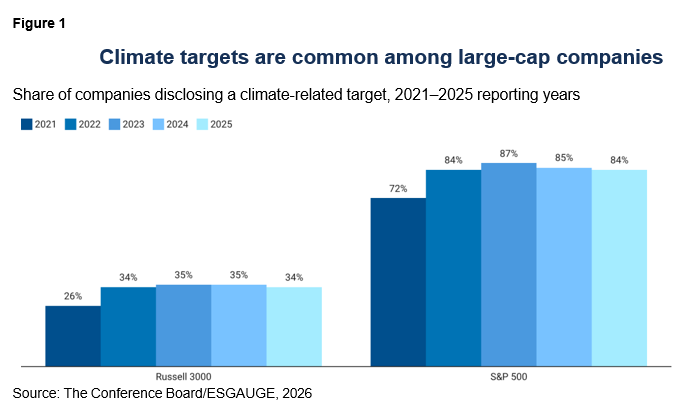
The disclosure of climate targets among large US public companies is now a well-established practice, with a significant 84% of S&P 500 companies reporting such goals in 2025. However, this adoption rate drops considerably in the broader Russell 3000 index, where only 34% of companies disclose climate goals, a figure that has remained largely stagnant since 2022. This disparity underscores a strong correlation between the maturity of sustainability programs, investor scrutiny, reporting capacity, and the adoption of corporate climate targets, with larger, more scrutinized companies leading the way.
A deeper examination of recent S&P 500 disclosures reveals a significant variation in what constitutes a "climate target." While some companies articulate broad aspirations, others provide detailed specifications regarding the emissions scopes covered, the precise reduction levels, the baseline year for measurement, and the definitive deadline for achievement. A persistent challenge, particularly for Scope 3 (value-chain) emissions, remains the lack of control and the inherent weakness in data collection, where companies often have less direct influence and less robust data compared to their operational (Scope 1) and purchased electricity (Scope 2) emissions.
Furthermore, an emerging gap is becoming apparent between the mere setting of climate targets and the internal confidence in their delivery. Recent polling conducted by The Conference Board among corporate sustainability executives indicated that only 24% expressed confidence across most scopes and pathways. The majority reported that "some targets are on track, others are uncertain." This suggests that while the ambition to decarbonize is widespread, the practicalities of execution are proving more complex and challenging than initially anticipated.
Confidence in achieving climate targets is highest in areas where companies exert greater control, possess better data, and have more established tools. These typically include energy efficiency initiatives, the adoption of renewable electricity, and direct operational emissions reductions. Confidence levels tend to decrease significantly when progress hinges on factors outside a company’s immediate control, such as the performance of suppliers, customer behavior, product usage patterns, financed emissions (for financial institutions), the capacity and carbon intensity of electricity grids, or the evolving nature of sustainability standards and methodologies. Consequently, the phase of corporate climate goal setting is evolving into a more disciplined approach, emphasizing feasibility, rigorous execution, and demonstrable credibility.
Understanding Greenhouse Gas (GHG) Emissions: Scopes 1, 2, and 3
Greenhouse gas (GHG) emissions, primarily carbon dioxide (CO2), methane (CH4), and nitrous oxide (N2O), are the principal drivers of global warming by trapping heat in the atmosphere. Corporations are significant contributors to these emissions, and their tracking is essential for regulatory compliance, meeting investor expectations, and managing associated financial and operational risks. The GHG Protocol, a widely adopted framework, categorizes these emissions into three distinct scopes based on their origin:

- Scope 1: Direct emissions from sources owned or controlled by the company. This includes emissions from on-site fuel combustion, company-owned or controlled vehicles, and fugitive emissions (e.g., leaks of refrigerants).
- Scope 2: Indirect emissions from the generation of purchased electricity, steam, heating, and cooling consumed by the company. These emissions occur at the facility where energy is generated but are reported by the consuming company.
- Scope 3: All other indirect emissions that occur in the company’s value chain, both upstream and downstream. This is often the most challenging category to measure and manage, encompassing a wide array of activities such as purchased goods and services, capital goods, fuel- and energy-related activities, upstream and downstream transportation and distribution, waste generated in operations, business travel, employee commuting, upstream leased assets, downstream leased assets, franchises, investments, and the use of sold products and end-of-life treatment of sold products.
Progress on Emissions Reduction: A Varied Picture
GHG emissions disclosure is now a standard practice for large-cap US companies. Regulatory mandates are a significant impetus, with new and emerging rules requiring not only disclosure but also external assurance of the underlying data. Despite ongoing efforts to repeal the US Securities and Exchange Commission’s (SEC) 2024 climate disclosure rule, momentum for mandatory reporting has been sustained through state-level initiatives, particularly in California, alongside European and international regulations that impact global corporations.
Scope 1 (Operational) Emissions:
Among Russell 3000 companies, notable progress has been observed in reducing Scope 1 emissions. Median reported emissions showed a significant decline of 41% between 2021 and 2025, although a slight increase was noted in 2025. In contrast, S&P 500 firms exhibited a flatter trend, with median Scope 1 emissions remaining essentially unchanged from 2021 levels, despite a dip from a 2022 peak.
Several prominent S&P 500 companies have reported substantial Scope 1 reductions during this period. 3M, for instance, achieved a 58% decrease, AT&T reported a 48% reduction, and McKesson saw a 39% decline. These reductions are likely attributable to a combination of company-specific operational adjustments, such as efficiency projects across large manufacturing footprints (3M), fleet optimization and reductions (AT&T), and a mix of facilities, fleet, and portfolio changes (McKesson).
The utilities and energy sectors are the primary drivers of Scope 1 emissions, with utilities occupying a distinct category due to their scale of operations. While utility firms initially reported meaningful average reductions through 2024, a subsequent increase in 2025 may be linked to heightened electricity demand from various sectors, including the burgeoning data center industry. In such circumstances, utilities might need to increase their reliance on fossil fuels like natural gas, and potentially even coal, to meet peak load requirements, even as their long-term decarbonization strategies remain intact.
Scope 2 (Purchased Electricity) Emissions:
US public companies have demonstrated the most significant reported progress in reducing emissions associated with purchased electricity (Scope 2) since 2021. Declines have been observed in both location-based and market-based accounting methods. Location-based Scope 2 emissions reflect the average carbon intensity of electricity grids in the regions where companies operate, highlighting their exposure to the physical power system. Market-based Scope 2 emissions, conversely, represent a company’s conscious choices in electricity procurement, including renewable energy contracts, green tariffs, power purchase agreements (PPAs), and renewable energy certificates (RECs).
The marked decline in market-based emissions, in particular, suggests that recent corporate climate achievements have been significantly influenced by the utilization of instruments designed to lower reported electricity emissions, rather than solely relying on the physical decarbonization of electricity grids at the point of consumption. The upcoming proposed updates to the GHG Protocol’s Scope 2 Guidance, which may necessitate more stringent evidence of matching clean electricity consumption with procurement by both time and location, could present future challenges for companies heavily dependent on annual renewable energy purchases. This could potentially lead to smaller reported reductions, increased volatility, or the necessity to revise targets and procurement strategies. Notably, several S&P 500 companies, including NVIDIA and T-Mobile, reported zero market-based Scope 2 emissions in 2025, despite having substantial location-based emissions. This highlights the significant role of procurement choices in shaping reported climate progress.
Scope 3 (Value Chain) Emissions: The Persistent Challenge
Scope 3 emissions, representing indirect emissions across a company’s entire value chain, often constitute the most substantial portion of total corporate emissions. The GHG Protocol further categorizes Scope 3 into 15 distinct areas, encompassing both upstream and downstream activities. The measurement and management of these emissions are inherently difficult due to a company’s limited direct control over data from suppliers, customers, logistics providers, product use, and financed entities. The quality of this data can vary considerably among different counterparties, often compelling companies to rely on proxies, averages, estimates, or generic emission factors instead of granular, primary data.
Similarly, the verification of Scope 3 data presents significant challenges, especially across intricate and global supply chains. For example, changes in transport and distribution emission factors can materially alter a company’s Scope 3 trajectory, forcing a strategic decision between maintaining comparability with historical data or adopting updated assumptions, as illustrated by eBay’s experience.
At a high level, median Scope 3 emissions have shown an upward trend among Russell 3000 companies, while remaining relatively flat for S&P 500 firms. However, this increase among smaller and midsize companies could be attributed to expanded disclosure practices, improved estimation methodologies, and broader coverage of Scope 3 categories, rather than necessarily reflecting actual emissions growth. Conversely, the relative stability reported by S&P 500 companies might indicate more mature reporting systems or the consistent application of established assumptions.
Industry-specific variations in Scope 3 emissions are significant, with the energy sector exhibiting the highest emissions, largely driven by the downstream use of sold products. Other sectors face different primary exposures: manufacturing and consumer goods are heavily influenced by their supply chains and product design, financial services by financed emissions, and technology by purchased goods, electricity, hardware, and cloud computing demand.
Corporate Climate Targets at Risk: The Execution Challenge
The observed emissions trends prompt a critical question: are current corporate climate targets robust enough to withstand the demands of the next execution phase? The data suggests that while target adoption is broad and disclosure practices are maturing, the actual progress is uneven. Scope 3 emissions reporting remains an underdeveloped area, and many existing targets are facing increasing pressure from capital constraints, escalating energy demand, technology readiness limitations, evolving standards, and the inherent complexity of value chains.
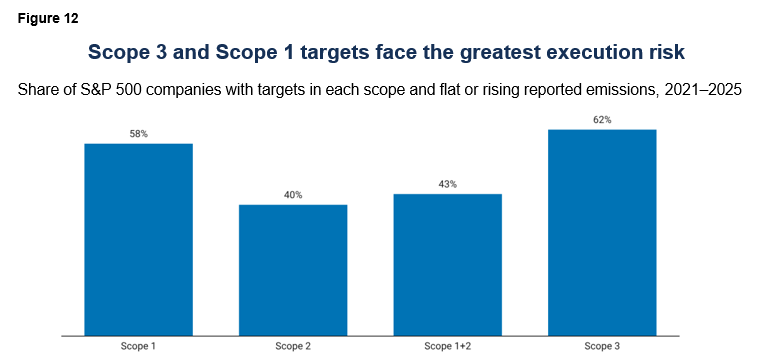
A significant portion of S&P 500 companies with disclosed Scope 1 targets reported flat or increasing emissions between 2021 and 2025 (58%). Similarly, for companies with Scope 3 targets, 62% indicated flat or rising emissions. Scope 2 emissions showed a more positive trend, with 40% reporting reductions, likely due to the impact of renewable electricity procurement and energy efficiency measures. These figures, while not definitive proof of future target failure, highlight that a substantial majority of large-cap US companies’ climate goals are currently on a trajectory that carries significant execution risk. The challenges differ by scope: Scope 1 targets are primarily constrained by operational, capital, technological, and asset-turnover factors, whereas Scope 3 targets are heavily influenced by value-chain dynamics, third-party performance, and data integrity.
When emissions remain static or increase despite public climate commitments, leaders must meticulously identify the root causes. For Scope 1, the core issue revolves around the company’s ability to achieve direct operational reductions through capital investments, equipment upgrades, process optimizations, fuel conversions, efficiency improvements, strategic facility decisions, or the adoption of new technologies, all while maintaining growth and operational reliability. For Scope 2, the hurdles increasingly lie in electricity procurement strategies, grid infrastructure limitations, the complexity of accounting standards, and the availability of credible clean power sources. For Scope 3, the primary challenge is the extent of a company’s influence over its suppliers, customers, financed entities, logistics partners, product design, and product usage, coupled with the reliability of the available data to accurately demonstrate genuine progress.
Recognizing the escalating complexities and the dynamic nature of corporate decarbonization efforts, the Science Based Targets initiative (SBTi), a key global validator of corporate climate targets for scientific alignment and credibility, has recently updated its Corporate Net-Zero Standard. This revision offers greater flexibility while simultaneously imposing higher expectations regarding data quality, governance structures, transition planning, progress tracking, and the substantiation of climate claims.
What Happens When Climate Targets Change?
The evidence suggesting that many corporate climate targets are at risk indicates a probable need for increased capital allocation, more robust execution strategies, or a necessary recalibration of these goals before the 2030 milestones. Such recalibration is not inherently a sign of diminished ambition; rather, it can stem from improved data accuracy, shifts in business composition, the adoption of new accounting standards, increased capital costs, unforeseen technology delays, grid capacity issues, or the integration of more realistic execution pathways. As the 2030 deadline approaches, companies must strategically evaluate whether and how to articulate credible long-term targets for 2040 and 2050, or establish transition pathways for the subsequent phases of decarbonization.
The critical factor in any target adjustment is the transparency and rationale behind the change. Investors and lenders will prioritize financial risk assessments, capital requirements, transition-related exposures, and the overall credibility of management’s approach. Customers, particularly those with their own Scope 3 reporting obligations, may scrutinize how supplier target changes impact their own emissions inventories and procurement evaluations. Regulators, external assurance providers, and legal counsel will focus on the accuracy, consistency, and verifiability of any revised targets. Employees, local communities, non-governmental organizations (NGOs), and the media are likely to react more critically if a change appears inconsistent with previous public commitments.
Companies should clearly differentiate between three primary types of target adjustments:
- Technical Recalibration: Adjustments based on improved data, updated methodologies, revised emission factors, or clearer accounting standards that do not alter the fundamental ambition or feasibility of the original goal.
- Feasibility Reset: Modifications driven by external factors such as unforeseen technology delays, significant shifts in capital markets or costs, unexpected grid decarbonization challenges, or material changes in business operations or portfolio composition that fundamentally impact the achievability of the original target within the given timeframe.
- Ambition Reduction: A deliberate lowering of emission reduction targets or a shift away from previously stated net-zero commitments, potentially due to a lack of progress, competing business priorities, or a re-evaluation of strategic direction.
Crucially, significant target changes should not be a unilateral decision made solely by the drafting team. Such material adjustments necessitate thorough review and approval from a cross-functional group, including sustainability, finance, legal, operations, investor relations, communications departments, and the board of directors. This comprehensive review process must address key questions: What specific factors have led to this change? Does the adjustment impact the overall ambition or primarily involve accounting methodologies? How will comparability with previous disclosures and investor expectations be maintained? And, what are the concrete next steps management will take to ensure progress under the revised framework?
Communicating and Disclosing Climate Goals: Towards Greater Discipline
As corporate climate targets face heightened scrutiny, companies are adapting not only their goal-setting processes but also their communication strategies. The prevailing trend is toward increased rigor, enhanced substantiation, and a reduced tolerance for vague, aspirational claims that lack a clear connection to tangible execution plans.
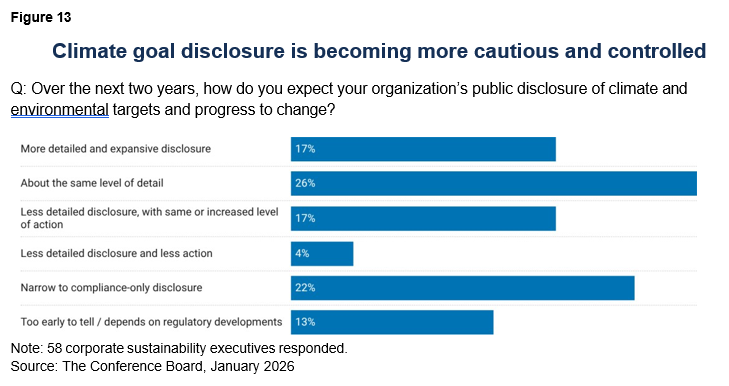
Surveys of corporate sustainability executives suggest a more cautious and fragmented disclosure environment. While outright retrenchment from climate action appears uncommon, many organizations are adopting a more discerning approach to public communications, carefully selecting what information to share and how to frame it. Some companies anticipate providing more granular detail in their disclosures, while others expect reporting to become more compliance-driven or less expansive, even if the underlying decarbonization efforts continue unabated.
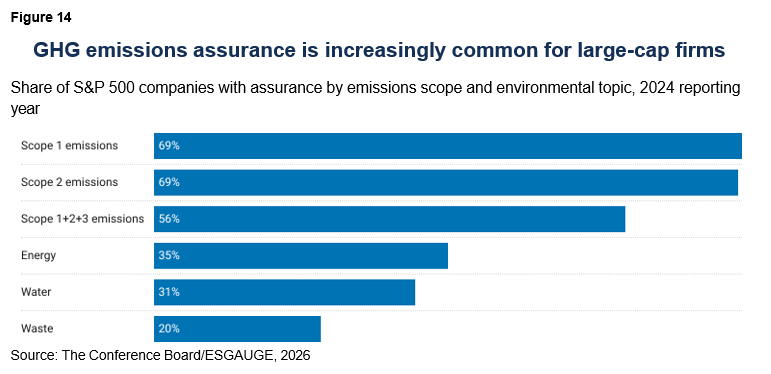
External assurance is becoming an increasingly integral part of this disclosure process. Typically involving an independent third-party review of emissions data, calculation methodologies, internal controls, and adherence to defined reporting criteria, assurance is gaining traction as regulators, investors, customers, and boards seek greater confidence in the veracity of climate-related disclosures. In 2024, approximately seven out of ten S&P 500 companies reported having external assurance for their Scope 1 and Scope 2 emissions, with over half extending this assurance to their Scope 3 data.
However, it is crucial to note that assured emissions data does not inherently guarantee that a company is on track to meet its targets. While assurance provides stakeholders with confidence in the reliability of the data itself, it does not confirm emissions reduction progress, the financial viability of transition plans, or the ultimate achievability of stated goals.
Ultimately, the most credible climate goal disclosures will articulate clear distinctions between:
- Ambition: The overarching long-term vision, such as a net-zero commitment by 2050.
- Targets: Specific, time-bound, measurable, achievable, relevant, and time-bound (SMART) goals for emissions reductions by a particular date (e.g., 50% reduction in Scope 1 and 2 by 2030).
- Claims: Specific statements about achievements, such as purchasing renewable electricity or using certain abatement technologies.
- Data: The underlying quantitative information, including emissions inventories, energy consumption, and operational metrics, which must be accurate, comprehensive, and ideally, assured.
These distinctions are vital because a net-zero ambition, a specific 2030 emissions target, a claim about renewable electricity procurement, and a Scope 3 emissions estimate all carry different levels of inherent control, measurability, and verifiable evidence. Companies must also provide clear explanations for any fluctuations or movements in their emissions data. If emissions increase, disclosures should explicitly state whether the cause is business growth, acquisitions, expanded Scope 3 coverage, improved supplier data collection, project delays, increased energy demand, or changes in calculation methodologies. Similarly, if targets are revised, the company must transparently explain whether the adjustment reflects a technical recalibration, a reassessment of feasibility, or a genuine reduction in overall ambition.
Corporate Environmental Goals Beyond Climate
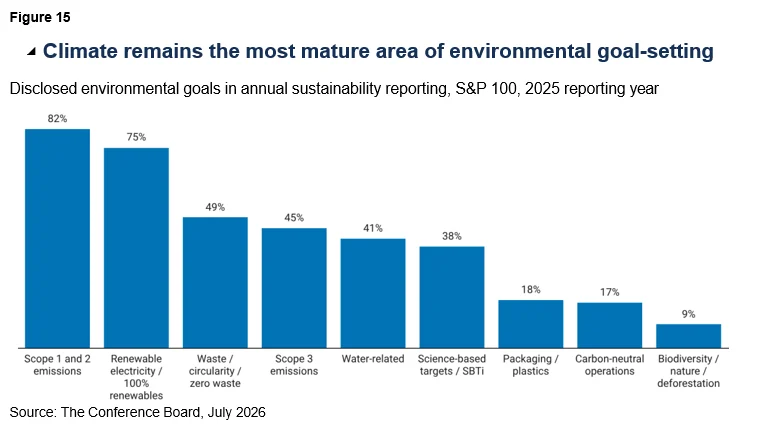
Climate change mitigation represents the most advanced area of corporate environmental target-setting. Beyond climate, other environmental goals are gaining traction but remain less standardized, often varying significantly based on industry sector, geographic location, product design intricacies, and a company’s specific value-chain exposures. Benchmarking annual sustainability disclosures among S&P 100 companies reveals that environmental goal-setting is most prevalent where measurement and operational control are most straightforward. In 2025, 82% of S&P 100 companies disclosed targets for Scope 1 and Scope 2 emissions, and 75% reported goals related to renewable electricity procurement.
Disclosure rates were considerably lower for more complex or value-chain-dependent environmental areas: Scope 3 emissions (45%), water management (41%), packaging and plastics (18%), and biodiversity impact (9%). This pattern is a direct reflection of the inherent differences in measurability, the degree of operational control, and the perceived relevance of these issues to a company’s core business strategy.
Companies are advised to initiate environmental goal-setting where their exposure is material, where credible baselines can be established, where they possess either direct control or significant influence, and where progress can be reliably quantified. A focused, well-governed objective directly linked to tangible business exposures is invariably more impactful and credible than a sweeping environmental commitment lacking a clear baseline or a defined execution pathway.
Conclusion: Prioritizing Action for Business Leaders
Corporate climate targets have transitioned from mere aspirations to critical execution imperatives. While the adoption of these goals is widespread and disclosure practices have matured significantly, the path to achieving them is proving uneven. Scope 3 emissions management remains a significant underdeveloped area, and many existing targets are increasingly strained by capital constraints, escalating energy demands, technological readiness, evolving regulatory landscapes, and the inherent complexities of global value chains.
To effectively navigate these multifaceted challenges, business leaders should prioritize five key areas:
- Integrate Climate Goals with Business Strategy: Ensure climate targets are not siloed sustainability initiatives but are woven into core business strategies, capital allocation decisions, risk management frameworks, and operational planning. This integration will foster greater accountability and resource prioritization.
- Enhance Scope 3 Data and Engagement: Recognize the critical importance of Scope 3 emissions and invest in improving data collection, estimation methodologies, and collaborative engagement with suppliers and customers to drive value-chain reductions. Robust data governance and transparent reporting are paramount.
- Focus on Feasibility and Execution: Prioritize targets that are demonstrably feasible, supported by clear execution plans, adequate capital, and viable technological pathways. A disciplined approach to target setting that balances ambition with realistic implementation is crucial for credibility.
- Strengthen Governance and Transparency: Establish robust governance structures for target setting, monitoring, and reporting, involving cross-functional teams and board oversight. Transparent communication about progress, challenges, and any necessary target adjustments is essential for stakeholder trust.
- Adapt to Evolving Policy and Market Dynamics: Stay abreast of changing regulatory requirements, investor expectations, and market pressures, particularly concerning Scope 2 accounting rules and the increasing demand for assured climate data. Proactive adaptation of procurement strategies and reporting systems will be vital.
The journey from setting climate targets to achieving them is increasingly defined by practical execution. By focusing on these priorities, business leaders can enhance the credibility and achievability of their climate goals, navigating the complexities of decarbonization while building resilience and long-term value.
About This Report
This report provides a detailed examination of the current state and future trajectory of corporate climate goals. Its findings are informed by a multi-faceted approach, incorporating:
- Disclosure Data Analysis: A comprehensive review of sustainability disclosures from a significant sample of US public companies, including the S&P 500 and Russell 3000 indices.
- Executive Polling: Insights gathered from surveys of corporate sustainability executives, capturing their perspectives on target setting, execution challenges, confidence levels, and influencing factors.
- Industry Benchmarking: Analysis of environmental goal-setting prevalence and progress across various industry sectors, identifying best practices and emerging trends.
- Regulatory Landscape Review: An assessment of current and upcoming climate-related regulations and standards from governmental bodies and key industry initiatives, such as the GHG Protocol and SBTi.
The insights derived from this report are designed to equip business leaders with the knowledge and strategic frameworks necessary to effectively manage their climate commitments in an increasingly complex and scrutinized environment.
