

In today’s hyper-connected and rapidly evolving professional landscape, the allure of keeping options open is pervasive. Yet, beneath this widespread inclination lies a fundamental truth that separates exceptional individuals and organizations from the rest: genuine commitment, coupled with unwavering execution, is the ultimate competitive advantage. This principle, often overlooked in the pursuit of broad flexibility, is the bedrock upon which lasting success is built, particularly at the executive level and across all facets of business.
The prevailing narrative often champions agility and the ability to pivot as paramount. However, this emphasis on maintaining multiple avenues can inadvertently lead to a diffusion of energy and a dilution of expertise. When individuals or teams are spread too thin, attempting to excel in numerous areas simultaneously, the inevitable outcome is mediocrity rather than mastery. The true winners, the individuals and entities that consistently achieve groundbreaking results, are those who make decisive choices, commit deeply, and relentlessly pursue excellence in their chosen domains.
This lesson was powerfully illustrated by Ryan Hawk, founder of The Learning Leader Show. A few years into building his podcast, Hawk found himself at a critical juncture. The show’s burgeoning success had opened a cascade of diverse opportunities: lucrative keynote speaking engagements, requests for leadership development training programs, and executive coaching offers. Simultaneously, he maintained his role as Vice President of Sales at a major corporation, leading a team responsible for an annual revenue stream exceeding $500 million. The strain of juggling these multifaceted responsibilities became palpable. Hawk observed a detrimental pattern emerging: he was becoming proficient in many areas, but truly excellent in none.
The crossroads demanded a stark choice. Hawk had to decide whether to scale back his burgeoning media venture and its associated opportunities, or to sever ties with the corporate world and dedicate himself entirely to the "accidental business" he had cultivated. He opted for the latter, a decision driven by the profound question: "What could happen if I gave everything I had to build a media and leadership consulting business?" The uncertainty of the outcome was overshadowed by the certainty that 100 percent commitment was the only path to discovery.
The initial years following this decisive pivot in late 2017 were undoubtedly challenging. Despite securing valuable clients, the financial rewards did not initially match his former VP salary and bonuses. However, each subsequent year marked a significant improvement. Today, Hawk expresses an inability to envision any other professional trajectory, attributing his current success to the unreserved commitment and sacrifices he made. He emphasizes that the true potential of his chosen path could only be unearthed by eliminating all other possibilities and immersing himself fully in its pursuit.
The Power of Unwavering Commitment
The psychological underpinning of this phenomenon is significant. When individuals commit to a particular path—be it a relationship, a business venture, or a craft—they unlock latent capabilities and achieve levels of performance that remain elusive when one foot remains firmly planted outside the door. Commitment, by its very nature, necessitates saying "no" to other possibilities. It requires an acceptance that one cannot simultaneously possess, embody, and accomplish everything. This often involves a difficult process of making peace with the paths not taken.
Our contemporary culture often exhibits a pronounced attachment to optionality, driven by a perception of safety and reduced risk. The narrative of being "smart" and "strategic" by keeping one’s options open can, however, mask an underlying avoidance of the discomfort and vulnerability inherent in deep commitment. The truth is that significant achievements, those that redefine industries and leave lasting legacies, demand complete dedication. They necessitate the deliberate closing of escape routes and the unwavering ownership of one’s choices. In an era where preserving optionality is often lauded, the courage to commit emerges as a rare and profoundly valuable asset.
Cultivating Magnetic Leadership: The Engine of Commitment
Beyond the individual’s commitment, the ability to attract and mobilize talent is crucial for sustained success. This is where the concept of magnetic leadership becomes paramount. Magnetic leaders are not merely effective managers; they are individuals who inspire loyalty, attract top-tier talent, and build cohesive, high-performing teams.
A compelling case study in magnetic leadership can be found in Microsoft’s strategic pivot towards cloud computing with Azure. In the early 2010s, the tech giant faced the formidable challenge of developing a cloud platform that could rival Amazon Web Services, a task made more arduous by internal skepticism that still favored desktop software. Then-CEO Steve Ballmer recognized the critical need for exceptional talent and recruited Dave Cutler, the renowned engineer instrumental in the development of Windows NT.
Ballmer recounted to the hosts of the Acquired podcast, Ben Gilbert and David Rosenthal, how Cutler brought a trusted circle of his "favorite guys" with him. "He brings them over because he’s a magnet for talent and we get started," Ballmer explained. This was not simply a matter of hiring one brilliant engineer; it was about acquiring a pre-existing, high-functioning team. Cutler’s network comprised individuals who had previously collaborated with him, who trusted his vision, and who understood that aligning with his leadership typically led to the creation of impactful innovations.

The Compounding Effect of Trust and Reputation
Magnetic leaders, therefore, do not just change jobs; they often bring entire teams of exceptional individuals who have learned that investing their careers in that leader’s vision yields substantial rewards. Every strong professional relationship cultivated over time acts as an investment that appreciates significantly. The colleague who later calls with an opportune referral, or the individual with whom one collaborated effectively, may evolve into the executive who recruits them for a groundbreaking startup years down the line.
This phenomenon exhibits a powerful compounding effect. A single individual who trusts a leader’s judgment can influence multiple hiring decisions throughout their career. Those individuals, in turn, can influence others, creating a ripple effect of talent acquisition. This mathematical advantage accrues to the leader’s benefit, provided they consistently deliver results and treat individuals with respect. When talented individuals choose to follow a leader to new opportunities, it signals a profound endorsement of that leader’s capabilities and character, suggesting they are a reliable bet for future success.
This dynamic fosters a virtuous cycle where quality consistently attracts more quality. Cutler’s team followed him not because of a job posting or a compensation package, but because they possessed a track record of his leadership. They understood the caliber of challenges they would tackle and the high standards they would be held to. This established reputation proved more persuasive than any external incentive.
Building Magnetic Influence Through Character and Consistency
The cultivation of magnetic leadership is not an outcome of innate charisma or adept office politics. Instead, it is forged through consistent actions and character, particularly in the crucible of everyday professional interactions. How leaders respond to disagreements under pressure, whether they readily share credit for project successes, and how they react when plans falter are all critical indicators. These moments, seemingly small, accumulate and are remembered by those around them.
Furthermore, the manner in which leaders support their teams during periods of adversity, such as layoffs, and how they treat individuals who cannot directly advance their careers, are closely observed. These actions collectively shape a reputation that ultimately determines whether others will willingly follow them into uncertain situations.
A Long-Term Investment Strategy
Developing this magnetic quality requires a strategic outlook that extends across decades, not just quarters. It involves a deliberate investment in cultivating long-term relationships, prioritizing collective team success over personal accolades, and steadfastly maintaining high standards even when it presents inconveniences. This patient approach yields advantages that are inherently difficult for competitors to replicate. While many professionals focus on achieving immediate results, magnetic leaders optimize for enduring trust and consistent value delivery.
The long-term impact of this strategy is profound. The ability to attract top talent becomes increasingly valuable as a career progresses. Each successful project, each robust professional relationship, and each demonstration of dependable leadership contributes to a reputation that unlocks opportunities otherwise inaccessible.
The Ultimate Competitive Differentiator
When organizations confront their most significant challenges, they seek more than just skilled individuals. They desire individuals who possess the capacity to attract and collaborate effectively with other exceptional people. This distinction is what separates being hired for a specific skill set from being valued for the talent upgrade one represents to the entire organization.
The process of becoming a magnet for talent is not about superficial charm or political maneuvering. It is about the consistent delivery of results, the equitable treatment of individuals, and the building of trust through reliable, principled behavior over an extended period. For those willing to make this sustained investment, it generates a form of career leverage that compounds throughout their professional lives, empowering them to tackle challenges that would be insurmountable when acting alone. The most significant benefit? Once this reputation is established, opportunities begin to seek out the individual, rather than the other way around.
This approach is not a fleeting trend but a foundational principle for enduring success in leadership and business. The relentless pursuit of excellence, coupled with the cultivation of trust and the commitment to a chosen path, ultimately creates an unassailable competitive advantage that resonates far beyond the executive suite.
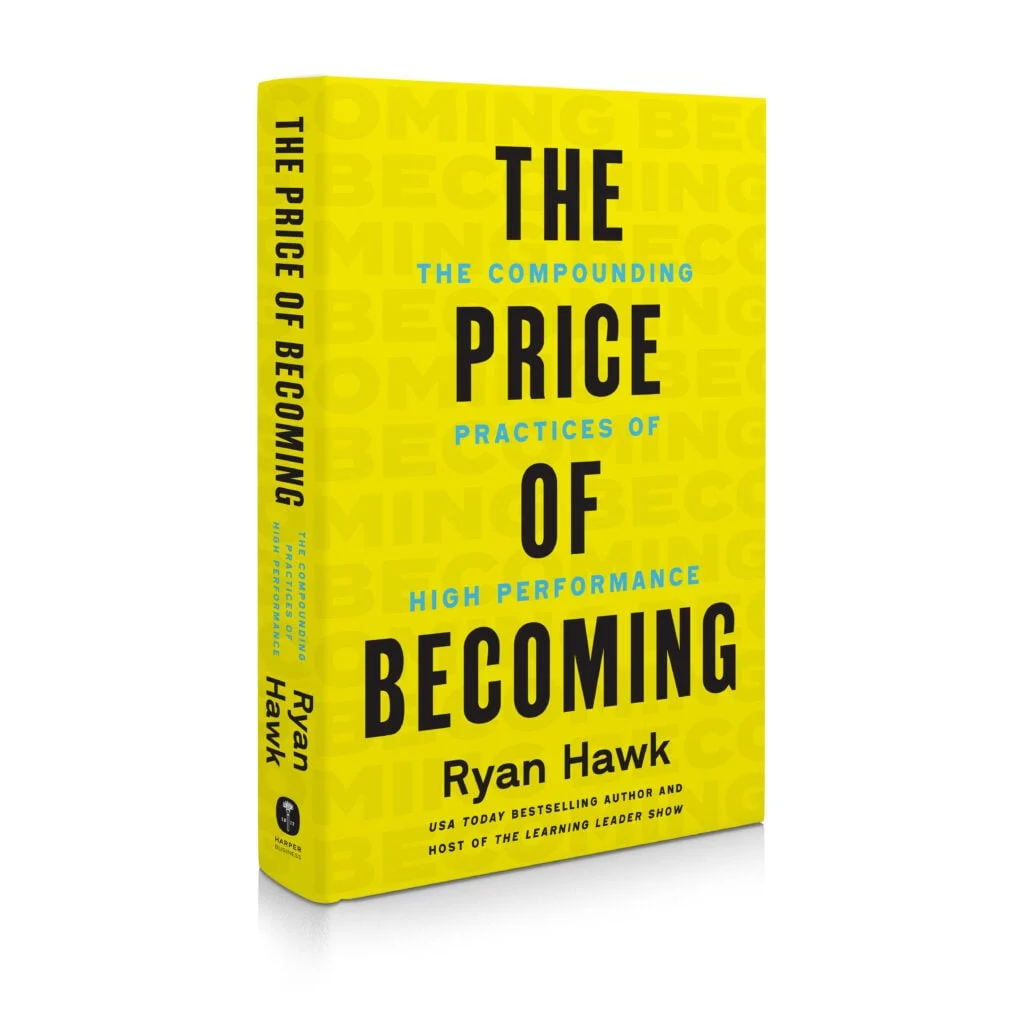
This article is an excerpt from "The Price of Becoming: The Compounding Practices of High Performance" © 2026 by Ryan Hawk. Published by Harper Edge, an imprint of HarperCollins LLC.
