

The Q3 2026 BiggerPockets Pulse survey, a comprehensive barometer of sentiment among the nation’s largest community of individual real estate investors, reveals a market characterized by grit in the face of mounting headwinds. While the investor class remains active, a steady erosion of confidence has emerged throughout the year. The Pulse Index, which serves as a weighted measure of market optimism and activity, fell to 96 points in the third quarter. This represents a notable decline from the 102 points recorded in Q2 and the 108 points seen at the start of the year in Q1. While a score of 96 remains within the "neutral" territory, the consistent downward trajectory suggests that the initial optimism of 2026 is giving way to a more sober realization of the "higher-for-longer" economic reality.
The current sentiment is driven by a convergence of domestic economic pressures and international instability. Specifically, investors are grappling with a "triple threat" of challenges: a chronic shortage of viable deal inventory, the tightening of private and institutional capital, and an unprecedented surge in property-level operating expenses. Despite these pressures, the survey data suggests that the American real estate investor is not retreating but rather recalibrating, shifting focus toward defensive strategies and markets with proven stability, such as the Midwest.
A Chronology of Declining Sentiment in 2026
To understand the Q3 results, one must look at the progression of the real estate market throughout the 2026 calendar year. In the first quarter, the Pulse Index stood at 108, buoyed by hopes that the Federal Reserve would successfully navigate a "soft landing" and that mortgage rates would return to the mid-5% range. At that time, 40% of investors expected rates to fall significantly by year-end.
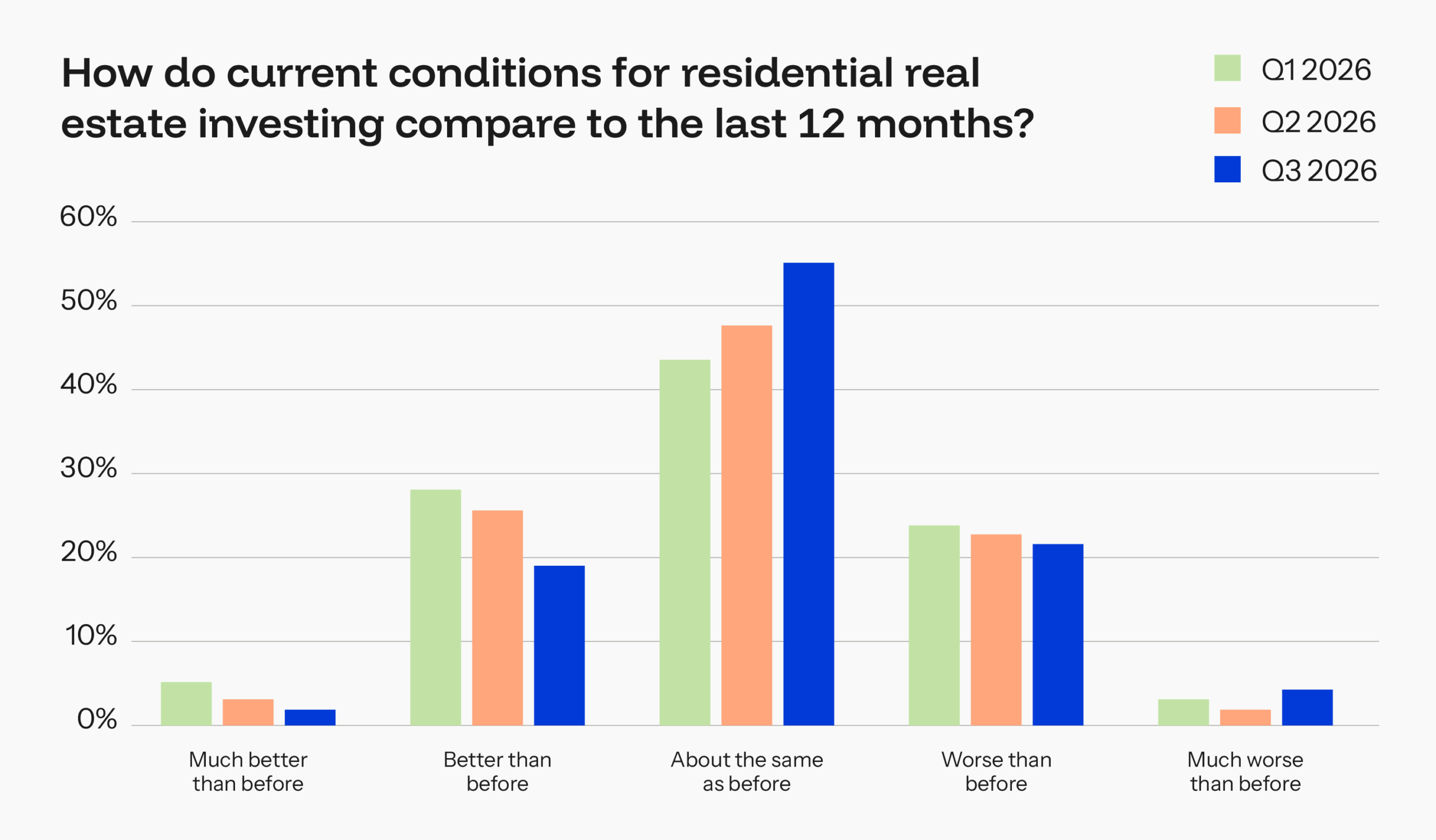
By the second quarter, the index slipped to 102 as the initial shock of the Iran conflict and persistent domestic inflation began to weigh on the collective psyche. The Q2 results showed the first signs of investors moving to the "sidelines," with a growing number of respondents shifting their outlook from "improving" to "about the same."
The Q3 data confirms this stabilization at a lower level of optimism. Currently, 55% of investors believe market conditions are "about the same" as they were 12 months ago, a significant increase from the 47.5% who held that view in Q2. Perhaps more tellingly, the percentage of investors who feel conditions are "better" has slipped to just 19%, down from 25.5% only three months ago. This suggests that the "window of opportunity" many perceived at the start of the year is perceived to be closing, or at least becoming more difficult to climb through.

The Shift from Interest Rate Anxiety to Expense Management
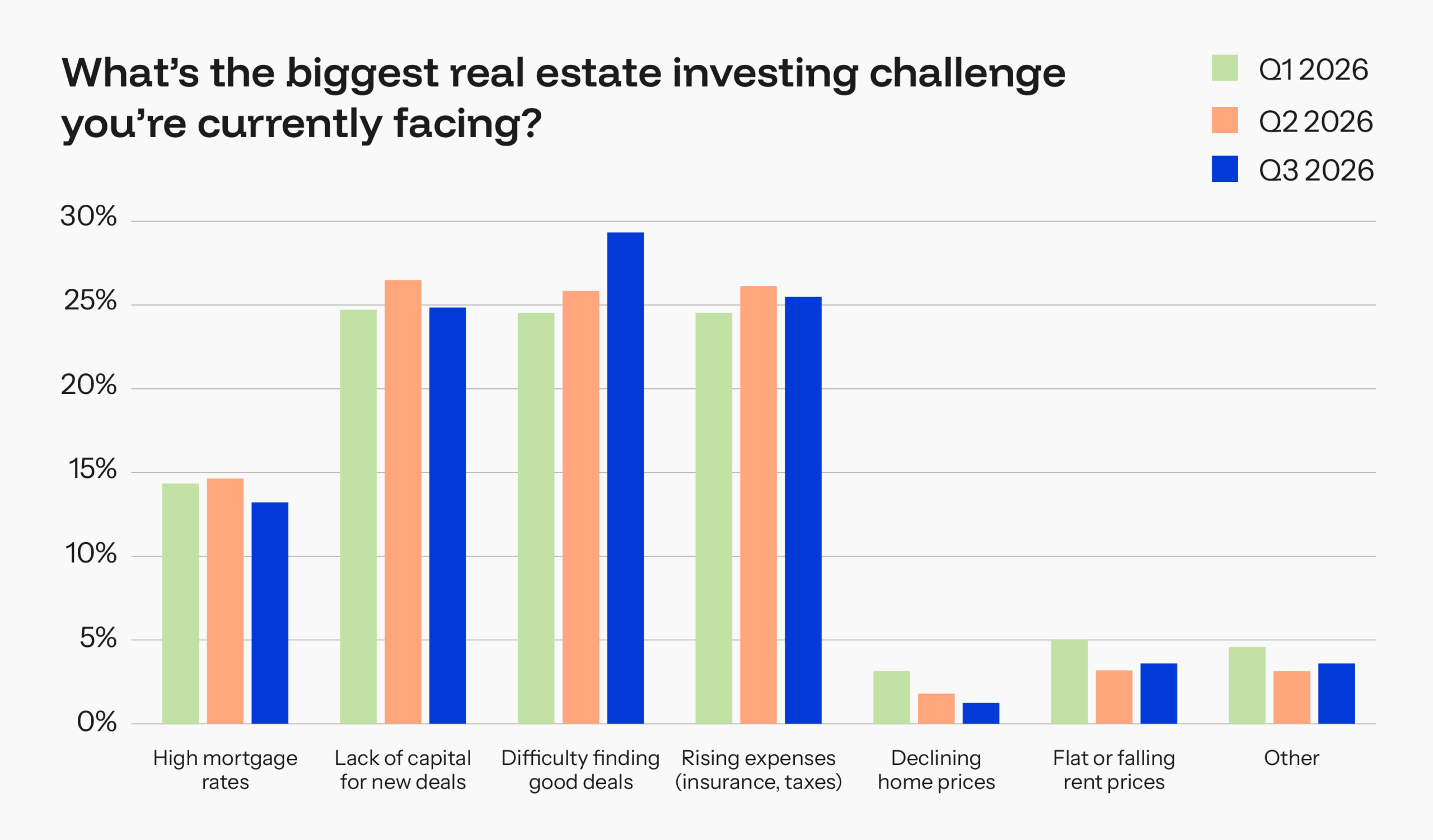
For much of 2024 and 2025, the primary concern for real estate investors was the volatility of mortgage rates. However, the Q3 2026 survey highlights a fundamental shift in the investor’s primary "pain point." High mortgage rates, which once dominated investor complaints, have faded to a concern for only 13% of respondents. In their place, the "difficulty of finding good deals" has emerged as the top challenge, cited by 30% of the community.
Following closely behind is the "rising cost of ownership," an umbrella term for the skyrocketing expenses associated with insurance premiums, property taxes, and maintenance. Roughly 25% of investors now identify these "holding costs" as their primary obstacle. In many jurisdictions, insurance premiums have seen double-digit increases for three consecutive years, while property tax reassessments have finally caught up to the peak valuations of the mid-2020s. This "margin squeeze" is making it increasingly difficult for even experienced investors to achieve the cash-flow requirements necessary to satisfy lenders or personal financial goals.
Furthermore, the "lack of capital for new deals" remains a significant hurdle for 25% of the market. As traditional banks tighten lending standards in response to geopolitical uncertainty and a cooling economy, investors are finding that the "dry powder" they relied on in previous years is either more expensive or entirely inaccessible.
Strategic Realignment: The Return of the Long-Term Rental
In response to these challenges, investors are abandoning speculative or high-turnover strategies in favor of "boring" but durable models. Long-term rentals (LTRs) have solidified their position as the preferred strategy for 55% of the community in Q3, up from 48% in the previous quarter. The appeal of the LTR model in 2026 lies in its lower turnover costs and the relative stability of residential rents compared to the volatility of the fix-and-flip or short-term rental (STR) markets.
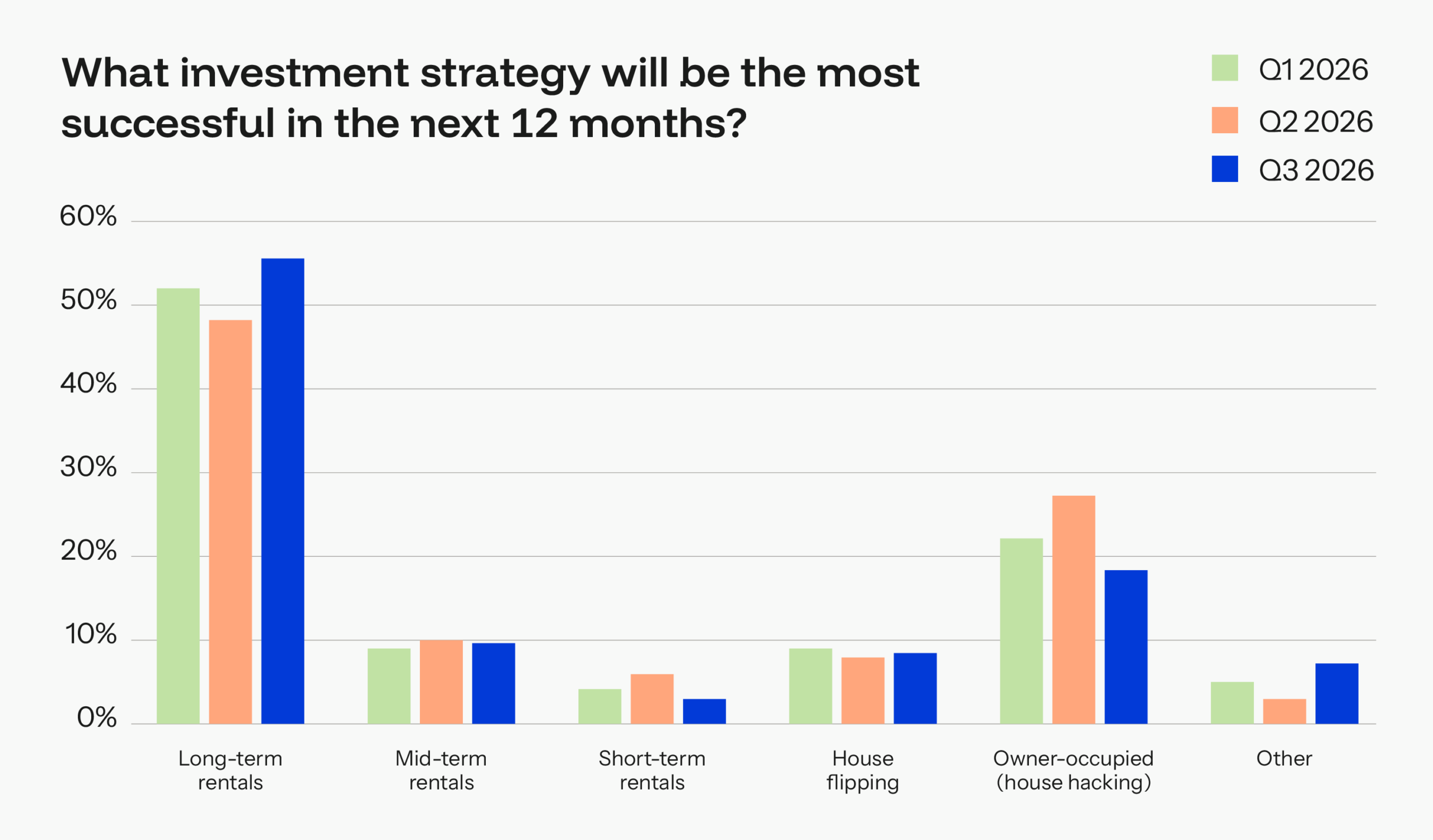
Owner-occupied "house hacking"—the practice of living in one unit of a small multifamily property while renting out the others—remains a popular entry point for 18% of investors. This strategy is seen as a vital hedge against high personal housing costs. Conversely, the short-term rental market continues its downward slide in popularity, garnering only 3% of the vote for the "most successful strategy." This decline is attributed to a combination of increased municipal regulation, "Airbnb fatigue" among travelers, and the rising cost of professional cleaning and management services.
Geopolitical Shocks and the Federal Reserve
The Q3 survey also gauged investor reactions to major external factors, specifically the ongoing conflict in Iran and the potential leadership change at the Federal Reserve. Interestingly, the "initial shock" of the Iran war appears to have been absorbed by the market. In Q3, 47% of investors expect the war to have a neutral impact on the real estate market over the next three months, a sharp increase from 32.5% in Q2. While 41.5% still anticipate a negative impact, the "very negative" outlook has been halved, suggesting that investors are now pricing in geopolitical risk as a constant rather than a variable.
Regarding the Federal Reserve, the community remains in a state of "wait-and-see" concerning the potential chairmanship of Kevin Warsh. A substantial 67% of respondents reported a neutral stance on how his leadership would affect the real estate sector. Market analysts suggest this neutrality stems from a broader belief that the structural issues facing the housing market—namely supply shortages—are beyond the immediate control of the Fed’s interest rate policy.
However, inflation remains a persistent drag on activity. Over 52% of investors stated that rising inflation makes them "less likely" to acquire new assets in the immediate future. This sentiment reflects the reality that while real estate is traditionally an inflation hedge, the current "cost-push" inflation is hitting the expense side of the ledger faster than it is increasing the rent side.

Regional Analysis: The Midwest Dominance
Geographically, the 2026 investment landscape is bifurcated. The Midwest has emerged as the clear winner, with 45% of investors naming it the region with the best investing conditions. The region’s appeal is rooted in its "price-to-rent" ratios, which remain some of the most favorable in the country. Cities in the Midwest have largely avoided the dramatic price corrections seen in the "pandemic darlings" of the Sunbelt, providing a sense of capital preservation that is highly valued in the current climate.
The Southeast and Florida, previously the epicenter of the real estate boom, now sit at a distant second with 22.5% of the vote. Investors in these regions are reporting increased difficulty due to the aforementioned insurance crisis and a perceived "over-supply" of new construction in certain sub-markets. The Southwest and Texas follow at 13%, with many investors expressing concern over flat or falling rent prices in formerly high-growth metros.

The AI Factor and Future Implications
Artificial Intelligence (AI) and its potential for job displacement have become a standard consideration for the forward-looking investor. In Q3, nearly 38% of investors expressed concern that AI-driven job losses could negatively impact housing and rental demand over the next 12 months. This represents a growing shift from the "neutral" stance held earlier in the year.
The concern is twofold: first, that white-collar job displacement in tech-heavy hubs will reduce the pool of high-income renters; and second, that the increased efficiency of AI may lead to a permanent reduction in the need for physical office space, further impacting the broader economic health of urban centers.
Conclusion and Market Outlook
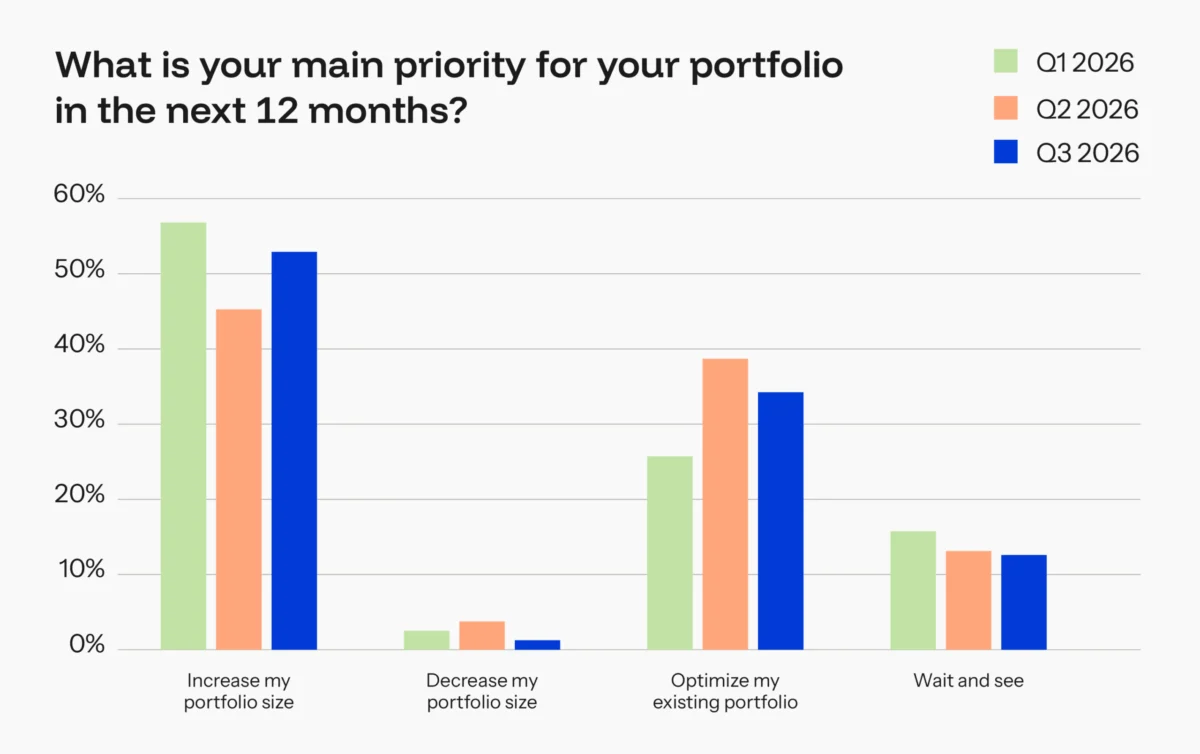
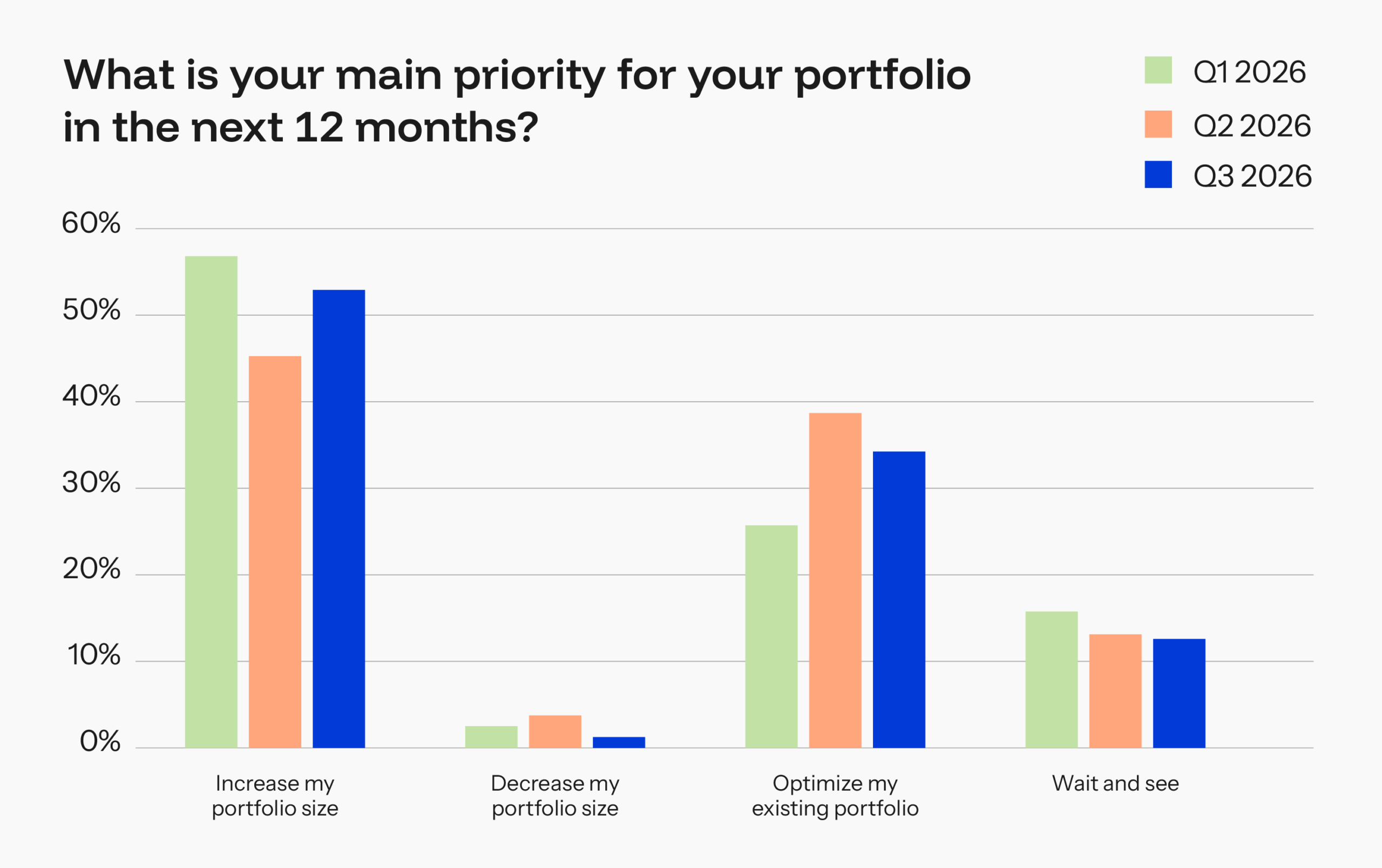
Despite the cooling sentiment, the BiggerPockets Pulse survey reveals a resilient core of investors who are still "playing offense." Over 53% of respondents state that their main priority for the next 12 months is to increase their portfolio size. This indicates that while the market is difficult, seasoned investors view the current downturn as a "buyer’s advantage."
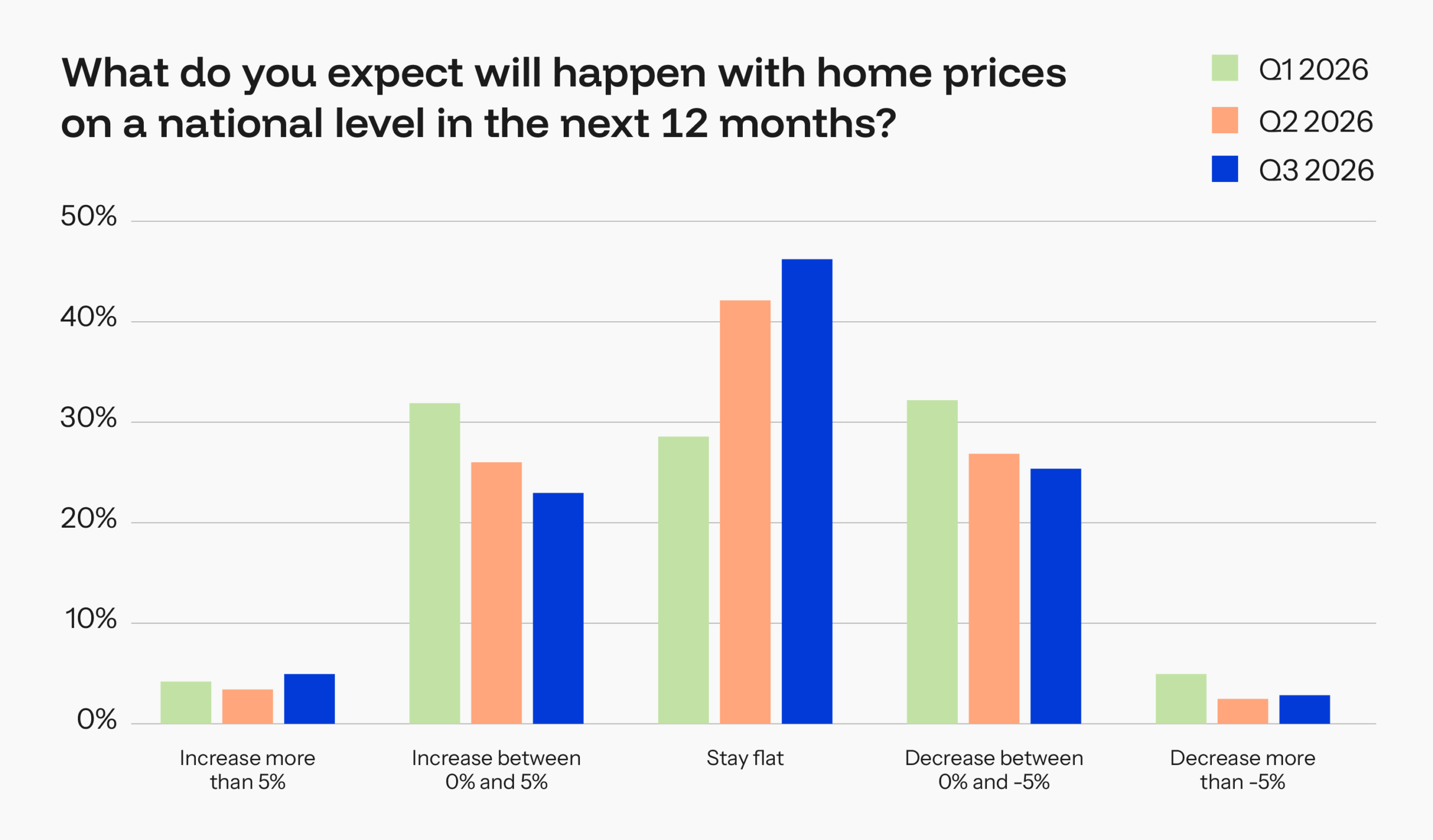
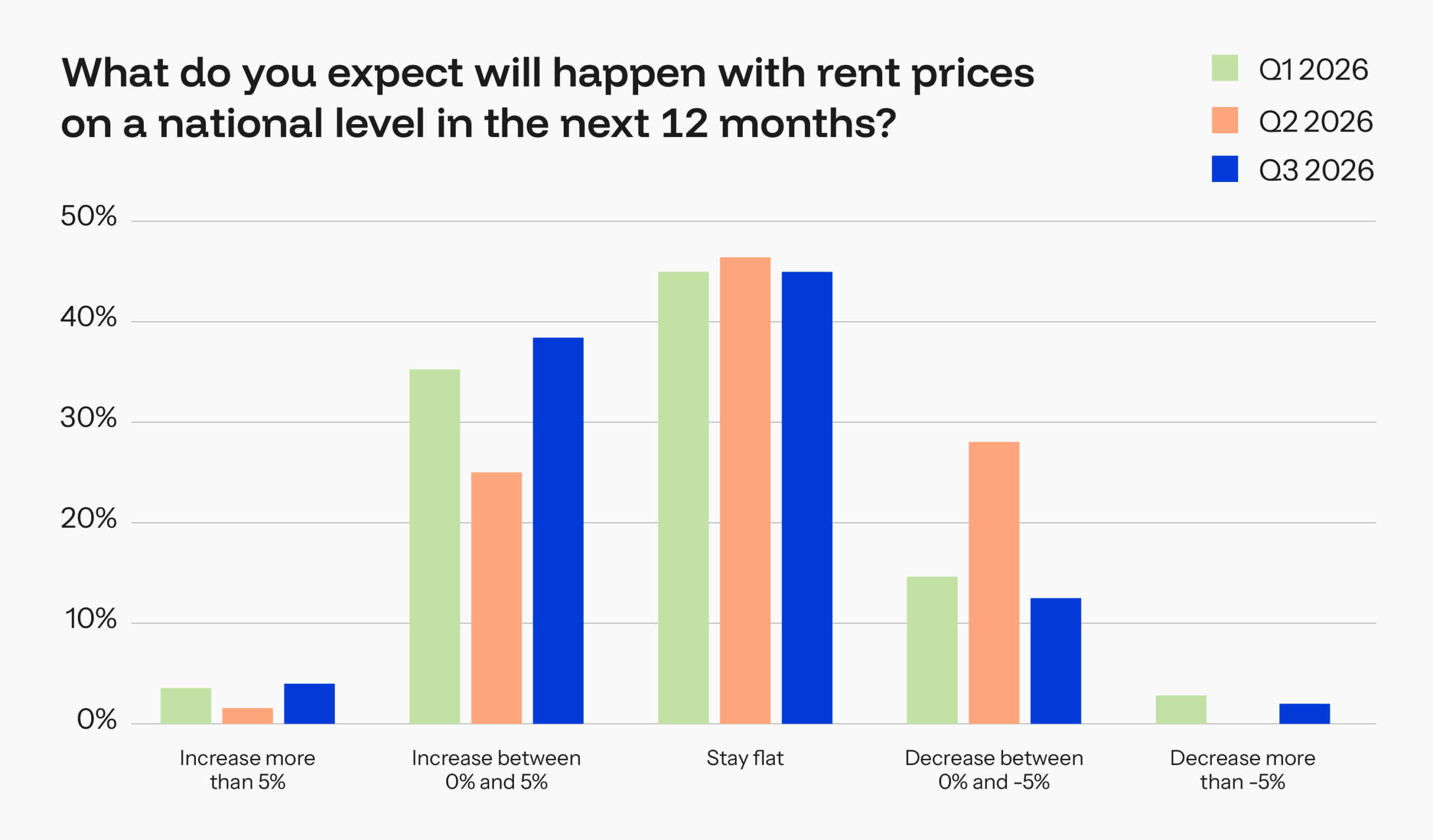
The outlook for the remainder of 2026 and into 2027 is one of stabilization. A plurality of investors (46%) expect home prices to stay flat nationally, while 45% expect rents to remain stable. Mortgage rate expectations have been adjusted upward, with 75% of the community now underwriting deals at rates between 6.0% and 7.0% for the foreseeable future.
In summary, the Q3 2026 report paints a picture of a "professionalizing" investor class. The era of "easy money" and rapid appreciation has been replaced by an era of meticulous expense management, strategic regional selection, and a focus on long-term cash flow. For those capable of navigating the current margin squeeze, the consensus remains that real estate remains the most viable path to wealth, even if the road has become significantly more uphill.
