


The European Commission has officially greenlit a landmark €63 billion state aid initiative by the French government designed to catalyze the massive expansion of offshore wind energy over the next quarter-century. This monumental financial commitment is a cornerstone of France’s national energy strategy, aiming to accelerate the transition toward a net-zero economy while aligning with the broader objectives of the European Union’s Clean Industrial Deal. The program represents one of the largest single state aid approvals for renewable energy in the history of the European Union, signaling a decisive shift in the continent’s approach to industrial decarbonization and energy sovereignty.
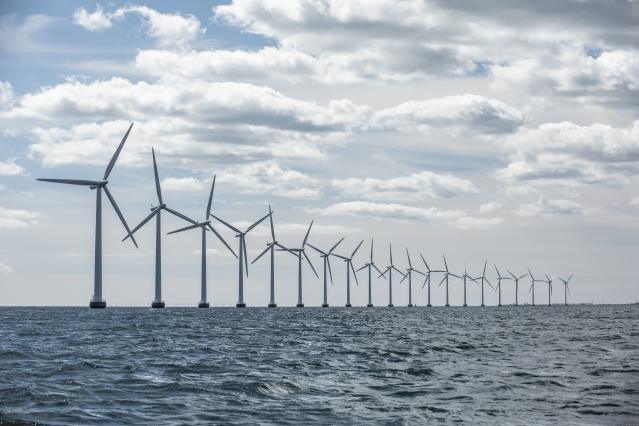
Under the terms of the approved scheme, France will provide support for the construction and long-term operation of eleven offshore wind farms. These projects are strategically distributed across France’s diverse maritime territories, including the North Sea, the Atlantic Ocean, and the Mediterranean Sea. Once fully operational, the wind farms are projected to boast a combined installed capacity of up to 11.1 gigawatts (GW). This infrastructure is expected to generate approximately 47.8 terawatt-hours (TWh) of renewable electricity annually. To put this figure into perspective, the output will account for more than 10% of France’s total annual electricity consumption, significantly reducing the nation’s reliance on fossil fuels and diversifying its energy mix beyond its traditional nuclear stronghold.
The Clean Industrial Deal State Aid Framework (CISAF)
The Commission’s approval was granted under the recently established Clean Industrial Deal State Aid Framework (CISAF). This framework was designed to provide Member States with a streamlined and flexible pathway to fund projects that contribute to the EU’s overarching climate goals. Adopted in May 2025, CISAF was born out of the necessity to maintain European industrial competitiveness in the face of global subsidies for green technology, such as the United States’ Inflation Reduction Act.
CISAF allows for the rapid deployment of state aid for renewable energy roll-outs and ensures that Europe maintains a robust manufacturing capacity for clean technologies. By utilizing this framework, France is able to provide long-term price certainty to developers, which is essential for the capital-intensive nature of offshore wind construction. The framework emphasizes that aid must be "necessary, appropriate, and proportionate," ensuring that the intervention does not unduly distort competition within the EU’s single market while still achieving critical environmental outcomes.
Financial Mechanism: The Two-Way Contract for Difference
A central component of the €63 billion plan is the use of a "two-way contract for difference" (CfD) mechanism. This financial structure is designed to stabilize revenues for energy producers while protecting the public purse from excessive costs. Under this scheme, the aid is granted following a transparent, competitive, and non-discriminatory bidding process.
The "strike price" is determined by the "pay as bid" offer submitted by the winning beneficiary during the tender process. The mechanism operates based on the fluctuations of the electricity market:
- Low Market Prices: If the average market price for electricity falls below the agreed strike price, the French state pays the producer the difference, ensuring the project remains bankable and financially viable.
- High Market Prices: Conversely, if the market price exceeds the strike price, the energy producer is required to pay the excess revenue back to the state.
This "two-way" nature ensures that while investors are shielded from the volatility of energy markets, the state—and by extension, the taxpayer—benefits during periods of high energy prices. This model has become the gold standard for offshore wind procurement across Europe, as it minimizes the cost of capital by de-risking the projects for private lenders.
Geographic Distribution and Technical Ambition
The eleven wind farms planned under this scheme represent a sophisticated blend of traditional fixed-bottom turbines and cutting-edge floating offshore wind technology. The geographic spread is vital for balancing the national grid:
- The North Sea: Projects in this region will leverage the relatively shallow waters and consistent, high-velocity winds characteristic of the area.
- The Atlantic Coast: This region offers vast potential but requires navigating deeper waters, often necessitating floating foundations for turbines located further offshore.
- The Mediterranean: Due to the steep continental shelf in the Mediterranean, France is expected to utilize this aid to become a global leader in floating offshore wind, a technology that allows for energy generation in deep-sea environments where fixed structures are not feasible.
The 11.1 GW target is a significant leap for France, which, despite having one of the largest maritime territories in Europe, was initially slower than neighbors like the United Kingdom or Denmark in deploying offshore wind. This €63 billion injection is intended to bridge that gap and position France as a primary hub for maritime renewable energy.

Chronology of France’s Offshore Wind Evolution
The road to this €63 billion approval has been paved by a decade of legislative and industrial preparation.
- 2015: France passed the Energy Transition for Green Growth Act, which set the initial targets for diversifying the energy mix.
- 2022: The inauguration of the Saint-Nazaire offshore wind farm, France’s first commercial-scale project, proved the viability of the sector in French waters.
- 2023-2024: The French government engaged in intensive negotiations with the European Commission to ensure that its "Pacte Éolien en Mer" (Offshore Wind Pact) met EU state aid guidelines.
- May 2025: The EU adopted the CISAF, providing the specific legal mechanism needed for a package of this magnitude.
- July 2026: Official approval from the European Commission is granted, allowing tenders to proceed with the backing of state guarantees.
Official Responses and Strategic Implications
Teresa Ribera, the European Commission’s Executive Vice-President for Clean, Just and Competitive Transition, emphasized the strategic importance of the decision. "Today’s decision clears the way for France’s offshore wind support scheme," Ribera stated. "France will continue working towards a fully decarbonised energy system, and the Commission will continue supporting Member States in achieving our common climate objectives."
Industry leaders have also welcomed the news. Representatives from the renewable energy sector suggest that this level of state support provides the "long-term visibility" required to build out a domestic supply chain. By guaranteeing support for 25 years, the French government is encouraging turbine manufacturers, cable layers, and port operators to invest in local infrastructure in cities like Le Havre, Saint-Nazaire, and Cherbourg.
The French Ministry of Energy Transition noted that this plan is not just about climate change but also about "energy sovereignty." By generating 10% of its electricity from domestic offshore winds, France reduces its exposure to international gas price shocks and enhances the stability of the European interconnected grid.
Broader Impact on the European Energy Landscape
The approval of France’s plan follows a similar move by the Commission regarding Italy’s €23 billion renewable energy support program. Together, these approvals indicate a trend toward massive, state-backed investments in clean energy across the EU’s largest economies.

The implications for the European "Clean Industrial Deal" are profound. By fostering a massive domestic market for offshore wind, the EU aims to:
- Reduce Carbon Emissions: Contributing to the goal of a 55% reduction in greenhouse gas emissions by 1930.
- Industrial Competitiveness: Creating a "home market" for European firms like Siemens Gamesa and Vestas, helping them compete against rising competition from non-EU manufacturers.
- Job Creation: It is estimated that the construction and maintenance of these 11 wind farms could create tens of thousands of high-skilled "green-collar" jobs in coastal regions.
- Technological Innovation: The focus on the Mediterranean and Atlantic will likely accelerate the commercialization of floating wind technology, which can then be exported globally.
Challenges and Future Outlook
Despite the optimism surrounding the €63 billion approval, several hurdles remain. The scale of the ambition will test the capacity of the European supply chain, which is currently grappling with rising material costs and logistical bottlenecks. Furthermore, the integration of 11.1 GW of intermittent power will require significant upgrades to France’s onshore transmission grid, managed by RTE (Réseau de Transport d’Électricité).
Environmental considerations also remain at the forefront. Each of the eleven projects will undergo rigorous environmental impact assessments to mitigate effects on marine biodiversity and migratory bird patterns. The French government has committed to a "co-construction" approach, involving local fishing communities and environmental NGOs in the planning stages to minimize social friction.
In conclusion, the European Commission’s approval of France’s €63 billion offshore wind plan marks a transformative moment for the continent’s energy transition. It validates the "Contract for Difference" model as a primary tool for state intervention and sets a high bar for other Member States to follow. As France moves from the planning phase to the tendering and construction phases, the eyes of the global energy industry will be on the North Sea, the Atlantic, and the Mediterranean to see if this massive financial bet will indeed power the next generation of French industry.
