

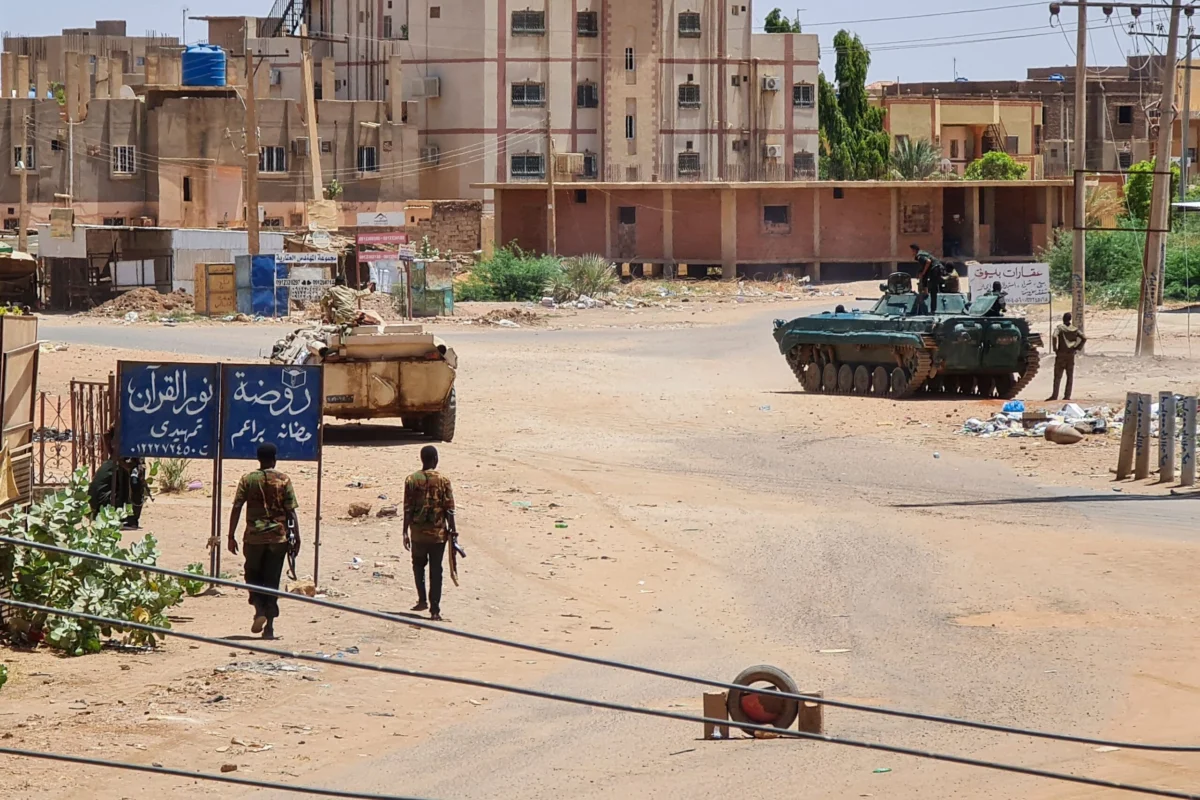
The persistent roar of fighter jets and the heavy thud of artillery fire have become the grim soundtrack of daily life in Khartoum, marking a somber milestone as the conflict between Sudan’s two primary military factions enters its second month. Despite high-profile, internationally-brokered peace talks held in Jeddah, Saudi Arabia, the power struggle between the Sudanese Armed Forces (SAF) and the paramilitary Rapid Support Forces (RSF) shows no signs of abating. What began on April 15 as a localized skirmish for control of the capital has rapidly metastasized into a nationwide humanitarian catastrophe, threatening to destabilize the already volatile Horn of Africa and the Sahel regions.
The International Rescue Committee (IRC) and other humanitarian agencies have sounded the alarm, reporting that the official death toll has surpassed 600, with over 5,000 individuals injured. However, medical professionals on the ground and local activists suggest the real numbers are likely significantly higher, as many casualties go unrecorded due to the collapse of the healthcare system and the inability of morgues to function under siege. Nearly one million people have been forced to flee their homes, creating a dual crisis of internal displacement and a burgeoning refugee exodus into neighboring Egypt, Chad, Ethiopia, and South Sudan.
The Genesis of a General’s War
To understand the current state of "state failure" that many fear, it is necessary to look back at the fragile alliance that preceded the violence. General Abdel Fattah al-Burhan, the head of the SAF, and General Mohamed Hamdan Dagalo, better known as Hemedti, the leader of the RSF, were once partners in power. In 2019, following months of massive pro-democracy protests, the two military leaders joined forces to oust the long-standing dictator Omar al-Bashir.
The transition to democracy was always tenuous. In October 2021, Burhan and Hemedti collaborated again to lead a military coup that dissolved the civilian-led transitional government of Prime Minister Abdalla Hamdok. This move drew widespread international condemnation and led to the freezing of billions of dollars in foreign aid from the World Bank and the International Monetary Fund (IMF). For nearly two years, the SAF and RSF maintained a precarious power-sharing arrangement, ostensibly to facilitate a return to civilian rule.
However, the integration of the RSF into the regular army became the ultimate sticking point. Hemedti, whose paramilitary forces grew out of the Janjaweed militias of the Darfur conflict, sought a decade-long timeline for integration and a direct reporting line to a civilian head of state. Burhan and the SAF leadership demanded a two-year timeline and total military subordination. By early April 2023, these divergent visions reached a breaking point, culminating in the first shots fired at the Soba military base and Khartoum International Airport on April 15.
A Timeline of Escalation and Failed Diplomacy
The past four weeks have been characterized by a cycle of temporary truces that are violated almost as soon as they are signed.
- April 15: Heavy fighting breaks out in Khartoum and Merowe. The RSF claims control of the presidential palace and the airport, which the SAF denies.
- April 20: The first major wave of foreign evacuations begins as diplomats and expatriates flee the capital.
- April 25: A U.S.-brokered 72-hour ceasefire is announced but fails to stop the shelling in residential areas.
- May 6: Representatives from both factions arrive in Jeddah for talks facilitated by Saudi Arabia and the United States.
- May 11: The "Jeddah Declaration of Commitment to Protect the Civilians of Sudan" is signed. While it establishes humanitarian principles, it fails to include a formal ceasefire.
- May 15: One month into the conflict, airstrikes intensify in northern Khartoum and the city of Bahri, while violence in the Darfur region escalates to levels not seen in nearly two decades.
In the Darfur region, the conflict has taken on a more sinister, ethnic dimension. Reports from El Geneina in West Darfur indicate that the fighting has moved beyond the two military factions, drawing in local tribal militias and leading to the widespread burning of markets and displacement camps.
The Humanitarian Cost: A Nation on the Brink
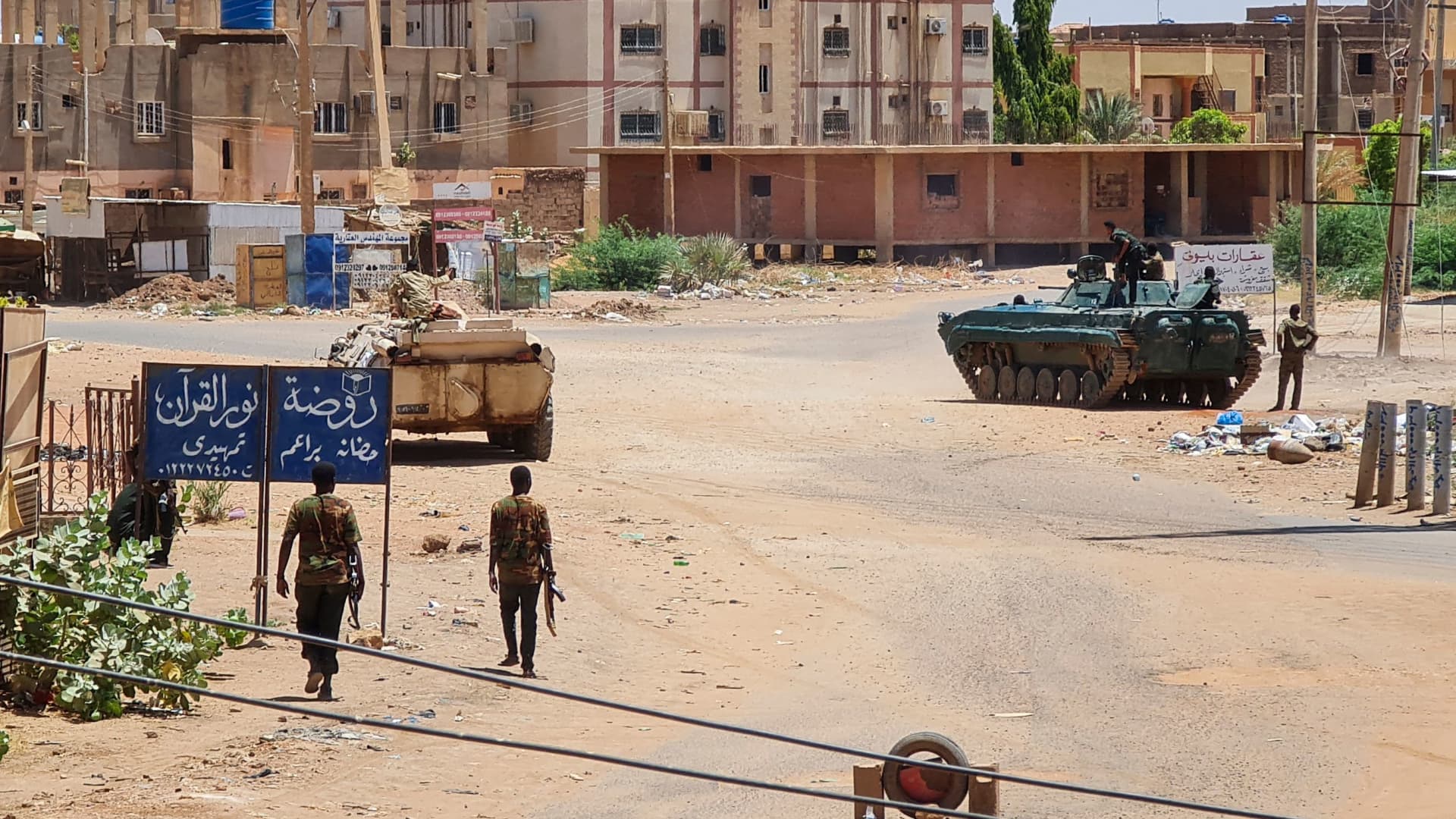
The humanitarian situation is described by the UN as "breaking point." Kurt Tjossem, the IRC’s Vice President for East Africa, emphasized that the needs are "immense and immediate." In Khartoum, the infrastructure of modern life has evaporated. Millions are trapped in their homes without consistent access to electricity or running water. With temperatures frequently exceeding 40 degrees Celsius (104 degrees Fahrenheit), the lack of refrigeration has caused food supplies to rot, while the price of remaining staples has tripled or quadrupled.
The healthcare sector is particularly devastated. The World Health Organization (WHO) reports that nearly 70% of hospitals in conflict zones are out of service. Those that remain open are operating with severe shortages of oxygen, blood, and basic surgical supplies. Patients with chronic illnesses, such as kidney failure or diabetes, face a "silent death" as dialysis centers close and insulin supplies vanish.
Furthermore, the economic impact is catastrophic. Sudan’s economy, already reeling from years of inflation and sanctions, is effectively in a state of freefall. The banking system has largely collapsed, leaving citizens unable to withdraw cash to buy food or fuel. The looting of warehouses—including those belonging to the World Food Programme (WFP)—has further hindered the ability of international agencies to provide relief.
International Responses and the "Cycle of Impunity"
The global community has responded with a mix of diplomatic pressure and humanitarian appeals. Andrew Mitchell, the U.K. Minister for International Development and Africa, recently addressed the UN Human Rights Council, stressing the need to break the "cycle of impunity" that has plagued Sudan for decades. He called for a united international message of horror regarding the violence and a return to the "political track."
However, many Sudanese activists and political analysts argue that the international approach is fundamentally flawed. Sudanese-Australian writer and activist Yassmin Abdel-Magied told CNBC that the Jeddah talks, by excluding civilian voices, effectively reward the "belligerence" of the two generals. She argued that treating Burhan and Hemedti as the sole legitimate stakeholders in Sudan’s future ignores the millions of citizens who risked their lives in 2019 for a civilian democracy.
The role of external actors also complicates the path to peace. Various regional powers have vested interests in the outcome:
- Egypt: Historically aligned with the SAF and General Burhan, viewing a stable, traditional military government in Sudan as a matter of national security.
- United Arab Emirates (UAE): Has been linked to Hemedti and the RSF, largely due to the paramilitary group’s involvement in the conflict in Yemen and interests in Sudan’s gold mining sector.
- The Wagner Group: The Russian private military company has long been associated with the RSF, providing training and equipment in exchange for access to gold resources.
Experts suggest that until these external lifelines are severed through targeted sanctions and diplomatic pressure, the generals will have little incentive to stop fighting.
The Role of Resistance Committees
Amidst the failure of formal diplomacy, a glimmer of hope remains in the form of Sudan’s Resistance Committees. These informal, neighborhood-based networks were the engine of the 2019 revolution. Since the outbreak of war, they have transformed into "Emergency Rooms," coordinating the distribution of food, organizing evacuations, and even performing basic medical procedures in makeshift clinics.
Abdel-Magied and other observers argue that these committees should be given a seat at the negotiating table. "The framework is already there," she noted, suggesting that a delegation of civilian representatives could provide the necessary counterbalance to the military factions. Without such representation, any peace deal is likely to be a "quick fix" that preserves the status quo rather than addressing the structural issues that led to the war.
Implications and the Threat of State Failure
The stakes of the Sudan conflict extend far beyond its borders. Sudan occupies a strategic position on the Red Sea and serves as a bridge between the Middle East and Sub-Saharan Africa. A total collapse of the Sudanese state would create a massive power vacuum, potentially turning the country into a haven for extremist groups and human traffickers.
Furthermore, the displacement crisis is putting immense pressure on neighboring countries. Chad, which already hosts hundreds of thousands of refugees from previous Darfur conflicts, is struggling to accommodate the new influx. Egypt is seeing thousands of Sudanese arrive daily at the Argeen and Qustul border crossings, straining its own economic resources.
If the fighting is not arrested, the prospect of a protracted civil war looms. Unlike previous conflicts in Sudan that were largely confined to the peripheries, this war is being fought in the heart of the country’s economic and administrative center. The destruction of Khartoum is not just a humanitarian disaster; it is the systematic dismantling of the Sudanese state apparatus.
As the conflict enters its second month, the "intentional, diligent, thought-through action" called for by activists remains elusive. The international community faces a choice: continue with high-level diplomacy that treats the warring generals as the only viable leaders, or pivot toward a strategy that empowers civilian networks and applies genuine economic pressure on those funding the war. For the 46 million inhabitants of Sudan, the window for a peaceful resolution is rapidly closing, and the cost of failure is a generation of dysfunction and despair.
