

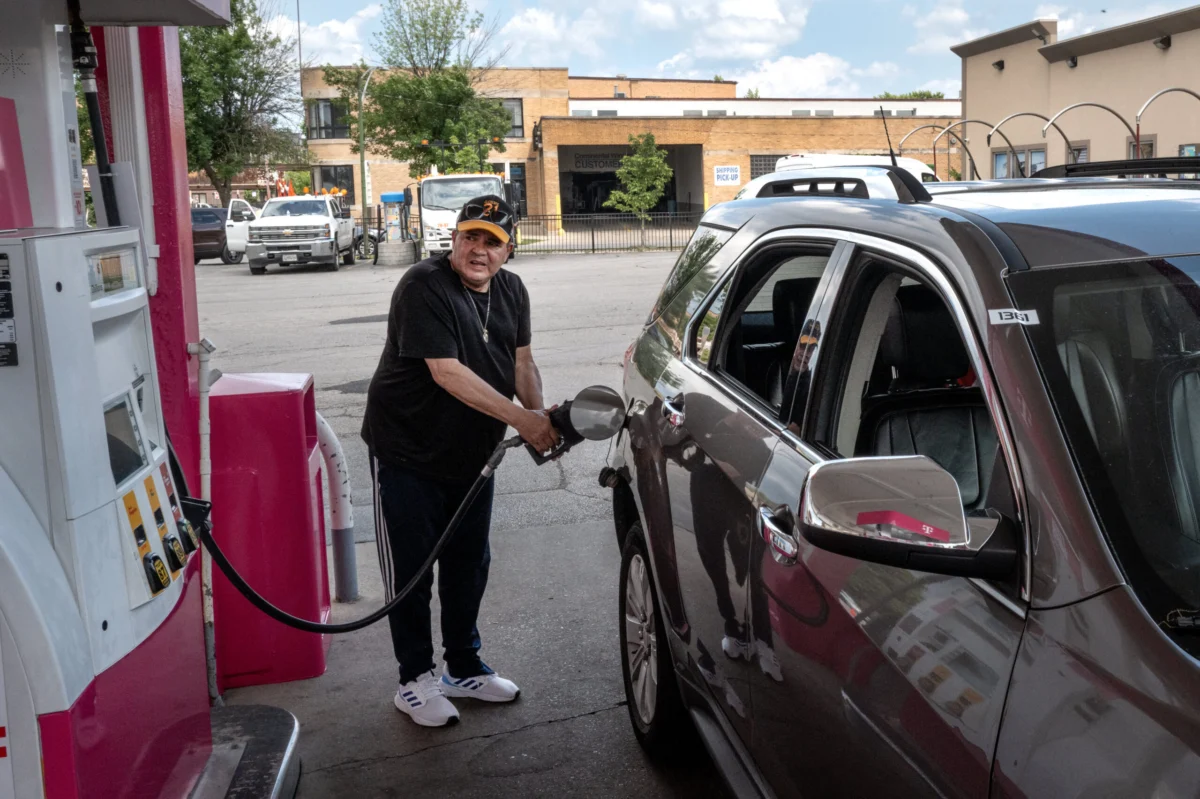
The Federal Reserve concluded its first meeting under the stewardship of new Chairman Kevin Warsh on Wednesday, June 17, 2026, by holding interest rates steady. This highly anticipated decision, while widely expected by market analysts, offered little immediate reprieve for American consumers grappling with persistently high gas prices and broader affordability challenges across various sectors of the economy. The central bank’s stance signals a cautious approach in the face of escalating inflationary pressures, particularly a notable surge in energy costs, which has complicated the economic outlook and set an early test for Chairman Warsh’s leadership.
A New Era Under Warsh’s Leadership
Kevin Warsh, sworn in as Chairman of the Federal Reserve on May 22, 2026, in a ceremony at the East Room of the White House, embarked on his tenure at a pivotal moment for the U.S. economy. Appointed by President Donald Trump, Warsh’s selection was met with considerable interest due to his prior experience as a Fed governor from 2006 to 2011 and his reputation as a proponent of more hawkish monetary policy in certain contexts, though he had also signaled openness to lower rates during his nomination process. His appointment underscored President Trump’s desire for a central bank leader who might align with his administration’s economic objectives, particularly concerning borrowing costs.
Warsh, a former investment banker and economic advisor, succeeded Jerome Powell, whose multi-year fight against inflation had brought the federal funds rate to its current elevated levels. The transition marked a significant shift in leadership, with observers keen to discern how Warsh would navigate the complex interplay of inflation, economic growth, and employment targets. His inaugural Federal Open Market Committee (FOMC) meeting was thus under intense scrutiny, not only for the policy outcome but also for the tone and direction it would set for the coming quarters.
Inflationary Pressures Mount: A Three-Year High
The decision to maintain the federal funds rate at its current level came against a backdrop of intensifying inflationary pressures. Just a week prior to the FOMC meeting, the Bureau of Labor Statistics reported that the Consumer Price Index (CPI) for May 2026 rose at its fastest pace in three years, exceeding economists’ forecasts. This acceleration was largely driven by a significant jump in energy costs, exacerbated by ongoing geopolitical instability, particularly the fallout from the Iran war. The conflict in the Middle East has created substantial volatility in global oil markets, leading to elevated pump prices that directly impact household budgets and business operating costs.
Economists are increasingly concerned that these energy cost increases could have broader, longer-term inflationary effects, seeping into transportation, manufacturing, and ultimately consumer goods and services. "The Fed can no longer claim there is a balance of risks; inflation is the problem," asserted Certified Financial Planner Stephen Kates, a financial analyst at Bankrate. His sentiment reflects a growing consensus that the central bank’s primary battle is now squarely against persistent price increases, potentially overriding other considerations such as supporting economic growth through lower borrowing costs.
Beyond energy, preliminary analyses of the May CPI report indicated that core inflation, which excludes volatile food and energy prices, also remained stubbornly high, signaling that price pressures were not confined to a single sector. Housing costs, including rent and owners’ equivalent rent, continued their upward trajectory, while services inflation, encompassing everything from healthcare to personal care, showed little sign of abating. This broad-based inflation suggests deeply embedded price increases that require sustained monetary policy vigilance.
Navigating the Political-Economic Divide
The Fed’s decision to hold rates steady, and the underlying rationale driven by inflation concerns, places Chairman Warsh in a potentially challenging position relative to the White House. President Trump has historically advocated for lower interest rates, believing they stimulate economic growth and benefit borrowers. His selection of Warsh was, in part, seen as an attempt to usher in a more accommodative monetary policy environment. However, the current economic reality of rising inflation appears to be compelling the central bank to consider a path that diverges from the President’s preference.
Analysts suggest that the inflation data, particularly the May CPI report, significantly constrained Warsh’s options for his debut meeting. To cut rates in such an environment would risk exacerbating inflation and undermining the Fed’s credibility as an inflation fighter. Conversely, the prospect of future rate hikes – a scenario now being openly discussed by some economists – would directly contradict the President’s stated desires, highlighting the enduring tension between central bank independence and political pressures.
"The Fed’s mandate is price stability and maximum employment, not political expediency," commented Dr. Eleanor Vance, a senior economist at the Peterson Institute for International Economics. "Chairman Warsh’s initial move signals a commitment to tackling inflation head-on, even if it means confronting external expectations." This independence is a cornerstone of effective monetary policy, but it often leads to friction when economic necessities clash with political agendas, especially in an election year or during periods of economic stress.
The Fed’s Reach: Impact on Everyday Finances
The Federal Reserve’s benchmark, the federal funds rate, is the interest rate at which commercial banks lend to each other overnight. While seemingly esoteric, this rate has a profound ripple effect, influencing a vast array of consumer and business borrowing and savings rates. When the Fed holds rates steady, it means borrowing costs remain elevated, and for some products, the prospect of further increases looms. This directly impacts the financial well-being of millions of American households already feeling the squeeze of mounting cost pressures.
Credit Card Costs Remain Elevated
Among the most directly affected financial products are credit cards. Most credit cards operate with variable annual percentage rates (APRs) that are closely tied to the federal funds rate. With the Fed’s benchmark remaining high, credit card APRs have held steady at elevated levels. The average annual percentage rate for credit cards has hovered just under 20% since last year, according to Bankrate data. This represents a significant burden for consumers carrying balances, as the cost of revolving credit continues to eat into disposable income.
"Credit card APRs don’t tend to change much unless the Fed forces them to, and with no Fed rate cuts likely on the horizon, Americans should expect card APRs to remain high for the foreseeable future," warned Matt Schulz, chief credit analyst at LendingTree. For a typical household with an average credit card debt of around $6,000, maintaining a 20% APR can mean hundreds of dollars in interest payments annually, diverting funds that could otherwise be used for necessities or savings. Strategies such as balance transfers to lower-APR cards or aggressive debt repayment are becoming increasingly crucial for managing this aspect of personal finance.
Housing Market Navigates High Mortgage Rates
The housing market, a critical component of the American economy, continues to grapple with elevated borrowing costs. While 15- and 30-year fixed mortgage rates do not directly track the federal funds rate, they are heavily influenced by long-term Treasury yields and broader economic sentiment. The ongoing uncertainty stemming from Middle East tensions has contributed to significant volatility in these rates.
As of June 16, 2026, the average rate for a 30-year, fixed-rate mortgage stood at 6.54%, according to Mortgage News Daily, a stark contrast to the historically low rates seen in the early 2020s. The average rate for a 15-year, fixed-rate mortgage was similarly high at 6.11%. These elevated rates significantly impact housing affordability, making homeownership a distant dream for many first-time buyers and increasing monthly payments for those looking to purchase or refinance.
Wayne Winegarden, an economist at the Pacific Research Institute, a conservative think tank, highlighted the broader societal impact: "It makes buying a house more difficult… if you are locking in at a higher rate, it’s just another way we are making life unaffordable for American families." Higher mortgage rates translate to reduced purchasing power, potentially cooling demand in an already tight housing market and putting downward pressure on home price appreciation in some regions, though inventory shortages continue to provide a floor for values.
Auto Loans Add to Consumer Burden
New and used car buyers are also feeling the pinch of elevated interest rates. Auto loan rates, while fixed for the life of the loan, are set based on prevailing market conditions, which include the Fed’s benchmark. With financing costs remaining high, consumers are facing a double squeeze: more expensive vehicles due to ongoing supply chain issues and manufacturing costs, coupled with higher interest rates on loans.
According to Edmunds, with the Fed’s benchmark holding steady, the average rate on a five-year loan for a new car is 6.9%, while the average auto loan rate for a used car is even higher at 10.4%. This combination forces many buyers to make difficult choices, often opting for longer repayment terms to keep monthly payments affordable.
"Until the rate picture shifts, buyers will keep stretching loan terms to make payments affordable, accruing more interest through the life of their terms as an unfortunate byproduct," observed Joseph Yoon, consumer insights analyst at Edmunds. This trend of longer loan terms means consumers end up paying significantly more interest over the lifespan of their vehicle, exacerbating the overall cost of ownership.
A Glimmer for Savers
Amidst the challenging borrowing landscape, there remains a silver lining for savers. Savings rates tend to correlate with changes in the target federal funds rate. While the decision to hold rates unchanged has kept savings yields largely steady, some have started to drift slightly lower in anticipation of future market movements or a lack of further rate hikes. Nevertheless, top-yielding online savings accounts continue to offer attractive returns, often paying more than 4% annually, according to Bankrate.
"If you’re seeking a silver lining in these higher rates, look no further than high-yield savings accounts," Schulz reiterated. These accounts provide a valuable opportunity for consumers to earn substantial returns on their liquid cash, helping to offset some of the inflationary erosion of purchasing power. For those with emergency funds or short-term savings goals, these accounts present a stark contrast to the near-zero rates offered by traditional brick-and-mortar banks during periods of lower interest rates.
Broader Economic Implications
Beyond individual consumer finances, the Fed’s decision has broader implications for the U.S. economy. Businesses, particularly small and medium-sized enterprises (SMEs), face higher costs for working capital and investment loans, potentially dampening expansion plans and job creation. The cumulative effect of high borrowing costs across the economy could lead to a slowdown in overall economic activity, a trade-off the Fed might be willing to accept if it ultimately brings inflation under control. Furthermore, the persistent strength of the U.S. dollar, often buoyed by higher interest rates relative to other major economies, could impact export competitiveness, though it also helps to mitigate the cost of imports.
The Path Ahead: Uncertainty Looms
The Federal Reserve’s decision to hold interest rates steady under Chairman Warsh’s debut marks a cautious and data-dependent approach to monetary policy. With inflation proving more stubborn than anticipated and geopolitical events adding layers of complexity, the path forward remains fraught with uncertainty.
Market participants will now closely scrutinize upcoming economic data, particularly future inflation reports, employment figures, and retail sales, for clues about the Fed’s next move. While the immediate decision was to pause, the commentary from economists suggests that the central bank may yet be forced to consider further rate hikes if inflationary pressures do not subside. This would represent a significant pivot from any earlier indications of potential rate cuts and would further intensify the financial strain on consumers and businesses.
The Federal Reserve’s commitment to achieving its dual mandate of maximum employment and price stability will be rigorously tested in the coming months. Chairman Warsh’s leadership will be defined by his ability to navigate these complex challenges, balancing the need to tame inflation with the desire to maintain economic stability, all while maintaining the central bank’s crucial independence in the face of political pressures. For American households, the current environment necessitates careful financial planning, strategic debt management, and a vigilant eye on the evolving economic landscape.
