

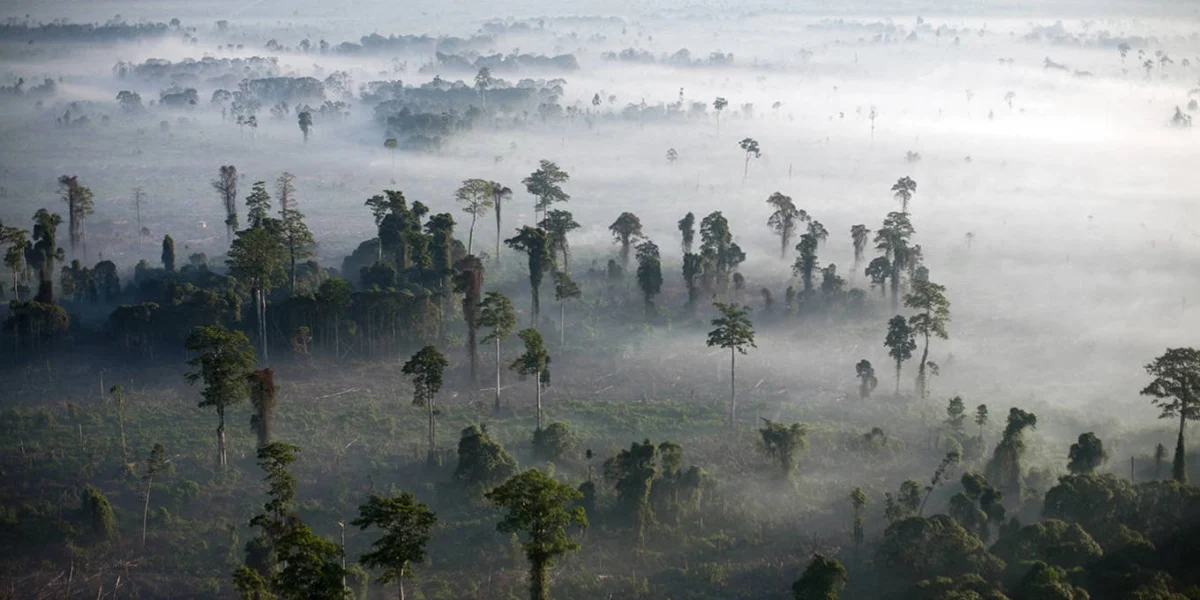
Six months after its prominent launch at the United Nations Climate Conference (COP30), the Tropical Forest Forever Facility (TFFF) faces mounting scrutiny, with many experts questioning its viability and the efficacy of its market-based approach to safeguarding critical tropical ecosystems. While the TFFF, a flagship initiative championed by the Brazilian COP presidency, aimed to mobilize substantial capital for forest conservation, its current trajectory suggests it may fall short of its ambitious goals. However, this potential setback does not spell the end for global conservation efforts. Innovative financial instruments like sustainability-linked sovereign bonds (SLBs) and sustainability-linked loans (SLLs) offer a more robust and adaptable pathway for tropical nations to finance and sustain their vital forest protection initiatives.
The TFFF’s core objective—the preservation of tropical forests—is undeniably of paramount importance. These verdant ecosystems are not merely biodiversity hotspots, housing an estimated 80% of the world’s terrestrial species, but also crucial carbon sinks. Since 1850, tropical deforestation and land-use changes have accounted for nearly one-fifth of the world’s cumulative carbon dioxide emissions, a significant driver of global warming. Furthermore, these forests are ancestral homes to numerous Indigenous Peoples and local communities, whose cultures and livelihoods are inextricably linked to their preservation. Recognizing this, the TFFF was conceived to address the inherent opportunity costs faced by tropical countries when choosing conservation over economic development. The principle was straightforward: northern, industrialized nations, bearing a historical responsibility for a significant portion of greenhouse gas emissions, should compensate tropical countries for undertaking conservation efforts that yield global benefits.
At the heart of the TFFF lies the Tropical Forest Investment Fund (TFIF), which aspired to raise a staggering $125 billion. A portion of this fund was earmarked for investment in emerging and developing economies. The proposed mechanism involved attracting investors with the promise of a modest return, say 5%, bolstered by sponsor capital and guarantees. The envisioned profit was that any return exceeding this baseline, for instance, 8%, could then be channeled to compensate countries that successfully conserved their tropical forests. Under this model, eligible nations could receive up to $4 per hectare of qualifying standing forest. However, a crucial disincentive was built into the system: payments would be reduced based on forest loss, with each deforested hectare potentially decreasing the payment base by 100 to 200 hectares, and fire-degraded forests by 35 hectares.
Despite significant efforts from countries like Norway, Germany, and France, and with its financial arm slated for hosting in Luxembourg, the TFFF has so far managed to raise only $6.7 billion. This shortfall, coupled with structural concerns, has led to widespread skepticism about its likelihood of success. The fundamental challenge lies in the intricate interplay of international capital markets, national politics, and the inherent difficulties of long-term financial commitments. Critics argue that expecting investors to accept lower returns while simultaneously guaranteeing funds for conservation is an overly optimistic proposition, often referred to in economic terms as seeking a "free lunch."
Furthermore, the TFFF’s compensation mechanism presents significant hurdles for tropical governments. The uncertainty surrounding the eventual payout, its potential delay beyond a government’s term in office, and the possibility of future administrations reversing conservation commitments without immediate repercussions, all contribute to a lack of strong motivation for sustained conservation action. Economists have voiced considerable criticism of the scheme, citing these issues as significant flaws. The United Kingdom, for instance, has publicly expressed skepticism and opted out of participating in the flagship fund, highlighting concerns about its operational effectiveness.
The Promise of Sustainability-Linked Bonds and Loans
Fortunately, the perceived impasse in tropical forest financing is not insurmountable. More effective and adaptable alternatives are emerging. The growing popularity of sustainability-linked sovereign bonds (SLBs) and sustainability-linked loans (SLLs) offers a compelling solution to the challenges that plague the TFFF. These financial instruments directly tie the interest rates and, in some cases, even the maturity dates of sovereign debt to the achievement of specific environmental or social performance targets.
Chile and Uruguay, for example, pioneered the issuance of sovereign SLBs in 2022. Uruguay’s issuance included forest conservation as a key performance indicator. Should the country fail to meet its conservation targets, the bond’s coupon rate would increase; conversely, exceeding targets would lead to a reduction in the coupon. This direct financial incentive mechanism creates a powerful, ongoing motivation for governments to prioritize and maintain conservation efforts. Similarly, sustainability-linked loans can be structured to adjust interest rates and repayment schedules based on the success of forest conservation initiatives, providing a direct link between financial performance and environmental outcomes.
Addressing the Time-Inconsistency Problem
A critical advantage of SLBs and SLLs is their ability to address the "time-inconsistency problem" in policymaking. This economic concept refers to the tendency for governments to make long-term commitments that they later find it beneficial to break, especially when future political considerations or economic pressures arise. By linking financial obligations to long-term conservation goals, SLBs and SLLs create a strong disincentive for future governments to deviate from established conservation policies. This is particularly relevant in politically dynamic regions. For example, Brazil’s upcoming presidential election could potentially bring to power a government with a different set of priorities, potentially undermining previous conservation commitments. SLBs and SLLs provide a financial safeguard against such policy reversals, ensuring a degree of continuity in conservation efforts regardless of political shifts.
Broader Benefits and Future Potential
Beyond political robustness and time consistency, SLBs and SLLs offer several other significant benefits. Governments receive the full loan amount upfront, eliminating the discounting of future payments due to perceived lags or uncertainty. This immediate financial infusion can be crucial for implementing and sustaining conservation programs. The increasing adoption of these instruments by diverse nations underscores their growing appeal. Thailand issued its first sovereign SLBs in 2024, with support from the Asian Development Bank, marking a significant step in the region’s sustainable finance landscape. Slovenia followed suit in 2025 with its own landmark issuance, demonstrating the global trend towards these innovative financing mechanisms. While the specific targets and structures of these bonds vary, the underlying principle of tying financial returns to sustainable performance remains consistent.
To further enhance their effectiveness in promoting tropical forest conservation, the design of SLBs and SLLs can and should be refined. Potential improvements include:
- Larger Coupon Adjustments: Increasing the magnitude of coupon adjustments based on performance targets would provide a stronger financial incentive for both exceeding and penalizing deviations from conservation goals.
- Proportional Variation: Ensuring that coupon adjustments vary proportionally with the level of success or failure in meeting targets would create a more nuanced and responsive financial mechanism.
- Extended Maturities: Longer bond maturities would align better with the long-term nature of forest conservation, providing sustained financial support and commitment.
- Targeted Investor Base: Prioritizing donor countries and institutional investors, such as pension funds and sovereign wealth funds, as primary bond buyers could ensure a more stable and committed investor base, less susceptible to short-term market fluctuations.
- Sovereign Debt Protections: Incorporating standard sovereign-debt protections would mitigate the risk of selective default, further bolstering investor confidence and the overall stability of the instruments.
These enhancements would not only strengthen the motivation for conservation but also potentially mobilize greater sums of capital for these critical initiatives.
The Real Risk: Failure to Conserve, Not Failure to Fund
The TFFF’s current challenges highlight a critical distinction: the true risk lies not in its potential inability to raise funds, but in its potential failure to deliver tangible conservation outcomes. If such high-profile initiatives falter, they risk discouraging future investment in tropical forest conservation by northern countries. This would be a tragic outcome, especially when viable and robust alternatives like SLBs and SLLs are readily available and gaining traction.
The global value of tropical forests, in terms of biodiversity, climate regulation, and ecosystem services, far exceeds the economic opportunity costs associated with their conservation. However, the realization of this value hinges on our ability to design and implement financial incentives that are both effective and enduring. The success of global conservation efforts depends on getting these incentives right, ensuring that financial mechanisms align with ecological imperatives and provide tropical nations with the sustained support they need to protect these invaluable natural assets for generations to come. The lessons learned from the TFFF’s struggles underscore the imperative to embrace and further develop innovative financial tools that can truly bridge the gap between economic realities and the urgent need for environmental stewardship.
