

Kuwait City, Kuwait – Early Wednesday morning, Kuwait International Airport became the target of a direct Iranian strike, resulting in at least one fatality and multiple injuries, according to a statement released by Kuwait’s Ministry of Foreign Affairs. This incident marks a significant escalation in the ongoing conflict, further destabilizing an already precarious ceasefire agreement that has been increasingly undermined by military actions in recent days.
The Islamic Revolutionary Guard Corps (IRGC) has reportedly denied responsibility for the attack, with Iran’s state-affiliated news outlet Tasnim quoting a spokesman attributing the incident to an error in U.S. military systems. This assertion contrasts sharply with the Kuwaiti Ministry of Foreign Affairs’ condemnation of "brutal and ongoing Iranian attacks using ballistic missiles and drones" against civilian and vital infrastructure.
The attack on Kuwait International Airport occurs as the broader conflict, now entering its fourth month, witnesses a surge in hostilities. Despite pronouncements from the Trump administration that the ceasefire remains in effect, the reality on the ground suggests a deteriorating situation. When pressed for comment on the status of the ceasefire in light of the Kuwaiti airport attack, President Donald Trump, speaking at the White House on Wednesday afternoon, offered a guarded response. "You know, there’s a reason for everything," Trump stated. "And we hit them pretty hard the night before, and actually last night." He further elaborated, "A ceasefire there is much different than a ceasefire in other parts of the world," hinting at the complex and volatile nature of the regional security landscape.
Both belligerent parties have engaged in a cycle of retaliatory strikes, creating an atmosphere of pervasive insecurity. The Kuwaiti Ministry of Foreign Affairs, in its translated statement, explicitly denounced the use of ballistic missiles and drones by Iran, emphasizing the targeting of civilian and critical facilities.
A Pattern of Escalation: Recent Military Actions and Denials
The IRGC’s denial of responsibility for the Kuwait airport strike is part of a larger narrative of contested actions. Just one day prior, U.S. Central Command (CENTCOM) reported the successful defense against multiple Iranian ballistic missiles and drones. In a statement released on its official website, CENTCOM detailed that it had launched "self-defense strikes" on Qeshm Island in the Persian Gulf in response to "attempted attacks" by Tehran.
According to CENTCOM, Iran had launched "several" ballistic missiles toward regional neighbors, though none reportedly reached their intended targets. Specifically, two Iranian missiles aimed at Kuwait reportedly fell short or disintegrated en route, while three missiles directed at Bahrain were intercepted by U.S. and Bahraini air defense forces. Furthermore, the U.S. military reported downing three one-way attack drones launched by Iran that were targeting civilian mariners transiting regional waters. Thankfully, no U.S. personnel were reported harmed in these engagements.
The Volatile Stalemate: Diplomatic Efforts and Military Confrontations
The United States and Iran appear to be locked in a volatile stalemate, where efforts to broker a peace deal are repeatedly overshadowed by public diplomatic disputes and direct military confrontations. This delicate balance is further complicated by Iran’s reported review of an agreement proposed by the Trump administration to pause the war. However, Iranian media indicated on Tuesday that Tehran had not communicated with Washington for several days, adding a layer of uncertainty to the ongoing diplomatic channels.
Earlier this week, Iran had declared its intention to cease communication with the U.S. and to completely block the Strait of Hormuz. This decision was framed as a response to Israel’s military operations in Lebanon targeting the Iran-backed militia Hezbollah. The geopolitical implications of such a move, given the Strait’s critical role in global oil transit, are substantial.
Israeli Prime Minister Benjamin Netanyahu, in an interview with CNBC on Wednesday, expressed confidence in the development of alternative oil transport routes, stating, "That’s what’s happening now. Not, it’s going to happen, it’s already happening now." This suggests a proactive strategy by Israel and its allies to mitigate the potential economic fallout from any disruption in the Strait of Hormuz.
President Trump’s stance on the negotiations has also seen shifts. While he stated in a CNBC interview on Monday that he "did not care" if negotiations with Iran were over, he later insisted that the talks were indeed ongoing. In a Wednesday podcast interview with the New York Post’s "Pod Force One," Trump confirmed Iran’s agreement not to possess nuclear weapons, though he cautioned that "Tehran could still ‘change their mind.’" He also confirmed a report from Axios detailing a phone call where he told Netanyahu, "You’re f—ing crazy. You’d be in prison if it weren’t for me." Trump explained his perturbation with Netanyahu’s "constantly fighting with Lebanon" but affirmed that he and Netanyahu have "worked very well together" during the Iran war. Netanyahu, when questioned by CNBC about the call, stated he was "not going to get into details."
Regional Impact and Security Alerts
The escalating tensions have not been confined to direct confrontations between the U.S. and Iran. Governments across the Gulf region have reported drone attacks, underscoring the widespread impact of the conflict. Kuwait’s air defenses were reportedly engaged in confronting "hostile missile and drone attacks," prompting the country to urge its citizens to adhere to security and safety instructions. Similarly, Bahrain’s interior ministry activated warning sirens, advising residents to seek shelter.
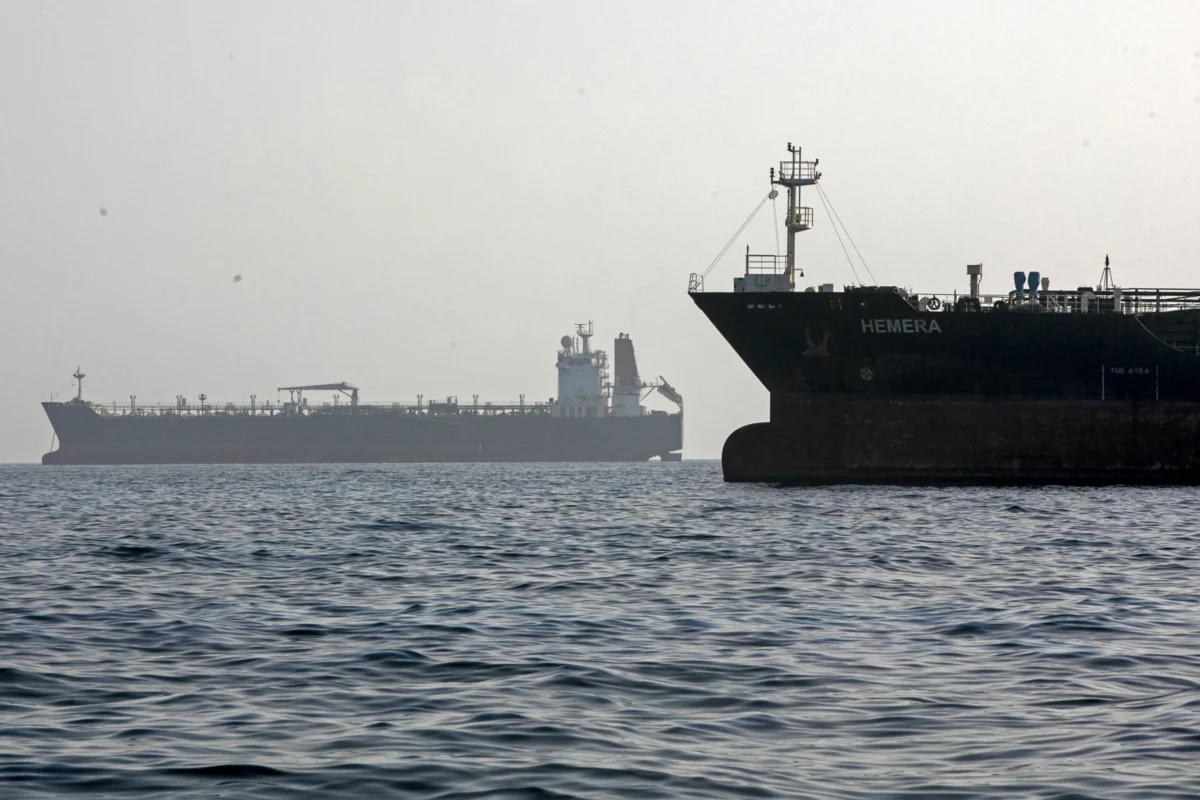
The IRGC has also been active in the region, reportedly attacking the U.S. Fifth Fleet headquarters, an airbase, and helicopters using missiles and drones. These actions, according to Reuters citing Iranian media, were in response to what the IRGC described as a U.S. strike on a communications tower south of Qeshm Island. In another incident, the IRGC navy allegedly targeted a vessel with missiles in retaliation for what it termed a U.S. attack on an Iranian tanker near the Strait of Hormuz, which damaged the vessel’s engine room.
Economic and Market Volatility
The persistent geopolitical uncertainty has a tangible impact on regional and global markets. Rick Gardner, chief investment officer at RGA Investments, commented on CNBC’s "Squawk Box Asia" that it is "hard to gauge when [the conflict and negotiations] may finally come to an end." Gardner anticipates that markets will likely experience oscillations, fluctuating between conflict-related negative shocks and resilient corporate earnings. He cautioned investors against withdrawing from markets due to geopolitical uncertainty, warning they could "be on the wrong side of the trade," especially given strong corporate earnings and guidance.
The events of Wednesday underscore the deeply complex and volatile nature of the Middle East conflict. The direct targeting of civilian infrastructure, coupled with the ongoing cycle of retaliatory strikes and contested narratives, presents a significant challenge to any prospects of a lasting peace. The international community, particularly key global powers, faces the arduous task of navigating these treacherous geopolitical waters, seeking to de-escalate tensions while addressing the underlying causes of the protracted conflict. The coming days and weeks will be critical in determining whether the fragile ceasefire can be salvaged or if the region is headed for further, potentially devastating, escalation.
