


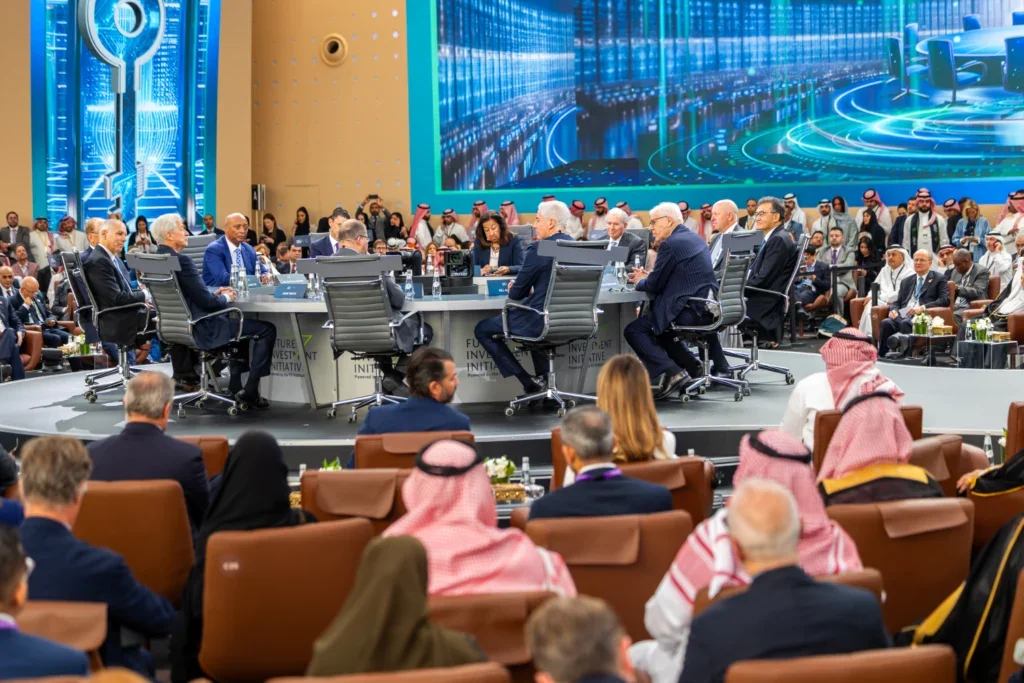
The Future Investment Initiative (FII) is set to launch its inaugural European edition in Rome, marking a significant expansion for Saudi Arabia’s prominent global finance summit. The FII Priority conference, a traveling offshoot of the flagship event held annually in Riyadh, will convene an influential gathering of global financiers, policymakers, heads of state, and technology leaders from June 17 to June 19 at the Rome Cavalieri, Waldorf Astoria hotel. The three-day summit, themed "Europe Reimagined: Capital, Sovereignty & Strategic Autonomy," underscores the growing importance of Europe as a key player in global economic and strategic discussions, particularly in an era of evolving international alliances and supply chain reconfigurations.
Genesis and Evolution of the Future Investment Initiative
Launched in 2017 by Crown Prince Mohammed bin Salman, the Future Investment Initiative (FII) rapidly ascended to become a cornerstone event in the global financial calendar. Often referred to as "Davos in the Desert," the Riyadh-based conference has consistently attracted a formidable array of global economic and political powerhouses. The initiative was conceived as a platform to showcase Saudi Arabia’s ambitious Vision 2030 economic diversification plan, aiming to attract foreign investment and foster innovation across a range of sectors, from technology and tourism to entertainment and energy. The success of the Riyadh summit in drawing top-tier global leaders has prompted its expansion into a more mobile format, with FII Priority events strategically chosen to engage with key international economic hubs.

The FII Priority series aims to foster more targeted and action-oriented discussions than its larger counterpart. Previous editions have included a significant event in Miami earlier this year, which featured prominent political figures, highlighting the series’ intent to engage with diverse economic and political landscapes. By choosing Rome for its European debut, FII signals its recognition of Italy’s strategic position within the European Union and its historical significance as a bridge between continents.
High-Profile Attendee List Signals Global Interest
The roster of speakers and attendees for FII Priority Rome reads like a who’s who of global finance and policy. Key figures from the world of investment banking include Anthony Gutman, co-CEO of Goldman Sachs International and global co-head of investment banking; Andrew Cohen, executive chairman of JPMorgan Chase’s global private bank; Lord Franck Petitgas, vice chairman of Blackstone Europe; and Sir Noel Quinn, the newly appointed chair of Julius Baer. The presence of these titans of industry underscores the FII’s continued influence in shaping global investment narratives and fostering strategic partnerships.
Beyond the financial sector, the conference will also feature prominent political figures, including former Italian Prime Minister Matteo Renzi and Albanian Prime Minister Edi Rama. Giancarlo Giorgetti, Italy’s Minister of Economy and Finance, is also slated to participate, signaling Italy’s active engagement with the FII’s agenda. Saudi Arabia’s commitment to the event is further demonstrated by the attendance of Ahmed Al-Khateeb, the kingdom’s Minister of Tourism, and Princess Reema Bandar Al Saud, Saudi Arabia’s Ambassador to the United States. Richard Attias, a veteran of global economic forums and a key organizer, will also be present, lending his extensive experience in orchestrating high-level international dialogues.

The FII’s ability to attract such a diverse and high-caliber group of individuals reflects its growing stature as a platform for critical global economic discussions. The inclusion of leaders from major financial institutions and influential political figures suggests a shared interest in addressing the complex challenges and opportunities facing the global economy, with a particular focus on the European continent.
Thematic Focus: Europe’s Strategic Imperatives
The overarching theme of "Europe Reimagined: Capital, Sovereignty & Strategic Autonomy" is particularly resonant in the current geopolitical climate. The conference is set to delve into several critical areas:
Reindustrialization and Capital Investment
A significant portion of the discussions will likely revolve around how Europe can finance its reindustrialization efforts. In the wake of global supply chain disruptions and a renewed focus on domestic production, European nations are seeking strategies to bolster their manufacturing capabilities and attract significant capital investment. This will involve exploring innovative financing models, public-private partnerships, and the role of sovereign wealth funds in driving industrial growth. Data from Eurostat indicates a recent trend towards reshoring and nearshoring in some European sectors, but significant capital infusion will be required to achieve a broad-based reindustrialization. The conference will likely explore how to leverage foreign direct investment, including from entities like the FII, to achieve these ambitious goals.
Building Resilient Supply Chains
The vulnerabilities exposed by recent global events, including the COVID-19 pandemic and geopolitical conflicts, have underscored the urgent need for more resilient supply chains. FII Priority Rome will provide a platform for leaders to discuss strategies for diversifying sourcing, strengthening logistics networks, and mitigating risks associated with over-reliance on single suppliers or regions. Analysis from organizations like the McKinsey Global Institute has highlighted the economic costs of supply chain disruptions, emphasizing the importance of proactive strategies to enhance robustness and flexibility. Discussions are expected to focus on leveraging technology, such as blockchain and advanced analytics, to improve supply chain visibility and responsiveness.
Navigating the AI-Driven Economy
The accelerating integration of Artificial Intelligence (AI) into the global economy presents both unprecedented opportunities and significant challenges. FII Priority Rome will address the workforce implications of this technological shift, including the need for reskilling and upskilling programs, the potential for job displacement, and the ethical considerations surrounding AI deployment. Discussions will likely explore how European economies can harness the benefits of AI while ensuring inclusive growth and mitigating potential societal impacts. Reports from the World Economic Forum consistently emphasize the transformative power of AI and the need for proactive policy responses to manage its societal and economic ramifications.
Strategic Autonomy in Key Sectors
The concept of strategic autonomy—the ability of a bloc or nation to act independently in critical areas—is a central tenet of the conference’s theme. Discussions are expected to cover strategic autonomy in energy, technology, defense, and finance. European leaders and investors are grappling with a world where traditional transatlantic alliances are being re-evaluated and global supply chains are increasingly subject to geopolitical pressures. The conference will provide a forum to explore how Europe can strengthen its self-reliance in these vital domains, fostering greater economic and political independence. This theme is particularly relevant given recent debates within the EU concerning its technological sovereignty, defense capabilities, and financial market integration.

Notable Speakers and Participants
In addition to the financial and political heavyweights, the FII Priority Rome agenda includes prominent figures from the technology and innovation sectors. Travis Kalanick, the co-founder of Uber and now CEO of Atoms, is expected to share insights on entrepreneurship and disruptive technologies. Stella Li, Executive Vice President of BYD, a leading global electric vehicle manufacturer, will likely offer perspectives on the future of sustainable transportation and manufacturing. Andrea Orcel, CEO of UniCredit, one of Europe’s most acquisitive lenders, will bring his expertise in European banking and corporate finance.
The conference will also broaden its scope to include discussions on sports and culture, with Alejandro Agag, the visionary behind Formula E and Extreme H, and Giuseppe Marotta, president of Inter Milan, set to contribute. Cecilia Attias, former first lady of France and founder of the Cecilia Attias Foundation for Women, will also participate, bringing a focus on social impact and gender equality. This diverse lineup of speakers reflects FII’s holistic approach to economic development, recognizing the interconnectedness of various sectors in shaping a nation’s or a continent’s future.
Broader Implications and Future Outlook
The FII’s decision to establish a European foothold signifies a strategic move to broaden its global reach and influence. By engaging directly with European leaders and investors, the FII aims to foster deeper economic ties and explore new avenues for investment and collaboration. The conference’s focus on strategic autonomy and resilience comes at a critical juncture for Europe, as the continent navigates a complex geopolitical landscape and seeks to redefine its economic future.

The discussions at FII Priority Rome are likely to generate actionable insights and potentially lead to new investment initiatives and policy frameworks. The presence of both established financial giants and emerging technology leaders suggests a forward-looking agenda, geared towards addressing the transformative forces shaping the 21st-century economy. As Europe grapples with issues of capital allocation, technological innovation, and geopolitical positioning, the insights and connections forged at this high-profile summit could play a significant role in shaping the continent’s trajectory in the years to come. The FII’s expansion into Europe underscores its ambition to be a central player in shaping global investment dialogues and fostering economic partnerships across continents. Coverage of the conference will be published on Spear’s Magazine website throughout the event, providing real-time updates and in-depth analysis of the key discussions and outcomes.
