

As the global automotive market transitions toward decarbonization, the year 2026 has emerged as a pivotal era for consumer choice, characterized by a sophisticated tug-of-war between Battery Electric Vehicles (BEVs) and Plug-in Hybrid Electric Vehicles (PHEVs). While early adopters once viewed the transition as a binary choice between internal combustion and pure electricity, modern consumers are increasingly making nuanced decisions based on geography, infrastructure, and specific lifestyle requirements. A prominent case study in this shifting landscape is the recent transition of a multi-generational family of electric vehicle enthusiasts who, after nearly a decade of Tesla ownership, opted to diversify their fleet with a 2026 Tesla Model Y and a 2026 Toyota RAV4 Plug-in Hybrid (PHEV). This move highlights the broader industry trends regarding range anxiety, automation capabilities, and the practicalities of rural versus urban EV ownership.
A Chronology of Adoption: From the Model 3 to the 2026 Fleet
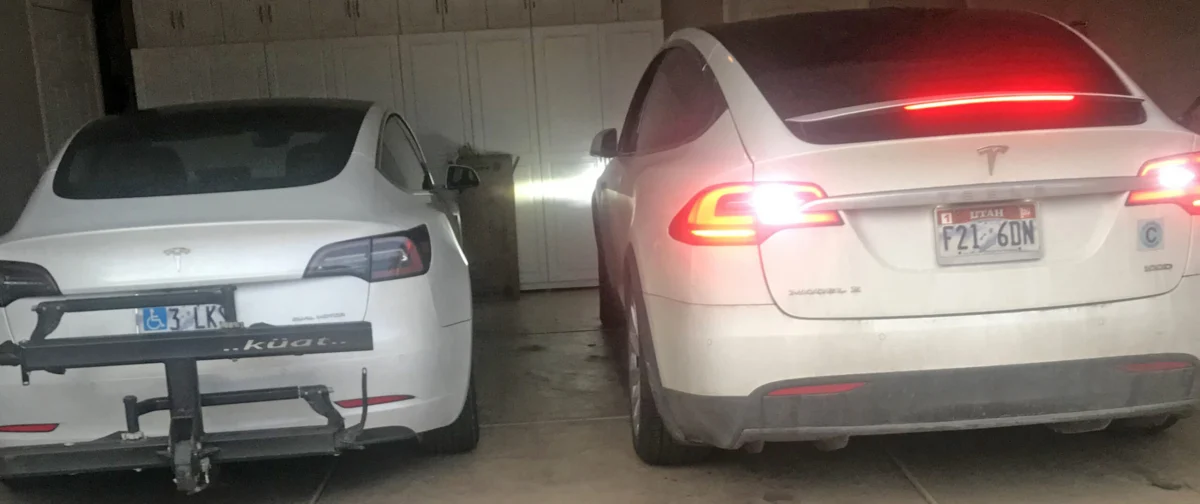
The family’s journey into sustainable transport began in earnest in 2019, a year that marked Tesla’s ascent into the mainstream with the ramp-up of the Model 3. At that time, the family purchased a Model 3 while their daughter, a high-level corporate executive with a history of international assignments in tech hubs like Prague, Munich, and Sydney, acquired a Tesla Model X. For several years, these vehicles served as the primary mode of transport, even during long-distance excursions to vacation homes in Saint George, Utah.

However, by 2026, two significant events prompted a reevaluation of their automotive needs. First, the original Model 3 was involved in a collision and subsequently totaled, necessitating a replacement. Second, the daughter’s retirement and relocation to Three Lakes, a remote community in Northern Wisconsin, changed her driving profile. While she remained committed to green technology, her new lifestyle involved frequent long-distance trips to remote areas with mountain bikes mounted on the rear—a configuration known to significantly impact aerodynamic efficiency and, consequently, electric range.
The resulting decision saw the parents upgrade to a base 2026 Tesla Model Y, while the daughter transitioned from a pure BEV (the Model X) to a 2026 Toyota RAV4 PHEV. This divergence offers a unique lens through which to view the current state of automotive technology and the specific trade-offs inherent in each platform.
Technical Specifications and Performance Benchmarks
To understand the rationale behind these choices, one must examine the technical profiles of both vehicles. The 2026 Tesla Model Y (Base) remains the benchmark for efficiency in the crossover segment. It features a simplified, high-performance electric drivetrain capable of producing 299 horsepower. The hallmark of the Tesla experience remains its instantaneous torque and "silk-smooth" power delivery across all RPM ranges. Furthermore, as a BEV, it requires no oil changes and minimal mechanical maintenance, making it an economically attractive option for high-mileage users who have access to home charging.

In contrast, the 2026 Toyota RAV4 PHEV represents the pinnacle of Toyota’s "multi-pathway" strategy. It offers a combined gas and electric range exceeding 500 miles. For daily operations in a small town like Three Lakes, its 52-mile pure electric range is often sufficient. The vehicle supports Level 2 (L2) charging, allowing the 18.1 kWh battery to be replenished in approximately two to three hours. This enables the owner to conduct morning errands on electricity, top off the battery during lunch, and complete afternoon trips without ever engaging the internal combustion engine.
However, the RAV4 PHEV carries the "baggage" of traditional automotive engineering. It requires routine oil changes, involves a complex dual-powertrain system, and necessitates visits to gasoline stations during long-haul trips. For the owner, these drawbacks are offset by the convenience of five-minute refueling, which is critical when navigating the sparser charging infrastructure of the rural Midwest or traveling with high-drag external loads like bicycles.
The Automation Divide: Tesla FSD V14 vs. Toyota Safety Sense
Perhaps the most stark contrast between the two 2026 models lies in their respective driving automation suites. The Tesla Model Y is equipped with Full Self-Driving (FSD) Version 14, a system that represents a significant leap over previous iterations. FSD V14 utilizes a sophisticated neural network architecture that has moved beyond simple lane-keeping to handle complex end-to-end navigation.
Reports from the field indicate that FSD V14 has mastered the "beginning" and "middle" of trips with unprecedented precision. The system is capable of backing out of unpaved, tree-lined driveways and navigating tight turns on roads without painted lines. One of the most noted improvements is the system’s ability to automatically back into parking spaces at large retail "big box" stores—a task many drivers find stressful due to limited visibility and clearance concerns. Tesla has also introduced behavioral profiles, allowing drivers to choose between modes such as "Chill," "Standard," "Hurry," and "Mad Max," though users note that even "Hurry" requires a safety-conscious oversight to avoid traffic citations.
Conversely, the 2026 Toyota RAV4 PHEV utilizes a more conservative suite of driver assistance technologies. While its smart cruise control is effective at maintaining following distances and stopping behind lead vehicles at traffic lights, it lacks the autonomy found in the Tesla. The steering assist is optimized for interstate highways with gentle curves; on more demanding rural roads with sharper turns, the system frequently disengages, requiring constant driver intervention. For users accustomed to Tesla’s high-level automation, the Toyota system feels like a previous generation of technology, functioning more as a safety net than a primary navigator.
Infrastructure Challenges in Remote Geographies
The decision to opt for a PHEV in 2026 is often a reflection of the current state of the United States’ charging infrastructure. While the Tesla Supercharger network is widely regarded as the gold standard for interstate travel, "blind spots" remain in remote regions such as Northern Wisconsin and the Intermountain West.

When a vehicle is equipped with a rear-mounted bike rack, the increased wind resistance can reduce an EV’s range by 20% to 30%. In a pure BEV, this requires more frequent stops at charging stations, which can add hours to a cross-country journey. For the daughter in this case study, the RAV4 PHEV’s ability to utilize the ubiquitous gasoline infrastructure provides a level of "destination freedom" that the Model X could not match under similar load conditions.
Market data suggests that this is a common trend. While BEV sales continue to grow in urban and suburban corridors, PHEVs are seeing a resurgence among rural buyers and those who frequently engage in outdoor recreation. The ability to charge at home for 90% of daily needs while retaining a "gasoline backup" for the remaining 10% of long-distance travel remains a compelling value proposition.
Environmental and Economic Implications
From an environmental standpoint, the "PHEV vs. BEV" debate is often centered on owner behavior. Critics of PHEVs argue that many owners fail to plug them in, essentially driving a heavier, less efficient gasoline car. However, data from long-term EV owners—such as the subject of this study—suggests that those transitioning from a BEV to a PHEV maintain their "plug-in habits." Having been accustomed to the convenience of a "full tank" every morning, these owners religiously use their L2 home chargers.

Economically, the Tesla Model Y offers a lower total cost of ownership (TCO) over a 200,000-mile lifespan due to the simplicity of the electric motor and the absence of a transmission or exhaust system. The Toyota RAV4 PHEV, while highly reliable by internal combustion standards, faces higher long-term maintenance costs associated with its more complex mechanical architecture.
Conclusion: A Bifurcated Future
The experiences of this family in 2026 suggest that the "one-size-fits-all" approach to green transportation is fading. The Tesla Model Y remains the superior choice for those prioritizing cutting-edge automation, low maintenance, and a seamless electric experience in areas with robust charging. Meanwhile, the Toyota RAV4 PHEV serves as a critical bridge for those whose lifestyles demand maximum flexibility in remote environments.
As battery energy density improves and the charging network expands toward the end of the decade, the gap between these two platforms may close. For now, however, the 2026 automotive market is defined by "different strokes for different folks," where the definition of the "perfect" car depends entirely on where the road leads and what is being carried on the back. This family’s diversified garage—one pure electric, one plug-in hybrid—reflects a pragmatic approach to a world in transition, balancing the ideal of a carbon-free future with the realities of contemporary travel.
