

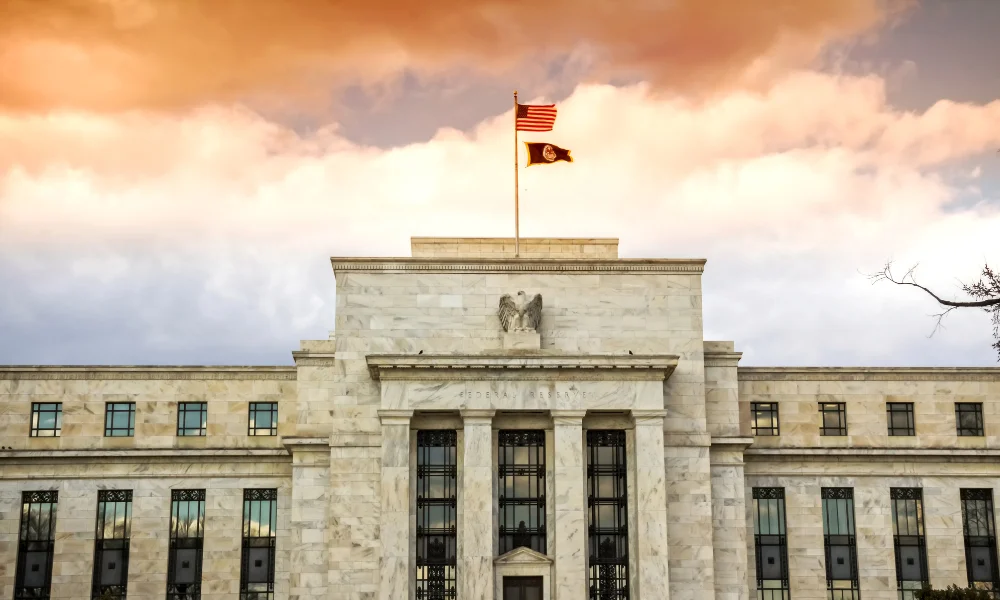
The Federal Reserve, at the conclusion of its Federal Open Markets Committee (FOMC) meeting, has elected to maintain its benchmark overnight interest rate within the target range of 3.5 to 3.75 percent. This decision marks a period of cautious stability as the U.S. economy navigates a landscape characterized by solid growth, robust employment, and ongoing inflationary concerns, further complicated by geopolitical uncertainties. The unanimous vote by the FOMC governors underscores a consensus on the current economic trajectory, a rarity in recent meeting outcomes.
Economic Activity Expands Despite Global Headwinds
The accompanying statement from the FOMC articulated a positive assessment of the U.S. economy, noting that "Economic activity is expanding at a solid pace despite elevated uncertainty that owes, in part, to the conflict in the Middle East." This expansion is underpinned by encouraging trends in productivity and capital investment, which are described as "strong." The labor market continues to demonstrate resilience, with job gains keeping pace with the growing workforce and the unemployment rate exhibiting minimal change. Data from the Bureau of Labor Statistics (BLS) for the most recent reporting period indicated an unemployment rate of approximately 4.3 percent, a figure that has remained relatively stable for several months, signaling a healthy and dynamic job market. This level of unemployment is well within what economists generally consider to be the "natural rate of unemployment," suggesting a tight labor market where most individuals seeking employment can find it.
However, the central bank’s primary mandate of price stability remains a significant focus. The statement explicitly acknowledged that "Inflation remains elevated relative to the Committee’s 2 percent goal, in part reflecting supply shocks that have driven price increases in certain sectors, including energy." This persistent inflation, even as economic activity strengthens, presents a complex challenge for policymakers. The FOMC reaffirmed its commitment to addressing this, stating, "The Committee will deliver price stability." The current inflation rate, as measured by the Consumer Price Index (CPI), has hovered around 5 percent year-over-year, considerably above the Fed’s long-term target of 2 percent. This elevated inflation is attributed by many economists to a confluence of factors, including lingering supply chain disruptions exacerbated by global events, strong consumer demand fueled by fiscal stimulus, and the recent surge in energy prices due to geopolitical tensions.
A New Era Under Fed Chair Kevin Warsh
This particular FOMC meeting held particular significance as it was the first to be chaired by the newly appointed Federal Reserve Chair, Kevin Warsh. His tenure begins at a critical juncture, with the economy exhibiting a dual character of robust growth and persistent inflation. Warsh, appointed by President Trump amidst the latter’s consistent calls for interest rate reductions, is expected by many analysts to adopt a neutral and data-dependent approach to monetary policy. This expectation is partly informed by Warsh’s past public statements, where he has expressed a general skepticism towards the efficacy and potential pitfalls of extensive forward guidance on monetary policy. The brevity of the FOMC statement, notably shorter than those issued under his predecessor, Jerome Powell, may be an early indicator of this inclination towards more concise communication.
The decision to hold rates steady was not only widely anticipated by market participants but also achieved with a remarkable level of internal accord. The absence of dissenting votes among the FOMC governors marks the first time in several meetings that a unanimous decision has been reached. This unity suggests a broad agreement within the committee regarding the current economic assessment and the appropriate course of action at this moment.
Market Expectations and the Path Forward
Despite the Fed’s decision to maintain the status quo, the financial markets are actively anticipating future policy adjustments. Current bond market pricing indicates a significant probability of a 25 basis point interest rate hike in December. This expectation reflects a recognition that while the Fed is pausing its tightening cycle for now, the persistent inflationary pressures may necessitate further action in the near future to ensure price stability.
The Fed’s dual mandate—maximum employment and price stability—often creates a delicate balancing act. In the current environment, with employment strong but inflation elevated, the committee faces the challenge of tempering price increases without inadvertently derailing the economic expansion. The decision to hold rates steady can be interpreted as a signal that the Fed believes the economy is robust enough to withstand current conditions and that it wants to gather more data before making further moves.
Historical Context and Previous FOMC Decisions
To fully appreciate the significance of the current FOMC decision, it is helpful to consider the recent history of monetary policy. Over the past year, the Federal Reserve had embarked on an aggressive rate-hiking cycle to combat surging inflation. This cycle saw a series of significant increases, pushing the benchmark interest rate from near zero to its current level. The pause in this cycle, therefore, represents a strategic shift, allowing the Fed to assess the cumulative impact of its previous actions and the evolving economic landscape.
For instance, in the FOMC meetings of the preceding year, there were often dissenting votes, reflecting varying perspectives on the appropriate pace and magnitude of rate increases. These debates often centered on the timing of the pivot, with some members advocating for more aggressive action to curb inflation and others urging caution to avoid tipping the economy into a recession. The current unanimity, therefore, suggests a convergence of views, at least for this specific meeting.
The Impact of Geopolitical Events
The FOMC statement’s explicit mention of "elevated uncertainty that owes, in part, to the conflict in the Middle East" highlights the growing influence of geopolitical events on economic policy. The conflict has had a palpable impact on global energy markets, contributing to the rise in oil and gas prices, which in turn feeds into broader inflationary pressures. Beyond energy, geopolitical instability can disrupt global supply chains, affect international trade, and dampen business and consumer confidence.
The Fed’s acknowledgment of this external factor underscores its awareness that domestic monetary policy operates within a complex global context. While the Fed’s primary tools are domestic, it must consider how international developments can influence inflation, employment, and overall economic growth within the United States. The uncertainty generated by these events makes forecasting and policy calibration more challenging, contributing to the Fed’s cautious approach.
Broader Economic Implications and Future Outlook
The Federal Reserve’s decision to hold interest rates steady has several immediate and potential long-term implications for various sectors of the economy. For consumers, this means that the cost of borrowing for mortgages, auto loans, and credit cards is likely to remain stable in the short term. This can provide some relief and predictability for household budgets, particularly as inflation continues to impact purchasing power.
For businesses, the holding pattern offers a period of stability in financing costs. However, the persistent inflation and the possibility of future rate hikes mean that businesses must remain vigilant in managing their costs and pricing strategies. The strong productivity and capital investment noted in the FOMC statement suggest that many businesses are adapting and investing for the future, even amidst uncertainty.
The implications for the housing market are also noteworthy. Higher interest rates generally cool demand for housing by increasing mortgage payments. By holding rates steady, the Fed may be allowing the housing market to adjust to previous rate increases without further immediate pressure. However, the underlying inflationary pressures and the potential for future hikes mean that the housing market remains a key area to monitor.
Looking ahead, the Federal Reserve’s path forward will likely be dictated by incoming economic data. Key indicators to watch will include further inflation reports (CPI and Personal Consumption Expenditures – PCE price index), employment statistics (job openings, wage growth, unemployment rate), and measures of economic output (Gross Domestic Product – GDP). The Fed’s commitment to achieving its 2 percent inflation target means that any sustained deviation from this goal could prompt a reassessment of its policy stance.
The market’s expectation of a December rate hike suggests that investors believe inflation will remain a dominant concern. However, the Fed’s communication has consistently emphasized data dependence. If inflation begins to show a more decisive and sustained downward trend, the Fed might hold off on further tightening. Conversely, if inflation proves more stubborn, or if the economy shows signs of overheating, additional rate increases could be on the table.
The appointment of Kevin Warsh as Fed Chair adds a layer of interest to the Fed’s future communications. His stated reservations about extensive forward guidance might lead to a more event-driven approach to policy announcements, where markets will need to carefully parse each piece of economic data and each FOMC statement for clues about the central bank’s thinking. This could lead to increased market volatility if the Fed’s actions are perceived as deviating from expectations without clear prior signaling.
In conclusion, the Federal Reserve’s decision to maintain its benchmark interest rate at 3.5-3.75 percent reflects a cautious optimism about the U.S. economy’s ability to expand while simultaneously acknowledging the persistent challenge of elevated inflation. The unanimous vote under the new leadership of Chair Kevin Warsh signifies a period of focused deliberation, as the central bank navigates a complex economic environment shaped by both domestic strengths and global uncertainties, with a clear commitment to ultimately achieving price stability.
