

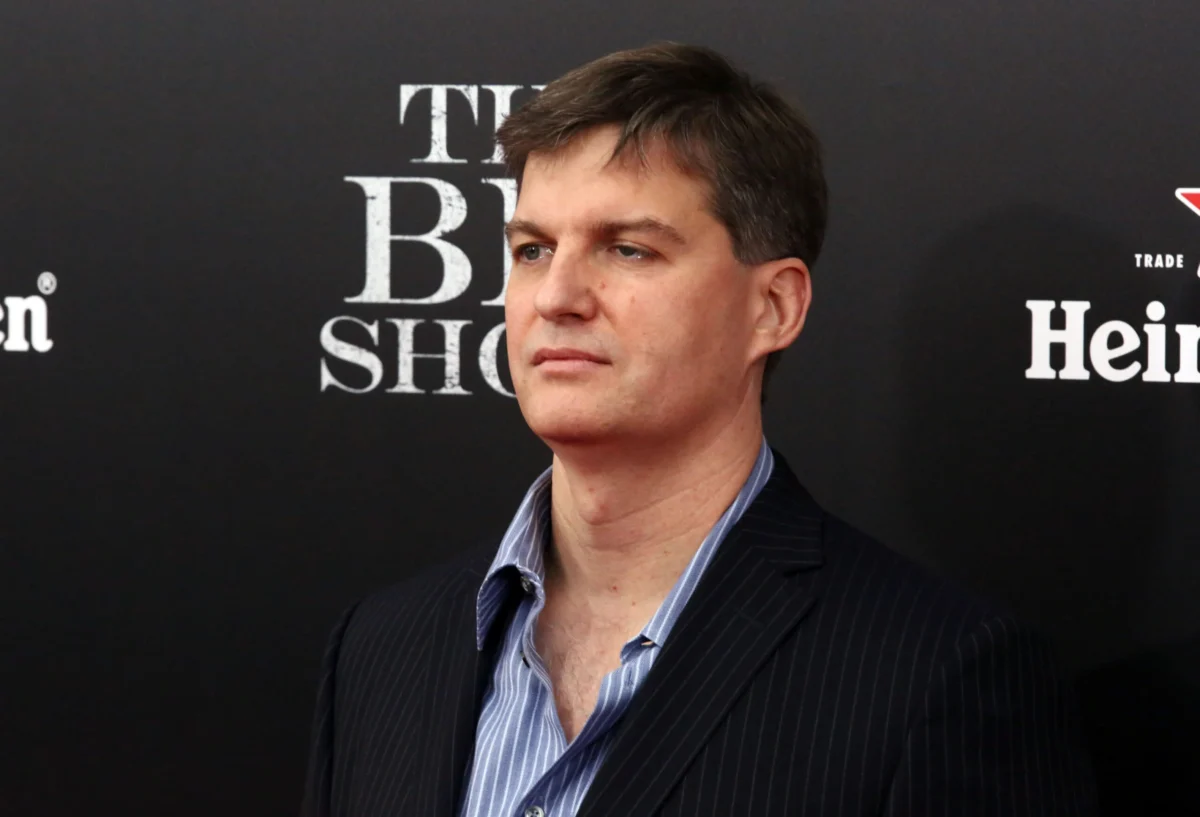
Michael Burry, the enigmatic investor renowned for his prescient wager against the U.S. housing market leading up to the 2008 financial crisis, has publicly voiced profound skepticism regarding the staggering valuation of SpaceX, the aerospace and satellite communications company founded by Elon Musk. Despite his bearish outlook on the company’s nearly $3 trillion market capitalization, Burry announced on Tuesday that he currently holds no position, neither long nor short, in SpaceX. His decision stems from the prohibitive cost of bearish options, which he deemed too expensive even as he questioned the fundamental underpinnings of the company’s colossal valuation.
The Oracle of "The Big Short" and His Latest Scrutiny
Burry, whose story was immortalized in Michael Lewis’s book "The Big Short," gained widespread recognition for his unconventional analytical approach and his ability to identify deep value disparities or systemic risks long before mainstream financial markets. His firm, Scion Asset Management, is known for its deep-dive research and often contrarian positions. His pronouncements, typically delivered through cryptic social media posts or, in this case, a SubStack entry, often send ripples through investor communities, prompting re-evaluation of prevailing market narratives.
In his Tuesday SubStack post, Burry confirmed, "I am not involved with SpaceX now. Neither short nor, ahem, long." This statement came after he revealed he had extensively reviewed various bearish options trades linked to SpaceX but ultimately chose to pass on all of them. This decision highlights a crucial aspect of Burry’s investment philosophy: even strong conviction in a company’s overvaluation does not automatically translate into a short position if the mechanics of the trade, such as option premiums, make the risk-reward profile unfavorable.
Dissecting the Valuation: A Multifaceted Critique
Burry’s core argument against SpaceX’s valuation rests on a perceived disconnect between its operational realities and its market capitalization. He described SpaceX as "fundamentally a small space company, a niche telecom, a bedeviled social media company, and a Coreweave-light" that generates less than $20 billion in annual revenue. This description is layered with implied criticism and perhaps a broader commentary on how market perception and the "Elon Musk premium" may be influencing valuations.
Breaking down Burry’s characterization:
- "Small space company": This likely refers to SpaceX’s origins and core business of rocket launches and satellite manufacturing. While undoubtedly a dominant force in this sector, Burry might be emphasizing its relative size compared to the astronomical $3 trillion valuation, implying that the market for launch services alone cannot justify such a figure. SpaceX’s Falcon 9 and Falcon Heavy rockets have revolutionized space access, but the total addressable market for these services, while growing, is finite.
- "Niche telecom": This directly points to Starlink, SpaceX’s ambitious satellite internet constellation. Starlink has achieved remarkable success in providing broadband internet to underserved regions globally, boasting millions of subscribers. However, it operates in a highly competitive and capital-intensive telecommunications market, facing rivals like OneWeb, Amazon’s Project Kuiper, and traditional terrestrial internet providers. The "niche" descriptor might suggest that while Starlink is innovative, its current market penetration and revenue streams, alongside its ongoing operational costs, do not align with a multi-trillion-dollar valuation.
- "Bedeviled social media company": This is a particularly intriguing and somewhat ambiguous part of Burry’s critique. SpaceX itself does not own a social media company. However, Elon Musk also owns X (formerly Twitter), which has faced significant challenges and controversies since his acquisition. Burry might be implying that the market’s valuation of SpaceX is implicitly factoring in a "Musk premium" or a perception of Musk’s overall portfolio, blurring the lines between his separate ventures. Alternatively, it could be a sarcastic jab at the broader market’s tendency to conflate innovation with unfettered growth across disparate sectors, or a hyperbolic way of saying that even if SpaceX were involved in a troubled sector like social media, its valuation would still be excessive. It underscores Burry’s view that the market may be applying a generalized speculative fervor around Musk’s ventures rather than a precise fundamental analysis of SpaceX alone.
- "Coreweave-light": Coreweave is a specialized cloud provider focusing on high-performance computing, particularly for AI workloads. By calling SpaceX "Coreweave-light," Burry suggests that while SpaceX might have some internal AI capabilities or aspirations (e.g., for autonomous rocket landings, Starship operations, or Starlink network management), its role in the booming AI infrastructure market is negligible compared to its valuation. This comment serves as a direct counterpoint to the prevailing narrative that companies with even tangential connections to AI deserve premium valuations, a trend Burry has consistently warned against.
The Astronomical Comparison: Berkshire Hathaway Eclipsed
To further underscore his point about the company’s disproportionate scale, Burry drew a stark comparison to one of the most respected and long-standing conglomerates in financial history: Warren Buffett’s Berkshire Hathaway. He noted with incredulity that SpaceX’s market capitalization had reached levels that "dwarf many established businesses and fortunes," specifically stating that it now exceeds Berkshire Hathaway’s market value by 2.5 times in just three days.
"Berkshire Hathaway has been eclipsed 2 1/2 times over in just three days. Berkshire Hathaway, painstakingly assembled over two century-old lives. The two greatest investors of our time," Burry stated. This comparison is particularly potent. Berkshire Hathaway, a diversified holding company, has been meticulously built over decades by Warren Buffett and his late partner Charlie Munger, representing a bastion of value investing, conservative management, and a vast portfolio of fundamentally strong businesses across various industries, from insurance to railroads and energy. Its market capitalization reflects decades of consistent profitability, robust cash flows, and prudent capital allocation. To see a relatively younger company like SpaceX, with significantly lower revenue and still heavily reliant on future technological breakthroughs and market expansion, surpass Berkshire Hathaway so rapidly is, in Burry’s view, an alarming indicator of market froth and irrational exuberance.
The Practicalities of Shorting: Why Burry Passed on Options
Despite his strong bearish conviction, Burry’s decision not to short SpaceX highlights the complexities of implementing such a trade. He explained his reasoning by detailing the pricing of various put options:
- A put option with a $100 strike price expiring in December 2028 was priced at about $25 per contract, with the stock trading around $212.
- A similar contract expiring in June 2027 cost roughly $13.
- A December 2026 put traded around $6.75.
Put options are contracts that give the holder the right, but not the obligation, to sell a specified amount of an underlying security at a predetermined price (the strike price) on or before a certain date (the expiration date). Investors buy puts when they expect the price of the underlying asset to fall. The "premium" is the cost of buying this right.
Burry found these premiums, especially for the shorter-dated options, too high. "Tempted by that one. But no thank you," he remarked about the December 2026 option. High option premiums often reflect high implied volatility (the market’s expectation of how much the stock price will fluctuate) and strong demand for downside protection or speculative bets. In the case of a high-growth, high-profile company like SpaceX, volatility is often elevated. For a short seller, expensive options reduce the potential profit and increase the risk. If the stock does not fall significantly or falls too slowly, the option premium can erode, leading to losses even if the underlying asset eventually declines. Burry expressed a hope that "With any luck SPCX will settle up here in the mid $200s and vol will drain out of put option chain," implying he would prefer to see the stock stabilize and volatility decrease before considering a short position, making the options cheaper and more appealing.
SpaceX’s Meteoric Rise and the Broader Market Context
Burry’s comments come on the heels of SpaceX’s highly anticipated public offering, which has seen its shares soar. Following a "blockbuster debut," shares of SpaceX jumped 20% in their first full day of trading and continued to climb, popping more than 25% week-to-date. This historic IPO not only cemented SpaceX’s position as a titan of the new space economy but also reportedly minted Elon Musk as the world’s first trillionaire, a testament to the immense value the market is assigning to his ventures.
This rapid appreciation and enormous valuation are not occurring in a vacuum. The broader market has been characterized by a surging appetite for technology stocks, particularly those perceived to be at the forefront of artificial intelligence (AI) and other disruptive technologies. For months, Burry has been a vocal critic of this trend, drawing parallels between the current market environment and the dot-com bubble of the late 1990s. In May, he explicitly stated that "the market today feels like the last months of the 1999-2000 bubble," urging investors to "reject greed" and scale back exposure to momentum-driven trades. He views the AI fixation as a primary driver of these inflated valuations, warning that many companies are being valued not on their current fundamentals but on speculative future potential that may not materialize.
Chronology of Burry’s Market Warnings:
- 2005-2007: Predicts and successfully shorts the subprime mortgage market, leading to the 2008 financial crisis.
- 2015: His story is popularized by "The Big Short," cementing his reputation.
- Late 2020 – Early 2021: Warns of an "epic bubble" in the market, citing speculative trading in "meme stocks" like GameStop.
- Mid-2022: Predicts a potential "mother of all crashes" as market exuberance continues.
- Early 2023: Begins to draw explicit parallels between the current market and the dot-com bubble, focusing on AI-driven speculation.
- May 2023: Urges investors to "reject greed" as AI enthusiasm drives valuations sharply higher, comparing it to the "last months of the 1999-2000 bubble."
- June 2023: Expresses deep skepticism over SpaceX’s $3 trillion valuation, citing high option premiums as a deterrent to shorting.
Implications and Broader Market Debate
Burry’s latest comments add significant weight to the ongoing debate among investors regarding the sustainability of current market valuations, especially for high-growth, technology-intensive companies like SpaceX.
- For SpaceX Investors: His skepticism could prompt a re-evaluation of fundamental metrics versus market sentiment. While Burry isn’t short, his analysis underscores the inherent risks associated with such elevated valuations, particularly if growth projections falter or competitive pressures intensify.
- For the Broader Market: Burry’s warnings about "greed" and the resemblance to the dot-com bubble serve as a cautionary tale. It highlights the tension between disruptive innovation and traditional valuation principles. In an environment where narratives around AI, space exploration, and technological breakthroughs often overshadow tangible earnings and cash flows, Burry’s voice represents a call for prudence.
- The Role of Options Markets: His detailed explanation of option premiums offers insight into how sophisticated investors assess risk and opportunity. Expensive options can act as a natural brake on short selling, paradoxically allowing overvalued assets to continue their ascent until volatility subsides or a significant catalyst emerges.
- "New Economy" vs. "Old Economy" Titans: The comparison between SpaceX and Berkshire Hathaway encapsulates a fundamental ideological divide in investing. On one side, the belief in transformative technologies and exponential growth, often valuing future potential heavily. On the other, a focus on established businesses, predictable cash flows, and intrinsic value. Burry, while acknowledging innovation, consistently leans towards the latter, demanding that even the most revolutionary companies eventually justify their valuations with robust financial performance.
The future trajectory of SpaceX’s valuation will likely depend on its ability to execute its ambitious plans, expand its revenue streams across its various segments (Starlink, Starship, launch services), and navigate competitive and regulatory landscapes. However, as Michael Burry has demonstrated throughout his career, ignoring the fundamental disconnects between valuation and reality can have profound consequences for investors. His current stance on SpaceX, while not a direct short, serves as a powerful reminder that even in the most exhilarating bull markets, the laws of financial gravity are never truly suspended.
