

The successful digestion of SpaceX’s monumental $2 trillion initial public offering on June 12, 2026, has unequivocally dispelled the widespread market anxieties that gripped investors in the preceding weeks, ushering in a robust rally across major indices. Just ten days prior to the landmark listing, a palpable fear permeated global markets as the technology sector experienced a sharp downturn, culminating in the stock market’s most significant single-day loss since October 2025. This downturn was exacerbated by investor apprehension regarding the market’s capacity to absorb the unprecedented deluge of new equity from the highly anticipated SpaceX offering. However, with the largest IPO in history now seamlessly integrated into the public market, investor confidence has been reignited, leading to a vigorous rebound in the very same growth stocks that had faced selling pressure. Concurrently, Wall Street’s benchmark "fear gauge," the Cboe Volatility Index (VIX), has retreated sharply, settling comfortably below its long-term average, signaling a profound shift in market sentiment from trepidation to renewed optimism.
The Genesis of a Giant: SpaceX’s Market Debut
The journey to SpaceX’s public debut has been one of the most keenly watched narratives in modern finance, reflecting not only the ambition of its founder, Elon Musk, but also the transformative potential of commercial space exploration. Founded in 2002, Space Exploration Technologies Corp. (SpaceX) quickly established itself as a pioneer, revolutionizing access to space with reusable rockets and an ambitious vision that spans satellite internet (Starlink) to interplanetary travel (Starship program, Mars colonization). For years, the company remained fiercely private, fueling intense speculation about its eventual public listing. The decision to finally go public in June 2026, driven by a combination of mature business lines, significant capital requirements for its expansive projects, and a robust market environment, marked a pivotal moment.
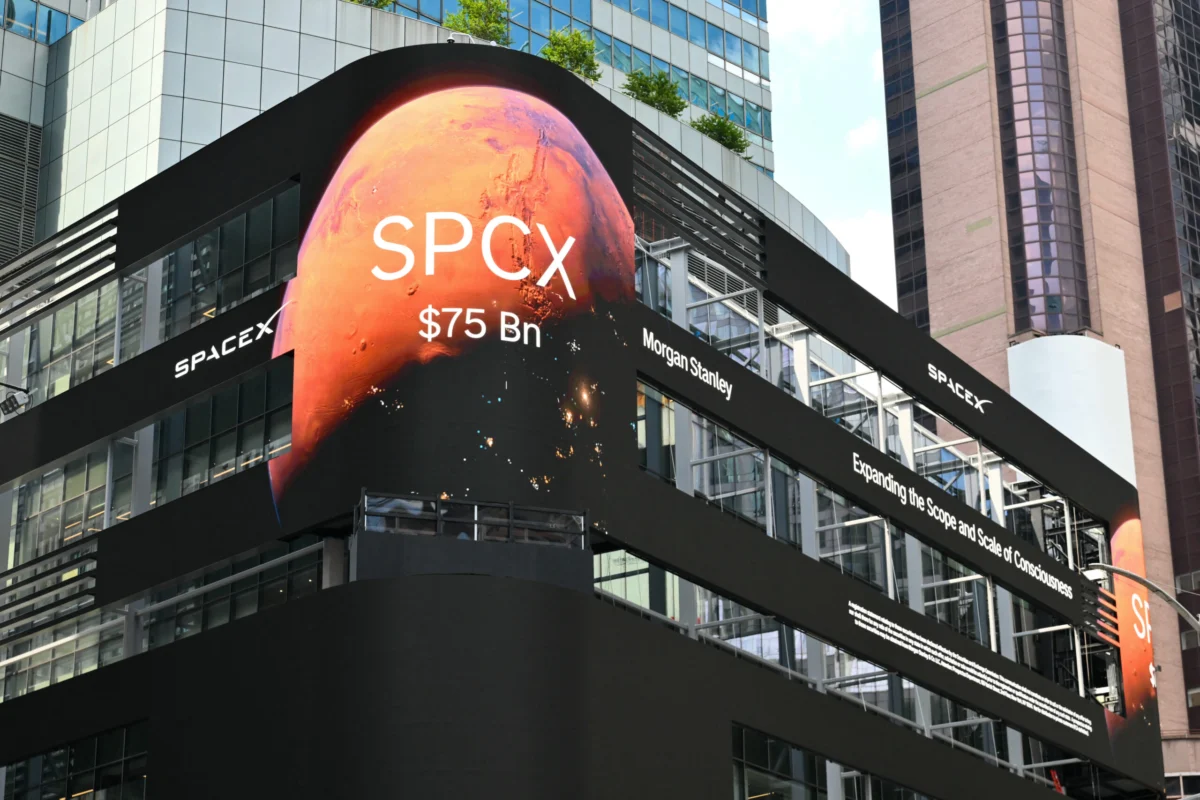
The sheer scale of the IPO was staggering. Priced at a valuation that allowed it to raise an unprecedented $2 trillion, it dwarfed previous historical listings such as Saudi Aramco’s $29.4 billion in 2019, Alibaba’s $25 billion in 2014, or even Meta Platforms (Facebook) in 2012. This gargantuan offering was a testament to SpaceX’s market dominance, technological prowess, and the almost cult-like following it commands among investors, both institutional and retail. Advertisements emblazoned across iconic digital billboards in New York’s Times Square served as a vibrant public celebration, underscoring the cultural and financial significance of the event. The successful execution of such a colossal offering required meticulous planning, robust underwriting, and a deep pool of eager capital, demonstrating the market’s surprising depth and appetite for truly disruptive innovation.
A Pre-IPO Storm: Market Jitters and the Fear Gauge’s Ascent
The immediate run-up to the SpaceX IPO was characterized by a period of significant market turbulence, creating a stark contrast to the post-listing euphoria. Around the first week of June 2026, approximately ten days before the IPO, global equities, particularly the high-flying technology sector, experienced a pronounced sell-off. This downturn was not isolated but built upon a backdrop of persistent macroeconomic concerns, including lingering inflationary pressures, the prospect of further interest rate hikes by central banks, and geopolitical uncertainties. The market had already seen its "worst day since October 2025," a period that analysts now recall was marked by a sharp, albeit short-lived, correction triggered by unexpected tightening of monetary policy.
In this already delicate environment, the impending SpaceX IPO loomed large, acting as a catalyst for heightened anxiety. Investors and analysts expressed legitimate concerns about the market’s ability to absorb such an enormous influx of new equity. The worry was that the sheer volume of capital required to subscribe to the SpaceX shares could drain liquidity from other parts of the market, forcing institutional investors to sell existing holdings to free up funds for the IPO. This "crowding out" effect could potentially trigger a broader market correction, especially in sectors perceived as overvalued.
This apprehension was vividly reflected in the Cboe Volatility Index (VIX), often referred to as Wall Street’s "fear gauge." The VIX, which measures the market’s expectation of future volatility based on S&P 500 index options, saw a rapid and significant escalation. Typically, a VIX reading below 20 indicates a period of relative calm, while readings above 25-30 suggest elevated fear and uncertainty. In the days leading up to the IPO, the VIX had spiked well above its historical average, signaling widespread investor unease and a scramble for protective hedges. The collective memory of the tech sector’s nosedive and the broader market’s vulnerability added a layer of caution that seemed poised to derail even the most anticipated of market debuts.
Digesting the Colossus: The IPO Event and Immediate Aftermath
Despite the preceding jitters, the actual launch of SpaceX’s public trading on June 12, 2026, proceeded with remarkable smoothness, defying many bearish predictions. The market’s capacity to absorb the $2 trillion offering "without a hiccup" was a testament to robust institutional demand, significant retail interest, and perhaps a shrewd pricing strategy that ensured enough upside potential to attract buyers. The initial trading saw strong buying interest, suggesting that the earlier selling pressure was indeed largely driven by pre-IPO risk management and capital reallocation rather than a fundamental lack of confidence in the company or the broader market. The public’s enthusiastic response confirmed that the allure of SpaceX’s long-term vision and its established track record far outweighed short-term market anxieties.
By the close of trading on its IPO day, SpaceX had firmly established itself as a titan of the public markets. The immediate success not only validated the company’s valuation but also served as a crucial psychological turning point for the broader market. The fear of an IPO-induced liquidity crunch quickly dissipated, replaced by a sense of relief and renewed bullish momentum. This positive feedback loop saw investors, who had previously divested from tech and growth stocks to free up capital or hedge against volatility, begin to re-enter the market with renewed vigor.
Post-IPO Euphoria: A Market Resurgence
The positive momentum from SpaceX’s smooth IPO translated into a powerful market rally on the subsequent trading day, Monday, June 15, 2026. The technology-heavy Nasdaq 100 index spearheaded the charge, jumping an impressive 3%, signaling a strong comeback for growth-oriented stocks. The broader S&P 500 index also posted significant gains, rising approximately 1.7%, bringing it tantalizingly close to the all-time record highs achieved earlier in the month before the pre-IPO turbulence.
A standout performer in this resurgence was the semiconductor sector, which surged to the forefront once again. The VanEck Semiconductor ETF (SMH) added more than 4% on Monday, reaching a new all-time high. This recovery was particularly notable given that the sector had experienced a sharp decline of over 10% from its previous record just ten days prior, on June 5, contributing significantly to the overall market jitters. The semiconductor industry, often considered a bellwether for technological advancement and economic health, demonstrated its underlying strength and critical importance in an increasingly digital world, driven by demand from artificial intelligence, data centers, and advanced computing.
SpaceX shares themselves experienced an extraordinary day, climbing 13% and propelling the company’s market capitalization to an astonishing $2.5 trillion. This immediate post-IPO surge solidified SpaceX’s position as one of the most valuable publicly traded companies globally, providing a robust counter-narrative to those market bears who had argued that speculative appetite was waning. The market’s enthusiastic embrace of SpaceX signaled a continued, perhaps even accelerated, hunger for high-growth, innovative companies, irrespective of their already lofty valuations.
VIX Unwound: Decoding the Decline in Volatility
The dramatic shift in market sentiment was most tangibly illustrated by the rapid unwinding of the Cboe Volatility Index. After peaking in the days leading up to the IPO, the VIX traded below 16 at its low on Monday, June 15, representing a complete reversal of the volatility spike that had commenced on June 5. This level is significantly below its long-term average, suggesting that investors now perceive the market environment as considerably less risky than just a week prior.
Ed Tom, Senior Director of Derivatives Market Intelligence at Cboe, provided crucial insights into this phenomenon. In a note to clients on Monday, Tom highlighted, "Although the SPX Index advanced by a modest 0.7% last week, the VIX Index declined far greater than expected due in large part to the unwind of protective near the money hedges and downside convexity positions." This statement indicates that the rapid VIX decline was not merely a passive reaction to rising stock prices but an active unwinding of defensive strategies. Investors who had purchased "near the money" put options to protect their portfolios, or who had taken "downside convexity" positions (which benefit disproportionately from sharp market drops), were now actively selling these hedges as fear subsided. This selling pressure on volatility-related instruments directly contributed to the VIX’s precipitous fall, signaling a broad-based return of risk appetite.
Options trading data further illuminated this shift. On Monday, more puts traded than calls in VIX options, with almost as many calls being sold as bought. This pattern suggests that a significant portion of options traders were betting on or positioning for a continued decline in volatility. Of the $93 million in options premium traded on VIX, over $70 million was tied to puts, indicating a strong directional bias towards a less volatile market. The most popular contract by volume, with 46,000 contracts traded, was the 16-strike put expiring on Wednesday, underscoring a short-term conviction that the VIX would remain at or below this low level.
Semiconductors’ Paradox: Hedging Amidst New Highs
While the broader market, and particularly the technology sector, enjoyed a robust rebound, the options flow in the VanEck Semiconductor ETF (SMH) presented a more nuanced picture. Despite semiconductors achieving new all-time highs, options flows in SMH continued to lean bearish, a trend that had persisted for weeks. This apparent paradox suggests a sophisticated approach to risk management among institutional investors. Given that major stock indexes now hold a higher concentration of semiconductor stocks than ever before, the month’s whipsaw volatility likely compelled many investors to pay up for hedges, even as the underlying assets surged.
Approximately 60% of the options premiums traded in SMH were in puts, signifying a continued demand for downside protection. However, a deeper look reveals notable activity from "put-spread sellers." A put spread involves simultaneously buying and selling put options at different strike prices, typically to profit from a stock remaining above a certain level or experiencing only a limited decline. The selling of put spreads is generally considered a moderately bullish or neutral strategy, as the seller collects premium and expects the stock not to fall significantly below the higher strike price.
For instance, the single largest trader of the day in SMH options exemplified this complex hedging strategy. This trader collected $5 million by selling two substantial put spreads expiring on July 17. Concurrently, they spent $2.7 million getting long the 600/550 spread expiring on the same day. This maneuver suggests a calculated position: betting against a large, catastrophic drop (by selling wider spreads) while maintaining some protection against a moderate pullback (by buying a tighter spread). This highlights that while confidence in the semiconductor sector’s long-term growth remains strong, the recent volatility has instilled a cautious approach to risk, with market participants actively managing potential downside exposure even as stocks reach new peaks.
The Road Ahead: SpaceX Options and Broader Market Implications
The successful IPO and subsequent market rally have set the stage for the next significant development: the listing of SpaceX options on Tuesday. This event is highly anticipated, especially given the historical popularity of options trading in other high-profile, founder-led technology companies like Tesla. Tesla options have long been a favorite among both institutional and retail traders, consistently ranking among the most active single-stock derivatives. The introduction of SpaceX options is expected to attract a similar level of fervent activity, providing new avenues for speculation, hedging, and price discovery around the space exploration giant. This will undoubtedly add another layer of complexity and potential volatility to the company’s stock, as options trading can amplify price movements.
Beyond the immediate impact on SpaceX’s stock, the historic IPO carries broader implications for the global financial landscape. The market’s seamless absorption of a $2 trillion offering signals an unprecedented capacity for liquidity and a robust appetite for transformative growth companies, potentially ushering in a new era for mega-IPOs. It reaffirms investor confidence in the technology sector’s resilience and its ability to innovate and expand even amidst macroeconomic headwinds. The swift calming of the VIX further suggests that market participants are quick to distinguish between genuine systemic risks and temporary jitters related to specific market events.
However, the rapid surge in market valuations and the renewed enthusiasm for growth stocks also raise questions about potential market froth. While the successful IPO has undeniably boosted investor sentiment, analysts will be closely monitoring future earnings reports, interest rate trajectories, and broader economic indicators to assess the sustainability of this rally. The ability of companies like SpaceX to consistently deliver on their ambitious growth projections will be critical in justifying their elevated valuations. For now, the successful launch of SpaceX into the public market has not only created a new financial behemoth but has also served as a powerful affirmation of market strength and investor belief in the future of innovation.
