

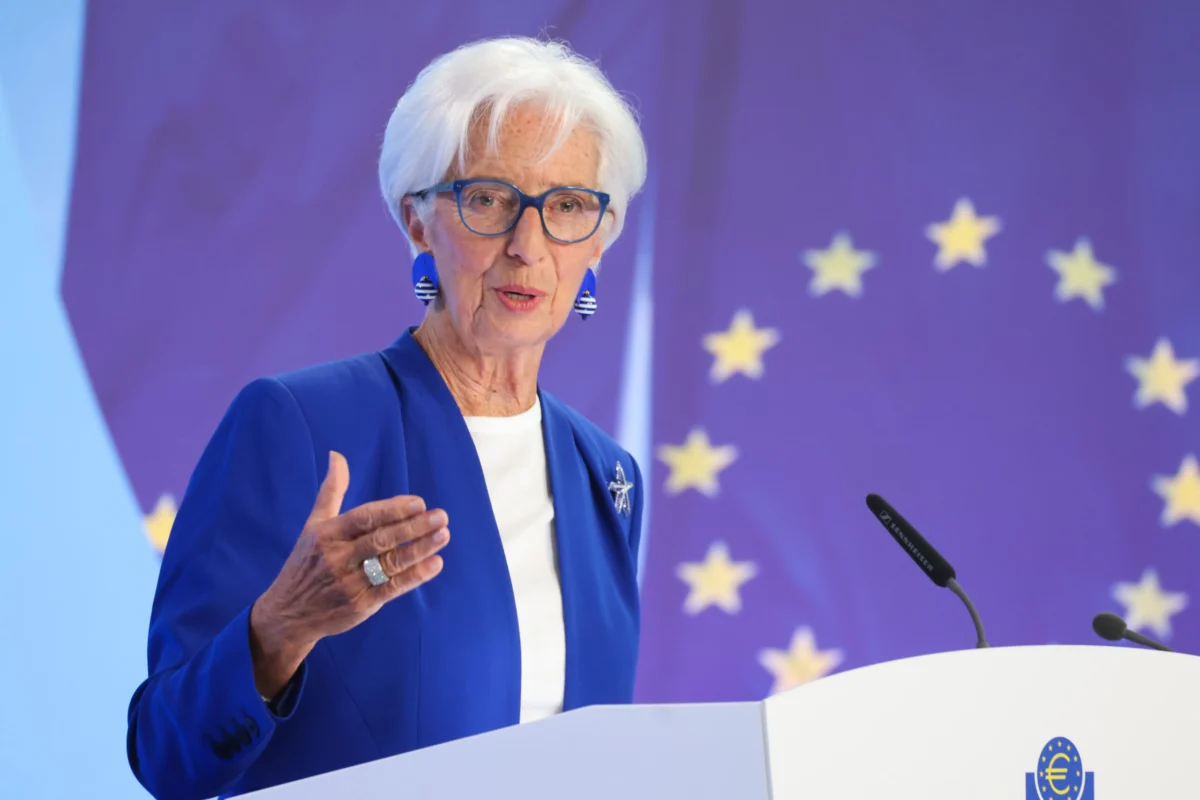
The European Central Bank (ECB) has signaled its commitment to taming persistent inflation by implementing a quarter-point interest rate hike, bringing its benchmark rate to 2.25%. This decisive move, announced on Thursday, June 11, 2026, comes as the escalating conflict in the Middle East continues to exert significant upward pressure on inflation, pushing it further away from the ECB’s target. The decision underscores the central bank’s proactive stance in addressing economic instability and its acknowledgment of the complex interplay between geopolitical events and macroeconomic stability within the euro area.
Governing Council’s Rationale and Market Expectations
The ECB’s Governing Council, in its official statement, articulated that the rate increase was a strategic measure designed to counteract the inflationary pressures stemming directly from the unfolding war in the Middle East. This proactive approach aligns with market expectations, which had largely anticipated a rate adjustment of at least 25 basis points. Data from LSEG indicated a near-universal consensus among market participants for such a move ahead of the June Governing Council meeting, reflecting a shared understanding of the prevailing economic climate and the potential impact of the ongoing conflict.
The Governing Council’s statement emphasized the robustness of this decision across various scenarios, suggesting that the rate hike is intended to be effective regardless of how the geopolitical shock evolves and influences the medium-term economic outlook for the euro area. This indicates a comprehensive risk assessment undertaken by the ECB, factoring in the potential for prolonged instability and its ripple effects on the region’s economy.
Revised Inflation and Growth Forecasts
In conjunction with the rate decision, the ECB also updated its inflation forecasts, painting a picture of continued upward price pressures in the near to medium term. The central bank now projects headline inflation in the euro zone to average 3% in 2026. While a subsequent cooling is anticipated, with inflation expected to decline to 2.3% in 2027 and to the target of 2% in 2028, the immediate outlook remains elevated.
These revised inflation projections are directly attributable to expectations of sustained higher energy prices. The conflict in the Middle East has significantly disrupted global energy markets, leading to increased costs that are anticipated to permeate through the economy, impacting the prices of food, goods, and services. The ECB’s forecast reflects a clear understanding of these second-round effects, where initial price shocks in one sector translate into broader inflationary pressures across the economy.
Conversely, the ECB has revised its economic growth forecasts downward for both 2026 and 2027. The central bank now anticipates euro area growth to average 0.8% in 2026, followed by a modest increase to 1.2% in 2027 and 1.5% in 2028. These downward revisions are a direct consequence of the anticipated "more pronounced impact of the war on commodity markets, real incomes and confidence." The conflict’s disruption to supply chains, coupled with heightened geopolitical uncertainty, is expected to dampen consumer and business sentiment, thereby restraining economic activity.
President Lagarde’s Remarks and Strategic Outlook
During a press conference following the announcement, ECB President Christine Lagarde reiterated the central bank’s concerns regarding the inflationary impact of the Middle East conflict. She acknowledged the prevailing uncertainty, highlighting the presence of upside risks for inflation and downside risks for economic growth. Lagarde was careful not to pre-commit to a specific future path for interest rates, stating, "We are not pre-committing to a particular rate path." This measured approach suggests that the ECB will remain data-dependent, adjusting its policy in response to evolving economic conditions and the unfolding geopolitical situation.
Lagarde further elaborated on the complexities of the situation, emphasizing that "The full implications of the war for medium-term inflation and growth will depend on the intensity and duration of the energy price shock, as well as the scale of its indirect and second-round effects." This statement underscores the ECB’s awareness that the current inflationary surge is not a transient phenomenon and that its ultimate impact will be contingent on a multitude of factors, including the trajectory of energy prices and their broader economic ramifications.
The Geopolitical Context: The Iran War’s Impact
The conflict, which has recently surpassed the 100-day mark, has been a significant driver of global energy price shocks. The closure of the Strait of Hormuz, a critical chokepoint for oil transportation, and the destruction of energy production facilities in the region have created severe supply constraints. While a fragile ceasefire remains in place, recent days have seen an escalation in tensions between Washington and Tehran, adding a layer of volatility to an already precarious geopolitical landscape. This ongoing instability in a vital energy-producing region directly influences global commodity markets and, consequently, the inflation outlook for economies like the euro area.
ECB’s Preparedness and Monitoring Strategy
The ECB affirmed its readiness to navigate the prevailing uncertainty. The Governing Council stated that it "remains well positioned to navigate the uncertainty caused by the war," and pledged to "closely monitor the situation." However, the central bank reiterated its stance of not pre-committing to a specific rate path, signaling a flexible and adaptive monetary policy approach. This commitment to vigilance and adaptability is crucial in managing an economic environment characterized by geopolitical volatility and its cascading effects.
Economic Indicators and Market Reactions
The backdrop for the ECB’s decision is a euro zone economy grappling with rising inflation and subdued growth. Flash data from earlier in June revealed that euro zone inflation surged to 3.2% in May, significantly exceeding the ECB’s 2% target, primarily driven by escalating energy costs. This persistent inflation poses a substantial challenge to the central bank’s price stability mandate.
On the growth front, the euro zone economy exhibited sluggish performance, expanding by a mere 0.1% in the first quarter of the year. This fragile growth trajectory underscores the delicate balancing act the ECB faces: combating inflation without inadvertently stifling economic recovery.
Market participants and analysts have offered their perspectives on the ECB’s move. Mark Wall, Chief European Economist at Deutsche Bank, characterized the rate hike as a "significant moment," noting it as the first ECB increase since 2023 and the initial response by a major global central bank to the current energy shock. Wall opined that the ECB’s decision signifies a departure from a "look through" strategy, suggesting that the central bank is now actively intervening to counter the inflationary impulse. However, he expressed skepticism about the extent of further tightening, predicting potentially one more hike in September before the cycle concludes, citing the dual risks of rising inflation and slowing growth.
Neil Birrell, Chief Investment Officer at Premier Miton, deemed the ECB’s decision unsurprising given the inflation backdrop. He found encouragement in the ECB’s assessment that the risks to GDP were not substantial, despite already muted growth expectations. Birrell anticipates further rate hikes this year, contingent on incoming data, but cautioned that it is "hard to think this is the end of the policy move."
In terms of market reactions, the yield on the 10-year German bund, a key benchmark for the euro zone, experienced a slight decrease, falling by 2 basis points by mid-afternoon in Frankfurt. The euro remained stable against the dollar and the British pound, indicating a measured market response to the ECB’s announcement. The absence of significant currency fluctuations suggests that the rate hike was largely priced in by the market, and the ECB’s forward guidance, emphasizing data dependency, is playing a crucial role in shaping investor expectations.
The ECB’s decision to raise interest rates underscores the profound impact of geopolitical events on global economic stability. As the conflict in the Middle East continues to evolve, the ECB’s commitment to monitoring the situation and adapting its policy accordingly will be paramount in navigating the complex challenges ahead, aiming to achieve price stability while supporting a fragile economic recovery. The coming months will be critical in assessing the efficacy of these measures and the broader trajectory of the euro area economy.
